
Fitting a kids storage cabinet into a compact HDB bedroom requires a careful balance between storage capacity and open floor space. In typical Singapore apartments, bedrooms must serve multiple functions, acting as sleeping quarters, study areas, and dedicated play zones. Selecting the wrong cabinet size can quickly crowd the room, leaving little to no space for your child to play safely on the floor.
To achieve the perfect balance, you must look beyond the basic width of the cabinet and evaluate its depth, height, and clearance requirements. A cabinet with a shallow depth of 30 to 40 cm is highly effective for organizing toys and books without encroaching on the center of the room. If you require clothing storage with hanging rails, a depth of 50 to 55 cm is generally necessary, though this requires more strategic placement to avoid blocking walkways. By prioritizing vertical height and choosing modular configurations, you can maximize storage volume while preserving a generous, uninterrupted play area.
Measure the Room and Clearances Before Choosing a Size
Before browsing online marketplaces or visiting furniture showrooms, you must obtain precise measurements of the bedroom. Start by mapping out the entire floor plan on paper, noting the exact dimensions of the walls. Identify the specific zone where you intend to place the kids storage cabinet, and measure this area’s width, depth, and height. Remember to account for skirting boards along the base of the walls, as these can prevent a cabinet from sitting completely flush against the wall, adding a few centimeters to the actual space the unit occupies.
Products mentioned in this guide
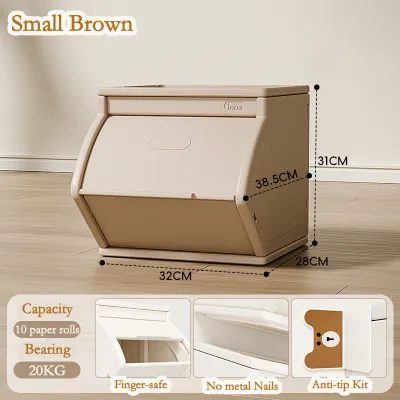
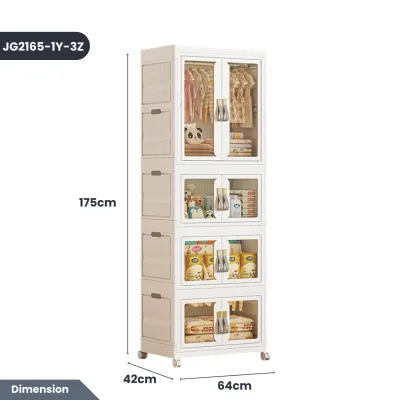
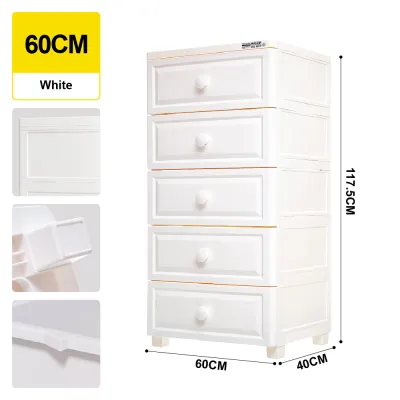
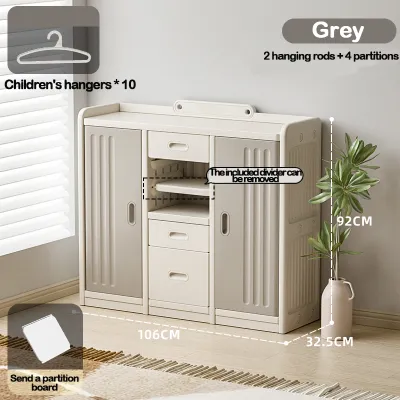
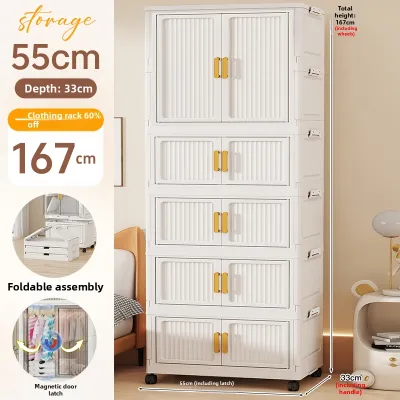
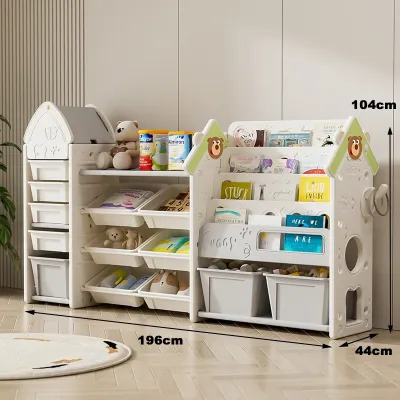
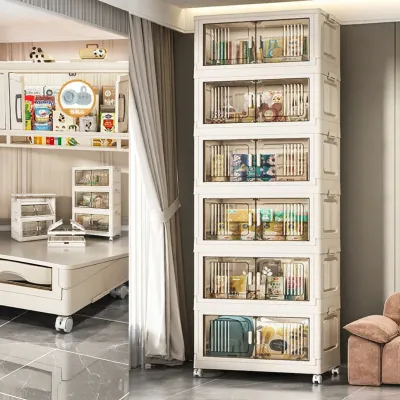
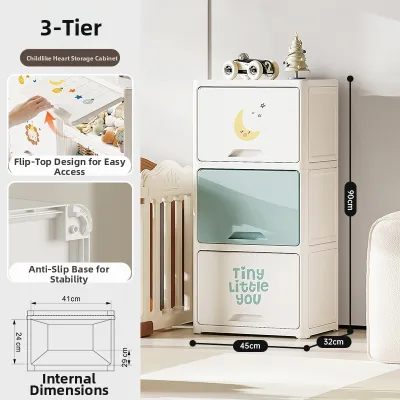
Prices are valid at publication and may change. Please refer to the product page for the latest price.
Next, evaluate the operational clearances required for existing features in the room. Open every door and window fully to ensure the cabinet will not obstruct their paths. In compact HDB bedrooms, a swinging bedroom door or wardrobe door can easily collide with a newly placed cabinet if clearances are not calculated beforehand. You must also map out the pathways your child uses to move around the room, ensuring there is a clear walkway of at least 60 to 70 cm between furniture pieces.
Do not forget to look upward when measuring the room. Note the location of wall-mounted air conditioning units, window grilles, curtain tracks, and electrical outlets. Placing a tall cabinet directly beneath an air conditioner can restrict airflow or make filter maintenance difficult. Additionally, ensure the cabinet does not block access to light switches or power sockets that you need for nightlights or study lamps.
Evaluate Cabinet Footprint and Configuration Options
When space is limited, the configuration of your kids storage cabinet plays a critical role in how much floor area remains open. Tall, narrow vertical cabinets are highly efficient because they utilize the room’s vertical volume rather than its floor space. A vertical unit with a small footprint can hold a significant amount of toys and books, but you must ensure the upper shelves are reserved for items that do not require frequent access by young children.

Conversely, wide and low storage units offer different advantages. While they occupy more floor space, their low profile keeps the room feeling open and airy. The top surface of a low cabinet can also serve a double purpose, acting as a play table, a display shelf for completed building blocks, or a book-reading nook. If you choose a low unit, look for models that can be fitted with removable storage bins to keep toys organized and easily accessible.
Corner cabinets and L-shaped configurations are excellent for utilizing awkward or underused spaces in a small bedroom. Corners are frequently left empty, but a dedicated corner storage unit can turn these dead zones into highly functional storage hubs. Alternatively, modular or stackable storage systems offer the greatest flexibility. These systems allow you to start with a low configuration when your child is young and gradually stack additional units vertically as their storage needs grow, adapting to the changing layout of the room.
Balance Storage Capacity with Usable Play Area
To select the right cabinet size, you must conduct a realistic assessment of the items you need to store. Sort through your child’s belongings and categorize them into clothing, books, active toys, and seasonal items. Overestimating your storage needs often leads to purchasing an oversized cabinet that unnecessarily consumes valuable play space. If you find that a large portion of the items are rarely used, consider storing them in another part of the home or rotating toys periodically rather than trying to fit everything into a single bedroom cabinet.
A safe and functional play area requires a minimum amount of uninterrupted floor space. For toddlers and young children, a clear floor area of at least 1.5 by 1.5 meters is ideal for spreading out toys, building tracks, or reading. To preserve this space, compare the footprint of potential cabinets against your remaining floor area. If a proposed cabinet reduces the open play space below your target, you may need to opt for a shallower unit or explore alternative storage solutions.
When floor space is exceptionally tight, multi-functional furniture becomes an invaluable asset. Look for ways to combine storage with other essential bedroom items. For example, a storage bench with integrated drawers can provide seating while housing toys. Alternatively, a loft bed or a cabin bed with built-in under-bed cabinets allows you to stack sleeping and storage zones vertically, completely freeing up the rest of the room’s floor area for active play.
Verify Safety, Stability, and Installation Requirements
Safety must be your primary consideration when introducing any new furniture into a child’s bedroom. Tall, narrow, or top-heavy cabinets pose a significant tip-over risk, especially if children attempt to climb the shelves or pull out multiple drawers at once. Before purchasing a vertical cabinet, verify that it comes with a dedicated wall-anchoring kit. You must also check the construction of your bedroom walls; concrete walls in HDB flats require appropriate masonry wall plugs and screws for secure mounting, while partition walls require anchoring directly into the studs.
In addition to wall anchoring, evaluate the weight capacity and structural stability of the cabinet. Check the manufacturer’s specifications to ensure the shelves can support the weight of heavy children’s books or wooden toy sets without bowing. A stable cabinet should have a solid, wide base or sturdy legs that distribute weight evenly. Avoid units that feel wobbly or flex when light pressure is applied to the top or sides.
The moving parts of the cabinet also require close inspection. Ensure that all drawers and doors are equipped with safety features such as drawer stops, which prevent drawers from being pulled completely out of the frame. Soft-close hinges and anti-slam mechanisms are highly recommended to protect small fingers from getting pinched. When planning the layout, ensure that the cabinet’s center of gravity remains stable even when drawers are fully extended, and never place heavy items on the upper shelves.
Common Sizing and Placement Mistakes to Avoid
One of the most frequent mistakes parents make is overlooking the depth of the storage cabinet. While a cabinet might fit perfectly along a wall in terms of width, a depth that exceeds 45 cm can narrow the adjacent walkway, making the room feel cramped and restricting movement. Always measure the clearance in front of the cabinet when the doors or drawers are fully open to ensure there is still room to pass by.
Another common error is placing tall cabinets directly next to windows. This not only blocks natural light, making the small bedroom feel darker and smaller, but it also creates a dangerous climbing hazard. A curious child could use the cabinet shelves as steps to reach the window sill, posing a severe safety risk. Keep tall furniture well away from windows and ensure window grilles are securely locked.
Finally, avoid the temptation to buy a single, massive wardrobe or cabinet to solve all your storage problems. A single large piece of furniture dominates a small room visually and physically, leaving little flexibility for future layout changes. Instead, opt for a combination of smaller, modular pieces that can be distributed across different walls or corners. This approach allows you to maintain a balanced layout and adapt the furniture arrangement as your child grows.
Frequently Asked Questions (FAQ)
What is the typical depth for a kids storage cabinet?
The typical depth for a kids storage cabinet ranges from 30 to 40 cm for toy and book storage, and 50 to 55 cm for clothing storage. When selecting a depth, measure the clearance in front of the cabinet to ensure that walkways remain unobstructed when doors or drawers are fully open. For very tight spaces, a shallow 30 cm cabinet paired with open bins is often the best choice to preserve floor space.
Can I use a standard wardrobe for mixed toy and clothes storage?
Yes, a standard wardrobe can be adapted for mixed storage by utilizing adjustable shelves, hanging organizers, and removable storage bins. To make it child-friendly, place clothing on lower hanging rails or in bottom drawers so your child can reach them independently. Use the upper shelves for seasonal items or bedding, and dedicate the middle and lower sections to labeled bins for toys and books.

Community discussion
Share your experience or ask a question. Comments are reviewed before publication.