
Finding the right single sofa bed with storage for a compact Singapore apartment requires balancing dual-purpose functionality with strict spatial constraints. In high-density housing like Housing & Development Board (HDB) flats, condominiums, and studio apartments, every square meter must be utilized efficiently. A single sofa bed with built-in storage serves as a comfortable seat by day, a supportive sleeping surface by night, and a hidden repository for bedding, seasonal clothing, or household essentials. To identify the ideal model for your home, you must evaluate how the unit transitions between modes, the accessibility of its storage compartment, and the durability of its internal mechanisms under local environmental conditions.
Space Planning and Dimension Checks
Before purchasing any multi-functional furniture, precise spatial mapping is essential to ensure the piece fits both your room and the delivery pathway. Begin by measuring the designated floor area where the sofa will sit in its primary upright position. You must then project the fully extended length of the bed mode onto your floor plan, ensuring there is at least 50 to 60 centimeters of walking clearance around the perimeter so you do not block access to wardrobes, doors, or balconies. Keep in mind that some pull-out designs require the sofa to be pulled away from the wall to fully recline, which adds to the necessary depth clearance.
Equally critical is verifying the delivery route from the building entrance to your living room. Singapore apartments, particularly older HDB blocks or boutique condominiums, may have narrow corridors, tight staircase turns, and compact passenger lifts. Measure the height, width, and diagonal clearance of your apartment doorway, as well as the lift entrance and interior cabin dimensions. Compare these measurements against the manufacturer’s packaged box dimensions rather than the assembled furniture dimensions, as many sofa beds are delivered flat-packed or in large semi-assembled modules that must navigate these tight spaces.
Products mentioned in this guide
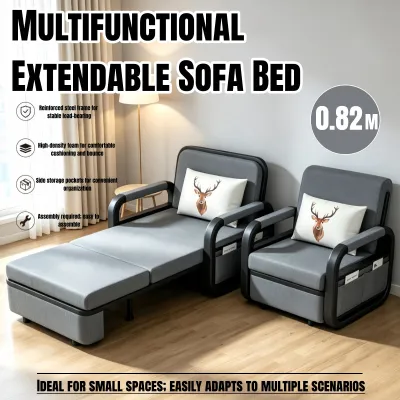

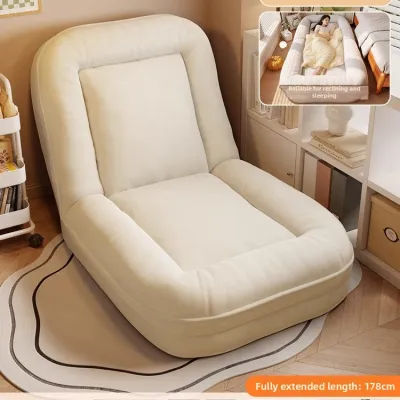
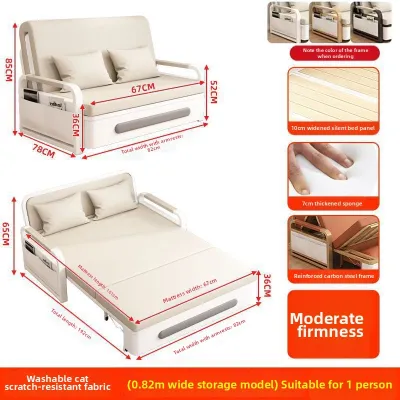
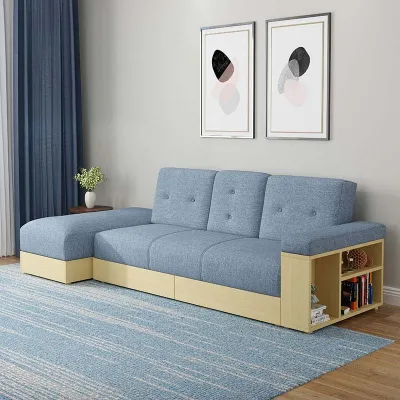
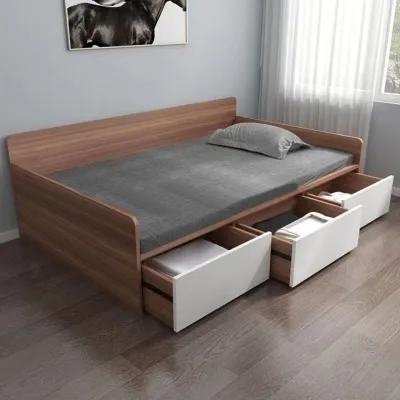
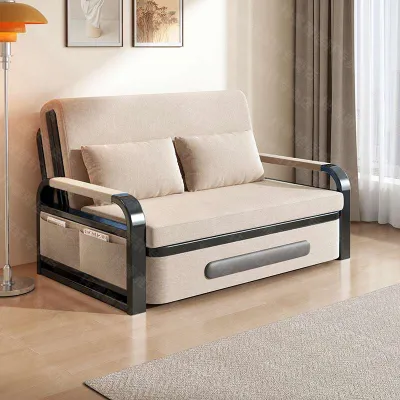
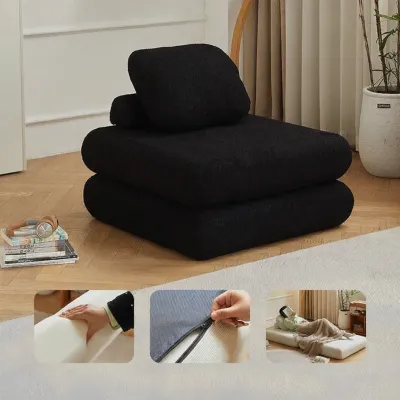
Prices are valid at publication and may change. Please refer to the product page for the latest price.
Storage Mechanisms and Accessibility
The utility of a single sofa bed’s storage depends heavily on its mechanical design and how easily you can access the compartment. The two primary configurations available are under-seat pull-out drawers and lift-up ottoman-style bases. Pull-out drawers operate on floor casters or metal runners, making them highly accessible for daily use; however, they require clear floor space directly in front of the sofa to slide open, which may be obstructed by coffee tables or rugs.

In contrast, lift-up ottoman designs utilize the space directly beneath the mattress platform, offering a deeper, unpartitioned storage cavity that is excellent for bulky items like spare pillows, winter wear, or heavy duvets. Because these designs require lifting the seating platform, they typically feature gas-assist struts to offset the weight of the mattress and frame. When evaluating a lift-up model, verify the quality of these struts and check the physical effort required to initiate the lift. If the mechanism lacks hydraulic assistance, lifting the platform daily can become physically taxing and may pose safety risks if the platform drops unexpectedly.
Mattress Types and Sleep Comfort
A sofa bed’s comfort level is determined by its mattress core, which must be supportive enough for sleeping while remaining resilient enough to withstand regular sitting. Common mattress materials include high-density polyurethane foam, memory foam, and pocket springs. High-density foam offers firm, consistent support and holds its shape well over time, making it a reliable choice for those who prefer a stiffer sleeping surface. Memory foam contours to the body to relieve pressure points, but it can retain body heat, which may feel uncomfortably warm in Singapore’s humid, tropical climate unless paired with a breathable, open-cell structure or a cooling fabric cover.
You must also inspect the thickness of the mattress and how it folds within the frame. Thin mattresses under 10 centimeters may allow sleepers to feel the underlying metal or wooden support bars, leading to poor sleep quality. Ensure the folding mechanism does not create permanent creases or deep gaps at the joints, which can disrupt spinal alignment. For long-term durability, check if the mattress cover is removable and washable, or if the mattress itself can be flipped, rotated, or eventually replaced without needing to discard the entire sofa frame.
Frame Materials and Structural Stability
The structural integrity of a single sofa bed determines its lifespan and safety, especially when subjected to the repetitive mechanical stress of transitioning between sofa and bed modes. Look for frames constructed from solid hardwoods or heavy-duty powder-coated steel, which offer superior load-bearing capacity and resistance to warping compared to low-grade particleboard. The joints and folding hinges should be securely bolted rather than stapled, as loose connections will cause the frame to wobble, squeak, or misalign over time.
When inspecting the unit in bed mode, pay close attention to the stability of the support legs, folding hinges, and locking pins. The legs must deploy fully perpendicular to the floor to prevent the bed from tipping when weight is shifted to the edges. Additionally, evaluate the upholstery fabric’s durability by checking its Martindale rub count on the manufacturer’s specification sheet; a rating of 15,000 rubs or higher is recommended for regular domestic use. Because Singapore’s high humidity can encourage dust mites and moisture retention, prioritize breathable, tightly woven synthetic blends or treated fabrics that are easy to spot-clean and vacuum.
Condition-Based Shortlist: Matching Features to Your Needs
To narrow down your options, match the sofa bed’s design features to your specific living situation and how often the bed will be used. If the unit is intended for frequent daily sleeping—such as in a studio apartment or a shared bedroom—you should prioritize models with a robust steel click-clack or pull-out frame, a thick high-density foam mattress, and a simple transition mechanism that minimizes wear. In this scenario, look for designs that do not require removing the seat cushions to deploy the bed, saving you time and effort every morning and evening.
For those who host occasional overnight guests and primarily need to maximize storage space, a lift-up ottoman sofa bed with a deep, unpartitioned compartment is the most practical choice. This setup allows you to store bulky bedding out of sight for months at a time, keeping your living area clutter-free while keeping the guest bed ready for use. If your apartment has an exceptionally tight layout, focus on compact, armless single sofa beds or models with ultra-slim armrests. Choosing a model with a pull-out trundle drawer on wheels allows you to access stored items easily without needing to lift the entire seating frame, making it highly suitable for narrow study rooms or multi-purpose home offices.
Pre-Purchase and Delivery Verification
Before finalizing your purchase, perform a thorough review of the retailer’s terms and product specifications to avoid unexpected complications. Confirm the exact assembled dimensions, weight capacity, and total weight of the unit against the official product sheet to ensure it aligns with your floor plan and structural limits. Review the warranty policy carefully, paying specific attention to whether the coverage extends to the moving mechanical parts, gas struts, and frame joints, rather than just the fabric upholstery.
Additionally, inquire about professional assembly services, as assembling a complex folding mechanism with gas struts can be challenging without the proper tools and experience. Finally, coordinate the delivery schedule with your building’s management office. Many condominiums and HDB estates have strict regulations regarding furniture delivery hours, lift bookings, and vehicle height limits in loading bays. Verifying these details in advance ensures a smooth delivery process and prevents costly delays or administrative penalties.
Frequently Asked Questions (FAQ)
Can a single sofa bed with storage support two people sleeping?
No, a standard single sofa bed is designed to accommodate only one adult sleeper. The typical width of a single mattress is approximately 90 centimeters, which does not provide sufficient space for two people to sleep comfortably or safely. Attempting to fit two adults on a single frame can exceed the manufacturer’s maximum weight capacity, putting excessive stress on the folding joints, support legs, and storage base, which may lead to structural failure or permanent damage to the mechanism. Always check the official specification sheet for the maximum weight limit before use.
How do I prevent mold in the storage compartment?
To prevent mold and mildew growth in Singapore’s humid climate, you must ensure that all stored bedding, pillows, and linens are completely dry before placing them inside the storage compartment. Avoid storing damp items or placing the sofa bed directly against external walls where condensation can accumulate. Periodically open the storage compartment to let air circulate, and consider placing moisture-absorbing dehumidifier tubs or silica gel packets inside the compartment to capture excess moisture. Ensuring the room itself is well-ventilated or regularly air-conditioned will also help maintain a dry environment.
Do I need to assemble the sofa bed myself?
Most single sofa beds with storage require some level of assembly, which can range from simply screwing on the legs to fully constructing the frame, attaching the lifting mechanisms, and installing the gas struts. Because these multi-functional pieces contain heavy moving parts and precise alignment requirements, self-assembly can be difficult and time-consuming. It is highly recommended to check if the retailer offers professional assembly services, either included in the delivery fee or as an optional add-on, to ensure the unit is put together safely and functions correctly.

Community discussion
Share your experience or ask a question. Comments are reviewed before publication.