
Selecting a single sofa bed (sofa single) for daily use requires balancing daytime seating comfort with nighttime sleep support. There is no single mechanism that excels in every category; the ideal choice depends on whether you prioritize sleep comfort, effortless daily conversion, or strict space limitations. For daily sleeping, a fold-out or pull-out mechanism with a dedicated mattress generally offers superior support compared to a click-clack model, which is better suited for occasional use or highly restricted spaces.
To make an informed investment, you must understand how these mechanisms operate, how they impact your sleep quality, and how much physical effort they require for daily conversion. This guide breaks down the structural differences, operational requirements, and spatial footprints of pull-out, fold-out, and click-clack single sofa beds to help you select the most suitable option for your daily routine.
Understanding the Three Main Single Sofa Bed Mechanisms
Each of the three primary single sofa bed mechanisms utilizes a distinct engineering approach to transform a compact armchair into a sleeping surface. Understanding these structural differences is the first step in determining which type fits your daily routine and physical space.
Products mentioned in this guide
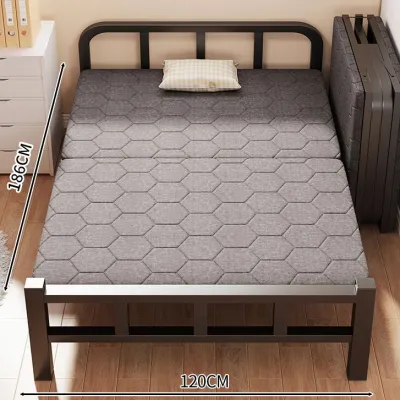
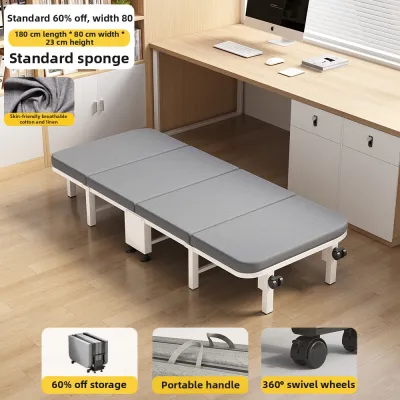

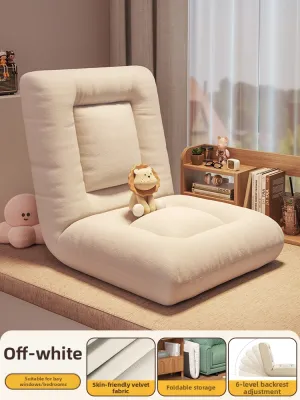
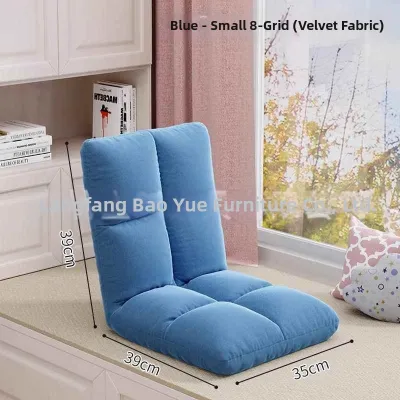
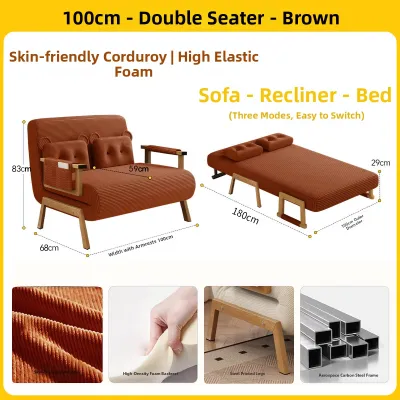
Prices are valid at publication and may change. Please refer to the product page for the latest price.
Pull-out mechanisms feature a hidden mattress frame housed entirely within the base of the sofa. To convert the unit, you typically remove the seat cushions and pull a handle or strap. This action rolls out a metal or wooden frame from the base, which then unfolds to support a separate mattress. Because the mattress is stored folded inside the frame, it remains completely hidden during the day, preserving the appearance and seating height of a standard single armchair.
Fold-out mechanisms operate by unfolding the actual seating cushions or a tri-fold frame outward and downward to form the bed. In basic foam models, the seat cushions are hinged and simply unfold directly onto the floor. In more robust mechanical versions, a metal or wooden frame folds out in sections, lowering the mattress onto low legs. This design is highly straightforward, often eliminating the complex mechanical linkages found in traditional pull-out beds, which can make the unit lighter and easier to maneuver.
Click-clack mechanisms are popular for modern, minimalist spaces due to their simplicity. This system operates on a heavy-duty hinge connecting the seat and the backrest. To convert the sofa into a bed, you lift the seat section upward until you hear an audible click, which releases the locking mechanism. You then lower the seat back down, and the backrest reclines flat (the “clack”) to align with the seat. This creates a continuous, flat sleeping surface without the need for a separate mattress.
Comparing Comfort and Sleep Quality
When evaluating a single sofa bed for daily use, sleep quality is paramount. The mechanism you choose directly dictates the type and thickness of the mattress you can use, as well as the underlying support structure.

Pull-out and fold-out mechanisms are designed to house a separate mattress. However, because this mattress must fold into two or three sections to fit inside the sofa frame, its thickness is structurally limited. Most pull-out mattresses range from 8 cm to 12 cm in thickness. To ensure daily comfort, you must check the manufacturer’s specifications for foam density; a high-density polyurethane foam or a pocket-spring mattress is essential to prevent you from feeling the support frame underneath.
The support structure itself plays a critical role in comfort. Pull-out frames typically utilize a system of wooden slats, a metal mesh deck, or elastic webbing. Wooden slats generally offer better contouring support and breathability, which is particularly important in warm, humid climates. Metal mesh can be highly durable but may sag over time if not constructed from high-tensile steel. In contrast, fold-out models that rest directly on the floor eliminate frame sagging entirely, though they lack the elevation and airflow of a raised bed.
Click-clack models present a different comfort profile. Because you sleep directly on the sofa cushions, there is no separate mattress. This means the sleeping surface is only as comfortable as the sofa’s upholstery and padding. While this eliminates the issue of a thin, folding mattress, it introduces other challenges. Click-clack beds often feature a prominent seam down the center where the seat and backrest meet, which can cause discomfort for side sleepers. To verify comfort, check the internal suspension specifications—look for pocket springs or high-resilience foam layers rather than simple block foam.
Evaluating Ease of Use and Daily Conversion
Converting your bed should not feel like a daily chore. The physical effort, operational steps, and spatial clearance required vary significantly across the three mechanisms.
Pull-out models require you to remove loose cushions, bend down, and lift a heavy metal frame upward and outward. If you have limited physical strength, this repetitive lifting can become tedious. You should check the weight of the moving parts and look for models equipped with spring-assisted mechanisms that reduce the lifting force required. Fold-out models are generally lighter, especially those that utilize high-density foam blocks that simply unfold onto the floor, though they still require you to bend down and manually extend the sections.
Click-clack models are the most physically forgiving, requiring a simple push-and-click motion that can often be performed with one hand. However, you must consider the clearance space required for operation. Pull-out and fold-out models extend far into the room, requiring a clear path of at least 180 cm to 200 cm from the back of the sofa. You must ensure that coffee tables, rugs, or other furniture can be easily moved to accommodate this daily extension.
Click-clack models extend horizontally rather than forward, but they require rear clearance. Because the backrest must fold backward, you must position the sofa several centimeters away from the wall, or choose a model with a forward-sliding hinge that automatically shifts the frame away from the wall during conversion. Always measure your available space to ensure you have the necessary clearance before purchasing.
Assessing Durability, Maintenance, and Space Efficiency
For a single sofa bed to survive daily use over several years, you must carefully inspect its structural integrity, maintenance requirements, and footprint constraints.
Pull-out mechanisms contain numerous moving joints, rivets, and springs. These metal-to-metal contact points are subject to friction and wear. When shopping, check that the hinges are made of heavy-gauge steel and that the folding action is smooth without grinding. Loose or poorly aligned tracks can warp over time, making the bed difficult to close and potentially damaging the internal frame. Fold-out models have fewer moving parts, making them inherently less prone to mechanical failure.
Maintenance and cleanliness are equally important, particularly in humid environments where dust and mold can accumulate. Pull-out and fold-out frames create internal cavities where dust can gather. Check how easy it is to vacuum beneath and inside the sofa frame when the bed is extended. For click-clack models, pay close attention to the fabric wear at the folding crease. The constant flexing of the upholstery fabric along the hinge line can lead to premature fraying. Look for durable, high-rub-count fabrics or removable covers that can be easily cleaned.
Space efficiency is not just about how much room the bed takes up when open, but also its footprint when closed. A single pull-out or fold-out sofa bed typically has a deeper profile (often 90 cm to 100 cm) to accommodate the folded mattress inside. Click-clack models tend to have a shallower depth when closed, making them highly efficient for narrow corridors or small study rooms. Always compare the closed dimensions against your available wall space, ensuring that the unit does not block doorways or built-in wardrobe doors.
Decision Framework: Matching the Mechanism to Your Daily Needs
To make the right choice, you must align the mechanism’s characteristics with your specific living conditions, physical capabilities, and comfort expectations. Use this conditional framework to guide your decision:
- Choose a pull-out mechanism if you prioritize a traditional sofa aesthetic and seating height during the day, prefer sleeping on a dedicated mattress that is kept clean and protected from daytime dust, and have ample front clearance to extend the frame fully.
- Choose a fold-out mechanism if you want a straightforward, low-maintenance design with fewer mechanical parts to break, prefer a firmer sleeping surface close to the floor, and need a lightweight unit that is easy to move during cleaning.
- Choose a click-clack mechanism if your floor space is highly restricted, you want a quick and effortless conversion process, and you do not mind sleeping on a firmer, jointed surface. This option is ideal for multi-functional home offices or narrow spare rooms.
Before finalizing your purchase, you must verify the delivery logistics and structural constraints of your home. In Singapore, tight apartment corridors, low-ceiling lifts, and narrow main doors can present significant obstacles. Measure the finished dimensions of the sofa bed when fully boxed, and compare them against your building’s lift door height and width, staircase clearance, and main entrance. A rigid click-clack or pull-out frame cannot be bent around tight corners, and failing to measure beforehand can result in costly delivery failures.
Additionally, check the weight capacity of the sofa bed. A daily-use single sofa bed should have a specified load capacity that comfortably accommodates your weight plus the dynamic forces of moving during sleep. Finally, if you plan to place a heavy metal-framed pull-out model on a raised timber platform or sensitive vinyl flooring, verify that the legs are equipped with protective, non-marking pads to prevent structural indentation or scratching over time.
Frequently Asked Questions (FAQ)
Can I replace the mattress in a click-clack single sofa bed?
Unlike pull-out or fold-out models, a click-clack single sofa bed does not have a separate, removable mattress. The seating and backrest cushions themselves serve as the sleeping surface, meaning they are permanently integrated into the frame and upholstery. Consequently, you cannot simply swap out the mattress if it sags or feels uncomfortable. If the padding wears down over time, your only options are to professionally reupholster the unit, add a separate mattress topper to improve comfort, or replace the entire sofa bed. Always check the manufacturer’s specifications regarding the density and type of foam used in the cushions before buying.
Do single sofa beds require assembly upon delivery?
Yes, most single sofa beds require some level of assembly upon delivery. While the complex mechanical frames of pull-out and click-clack models are usually pre-assembled at the factory, you will typically need to attach the legs, slide the armrests into place, or align the backrest onto its tracks. Before the delivery team arrives, verify whether assembly service is included in your purchase. If you are assembling the unit yourself, ensure you have a clear, flat workspace and review the manufacturer’s instructions carefully. Pay close attention to the alignment of the folding tracks and hinges, as improper assembly can cause uneven wear and premature mechanical failure.

Community discussion
Share your experience or ask a question. Comments are reviewed before publication.