
Finding the right multi-functional sofa for a compact living space requires balancing daytime comfort with nighttime utility. In modern apartments where space is at a premium, a sofa bed serves as a vital dual-purpose asset. However, choosing between a pull-out, fold-down, or modular mechanism is not about finding a universally superior design. Instead, it is about identifying which mechanical structure aligns with your physical space, daily physical capacity, and sleep expectations. Each design presents distinct trade-offs in terms of structural complexity, ease of deployment, and long-term support.
How Pull-Out, Fold-Down, and Modular Mechanisms Work
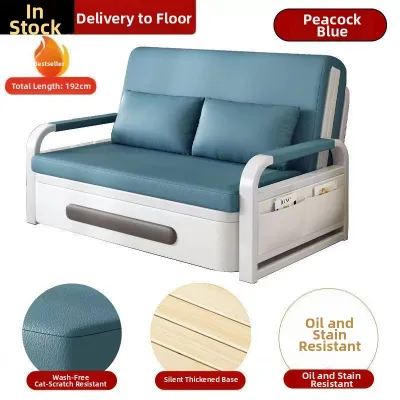
Pull-out mechanisms feature a hidden metal or wooden frame nested beneath the seat cushions. To deploy, you remove the loose seat cushions, grasp a handle or strap, and pull the frame outward and upward. The mechanism relies on a series of folding legs and springs that lock into place, revealing a dedicated mattress. This design separates the daytime seating surface from the nighttime sleeping surface, ensuring that you do not sleep directly on the cushions you sit on during the day.
Fold-down mechanisms, often referred to as click-clack or futon styles, utilize a hinged backrest that folds flat to align with the seat cushion. To operate, you typically pull the backrest forward until the internal hinge clicks, releasing the lock, and then lower it backward into a horizontal position. The daytime seating cushions double as the sleeping surface, making this a highly integrated, low-profile design with fewer moving parts than a pull-out frame.
Products mentioned in this guide
![[SG Seller] L Shape Sofa| High Quality | Bedroom | Compact | Living Room | Fabric Sofa Bed | High-End | Comfortable | 3 Seater | Durable | Designer |](https://img.lazcdn.com/g/p/d98bfe4619b209495308d40f5464cd62.jpg_400x400q80.jpg_.webp)
Prices are valid at publication and may change. Please refer to the product page for the latest price.
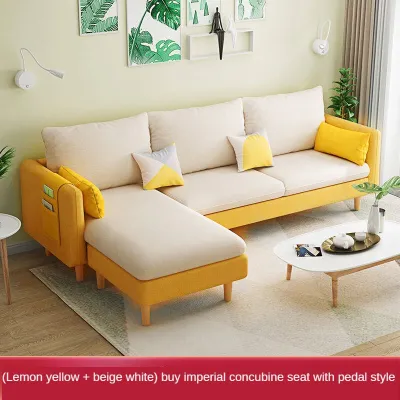
Modular mechanisms rely on independent, reconfigurable seating blocks rather than integrated mechanical hinges. To transform a modular sofa into a bed, you physically reposition individual components—such as an ottoman, a chaise lounge, or detachable corner blocks—and align them to form a continuous flat surface. These pieces are often held together by friction, weighted bases, or simple under-frame connectors, offering high layout flexibility without the risk of mechanical failure.
Assessing Sleep Quality and Mattress Support
Mattress thickness is a primary constraint for pull-out designs. Because the mattress must fold twice to fit inside the sofa frame, it is typically limited to a thickness of 5 to 12 centimeters. This thin profile means that high-density foam or pocket springs must work exceptionally hard to prevent you from feeling the metal support bars underneath. When evaluating these models, check the manufacturer’s specifications for mattress density and frame support systems, such as wooden slats or polypropylene decking, which offer better weight distribution than simple wire grids.

Fold-down models eliminate the thin mattress issue by utilizing the thick, high-density foam of the sofa cushions themselves. However, this design introduces a central seam where the backrest and seat meet. Over time, this seam can become a noticeable valley, potentially causing discomfort for side sleepers who require even hip and shoulder support. Additionally, because you sleep directly on the seating fabric, choosing breathable, wear-resistant upholstery is crucial to managing heat and humidity during warm nights.
Modular configurations offer a highly customizable sleeping surface, but they present the challenge of multiple seams and shifting blocks. If the individual modules are not securely locked together, they can drift apart during the night, creating uncomfortable gaps. To ensure adequate sleep quality, look for modular systems that include robust, heavy-duty alligator clips or interlocking brackets. Adding a thick mattress topper can also help bridge the seams and provide a more uniform sleeping surface for daily use.
Checking Durability and Mechanical Wear
Daily conversion subjects any sofa bed to significant mechanical stress. For pull-out models, the primary wear points are the metal rivets, folding joints, and sliding tracks. Over time, dust, pet hair, and debris can accumulate in the tracks, causing the mechanism to stick or misalign. Regularly inspecting these moving parts, tightening loose bolts, and keeping the tracks clear of obstructions are essential maintenance steps to prevent premature frame warping.
Fold-down mechanisms rely heavily on the internal click-clack hinges. If these hinges are forced beyond their designed angles or subjected to uneven weight distribution during conversion, they can jam or lose their locking capability. Once a hinge fails, the backrest may no longer stay upright, rendering the sofa unusable. When shopping, test the hinge action to ensure it operates smoothly without excessive resistance or grinding noises, which can indicate poor manufacturing tolerances.
Modular designs have the fewest moving parts, making them inherently durable from a mechanical standpoint. However, they are highly susceptible to fabric wear and cushion compression. Because the same cushions are used for both sitting and sleeping, the foam in high-use areas can compress unevenly over time. To extend the lifespan of a modular sofa bed, regularly rotate and flip the cushions if the design allows, and choose high-resilience polyurethane or latex foam cores that recover their shape quickly.
Managing Space Clearance and Daily Handling
Before purchasing any sofa bed, precise spatial planning is critical, especially in compact apartments where every centimeter counts. A pull-out sofa bed requires substantial clearance directly in front of the unit, often extending 200 to 240 centimeters from the back wall when fully deployed. You must ensure that coffee tables, sideboards, and other furniture can be easily moved to accommodate this footprint every night without blocking essential walkways or doorway access.
Fold-down models require a different spatial calculation. While they need less front clearance than pull-outs, many traditional click-clack designs require you to pull the entire sofa away from the wall before you can lower the backrest. If you plan to place the sofa against a wall, look specifically for “zero-wall” or “wall-hugger” mechanisms that slide forward on their base during conversion, eliminating the need to physically drag the heavy frame across your flooring daily.
The physical effort required for daily transformation is a key usability factor. Pull-out frames can be heavy, requiring significant lifting and bending, which may not be suitable for individuals with back sensitivity or limited physical strength. Fold-down models generally require less effort, relying on leverage and simple pushing motions. Modular units require lifting and sliding individual blocks; while each block is lighter than a full metal frame, the repetitive task of moving multiple pieces and securing connectors can become tedious as a daily routine.
Finally, consider the logistics of delivery and installation. Large, fully assembled pull-out sofas may not fit through narrow corridors, tight stairwells, or standard passenger lifts. Measure your doorways, lift entryways, and ceiling heights carefully before ordering. Modular designs offer a distinct advantage here, as they are delivered in separate, manageable boxes that easily navigate tight spaces and can be assembled directly in the target room.
Which Sofa Bed Mechanism Fits Your Daily Routine?
To make a confident decision, evaluate your daily routine against the specific strengths and limitations of each mechanism. If your primary goal is to replicate the feel of a traditional bed with a dedicated, seamless sleeping surface, and you have ample floor space to accommodate a full forward extension, a high-quality pull-out sofa bed is the most suitable choice. Ensure you select a model with a robust frame and a supportive mattress to handle the demands of nightly sleep.
If you are working with a highly constrained floor plan, prioritize mechanical simplicity, and prefer a quick, low-effort conversion process, a fold-down model is highly efficient. This option is ideal for study rooms, home offices, or living areas where the sofa bed is used primarily for seating and converted only at night. To mitigate the feel of the central seam, consider budgeting for a roll-away mattress topper that can be stored in a closet during the day.
If you value layout flexibility, frequently rearrange your living space, or need to navigate tight delivery access, a modular sofa bed offers the most adaptable solution. This design allows you to customize your seating configuration during the day and easily assemble a sleeping platform at night. It is particularly well-suited for dynamic households that require multi-functional furniture that can grow or change with their living arrangements.
Regardless of the mechanism you choose, always verify the manufacturer’s specified dimensions for both the folded and fully deployed states. Check the load capacity of the frame to ensure it can safely support the intended sleepers, and inspect the quality of the joints and upholstery before finalizing your purchase. Taking these practical steps ensures your multi-functional sofa bed remains a comfortable, reliable asset for years to come.
Frequently Asked Questions (FAQ)
Can I replace the mattress in a pull-out or fold-down sofa bed?
For pull-out sofa beds, replacing the mattress is possible, but you must strictly adhere to the manufacturer’s specified dimensions. The replacement mattress must match the exact length, width, and—most importantly—thickness of the original. If the replacement is even slightly too thick, the folding mechanism will not close properly, which can warp the metal frame or damage the upholstery. For fold-down models, the mattress is typically integrated directly into the sofa’s seat and back cushions, meaning it cannot be replaced independently; instead, you would need to replace the entire unit or use a mattress topper to adjust the comfort level.
Do modular sofa beds require reassembly for daily use?
Modular sofa beds do not require complex structural reassembly with tools for daily use, but they do require manual reconfiguration. Every night, you will need to physically move the individual modules into the bed layout and secure them using the built-in connectors or alignment brackets. While this process does not involve mechanical hinges, it does require physical effort to slide the heavy blocks and arrange the bedding. If you prefer a one-step conversion, a modular design may feel too labor-intensive for daily use compared to a quick fold-down mechanism.
Community discussion
Share your experience or ask a question. Comments are reviewed before publication.