
Selecting the right storage for a compact HDB bedroom requires balancing storage capacity with spatial harmony. A single door cabinet or wardrobe offers a flexible footprint that can fit into narrow alcoves, tight corners, or small gaps next to a bed without overwhelming the room. Because HDB floor plans—especially in newer Build-To-Order (BTO) flats—often feature tight layouts, maximizing every square centimeter is essential for maintaining a comfortable living environment.
Rather than relying on bulky, multi-door wardrobes that block natural light and restrict movement, a single door wardrobe serves as an adaptable, modular solution. This guide provides a comprehensive decision framework to help you evaluate your bedroom layout, understand standard furniture proportions, compare door mechanisms, and verify delivery logistics. By focusing on practical measurements and material checks, you can confidently select a wardrobe that fits your space and lifestyle.
Assessing Your Bedroom Space and Clearance Requirements
Before browsing online marketplaces or visiting furniture showrooms in Singapore, you must establish the precise physical boundaries of your bedroom. Start by measuring the available floor space where you intend to place the wardrobe. Use a steel measuring tape for accuracy, and measure the distance from the corner of the wall to the nearest obstruction, such as a window frame, door frame, or electrical outlet.
Products mentioned in this guide
![[ASTAR] DANNY SINGLE DOOR WARDROBE CABINET WALNUT WHITEWASH CHERRY 2TONE (NEW!)](https://img.lazcdn.com/g/p/4173215194984da203c5af2299f5e9b2.jpg_400x400q80.jpg_.webp)
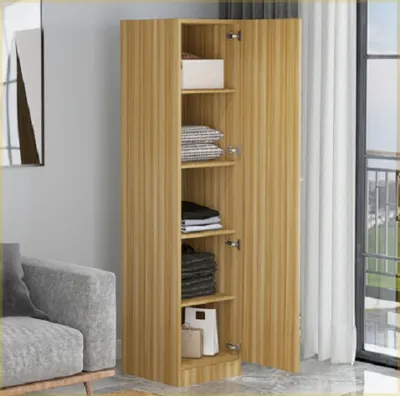
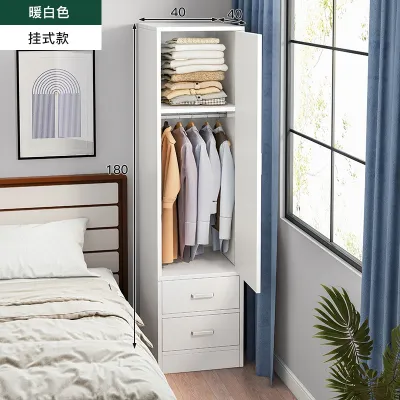
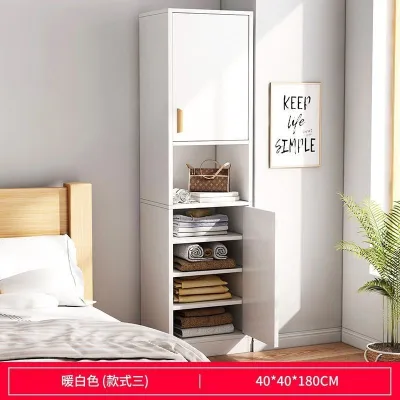
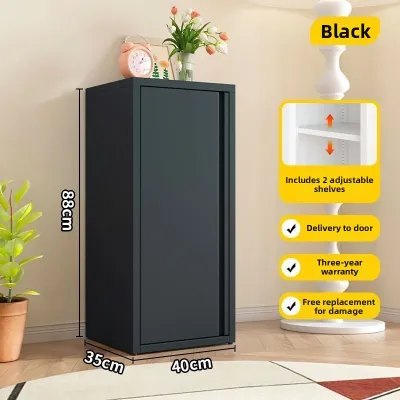
Prices are valid at publication and may change. Please refer to the product page for the latest price.
Ceiling height is equally critical, particularly in HDB flats where standard ceiling heights typically hover around 2.6 meters, though some top-floor units or older resale flats may vary. If you plan to purchase a tall single door cabinet, ensure there is at least a 5 to 10 cm gap between the top of the wardrobe and the ceiling to allow for assembly clearance, especially if the unit must be built flat on the floor and raised upright. Additionally, identify any overhead obstructions such as air-conditioner fan coil units, trunking, or ceiling fans that could interfere with the wardrobe’s placement or door operation.
Clearance is not just about where the wardrobe sits; it is also about how you move around it. To calculate the minimum clearance required for walking paths, ensure there is at least 60 cm of open space in front of the wardrobe when the door is fully closed. If you choose a hinged door, you must add the width of the door panel (typically 40 cm to 60 cm) to this clearance calculation to ensure you can stand comfortably in front of the unit while retrieving items.
Architectural details can easily disrupt your placement plans if overlooked. Skirting boards along the base of HDB walls will prevent a flat-backed wardrobe from sitting completely flush against the wall, leaving a small gap of 1 to 2 cm. Some modern wardrobes feature base cutouts to accommodate skirting boards, but if yours does not, you must factor this gap into your depth calculations. Furthermore, locate all power sockets and light switches; blocking access to these utilities is a common mistake that leads to daily inconvenience.
Understanding Standard Dimensions and Proportions
Single door wardrobes are highly valued for their narrow profiles, but their dimensions still vary significantly. Standard widths for single door units generally range from 40 cm to 60 cm. A 40 cm unit is highly compact and ideal for narrow alcoves, while a 60 cm unit offers a more generous hanging capacity. If you anticipate your storage needs growing over time, look for modular single door cabinets that can be paired side-by-side with identical units in the future, allowing you to expand your storage seamlessly as space permits.

When evaluating height, you must weigh the benefits of maximum storage against the visual impact on your room. Standard wardrobe heights usually range from 180 cm to 200 cm, leaving ample breathing room at the top. While ceiling-height options (230 cm to 240 cm) maximize vertical storage for seasonal items or extra bedding, they can make a small HDB bedroom feel smaller by blocking light and air circulation. If your room lacks natural light, a shorter wardrobe topped with decorative storage baskets may feel less imposing.
Depth is the most critical dimension for clothing storage. A standard wardrobe depth of 55 cm to 60 cm is required to hang adult-sized clothes sideways on a hanger without creasing the sleeves. If your bedroom layout only allows for a shallow cabinet of 40 cm to 45 cm, standard hanging rods will not fit. In such cases, look for units equipped with pull-out, front-facing hanging rails, which allow clothes to hang facing forward, or configure the interior entirely with shelves and drawers for folded clothing.
Choosing Door Mechanisms and Internal Layouts
The mechanism you choose for your wardrobe door directly impacts how much usable space remains in your bedroom. Hinged doors are the most common and reliable option, offering full access to the entire interior of the wardrobe at once. However, they require a clear swing radius in front of the cabinet. If your bed frame or study desk sits close to the wardrobe, a hinged door may strike the furniture, limiting your access and causing surface damage over time.
Sliding doors are highly efficient for tight spaces because they require zero clearance in front of the wardrobe to open. However, true single door sliding wardrobes are rare because a sliding door requires a second track or panel to slide behind. If you prefer a sliding mechanism in a compact footprint, you will typically find two-door units starting at a minimum width of 100 cm, or hybrid units that combine an open shelving section with a single sliding door panel that covers one half at a time.
Folding or bi-fold doors offer a practical middle ground for small rooms. They fold outward in a concertina fashion, requiring only half the clearance space of a standard hinged door while still providing excellent visibility of the wardrobe’s contents. The trade-off lies in maintenance; bi-fold door tracks require regular cleaning to prevent dust buildup from jamming the rollers, and the hardware can wear out faster than simple door hinges.
To make the most of a single door wardrobe’s limited interior, prioritize vertical organization. Look for units with adjustable shelving pegs, which allow you to customize the height of each compartment as your storage needs change. Dedicate the highest shelves to low-frequency items like travel bags or winter wear, and utilize the bottom section for pull-out drawers or wire baskets, which make it easier to access items stored at floor level without having to bend down and reach into dark corners.
Selecting Finishes to Reduce Visual Weight
In a small HDB bedroom, the visual weight of your furniture plays a significant role in how spacious the room feels. Large, dark, or heavily textured wooden wardrobes absorb light and can make a tight corner feel incredibly cramped. To counteract this, opt for light-colored laminates such as matte white, soft cream, light oak, or pale gray. These shades reflect both natural and artificial light, helping to brighten the room and create an illusion of openness.
Incorporating reflective or semi-transparent materials is another effective design strategy. A single door wardrobe featuring a mirrored front panel serves a dual purpose: it eliminates the need for a separate wall or floor mirror—saving valuable wall space—and visually doubles the depth of the room. Alternatively, frosted glass doors offer a sleek, contemporary aesthetic that breaks up the solid mass of the cabinet while keeping your clothing partially obscured from view to maintain a tidy appearance.
Because Singapore experiences high humidity year-round, material durability is a key consideration. Ensure that any engineered wood or medium-density fibreboard (MDF) wardrobe you select features high-quality edge banding, such as ABS (Acrylonitrile Butadiene Styrene) edging. This protective seal prevents moisture from penetrating the core material, which can cause swelling, warping, or laminate peeling. Check the manufacturer’s care instructions to ensure the surfaces can be easily wiped down with a damp cloth without degrading the finish.
Finally, pay close attention to the wardrobe’s hardware. In narrow walkways, protruding door handles can easily snag clothing, bags, or even cause minor bruises as you pass by. To prevent this, look for handle-less designs featuring push-to-open magnetic latches, or cabinets with integrated, recessed finger grips. These options keep the exterior profile of the wardrobe completely flat and streamlined, enhancing both safety and the minimalist aesthetic of your bedroom.
Final Pre-Purchase and Delivery Checklist
Before finalizing your purchase on any ecommerce platform or at a local furniture retailer, you must verify the logistics of delivery and installation. Many HDB flats have specific lift dimensions and tight corridor corners that can pose challenges for large furniture items. If you are purchasing a pre-assembled single door wardrobe, measure your front door frame, the HDB lift entrance, and the internal lift cabin height to ensure the unit can be transported safely to your floor without damage.
For flat-pack wardrobes that will be assembled inside your bedroom, confirm that you have sufficient floor space to lay the panels down during the assembly process. Additionally, check the weight of the packaged boxes; if you plan to assemble the unit yourself, ensure you have the necessary tools, such as a rubber mallet, a spirit level, and a screwdriver. If assembly services are offered by the retailer, verify whether these services are included in the purchase price or require an additional fee.
Safety must be a priority when installing tall, narrow furniture. Because single door wardrobes have a narrow base and a high center of gravity, they are susceptible to tipping over if they are overloaded or if heavy items are placed on the upper shelves. This risk increases significantly on carpeted floors or uneven tiles. Always check if the wardrobe comes with wall-anchoring brackets, and ensure you secure the unit to your HDB wall using appropriate wall plugs designed for concrete or drywall.
Lastly, review the financial and post-purchase terms of your transaction. Confirm the total cost in S$, ensuring that delivery fees, assembly charges, and any applicable taxes are clearly itemized before checkout. Review the manufacturer’s warranty terms, paying specific attention to coverage for moving parts like door hinges, drawer runners, and sliding tracks. A robust return policy is also essential in case the product arrives with manufacturing defects or does not match the specified dimensions.
Frequently Asked Questions (FAQ)
Fitting a Wardrobe Between a Bed and a Study Desk
To fit a single door wardrobe into a tight gap between a bed and a study desk, you must measure the exact width of the opening at three different points: near the floor, in the middle, and near the top. Walls are rarely perfectly straight, and a variance of just a few millimeters can prevent a tight-fitting wardrobe from sliding into place. Ensure you select a wardrobe width that leaves at least a 1 to 2 cm buffer on either side of the unit.
If the gap is extremely tight, a standard hinged door may not have room to swing open without hitting the bed frame or the desk chair. In this scenario, consider choosing a wardrobe with an open-front design (no door) or one that uses a fabric curtain instead of a solid door panel. This allows you to access your clothing easily without requiring any front clearance space, keeping your walkway completely unobstructed.
Anchoring Tall Wardrobes to HDB Walls
Anchoring is highly recommended for any single door wardrobe that stands taller than 120 cm, especially if the depth is less than 50 cm. The narrow footprint of these units makes them inherently less stable than wider wardrobes. When drawers are pulled out or heavy coats are hung near the front, the center of gravity shifts forward, creating a serious tipping hazard that can cause injury or damage to your flooring.
When anchoring a wardrobe to an HDB wall, you must use a wall detector tool to locate any concealed electrical conduits, water pipes, or structural metal beams before drilling. Standard HDB internal walls are typically made of concrete or lightweight concrete blocks, which require a hammer drill and high-quality masonry wall plugs (such as nylon plugs) to ensure a secure, permanent hold. Avoid drilling directly into structural columns or beams, as this may violate building regulations.

Community discussion
Share your experience or ask a question. Comments are reviewed before publication.