
When setting up a home office in Singapore, choosing between a mid-range option like a SIHOO ergonomic chair and premium or hybrid competitors requires balancing budget against specific physical needs. While premium brands often offer advanced materials and extensive warranties, and gaming-hybrid brands focus on deep recline and aesthetics, mid-range ergonomic chairs aim to provide essential adjustability at a more accessible price point. Because specific models, prices, and stock availability fluctuate, this guide focuses on the stable criteria you need to evaluate—such as adjustment mechanisms, material durability, and warranty scopes—to determine which brand category delivers the best value for your daily workflow.
Identifying Your Core Ergonomic Requirements
To find the right seating solution, you must first define the specific physical and usage parameters that dictate which chair features are non-negotiable for your home office. Sitting for two hours a day demands far less from a chair than sitting for eight to ten hours of intensive typing. If your daily routine involves continuous desk work, you will require highly adjustable armrests that support your forearms at a neutral angle. Conversely, if your day is punctuated by frequent video calls or reading sessions, a chair with a smooth recline and a reliable tilt-lock mechanism becomes a higher priority.
Physical dimensions are equally critical. Every chair has specific height and weight limits determined by its structural design and gas lift class. If you fall outside the average height range, you must verify that the seat height can adjust low enough for your feet to rest flat on the floor, or high enough to keep your hips slightly above your knees. Seat depth is another often-overlooked factor; a seat pan that is too deep will press against the back of your knees, restricting circulation, while a seat pan that is too shallow will fail to support your thighs adequately.
Products mentioned in this guide
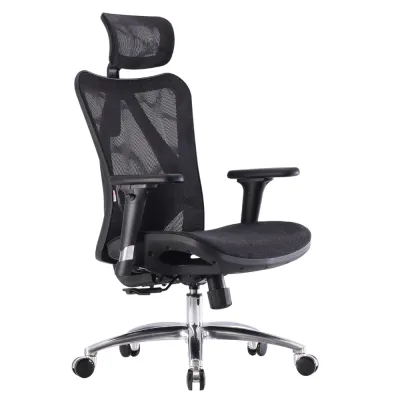
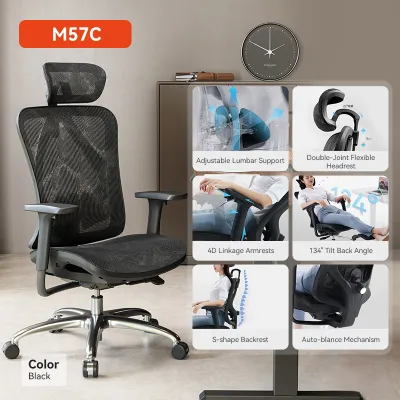
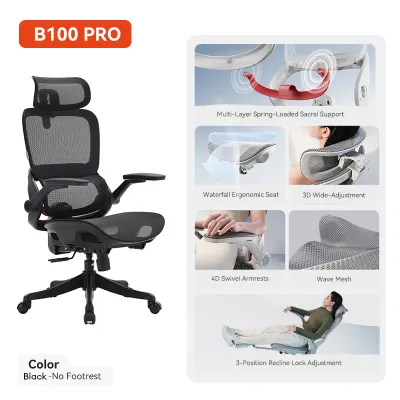
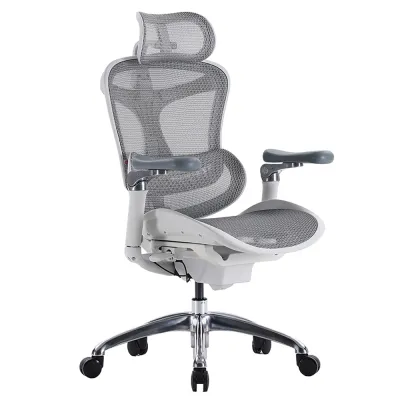
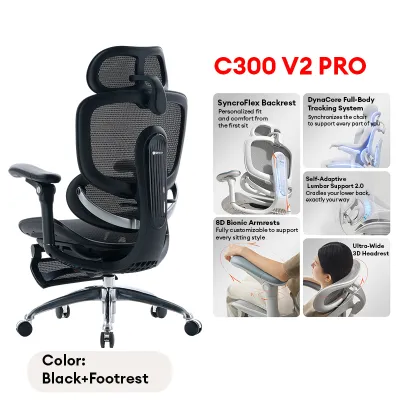
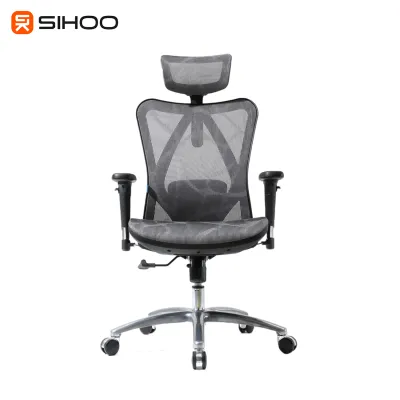
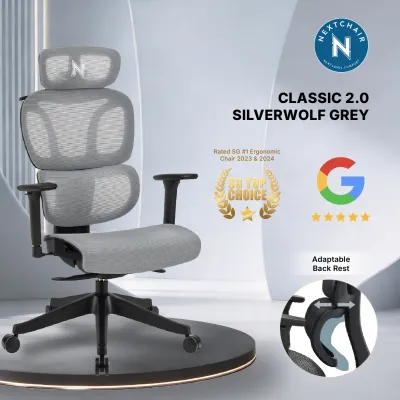
Prices are valid at publication and may change. Please refer to the product page for the latest price.
Finally, consider the spatial constraints of your Singapore home office. Standard HDB study rooms or condominium workspaces often require compact furniture footprints. You must measure the clearance between your desk’s underside and the floor to ensure the chair’s armrests can slide underneath when not in use. Additionally, the type of flooring in your home—whether hard vinyl, parquet, or low-pile carpet—will dictate the type of casters you need to prevent surface scratches and ensure smooth mobility.
Comparing Adjustability and Support Mechanisms
When comparing SIHOO chairs to premium ergonomic brands or hybrid gaming chairs, the sophistication of the adjustment mechanisms is the primary differentiator. Lumbar support is the foundation of any ergonomic chair, but how it is implemented varies widely. Basic chairs often feature a fixed lumbar pad that cannot be adjusted, which rarely aligns perfectly with every user’s spine. Mid-range options, including many SIHOO models, typically offer manually adjustable lumbar sliders that allow you to change the height and depth of the support. Premium brands often utilize dynamic, auto-adjusting lumbar systems that automatically adapt to your posture as you shift in your seat, providing continuous support without manual intervention.

Armrest adjustability is another area where brands diverge. Armrests are categorized by their degrees of freedom: 2D armrests adjust for height and angle; 3D armrests add depth adjustment (forward and backward); and 4D armrests include width adjustment (left and right). If you spend long hours typing, 3D or 4D armrests are highly beneficial because they allow you to position the pads close to your body, preventing shoulder strain. While mid-range brands frequently offer 3D or 4D armrests on their upper-tier models, the physical locking mechanisms on premium chairs tend to feel more secure, with less play or wobble in the joints.
The recline and tilt mechanism determines how the chair moves with your body. Basic office chairs use a simple tilt lock, where the entire chair tilts backward as a single unit, which can lift your feet off the floor and strain your thighs. Mid-range and premium ergonomic chairs generally employ a synchro-tilt mechanism. This system allows the backrest to recline at a faster rate than the seat pan (typically a 2:1 ratio), keeping your feet flat on the floor and maintaining proper spinal alignment. When evaluating different brands, check whether the chair offers adjustable tilt tension, which lets you customize the resistance of the recline based on your body weight.
Evaluating Material Durability and Comfort
The materials used in a chair’s construction directly impact both its immediate comfort and its long-term durability. Mesh is a highly popular choice for home offices in Singapore due to the warm, humid climate. A full-mesh chair allows maximum airflow, keeping you cool throughout the day. However, not all mesh is created equal. Premium brands use proprietary elastomeric mesh that retains its tension for a decade or more without sagging. Mid-range brands often use polyester-based mesh, which is highly breathable but may soften or sag over several years of heavy use. If you prefer a plush feel, a high-density molded foam seat cushion is an excellent alternative, provided it is paired with a breathable fabric cover. Avoid cheap, low-density cut foam, which tends to flatten permanently within a few months.
The structural frame and base materials also warrant close inspection. Most entry-level and mid-range chairs utilize a heavy-duty nylon or plastic base. While modern nylon bases are highly durable and perfectly adequate for standard weight capacities, they lack the premium aesthetic and absolute rigidity of reinforced aluminum alloy bases. Aluminum bases are typically found on high-end ergonomic models and premium gaming chairs, offering superior stability and a higher weight tolerance.
Safety is a non-negotiable factor when evaluating chair components. The gas lift cylinder, which controls the chair’s height, is the most critical safety component. You should always verify that the chair uses a Class 3 or Class 4 gas lift certified by recognized international testing bodies, such as TÜV or SGS, and meets BIFMA standards. These certifications ensure the cylinder has undergone rigorous pressure and durability testing, minimizing the risk of failure.
Reviewing Warranty Terms and Local Support
A chair is a long-term investment, making the warranty and local support structure a crucial part of the purchasing decision. Premium ergonomic brands are famous for offering extensive warranties, often spanning 10 to 12 years, which cover almost every component of the chair, including the mesh and moving parts. In contrast, mid-range brands like SIHOO typically offer shorter warranty periods, usually ranging from 1 to 3 years. It is vital to read the fine print of these warranties; some manufacturers offer a “limited” warranty that covers the steel frame for several years but limits coverage on the gas lift, armrests, and mesh to just 12 months.
Assembly is another practical consideration. Premium chairs often arrive fully assembled in a massive box, allowing you to use them immediately without any tool-wrangling. Mid-range chairs are almost exclusively shipped as flat-packs to save on shipping costs. This means you will need to spend 30 to 60 minutes assembling the chair yourself using the provided hex keys and screws. While most manufacturers provide clear video guides, you should assess whether you have the time and physical ability to handle the assembly, or if you need to pay an additional fee for local assembly services.
Finally, consider the local purchasing channels and customer service availability in Singapore. Buying from an official local distributor or a reputable store on an ecommerce platform ensures that you have a clear point of contact if a part arrives damaged or fails during the warranty period. Check the seller’s return policy and look for reviews regarding their responsiveness to spare part requests, as sourcing a replacement gas lift or caster on your own can be challenging.
Decision Framework: Matching Brands to Your Budget and Needs
To make the final decision, you must align your budget, ergonomic priorities, and daily usage habits with the strengths of each brand category.
Mid-range ergonomic brands, such as SIHOO, are highly suitable if you are working with a budget of approximately S$150 to S$400. These chairs provide the essential adjustable features—such as adjustable lumbar support, 3D armrests, and synchro-tilt—that are necessary to maintain a healthy posture during a standard workday. They are ideal for students, remote workers with moderate daily sitting times, or anyone who wants a significant ergonomic upgrade from a basic dining chair without spending a fortune. The trade-off is that you must be comfortable with manual assembly and a shorter warranty period.
Premium ergonomic brands are the correct choice if you view your office chair as a critical tool for your professional health and are willing to invest S$1,000 or more. These brands excel in material science, offering proprietary mesh that never sags, highly sophisticated dynamic support mechanisms, and flawless build quality. Backed by decade-long warranties, these chairs are designed for full-time, heavy-duty use where long-term durability and absolute comfort are paramount.
Gaming or hybrid brands occupy a unique niche, often priced between S$400 and S$800. You should choose these brands if you prioritize a striking aesthetic, a deep recline angle for relaxation or console gaming, and thick, couch-like foam cushioning. While many modern gaming chairs have incorporated improved lumbar support systems, they generally offer less active postural correction than dedicated ergonomic chairs and can run warm if they use synthetic leather in a non-air-conditioned Singapore room.
Frequently Asked Questions (FAQ)
How do I determine if a mid-range ergonomic chair supports full-time work?
To verify if a mid-range chair can handle eight or more hours of daily use, start by checking the manufacturer’s specified weight capacity and ensuring it offers at least a Class 3 or Class 4 gas lift. Next, look closely at the seat construction; if it uses foam, ensure it is high-density molded foam rather than low-density cut foam, which degrades quickly. Finally, review the warranty terms specifically for the moving parts and the mesh, as a longer warranty on these components indicates the manufacturer’s confidence in the chair’s daily durability.
What should I check if my new office chair causes lower back discomfort?
If you experience discomfort after switching to a new chair, first check your seat depth adjustment; there should be a gap of about two to three fingers between the edge of the seat and the back of your knees to ensure proper circulation. Next, adjust the height of the lumbar support so it sits directly in the curve of your lower spine, rather than pressing against your mid-back or pelvis. Finally, ensure your seat height is adjusted so your feet rest completely flat on the floor with your knees bent at a 90-degree angle, which relieves pressure on your lower back.

Community discussion
Share your experience or ask a question. Comments are reviewed before publication.