
Evaluating how the Sihoo Doro C300 compares to other ergonomic chairs for your home office requires looking beyond marketing buzzwords and focusing on how its physical dimensions, adjustment ranges, and material choices align with your body shape and daily work habits. In the mid-range ergonomic chair market, this model stands out for its dynamic lumbar support and flexible armrests, but its suitability depends entirely on whether these features match your height, weight, and desk configuration. Rather than offering a universal solution, comparing this chair to alternatives involves verifying specific mechanical limits, testing the responsiveness of its mesh, and measuring your workspace to ensure a proper physical fit.
For home office workers in Singapore, where study rooms are often compact and the tropical climate demands excellent ventilation, choosing a chair is a highly practical decision. A chair that works well for a taller individual in an air-conditioned office might cause discomfort for a shorter user working in a naturally ventilated home environment. Therefore, understanding how to measure, test, and compare the key features of the Sihoo Doro C300 against competing models is the most reliable way to secure long-term comfort and avoid costly return shipping fees or assembly headaches.
Core Ergonomic Features to Verify on the Sihoo Doro C300
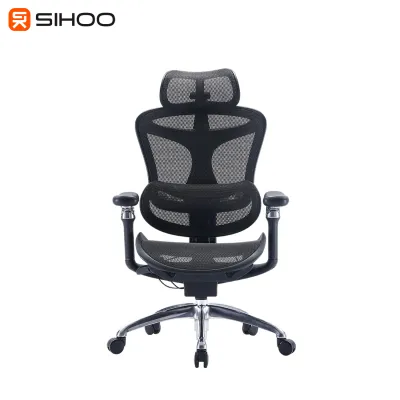
To determine if the Sihoo Doro C300 is the right fit for your body, you must systematically evaluate its primary ergonomic contact points. The most prominent feature of this model is its dynamic lumbar support system, which is designed to automatically adjust to your movements as you shift in the chair. When testing this mechanism, pay close attention to where the support presses against your lower back; it should cradle the natural inward curve of your lumbar spine without forcing your pelvis forward or creating pressure points. Because dynamic systems rely on your body weight and movement to self-adjust, you should verify whether the tension feels supportive or overly aggressive during extended sitting sessions.
Products mentioned in this guide
![[Pre-Order] SIHOO Doro C300 V1 Ergonomic Office Chair Mesh Chair Auto Weight Adaptive Recline 6D Armrests Home Office](https://img.lazcdn.com/g/p/aa787ce55358bbaf38e36f7fde84a25d.jpg_400x400q80.jpg_.webp)
Prices are valid at publication and may change. Please refer to the product page for the latest price.
Armrest adjustability is another critical dimension that directly impacts shoulder and neck strain. The Sihoo Doro C300 features multi-directional armrests that allow you to adjust their height, depth, and angle. To verify if these armrests suit your setup, sit with your shoulders relaxed and your elbows bent at a 90-degree angle; the armrests should support your forearms without forcing your shoulders upward. Additionally, check if the armrests can be lowered sufficiently to slide underneath your home office desk when the chair is not in use, which is essential for saving space in smaller rooms.
The recline tension and locking mechanisms dictate how smoothly you can transition between active typing and relaxed reading postures. When evaluating this feature, test the resistance of the backrest as you lean back; it should feel controlled and supportive, rather than giving way too quickly or requiring excessive effort to push. Verify the number of locking positions available on the chair’s tilt mechanism, as some users prefer a free-floating recline with adjustable tension, while others require solid, locked angles for specific tasks.
Finally, seat depth adjustment is a vital but often overlooked feature that determines how well your thighs are supported. A properly adjusted seat should allow you to sit fully back against the lumbar support while leaving a gap of about two to three fingers between the front edge of the seat cushion and the back of your knees. If the seat is too deep, it can cut off circulation behind your knees; if it is too shallow, it will not distribute your body weight evenly across your thighs. Check the product specifications to confirm whether the seat pan can slide forward and backward to accommodate your leg length.
Key Comparison Dimensions for Home Office Chairs
When comparing the Sihoo Doro C300 to other ergonomic chairs in its class, you must look at the underlying materials and construction methods rather than relying solely on visual appeal. Material breathability is a primary consideration, especially in warm and humid climates. Full-mesh chairs, like the Doro C300, offer excellent airflow that helps dissipate body heat, making them highly suitable for non-air-conditioned spaces. However, you should compare the feel of a mesh seat against a traditional high-density foam cushion; while mesh distributes pressure evenly, some users find that foam cushions provide a softer, more substantial feel for long-hour sitting.

Build quality indicators are essential for predicting the lifespan of your investment. Examine the base of the chair, which is typically constructed from either reinforced nylon or cast aluminum. While both materials can be durable, aluminum bases generally offer higher structural rigidity and a more premium weight, whereas nylon bases are lighter and more flexible. Additionally, inspect the caster wheels; hard nylon casters are standard for carpeted floors, but soft polyurethane (PU) casters are highly recommended for protecting delicate hardwood or vinyl flooring from scratches.
The adjustability range of a chair is far more important than the sheer number of adjustable parts. A chair might boast “10-way adjustability,” but if the actual travel distance of the seat height or armrests is narrow, it may still fail to accommodate very tall or very short users. When comparing models, look for the minimum and maximum dimensions of each adjustable component to ensure they overlap with your personal physical measurements.
Lastly, carefully review the manufacturer’s warranty and customer support policies. Ergonomic chairs contain several moving parts, including gas lifts, tilt mechanisms, and tension springs, which are subject to wear and tear over time. A robust warranty should cover these mechanical components as well as the mesh or fabric upholstery against premature sagging. Verify the process for claiming replacement parts and whether you will be expected to perform the repairs yourself or if professional servicing is available in your region.
Sihoo Doro C300 vs. Market Alternatives: Specification Matrix
To help you narrow down your choices, it is helpful to compare the physical limits of the Sihoo Doro C300 against typical industry standards for mid-range ergonomic chairs. Because specifications can vary based on regional distribution, manufacturing updates, and specific product batches, you should always verify these details against the official product label or user manual before finalizing your purchase.
| Feature | Sihoo Doro C300 (Verify on Label) | Typical Competitor (Verify on Label) | Verification Notes |
|---|---|---|---|
| Maximum Weight Capacity | Check manufacturer specification sheet | Typically ranges from 100 kg to 150 kg | Ensure the certified limit accommodates your weight with a safety margin. |
| Seat Height Range | Check product manual for exact dimensions | Typically ranges from 42 cm to 52 cm | Measure from your floor to the back of your knee to find your ideal height. |
| Maximum Recline Angle | Check product manual for exact degrees | Typically ranges from 110 to 135 degrees | Verify if the recline angle supports your preferred relaxation posture. |
| Armrest Adjustability | Multi-directional (Height, Angle, Depth) | Varies (Fixed, 2D, 3D, or 4D adjustability) | Check if the armrests can align perfectly with your desk height. |
When analyzing these specifications, remember that extreme measurements require careful verification. For instance, if you are on the taller side, a higher maximum seat height is crucial to prevent your knees from bending at an acute angle, which can place unnecessary stress on your joints. Conversely, shorter users must ensure the minimum seat height allows their feet to rest flat on the floor to maintain proper spinal alignment. Heavier users should pay close attention to the certified weight capacity and the structural material of the base to ensure long-term stability and safety.
Space, Assembly, and Daily Maintenance
Integrating a new ergonomic chair into your home office requires careful spatial planning. Before ordering, measure the footprint of your workspace, taking into account the diameter of the chair’s five-star base and the clearance needed when the chair is fully reclined. In compact Singapore apartments, ensuring the chair can glide smoothly without striking nearby wardrobes, walls, or desk legs is essential for maintaining a functional and clutter-free environment. Additionally, verify that the packaged box can fit through your doorways and lift access if you live in a high-rise building.
Assembly is another practical aspect to consider. Most ergonomic chairs, including the Sihoo Doro C300, are shipped flat-packed and require self-assembly. While manufacturers typically provide the necessary hex keys and basic instructions, you should review the assembly steps beforehand. Pay close attention to the torque specifications for the main structural bolts, particularly those securing the seat mechanism to the gas lift and the backrest to the seat pan. Over-tightening can strip the threads, while under-tightening can lead to structural instability, wobbling, and squeaking over time.
Routine maintenance is key to preserving the comfort and safety of your chair. Mesh fabrics are prone to collecting dust, lint, and skin flakes within the weave. To clean them safely, vacuum the mesh regularly using a soft brush attachment, and wipe down the plastic frame with a damp microfiber cloth. Avoid using harsh chemical solvents or abrasive scrubbers, which can degrade the synthetic fibers of the mesh or scratch the frame. Periodically inspect the caster wheels to remove hair and debris that can clog the bearings, and check the structural bolts every few months, tightening them gently if any play or wobble develops.
Decision Framework: Is the Sihoo Doro C300 Right for You?
To make a confident decision, you can use a structured framework based on your specific physical needs, workspace constraints, and personal preferences.
Choose the Sihoo Doro C300 if:
- You prefer a dynamic, self-adjusting lumbar support system that moves with you rather than a static, manually adjusted support.
- You require highly adjustable, multi-directional armrests to match a specific desk height or keyboard tray setup.
- The verified seat height and depth ranges of this model align precisely with your lower body measurements.
- You live in a warm climate and prioritize a full-mesh design to maximize airflow and cooling.
Choose a competing alternative if:
- You prefer the plush, cushioned feel of a high-density foam seat over the firm, suspended tension of a mesh seat.
- You require a highly specific, manual lumbar adjustment system where you can lock the depth and height of the support independently.
- Your body weight or height falls outside the recommended ranges specified on the Sihoo Doro C300 product label, requiring a heavy-duty or extra-tall model.
- You prefer a minimalist aesthetic with fewer visible mechanical parts and a more traditional office chair silhouette.
Verify first if:
- You have pre-existing back, neck, or joint conditions. In such cases, it is strongly recommended to consult a healthcare professional or physical therapist before selecting any ergonomic chair, as certain dynamic support systems may not suit your specific therapeutic needs.
Neither may fit if:
- Your home office desk has a fixed height that is either too low or too high to allow for proper ergonomic alignment with standard chair heights. In this scenario, you may need to invest in an adjustable-height desk, a keyboard tray, or a dedicated footrest to achieve a healthy posture, regardless of which chair you choose.
Frequently Asked Questions (FAQ)
Does the Sihoo Doro C300 require a headrest for proper ergonomic support?
A headrest is not strictly necessary for maintaining an upright, active typing posture, as your neck should naturally support your head when your spine is properly aligned. However, if you frequently recline to read, watch videos, or take breaks, a headrest can provide valuable support to reduce neck fatigue. When adjusting the headrest on the Sihoo Doro C300, ensure it cradles the natural curve of your neck rather than pushing your head forward, which can strain your upper back and shoulders.
How do I clean the mesh material without damaging it?
To clean the mesh material safely, start by vacuuming the seat and backrest with a soft brush attachment to remove loose dust and debris. For light stains or spills, dampen a clean microfiber cloth with water and a mild, pH-neutral soap, then gently blot the affected area without rubbing aggressively. Always check the manufacturer’s care label or instruction manual before applying any liquid cleaning agents, and allow the mesh to air dry completely in a well-ventilated indoor space away from direct sunlight before using the chair again.
Can I use the Sihoo Doro C300 on hard floors without a mat?
Whether you can use the chair directly on hard floors depends on the material of the casters installed on your specific unit. Standard hard nylon casters can scratch or wear down delicate flooring surfaces like hardwood, laminate, or vinyl over time. If your chair is equipped with hard casters, using a protective floor mat or swapping them for soft polyurethane (PU) casters is highly recommended to safeguard your floors and ensure smooth, quiet movement.

Community discussion
Share your experience or ask a question. Comments are reviewed before publication.