
Choosing between a Sihoo chair and other ergonomic brands for your Singapore home office depends on matching specific adjustability features and build materials to your daily usage hours and body metrics, rather than relying on a single universal winner. In a typical Singapore apartment, where space is often at a premium and the tropical climate demands excellent ventilation, selecting the right seating requires a careful look at physical dimensions, material breathability, and mechanical adjustability. By evaluating how different brands handle these factors, you can find a chair that supports your posture without cluttering your workspace.
Before comparing brands, you must identify your primary usage patterns. A chair intended for casual, two-hour evening sessions does not require the same heavy-duty specifications as one built for ten-hour workdays. For extended use, look for models that offer dynamic support, which adapts to your micro-movements throughout the day. Understanding your daily sitting duration helps establish baseline expectations for cushion density, mesh tension retention, and mechanical durability.
Spatial constraints are equally critical in Singapore’s residential layouts. Many home offices are integrated into bedrooms or living room corners, where floor space is limited. You must measure the available footprint to ensure the chair’s base can rotate freely without striking walls or nearby furniture. Additionally, check the doorway and lift clearance of your building to ensure the delivery box or fully assembled chair can easily pass through during installation.
Products mentioned in this guide
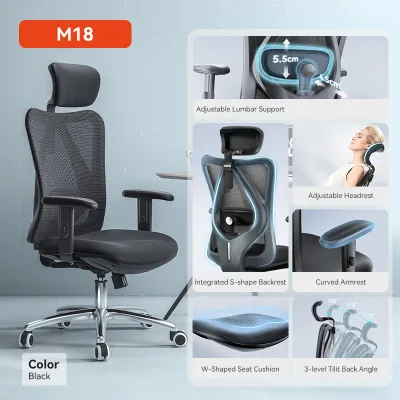
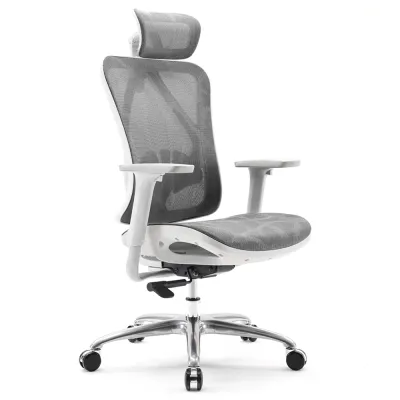
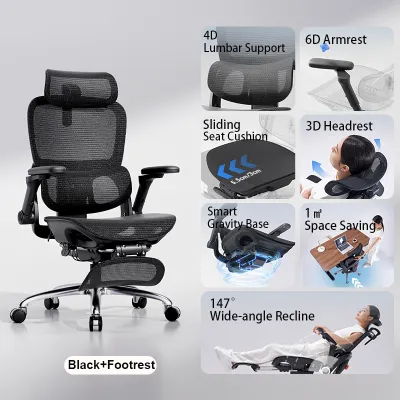
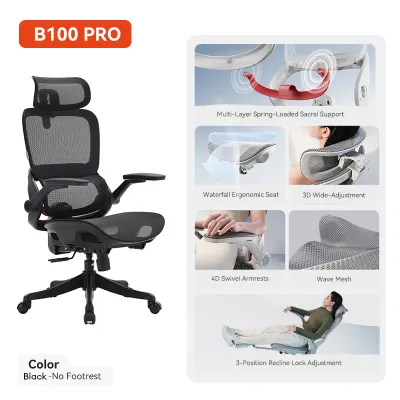
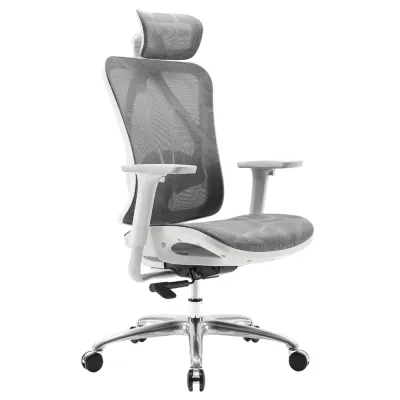
Prices are valid at publication and may change. Please refer to the product page for the latest price.
Desk height clearance is another vital dimension. Standard desks in Singapore typically stand around 73 to 75 centimeters high, but custom built-in study tables can vary. You need to verify that the chair’s armrests can lower sufficiently to slide under your desk when not in use. This simple check prevents the chair from protruding into walkways, keeping your home office tidy and functional.
Key Comparison Dimensions for Ergonomic Chairs
Transitioning from a basic task chair to an active ergonomic chair represents a shift from passive sitting to active support. A standard office chair simply provides a flat surface to sit on, often forcing your spine into an unnatural curve. In contrast, an ergonomic chair is designed to align with the natural S-curve of your spine, distributing your body weight evenly and reducing pressure points on your hips, thighs, and lower back.
However, specifications listed on a website do not always translate to real-world comfort. Paper specifications must be verified against physical adjustability ranges and official user manuals. Different brands define terms like “lumbar support” or “tension control” in various ways, making it essential to look past marketing jargon and focus on actual mechanical measurements, adjustment increments, and material certifications.
Adjustability and Lumbar Support Mechanisms
The lumbar support mechanism is the foundation of any ergonomic chair. When comparing Sihoo to other brands, examine whether the lumbar support is fixed, manually adjustable, or dynamic. Fixed support assumes a one-size-fits-all spinal curve, which rarely suits everyone. Height-adjustable lumbar support allows you to position the cushion directly in the lumbar lordosis of your lower back. Dynamic lumbar support automatically adjusts its depth and angle as you lean back or sit upright. To compare these effectively, check the manufacturer’s specifications for the vertical and horizontal travel distance of the lumbar support piece.
Many Sihoo chairs feature a distinct split-back design, where the lumbar support is housed in a separate lower panel that flexes independently from the upper backrest. This design aims to provide continuous lower-back contact even when you shift positions. When comparing this to single-piece backrests found on other brands, consider whether you prefer a targeted, pronounced lumbar push or a more uniform, integrated support across your entire back.
Armrest adjustability is another key factor that directly impacts shoulder and neck strain. Look for armrests categorized as 2D, 3D, or 4D. Basic 2D armrests adjust for height and depth, while 3D versions add angle rotation, and 4D models include width adjustment. Your forearm should rest comfortably on the pad at a 90-degree angle to your keyboard without forcing your shoulders to shrug. Compare these adjustment ranges against your own forearm length and shoulder width to ensure a proper fit.
Seat depth adjustment, often called a seat slider, is crucial for supporting your thighs without restricting blood circulation. When sitting fully back against the backrest, there should be a gap of about two to three fingers between the front edge of the seat cushion and the back of your knees. If the seat is too deep, it will press against your calves and force you to slouch forward. If it is too shallow, your thighs will lack adequate support. Check the product manual to see if the chair offers a seat slider and verify its total adjustment range in centimeters.
Finally, evaluate the recline tension control and tilt lock positions. A high-quality ergonomic chair allows you to adjust the resistance of the backrest when reclining, matching your body weight. It should also offer multiple tilt lock positions, allowing you to secure the backrest at specific angles for focused typing, reading, or resting. Review the manufacturer’s documentation to confirm how many lock positions are available and whether the tension knob is easily accessible from a seated position.
Material, Breathability, and Build Quality
In Singapore’s warm and humid climate, the choice of seating material significantly affects your daily comfort. Mesh seating surfaces offer excellent breathability, allowing air to circulate freely and keeping you cool during long working hours without air conditioning. However, not all mesh is created equal. High-tension woven mesh retains its shape over years of use, whereas lower-quality mesh can sag, leading to uneven weight distribution. Foam cushions, on the other hand, provide a plush feel but can trap heat. If you prefer foam, look for high-density molded foam, which offers better durability and support than standard cut foam.
The structural integrity of the chair’s base and frame determines its long-term stability. Check the product label or manual to identify the base material, which is typically nylon, steel, or cast aluminum. Aluminum bases generally offer the highest durability and load capacity, while reinforced nylon bases provide a lighter, more cost-effective alternative. Additionally, verify the type of casters included. Hard nylon casters are suitable for carpeted floors, but soft polyurethane (PU) coated casters are necessary to prevent scratching on parquet, vinyl, or laminate flooring common in Singapore homes.
Another critical safety and durability component to verify is the gas lift cylinder, which controls the chair’s height adjustment. Look for chairs equipped with a Class 3 or Class 4 gas lift, as these classifications indicate that the cylinder has been certified to withstand high pressure and heavy daily usage. The cylinder’s wall thickness and internal seals are more robust in Class 4 models, offering smoother height adjustments and a lower risk of gradual sinking over time.
To ensure safety and longevity, always check the manufacturer’s stated maximum weight capacity and recommended daily usage hours. A chair rated for eight or more hours of daily use is built with more robust components than one rated for light, occasional use. These ratings are often backed by industry certifications, such as BIFMA or TUV, which indicate that the chair has undergone rigorous testing for stability, backrest strength, and caster durability.
Evaluating Sihoo Against Market Alternatives
Sihoo has established a strong presence in the Singapore market, primarily positioned as a feature-rich option in the budget-to-mid-range segment. When evaluating a Sihoo model, you will find that they often include advanced adjustability features—such as multi-dimensional armrests, adjustable lumbar support, and footrests—at a highly competitive price point. However, it is essential to verify the specific model specifications, as entry-level Sihoo models may use more plastic components in the frame, while their mid-range and premium models incorporate more aluminum and higher-grade mesh.

When comparing Sihoo to premium ergonomic brands, the differences lie primarily in material refinement, engineering precision, and warranty coverage. High-end alternatives often feature advanced synchronous tilt mechanisms, where the seat and backrest move in a synchronized ratio to keep your feet flat on the floor as you recline. These premium brands also tend to use proprietary elastomeric mesh that offers zoned tension support, and they frequently back their products with comprehensive 10-to-12-year warranties that cover both parts and labor. If you require high mechanical precision and a long-term warranty, investing in a premium brand may be justified.
On the other end of the spectrum, comparing Sihoo to basic budget alternatives reveals the trade-offs of low-cost task chairs. Many entry-level office chairs offer minimal adjustability, often limited to simple seat height adjustments. They frequently lack lumbar depth control, adjustable armrests, or a tilting backrest. While these basic chairs may save you money upfront, they often fail to meet minimum ergonomic thresholds, potentially leading to discomfort during long working hours. Sihoo generally provides a significant step up from these basic options by offering essential ergonomic adjustments without a premium price tag.
To make a clear decision, apply a conditional framework based on your specific needs. Choose a Sihoo model if you want a highly adjustable chair with dedicated lumbar support, adjustable armrests, and a breathable mesh back within a moderate budget. On the other hand, consider exploring premium alternatives if you prioritize advanced synchronous tilt mechanisms, highly durable aluminum frames, and extended multi-year warranties, and are prepared to make a larger financial investment.
Price-to-Value Assessment and Purchasing Channels
When assessing the price-to-value ratio of any ergonomic chair in Singapore, you must look beyond the initial S$ price tag. A comprehensive value evaluation includes analyzing the warranty length, return policies, and whether assembly services are included in the purchase price. A lower-priced chair that only offers a one-year warranty may end up costing more in the long run if components fail and require replacement. Conversely, a slightly more expensive model with a three-to-five-year warranty provides peace of mind and better long-term value.
Assembly conditions are another practical factor to consider. Many ergonomic chairs are delivered flat-packed, requiring you to assemble the base, backrest, armrests, and mechanism yourself. While manufacturers provide instructions and basic tools, assembling a heavy chair can be challenging and time-consuming. Some local distributors in Singapore offer professional assembly services either included in the price or as an optional add-on. If you prefer to avoid the hassle, verify whether the seller provides pre-assembled delivery and if they will transport the chair directly to your room of choice.
Navigating purchasing channels safely is crucial to ensuring you receive an authentic product with valid warranty coverage. When shopping on e-commerce platforms or online marketplaces, always verify that you are buying from an authorized seller or the official brand store. Unauthorized parallel importers may offer lower prices, but their products might not be covered by local warranties, leaving you without support if a gas lift or mechanism fails. Check the seller’s profile, read customer reviews regarding warranty claims, and confirm that replacement parts are readily available locally.
Given that ergonomic comfort is highly subjective, visiting a physical showroom is one of the most effective ways to evaluate a chair before buying. Many distributors in Singapore have showrooms where you can test different models side-by-side. Spend at least fifteen minutes sitting in your preferred model, adjusting the lumbar support, armrests, and seat depth to match your body. If a showroom visit is not possible, look for online retailers that offer a trial period, allowing you to test the chair in your own home office setup with the option to return it if it does not provide the expected comfort.
Final Decision Framework: Which Chair Fits Your Setup?
To finalize your decision, follow a systematic verification process to ensure the chair you choose fits both your body and your workspace. First, measure your desk height and compare it to the chair’s armrest height range to guarantee clearance. Next, check the product label or manufacturer’s website to confirm that the chair’s maximum weight capacity and recommended height range align with your physical measurements. Finally, list the specific adjustability features you require, such as a seat slider or dynamic lumbar support, and verify that your chosen model includes them.
A Sihoo model is highly suitable if you are looking for a versatile, adjustable chair that handles the demands of a standard home office setup without exceeding a mid-range budget. It provides the essential ergonomic adjustments needed to maintain proper posture during typical working hours. However, if your work demands specialized orthopedic support, or if you want a chair built with premium materials designed to last over a decade of heavy daily use, it is worth exploring the high-end segment of the market.
Once you make your purchase, remember to retain your physical or digital receipt in a safe place. Register your warranty immediately according to the manufacturer’s instructions, which often involves submitting an online form with your serial number and proof of purchase. Keeping these documents organized ensures that if you ever need to make a claim or source replacement parts, the process will be straightforward and hassle-free.

Community discussion
Share your experience or ask a question. Comments are reviewed before publication.