
Finding a reliable shoe rack with lock in Singapore requires looking beyond brand names. Because manufacturing specifications, material grades, and lock mechanisms vary widely across different production batches, no single brand universally guarantees superior build quality or absolute security. Instead of relying on marketing labels, the most effective way to secure your footwear is to evaluate the physical construction, hardware components, and lock types of individual models. This guide provides a systematic approach to comparing locked shoe cabinets, helping you identify durable construction and dependable security features that match your specific storage needs, entryway space, and budget.
Key Factors for Evaluating Build Quality
To ensure a shoe cabinet can withstand daily use in Singapore’s humid climate, you must scrutinize the raw materials and structural engineering.
When reviewing frame materials, do not rely on generic terms like “heavy-duty wood.” For metal cabinets, look for the specific steel sheet thickness in the product specifications. A steel thickness of 0.6 mm to 0.8 mm generally provides sufficient rigidity for home storage, preventing the panels from flexing when doors are locked. For engineered wood, check for High-Density Fiberboard (HDF) or Medium-Density Fiberboard (MDF) with a moisture-resistant treatment. High-density boards resist warping under the weight of multiple pairs of shoes far better than low-grade particle boards, which can sag and cause door misalignment over time.
Products mentioned in this guide
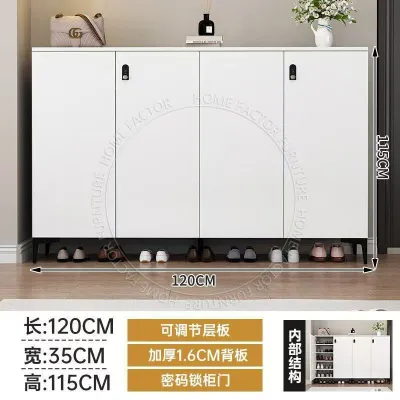
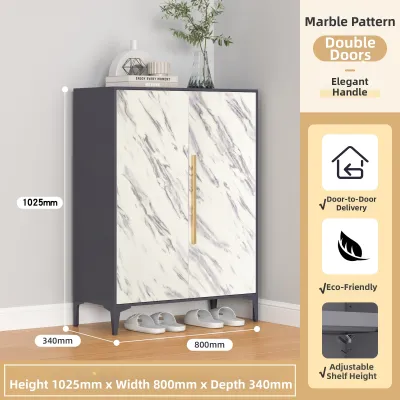
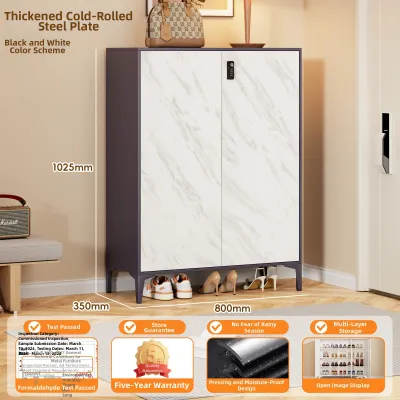
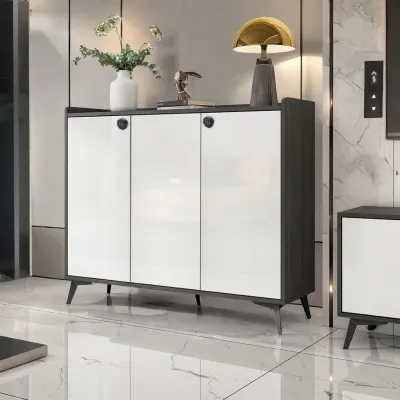
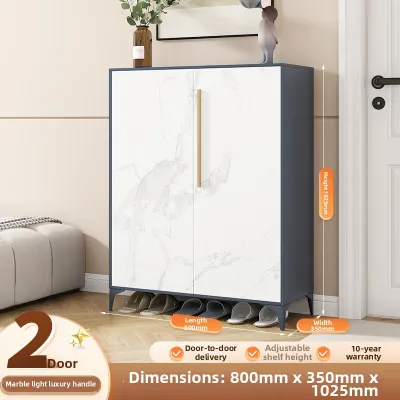
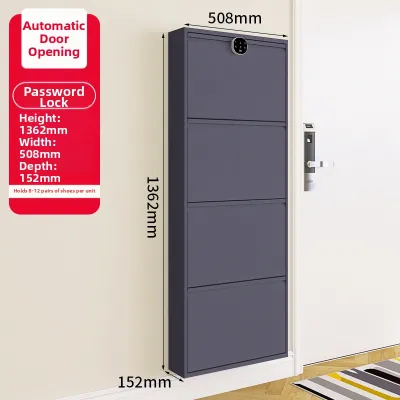
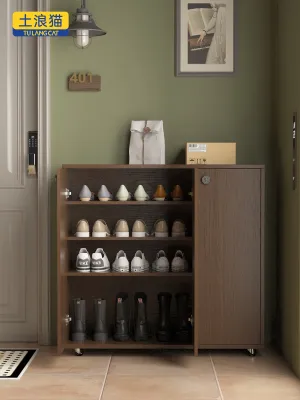
Prices are valid at publication and may change. Please refer to the product page for the latest price.
Shelf support structures are equally critical for long-term durability. Examine how the shelves are held in place. Look for metal shelf support pins rather than plastic pegs, which can degrade and shear under load. If the cabinet features wide shelves, verify whether the design includes reinforced metal ribs underneath or a central support partition to distribute weight evenly. Without these anti-sag features, a fully loaded shelf will bow downward, shifting the internal alignment and causing the locking mechanism to jam.
Overall stability is the foundation of both safety and lock reliability. A locked shoe rack must remain perfectly stable during operation; any frame twisting can misalign the lock latch with its strike plate. Check the base footprint of the unit—wider and deeper bases naturally resist tipping. If you are placing the cabinet on an uneven tiled floor, look for models equipped with adjustable leveling feet. These allow you to compensate for floor slope, ensuring the frame remains perfectly square. For tall units, verify if the manufacturer provides wall-anchoring hardware to prevent tip-over accidents.
Assessing Lock Mechanisms and Security
The locking mechanism is the primary point of interaction and potential failure on a locked shoe cabinet. Understanding the differences between lock types helps you choose a system that balances convenience with long-term reliability.

Mechanical cam locks are the most common and straightforward option. They operate without electrical power, eliminating concerns about battery depletion or electronic circuit failure in high humidity. However, mechanical locks are subject to physical wear over time. The key can wear down, or the internal pins can become sticky. Electronic or keypad locks offer keyless convenience, which is highly useful for busy households. When evaluating electronic locks, check the specifications for battery life and the presence of an external emergency power port or a physical override key. Without these backup options, a dead battery could leave your footwear permanently inaccessible.
The physical components of the lock determine its resistance to wear. Examine the lock cylinder material; solid brass or zinc alloy cylinders offer much higher durability than plastic-housed alternatives. Check the specifications for the latch bolt throw length—the distance the bolt extends into the frame. A longer throw (typically 10 mm or more) provides a more secure hold and is less likely to slip out of place if the door frame shifts slightly. Additionally, look for a reinforced metal strike plate on the cabinet frame where the bolt engages. A bare wood or thin plastic cutout will quickly wear down under repeated locking pressure.
It is vital to maintain realistic expectations regarding the security limitations of these units. Standard furniture locks are designed to deter casual access, prevent opportunistic theft along common corridors, and keep children or pets out of storage areas. They do not provide the high-security protection of a commercial-grade vault.
Comparing Value: Price vs. Durability Trade-offs
Navigating the price spectrum of locked shoe racks requires understanding where your money is actually being spent. Entry-level models often cut costs on materials and hardware, which can lead to a shorter lifespan and frequent lock issues.
The structural differences between budget and premium models are usually found in the thickness of the panels and the quality of the moving parts. Premium models typically feature thicker steel frames, high-density moisture-resistant wood composites, and robust powder-coated finishes that resist scratching and rust. In contrast, budget models may use thin, untreated particle board or ultra-thin sheet metal that easily dents. These cheaper materials are highly susceptible to ambient moisture, leading to swelling, warping, and eventual structural failure that misaligns the locking mechanism.
Hardware components have a massive impact on the total cost and overall durability of the cabinet. High-quality soft-close hinges, heavy-duty drawer slides, and precision-engineered lock cylinders cost more to manufacture, but they ensure smooth operation. Cheap hinges can sag within months, causing the doors to drop and preventing the lock bolt from aligning with the strike plate. When comparing models, look closely at the hardware specifications; investing a bit more upfront in a unit with robust hardware can save you the cost of replacing the entire cabinet later.
To determine the right investment level, assess your usage frequency and environmental conditions. If you plan to lock and unlock the cabinet multiple times a day, or if the unit will be placed in a semi-outdoor area like a sheltered balcony, prioritizing premium materials and robust mechanical locks is highly recommended.
Decision Framework: Choosing the Right Locked Shoe Rack
Selecting the ideal locked shoe rack involves matching your specific household needs, space constraints, and installation environment to the right material and lock combination.
Choose a heavy-duty metal cabinet with a mechanical deadbolt if your primary goal is maximum structural rigidity and long-term durability. This combination is highly suited for high-traffic entryways, sheltered outdoor corridors, or communal spaces where the cabinet is accessed frequently. The metal frame resists warping under heavy loads, and the mechanical lock operates reliably without the need to monitor battery levels or worry about electronic malfunctions caused by humidity.
Choose an engineered wood cabinet with a basic cam lock if you prioritize aesthetic integration with your existing home decor and only need to restrict casual access. These units blend seamlessly into indoor living spaces and hallways, offering a warmer, more traditional furniture appearance. The basic cam lock is sufficient for keeping children away from expensive footwear, provided the cabinet is kept in a dry, climate-controlled environment to prevent the wood from swelling.
However, neither option may fit your home if your entryway lacks the necessary clearance. Before purchasing, measure the available floor space and ensure there is enough room for the cabinet doors to swing fully open without blocking pathways or hitting adjacent walls. If your floor is highly uneven—such as certain tiled entryways or outdoor corridors—avoid cabinets that lack adjustable leveling feet, as a tilted frame will cause the doors to sag and prevent the lock from engaging properly.
Finally, always verify the logistics of delivery and installation. Check the fully assembled dimensions of the shoe rack against the clearance heights and widths of your building’s elevator, stairwells, and main doorway. A heavy, pre-assembled metal cabinet that cannot fit into the lift will result in costly return fees.
Installation and Maintenance Checks
Proper installation and regular upkeep are essential to preserve the structural integrity of your shoe rack and ensure the lock operates smoothly over its lifespan.
During assembly, alignment is the most critical factor. Before tightening any screws or securing the back panel, use a spirit level to ensure the frame is perfectly upright and square. If the cabinet is assembled or placed on an uneven surface, the frame will twist slightly. This minor distortion can cause the doors to hang unevenly, leading to lock misalignment where the bolt rubs against or fails to reach the strike plate. Tighten all structural fasteners gradually and evenly to maintain a square frame.
Routine maintenance will prevent premature wear of the moving parts. Periodically inspect the hinge screws and tighten any that have worked loose from daily door swings. For mechanical lock cylinders, apply a small amount of dry graphite lubricant once or twice a year; avoid using heavy oils or WD-40, which can attract dust and clog the internal pins. If you have an electronic lock, establish a schedule to replace the batteries before they drain completely, and keep the manual override key in a secure, easily accessible location outside the cabinet.
Always adhere to the manufacturer’s specified load limits for each shelf. Overloading shelves with heavy boots or non-shoe items can warp the horizontal panels and distort the overall frame. This warping shifts the door alignment, putting excessive pressure on the lock latch and potentially jamming the mechanism.
Frequently Asked Questions (FAQ)
Can I retrofit a standard shoe rack with a lock?
Retrofitting a standard shoe rack with a lock is physically possible but comes with significant structural risks. Most standard wooden shoe cabinets are made of thin engineered wood or hollow-core panels that do not have the internal reinforcement required to support a lock cylinder or strike plate. Drilling into these materials can cause splintering, cracking, or structural weakness, which often voids the manufacturer’s warranty. Additionally, achieving precise alignment between an aftermarket lock and the cabinet frame is highly challenging without professional tools. For reliable security and smooth operation, purchasing a purpose-built locked shoe rack is generally more effective than attempting a DIY modification.
Are electronic locks on shoe racks reliable in humid environments?
Electronic locks can operate reliably in humid environments, but they require careful selection and maintenance. High humidity can cause moisture condensation inside the lock housing, potentially leading to battery corrosion or circuit board failure. When choosing an electronic model, check the manufacturer’s specifications for moisture resistance or ingress protection (IP) ratings. To ensure long-term reliability, always use high-quality, leak-resistant batteries and replace them regularly. Most importantly, select a model that features a physical manual override key or an external emergency power terminal, ensuring you can still access your footwear in the event of an electronic failure.

Community discussion
Share your experience or ask a question. Comments are reviewed before publication.