
Selecting a children’s bed frame requires balancing aesthetics with strict safety protocols. When looking at options like a Seahouse bed frame for your child’s bedroom, verifying structural integrity, material safety, and compliance with international standards is paramount. In Singapore’s typical high-density housing, such as HDB flats and condominiums, bedrooms often serve multiple purposes, combining play, study, and sleep. This makes the physical safety and footprint of the bed frame even more critical. A proper kids’ bed must withstand active daily use while ensuring that the sleeping environment remains entirely free of physical and chemical hazards.
Before finalizing any purchase, parents should systematically evaluate the design and construction of the bed frame. This guide outlines the essential safety standards, material checks, and structural considerations you should verify to ensure a secure night’s sleep for your child.
Critical Structural Checks to Prevent Falls and Entrapment
The physical dimensions of a bed frame play a direct role in preventing accidents. Falls and entrapment are among the most common risks associated with children’s beds, making it vital to measure and inspect the frame’s layout before assembly.
Products mentioned in this guide

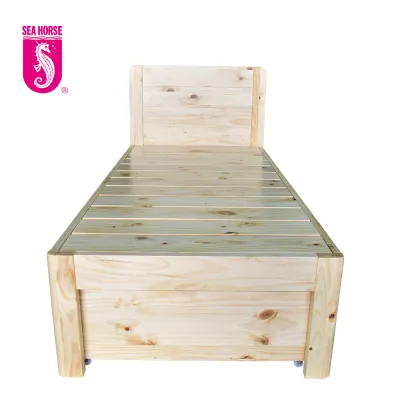
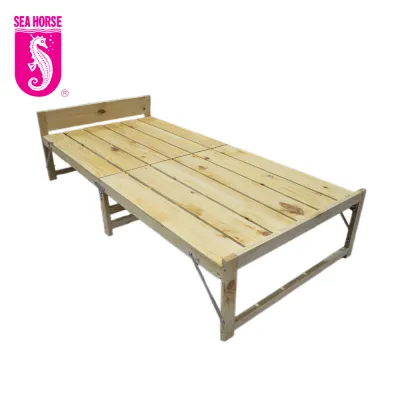
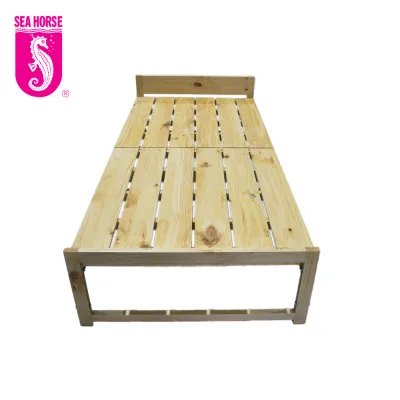
Prices are valid at publication and may change. Please refer to the product page for the latest price.
First, evaluate the guardrail height relative to the intended mattress thickness. If the bed frame includes built-in guardrails, they must extend significantly above the top of the mattress. A guardrail that is too low offers virtually no protection if a child rolls over during the night. Always measure the distance from the top of the mattress to the top of the guardrail to ensure it meets standard safety margins.
Second, verify the spacing between the bed slats. Slats provide the foundation for the mattress, but if they are spaced too far apart, they create a severe entrapment hazard for a child’s limbs or head. Standard safety guidelines recommend that the gap between individual slats should not exceed 60 mm to 75 mm. This spacing also ensures proper mattress support, preventing sagging that could compromise comfort and safety.
Third, inspect the perimeter of the bed frame for dangerous gaps. When the mattress is placed inside the frame, there should be no significant space between the mattress edges and the frame walls. Gaps wider than a few centimeters can trap a child’s arm, leg, or foot, leading to injury. Ensure you match the frame’s inner dimensions precisely with standard local mattress sizes.
Finally, examine the frame for any protruding hardware or sharp catch points. Bolts, screws, brackets, and decorative elements must be flush with the surface or countersunk. Any outstanding hardware can catch on loose clothing, pajamas, or toy strings, posing a serious entanglement or strangulation risk. Run your hands along the entire frame to confirm a completely smooth profile.
Verifying Material Safety and Non-Toxic Finishes
Children spend up to half their day in close contact with their bed, making chemical safety just as important as structural soundness. The materials and finishes used on the bed frame must be thoroughly vetted to prevent exposure to harmful substances.

Singapore’s warm and humid climate can accelerate the off-gassing of volatile organic compounds (VOCs) from paints, varnishes, and adhesives, particularly in enclosed, air-conditioned bedrooms. When researching a Seahouse bed frame, actively look for manufacturer specifications indicating the use of low-VOC, lead-free, and non-toxic finishes. Safe products often carry certifications demonstrating compliance with international toy safety standards, which regulate heavy metal content in surface coatings.
Physical texture is another key indicator of material quality. Inspect the wood or metal surfaces to ensure they are entirely smooth and splinter-free. Children frequently run their hands along the bed rails, and toddlers may even chew on the frame during teething. Rounded corners and softened edges are essential to minimize the impact of accidental bumps and scrapes during play.
Never assume a bed frame is safe based solely on generic material descriptions like “solid wood” or “eco-friendly.” Responsible manufacturers provide explicit product safety documentation or material safety data sheets upon request. If a retailer cannot provide clear information regarding the chemical safety of their finishes, it is best to look for an alternative that does.
Assessing Stability, Assembly, and Weight Limits
A children’s bed frame must be robust enough to handle more than just quiet sleeping. Children naturally jump, climb, and play on their furniture, meaning the frame must offer exceptional stability and load-bearing capacity.
Always locate and adhere to the manufacturer’s stated maximum weight capacity. This limit must comfortably accommodate the weight of the mattress, the child, heavy bedding, and the occasional weight of a parent sitting on the edge for bedtime stories. Exceeding this limit compromises the structural integrity of the joints and can lead to sudden collapse.
Evaluate the sturdiness of the joints, legs, and center support structures. High-quality kids’ beds utilize robust joinery, such as metal-on-metal bolt connections, rather than simple wood screws that can strip and loosen over time. Shake the assembled frame gently; there should be no noticeable wobble, sway, or squeaking, which indicate weak joints or poor design.
Confirm that all necessary hardware is included in the package and that the assembly instructions are comprehensive. Missing washers or improperly tightened bolts can severely weaken the bed. If you are assembling the bed yourself, follow each step meticulously. For taller frames, loft beds, or bunk beds, check if the manual recommends securing the frame to the wall. In compact rooms, anchoring the bed to a solid concrete wall provides vital protection against tipping.
How to Locate and Read Safety Certification Labels
Official safety certifications provide peace of mind that a product has undergone rigorous independent testing. Knowing how to locate and interpret these labels is a crucial skill for any parent shopping for children’s furniture.
Start by searching for recognized safety marks on the bed frame itself, the user manual, or the official retail listing. Look for compliance with established standards such as ASTM F1427 (the standard consumer safety specification for bunk beds) or EN 747 (the European standard for bunk beds and high beds). These standards govern everything from structural strength to entrapment hazards.
Keep in mind that safety compliance must be explicitly claimed and documented. Generic marketing terms like “child-safe” or “tested quality” carry no legal weight. A reputable manufacturer will state the exact testing standard their product meets. If you are purchasing through an online marketplace or a local showroom, do not hesitate to ask the customer service team for proof of certification.
If certification information is entirely missing, ambiguous, or contradicts the physical features of the bed (such as wide slat gaps or low guardrails), proceed with caution. A lack of transparent safety documentation is a strong indicator that the product has not been verified to meet international safety benchmarks.
Routine Maintenance and When to Stop Using the Bed
Safety is an ongoing responsibility that extends far beyond the initial purchase and assembly. Regular maintenance checks ensure that the bed frame remains safe and stable throughout its lifespan.
Establish a routine inspection schedule, such as checking the bed frame every three to six months. The natural expansion and contraction of wooden components due to humidity fluctuations can cause fasteners to loosen over time. Use this opportunity to tighten all screws, bolts, and structural connectors, ensuring the frame remains rigid.
During your inspection, look closely for physical signs of wear or damage. Check for cracked wooden slats, bent metal brackets, warped support beams, or loose guardrails. Pay special attention to the joints and the areas where the ladder or guardrails attach to the main frame, as these points experience the highest stress.
If you identify structural failures, such as a cracked load-bearing rail or a joint that wobbles even after tightening, stop using the bed immediately. Do not attempt temporary fixes with tape, glue, or non-standard hardware. Consult the manufacturer to see if official replacement parts are available. If the damage is widespread or compromises the core stability of the frame, it is time to replace the bed entirely to protect your child.
Frequently Asked Questions (FAQ)
Do bunk beds require different safety standards than standard kids' beds?
Yes, bunk beds and loft beds require much stricter safety standards due to the increased risk of falls from height. The top bunk must feature continuous guardrails on all four sides, with only a small opening permitted for the ladder. The ladder itself must be securely fastened to the bed frame, with slip-resistant steps and no loose rungs. Additionally, safety guidelines state that the top bunk is not suitable for children under six years of age, and the total weight on the upper structure must never exceed the manufacturer’s specified limit.
How thick should the mattress be for a kids' bed with guardrails?
The thickness of the mattress directly affects the safety performance of the guardrails. If the mattress is too thick, it reduces the effective height of the guardrail, making it easier for a child to roll over the edge. As a general rule, the top of the guardrail must sit at least 127 mm above the top surface of the mattress. Always consult the bed frame manufacturer’s specifications to find the maximum recommended mattress thickness before making a purchase.

Community discussion
Share your experience or ask a question. Comments are reviewed before publication.