
In Singapore, bunk beds sold to consumers must comply with the Consumer Protection (Consumer Goods Safety Requirements) Regulations (CGSR) administered by Enterprise Singapore. Under this regulatory framework, consumer products that do not have specific local mandatory standards must meet recognized international safety standards to be considered safe for supply. For bunk beds, this means verifying compliance with established global benchmarks such as the European standard EN 747, the American standard ASTM F1427, or the Australian and New Zealand standard AS/NZS 4220. Ensuring a bunk bed meets these standards is essential to protect children from structural failures, falls, and entrapment hazards.
Understanding Bunk Bed Safety Certifications and Labels
When shopping for a bunk bed in Singapore, you should look for specific safety certifications on the product packaging, instruction manuals, or manufacturer specifications. The European standard EN 747 is one of the most common and rigorous benchmarks, specifying requirements for the safety, strength, and durability of bunk beds and high beds for domestic use. Alternatively, the American ASTM F1427 standard and the Australian/New Zealand AS/NZS 4220 standard also provide comprehensive guidelines covering structural integrity and design safety.
To verify these certifications, do not rely solely on verbal assurances from showroom staff. Request official compliance documentation or test reports issued by accredited third-party testing laboratories. Reputable retailers should be able to provide these documents upon request, showing that the specific model has undergone testing for load capacity, impact resistance, and dimensional safety. If a retailer cannot or will not provide proof of testing, it is advisable to look for alternative options that offer transparent compliance records.
Products mentioned in this guide
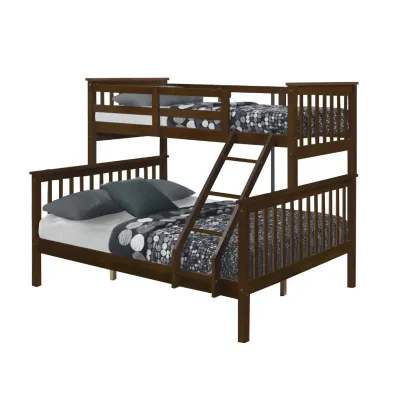
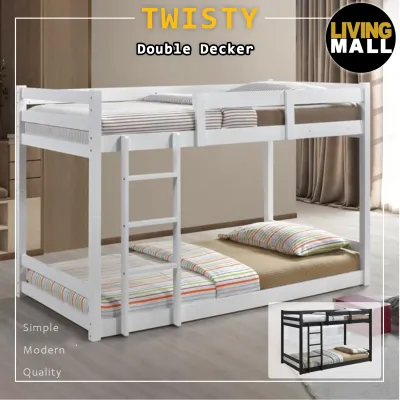
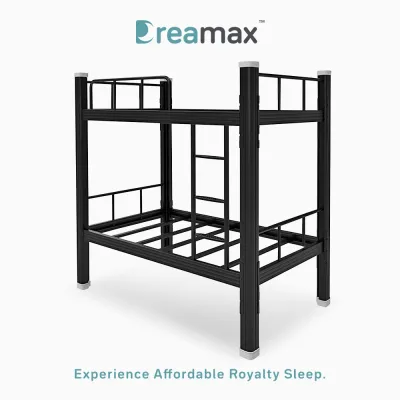
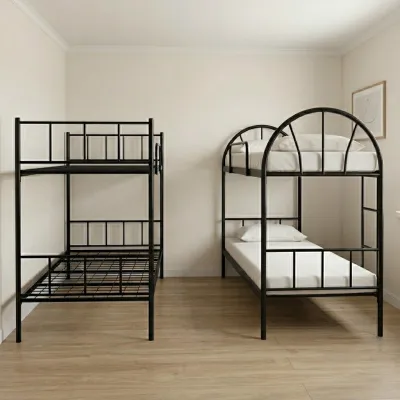
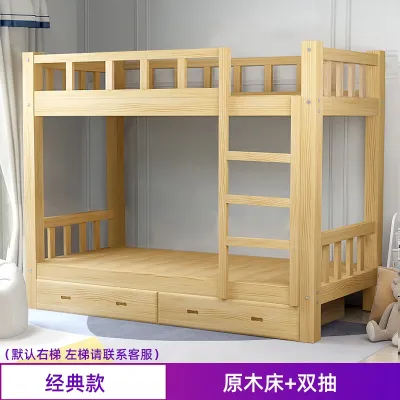
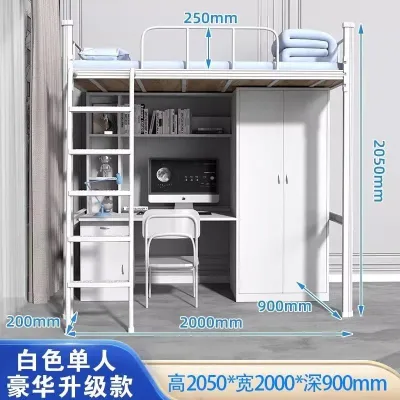

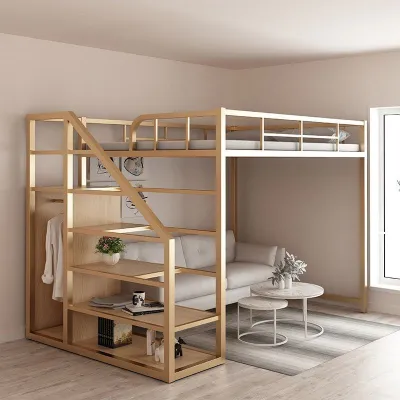
Prices are valid at publication and may change. Please refer to the product page for the latest price.
Understanding the distinction between mandatory local regulations and voluntary international benchmarks is key to making an informed purchase. While Enterprise Singapore enforces the CGSR to ensure general product safety, it does not pre-approve or register every individual furniture design before it hits the market. Instead, the onus is on manufacturers and distributors to ensure their products comply with international standards. By actively checking for labels indicating compliance with EN 747, ASTM F1427, or AS/NZS 4220, you can verify that the furniture has been designed to minimise risks associated with bunk beds.
Essential Physical Safety Features to Inspect Before Buying
Before finalizing your purchase, a physical inspection of the bunk bed’s design and dimensions is crucial. The guardrails on the top bunk are the primary defense against falls. Ensure that guardrails are installed on all four sides of the upper bed, even if the bed is positioned against a wall. The gap between the guardrail and the wall can still present a fall or entrapment risk if the bed shifts. According to international standards, the top of the guardrails must stand at least 160 mm above the upper surface of the mattress. This means you must factor in the thickness of your chosen mattress when evaluating guardrail height.

Next, evaluate the gap limits across the entire bed structure to prevent head, limb, or torso entrapment. Check the manufacturer’s specifications for the spacing between the guardrail slats, ladder rungs, and bed base slats. Safety standards generally dictate that gaps must be either less than 75 mm or greater than 230 mm. Gaps between 75 mm and 230 mm are hazardous because they are large enough for a child’s body to slip through but small enough to trap their head, leading to serious injury.
Structural stability and material quality are equally important. Verify the manufacturer’s stated weight capacity for both the upper and lower bunks, ensuring they can safely support your children as they grow. Inspect the joints and fastening mechanisms; high-quality bunk beds typically use heavy-duty metal-to-metal bolts rather than simple wood screws, which can loosen over time. Physical stability can be assessed by gently shaking the assembled display model; any significant wobbling, swaying, or creaking indicates weak joints or substandard materials.
Finally, consider the physical constraints of Singaporean housing. Before purchasing, measure your doorway clearances and lift dimensions. Many high-rise apartments and HDB flats have passenger lifts with strict height and depth limits. Ensure that the bunk bed components can be safely transported up to your unit and through your front door without requiring risky maneuvers or damaging the product during delivery.
Safe Installation and Room Placement Guidelines
Proper assembly is fundamental to the safety of any bunk bed. Always follow the manufacturer’s step-by-step assembly instructions precisely, and verify that all hardware, brackets, and dowels listed in the manual are present and correctly installed. Never substitute missing parts with generic hardware from a local DIY store unless approved by the manufacturer. If the assembly process seems complex, consider hiring professional installation services offered by the retailer to ensure the structural integrity of the bed is not compromised.
Room placement requires careful planning, especially in Singapore’s tropical climate where ceiling fans are common household fixtures. Never place a bunk bed directly under or adjacent to a ceiling fan. A child sitting up or moving on the top bunk must be completely out of reach of the fan blades to prevent severe impact injuries. Additionally, position the bed away from windows, air conditioning units, and window blind cords, which present significant strangulation and fall hazards.
Ensure there is adequate headroom for the child occupying the top bunk. Given that standard HDB ceiling heights are typically around 2.6 meters, a bunk bed that is too tall will leave very little space between the top mattress and the ceiling. Ideally, there should be at least 75 cm to 90 cm of clear space above the top mattress so the child can sit up comfortably without bumping their head. Finally, ensure the ladder is securely attached to the bed frame and that the path to the ladder remains completely unobstructed by other furniture or toys.
Daily Usage Rules and Maintenance for Long-Term Safety
Establishing clear household rules is essential for maintaining a safe sleeping environment. Manufacturers universally recommend that the top bunk should not be used by children under six years of age. Younger children often lack the physical coordination, balance, and spatial awareness required to safely navigate the ladder and avoid rolling off the bed during sleep. Assess your child’s developmental readiness and behavior before allowing them to sleep on or play near the upper bunk.
Mattress thickness is a critical factor that directly impacts the effectiveness of the guardrails. Many bunk beds feature a safety line or “max mattress height” marker engraved or stickered onto the upper frame. Ensure that the mattress you purchase does not exceed this limit. If the mattress is too thick, the effective height of the guardrail is reduced, significantly increasing the risk of a child rolling over the edge. Always check the manufacturer’s specified maximum mattress thickness before buying a mattress for the top bunk.
Long-term safety requires a routine maintenance schedule. Over time, the natural movement of children climbing up and down can cause bolts and joints to loosen. Set a reminder to inspect the bunk bed hardware every three to six months. Tighten any loose bolts, check that the ladder remains firmly anchored, and inspect the wooden or metal frame for any signs of cracking, warping, or structural wear. If you notice any persistent wobbling or damage, restrict access to the bed until it has been repaired or reinforced according to the manufacturer’s guidelines.
Frequently Asked Questions (FAQ)
Are bunk beds safe for toddlers?
Bunk beds are not recommended for toddlers. Manufacturer guidelines and international safety standards state that the top bunk is unsafe for children under six years of age due to the risk of falls and entrapment. Toddlers lack the motor skills and coordination needed to climb the ladder safely, especially in the dark. For younger children, alternative sleeping arrangements such as standard single beds, trundle beds, or low-to-the-ground toddler beds are much safer options.
How often should I check the bunk bed hardware?
You should perform a thorough inspection of the bunk bed hardware every three to six months. Check all bolts, screws, and brackets to ensure they remain tightly secured. Additionally, perform an immediate check if you hear any squeaking, notice any wobbling when your child climbs the ladder, or if the bed has been moved to a different position in the room. Regular tightening prevents joint wear and maintains the overall structural integrity of the frame.
What is the maximum mattress thickness for a top bunk?
The maximum mattress thickness for a top bunk is typically specified by the manufacturer and is often limited to 15 cm (approximately 6 inches) or less. This limit ensures that the guardrails maintain a safe clearance of at least 160 mm above the top of the mattress. Always locate the safety fill line marked on the inside of the upper bed frame and choose a mattress that sits well below this line to prevent accidental falls.
Community discussion
Share your experience or ask a question. Comments are reviewed before publication.