
Selecting a super single loft bed for a child’s bedroom in Singapore requires careful attention to structural integrity, physical dimensions, and safety certifications. Because a super single mattress is wider and heavier than a standard single mattress, the loft frame must support additional weight and resist lateral forces. Ensuring the bed meets recognized safety standards is the most effective way to minimize the risk of falls, structural failure, and entrapment.
To make an informed decision, buyers must look beyond aesthetic appeal and evaluate how a bed is engineered, tested, and installed. This guide outlines the critical safety standards, physical measurements, and structural checks you should perform before purchasing a super single loft bed for your home.
Verifying Safety Certifications and Compliance Labels
When shopping for children’s furniture in Singapore, verifying compliance with established safety standards is a primary step. The Consumer Protection (Consumer Goods Safety Requirements) Regulations, administered by Enterprise Singapore, require general consumer goods to meet applicable international safety standards. For loft beds and bunk beds, the most widely recognized frameworks are the European standard EN 747 and the American standard ASTM F1427.
Products mentioned in this guide
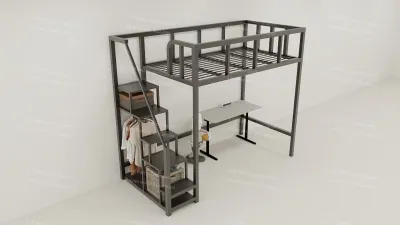
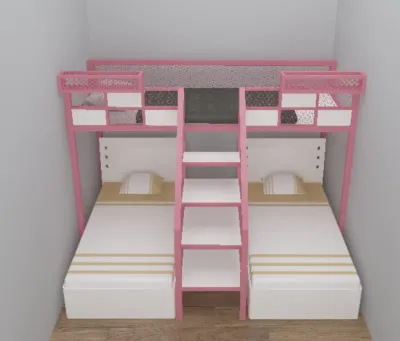
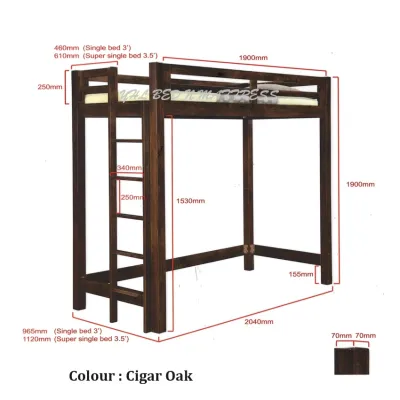
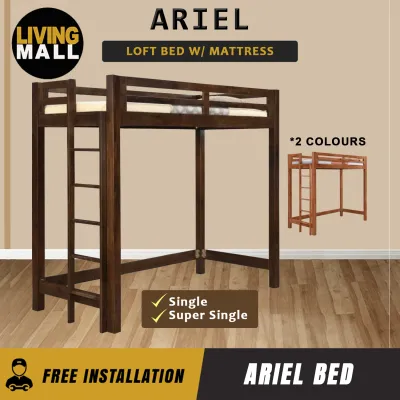
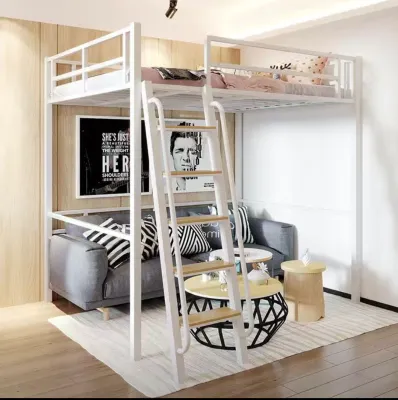
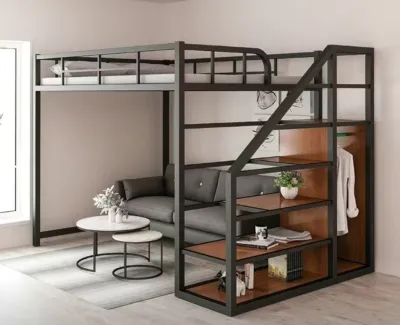
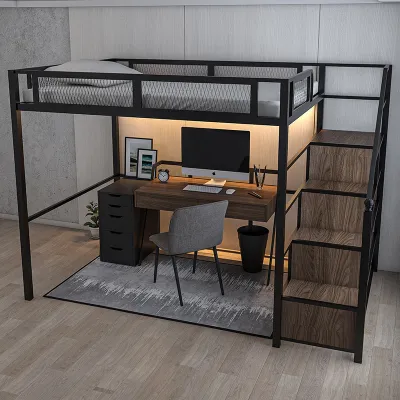
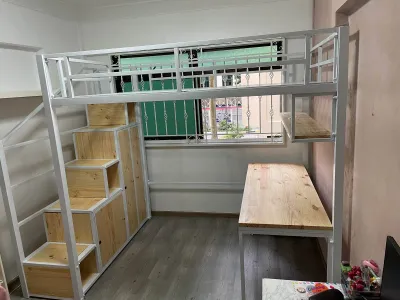
Prices are valid at publication and may change. Please refer to the product page for the latest price.
These standards are not merely bureaucratic guidelines; they dictate rigorous testing protocols for structural strength, stability, and entrapment hazards. A bed certified under EN 747-1 (which specifies safety requirements) and tested under EN 747-2 (which outlines testing methods) has undergone mechanical testing to ensure it can withstand repeated impacts, heavy loads, and lateral movement without tipping or collapsing.
To verify these certifications, look for compliance labels or reference numbers printed on the product packaging, the user manual, or a permanent sticker on the bed frame itself. Legitimate manufacturers will clearly state which standards their products meet. If this information is not readily visible on the retailer’s website or showroom display, ask the sales representative to provide the official test reports or compliance certificates from an accredited third-party testing laboratory.
Be cautious of vague claims such as “child-safe” or “certified sturdy” that lack reference to specific international standards. A reputable retailer should be able to produce documentation confirming that the specific model of the super single loft bed has passed independent safety testing. If a retailer cannot or will not provide this proof, it is safer to consider alternative options.
Inspecting Critical Physical Safety Dimensions
Physical dimensions are the most direct defense against accidental falls and entrapment. The height of the guardrails relative to the mattress is a critical measurement. Safety standards dictate that the top of the guardrail must extend at least 160 mm above the top surface of the mattress. Because super single mattresses vary in thickness, you must calculate this margin using the actual mattress you plan to install, ensuring it does not exceed the manufacturer’s maximum recommended mattress thickness.

Guardrails must be continuous on the side of the bed that faces the wall, as gaps between the bed and the wall can lead to entrapment if the bed shifts. On the open side, the guardrail must run the full length of the bed, except for a designated opening for the ladder. This ladder opening should be kept to a minimum width—typically between 300 mm and 400 mm—to prevent a sleeping child from rolling out while still allowing safe access.
Gap sizes within the bed structure are strictly regulated to prevent head, neck, and limb entrapment. Gaps between guardrail slats, ladder rungs, and the bed frame must be either smaller than 75 mm or larger than 230 mm. Gaps between 75 mm and 230 mm are highly hazardous, as a child’s body can slip through while their head or neck becomes trapped, posing a severe strangulation risk.
Vertical clearance is another essential dimension, particularly in Singapore where standard HDB flat ceilings are approximately 2.6 meters high. Measure the distance from the top of the mattress to the ceiling before purchasing. There must be at least 75 cm to 1 meter of clearance to allow the child to sit up comfortably without hitting their head on the ceiling or light fixtures, while also ensuring adequate ventilation.
Evaluating Ladder Design and Structural Stability
The ladder is the primary point of transition and must be exceptionally secure. Inspect how the ladder attaches to the bed frame; it should be fixed permanently with heavy-duty bolts or brackets rather than hanging loosely on hooks. The ladder rungs should have a flat, deep surface rather than narrow, round steps, which can cause slipping and foot discomfort. Look for slip-resistant textures, grooved surfaces, or grip tape on each step.
Spacing between the ladder rungs must be uniform to prevent tripping during ascent or descent. Standard guidelines suggest a distance of 250 mm to 300 mm between rungs. Additionally, the ladder should not obstruct any storage compartments or desk space underneath in a way that encourages children to climb on non-designated surfaces to access the top bed.
Weight capacity is a critical factor for a super single loft bed, which is often used by older children, teenagers, or even adults. The manufacturer’s specified weight limit must account for the combined weight of the user, the super single mattress, and all bedding. Look for frames rated to support a static weight of at least 100 kg to 150 kg, and verify that the frame does not wobble or sway when lateral pressure is applied.
Examine the materials and joint connections closely. Solid hardwood frames and heavy-gauge metal frames offer superior stability compared to thin particleboard. Joints should utilize metal-to-metal connections, such as barrel nuts and bolts, which maintain their tightness over time. Inspect the entire frame for sharp edges, rough wood splinters, or protruding bolt heads that could snag clothing or cause scratches.
Ensuring Safe Assembly, Placement, and Maintenance
Even the most compliant loft bed can become hazardous if assembled or positioned incorrectly. Always follow the manufacturer’s assembly instructions precisely, using every screw, bolt, and bracket provided. Never substitute hardware or skip steps, such as omitting support slats or cross-bracing bars. If the manufacturer specifies that the loft bed must be anchored to the wall, use appropriate wall plugs and heavy-duty brackets suitable for your wall type.
Room layout plays a significant role in loft bed safety. Position the bed well away from ceiling fans, air conditioning units, and hanging light fixtures. In Singapore’s warm climate, ceiling fans are common; ensure that the fan blades are completely out of reach from the top bunk, even when a child stretches their arms upward. Avoid placing the bed near windows, blind cords, or curtains to eliminate the risk of falls and strangulation.
Regular maintenance is necessary to preserve the structural integrity of the bed over time. Singapore’s high humidity can cause wooden components to expand and contract slightly, which may loosen joint connections over time. Establish a routine to inspect the bed frame every few months, tightening any loose bolts and checking for signs of wear, wood splitting, or metal fatigue.
Instruct children on safe usage rules to prevent accidents. The loft bed should be used strictly for sleeping and quiet activities, not as a playground. Prohibit jumping, rough play, or hanging from the guardrails and ladder. Keeping the area around the base of the ladder clear of toys and clutter will also prevent trips and falls during nighttime descents.
Frequently Asked Questions (FAQ)
At what age is it safe for a child to sleep on the top bunk of a loft bed?
International safety standards and pediatric guidelines recommend that children under the age of six should not sleep on the top bunk or a loft bed. Children under six years old generally lack the physical coordination, balance, and spatial awareness required to safely navigate the ladder and elevated platform, particularly when waking up disoriented in the dark. Always assess your child’s individual developmental maturity and climbing ability, and adhere strictly to the manufacturer’s age recommendations.
Can I use a standard single mattress on a super single loft bed frame?
Using a standard single mattress on a super single loft bed frame is highly discouraged because it creates a severe safety hazard. A standard single mattress is approximately 91 cm wide, whereas a super single frame is designed for a mattress that is 107 cm wide. This size discrepancy leaves a gap of about 16 cm along the side of the bed. A child can easily slip into this gap, leading to limb entrapment, suffocation, or falls. Always match the mattress dimensions precisely to the frame specifications.

Community discussion
Share your experience or ask a question. Comments are reviewed before publication.