
When ordering a customized bunk bed in Singapore, ensuring child safety requires looking beyond aesthetic designs to verify structural integrity, fall prevention, and entrapment risks. Since specific mandatory local certifications for custom-built children’s beds may vary or rely on manufacturer declarations, parents must proactively evaluate physical dimensions, load-bearing claims, and installation requirements. This guide outlines the critical safety checks and structural verifications you should complete with your furniture maker before finalizing a custom order.
To ensure a customized bunk bed is safe, it should ideally align with established international safety standards such as the European Standard (EN 747) or the American Standard (ASTM F1427). Because custom furniture is built to order rather than mass-produced and pre-certified, the responsibility of verifying compliance falls largely on the buyer and the craftsman. You must verify critical safety dimensions, structural joint integrity, material load capacities, and secure wall-anchoring methods to prevent tipping, falls, and entrapment hazards in your child’s bedroom.
Key Physical Safety Dimensions to Verify Before Ordering
The most critical aspect of a customized bunk bed is its physical geometry. Unlike standard beds, bunk beds introduce height-related risks that require precise dimensional planning. When reviewing the initial design drawings with your furniture maker, pay close attention to the guardrails on the top bunk. The guardrails must be continuous on all sides, except for the ladder opening, and must extend high enough above the mattress to prevent a sleeping child from rolling over the edge. A reliable benchmark is to ensure the top of the guardrail sits at least 160 mm above the top surface of the mattress. This means you must decide on your mattress thickness before finalizing the bed frame dimensions, as an overly thick mattress will dangerously reduce the effective height of the guardrail.
Products mentioned in this guide
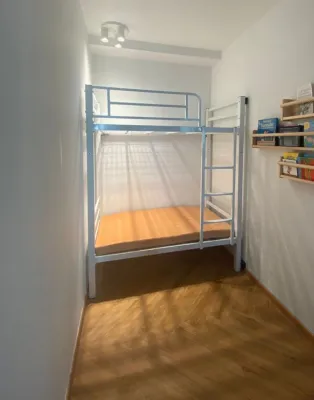
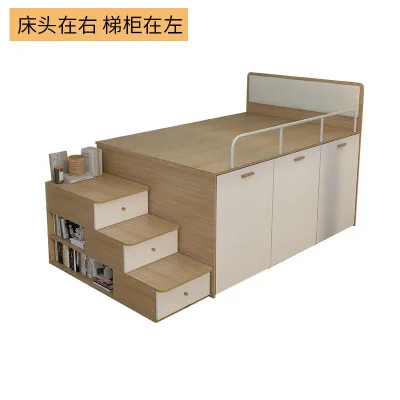
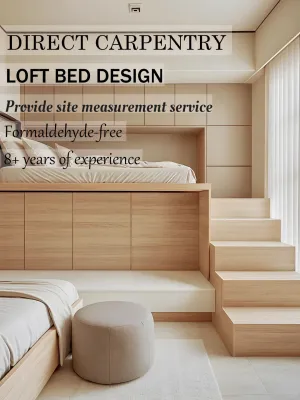
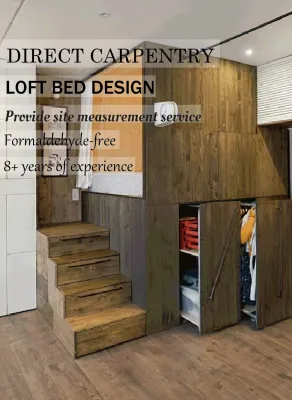
Prices are valid at publication and may change. Please refer to the product page for the latest price.
Entrapment is another major hazard associated with custom children’s furniture. Gaps between the guardrail slats, between the bed frame and the wall, or between individual mattress support slats must be carefully controlled. To prevent a child’s head, neck, or limbs from becoming trapped, gaps should generally be kept under 75 mm or, if larger, must exceed 230 mm to ensure a child’s body can pass through completely without getting stuck. Ask your maker to specify these gap dimensions on the technical drawing.
The ladder or staircase is the primary point of transition and must be engineered for stability. If you choose a vertical ladder, verify that the rungs are flat, slip-resistant, and spaced evenly. The distance between rungs should be consistent to prevent missteps. For a staircase design, which is highly popular in Singaporean homes for its integrated storage potential, ensure the steps have adequate depth for a child’s foot and are equipped with a sturdy handrail. The ladder or staircase must be securely fastened to the main bed frame with heavy-duty hardware rather than simply hooked over the edge, preventing any shifting during active use.
Evaluating Material Strength and Load Capacity Claims
When customizing a bunk bed, it is easy to be swayed by premium material names like solid oak, teak, or engineered birch plywood. However, a material’s name alone does not guarantee structural safety or durability. The strength of a custom bunk bed depends heavily on how those materials are joined and the engineering principles applied by the maker. Instead of accepting generic marketing claims about heavy-duty wood, ask your furniture maker for documented load testing results or engineering specifications for their joint designs.

Examine the connection points and hardware that will hold the bed together. Bunk beds are subjected to dynamic loads—the forces exerted when children climb, jump, or shift weight suddenly—which are far more stressful on joints than static weight. Verify that the maker uses robust mechanical fasteners, such as steel barrel nuts and bolts, rather than simple wood screws or glue alone. The joints connecting the guardrails, ladder, and upper bed frame to the main corner posts must be reinforced to withstand continuous movement over several years.
Furthermore, clarify the difference between static weight limits and dynamic load capacities. A custom bed might be rated to hold a static weight of 100 kg, but a child jumping on the top bunk can easily exceed that force momentarily. Ask the craftsman to explain how the mattress support platform is reinforced. Solid wood slats or a thick plywood platform should be securely screwed into the side rails to prevent them from shifting or bowing under pressure.
Installation, Anchoring, and Room Environment Checks
A safe custom bunk bed design can still become hazardous if it is poorly integrated into the room environment. In Singapore, where ceiling heights in HDB flats, condominiums, and landed properties can vary significantly, vertical clearance is a primary concern. Measure your ceiling height accurately before ordering. There should be a minimum clearance of 75 cm to 1 meter between the top of the upper mattress and the ceiling. This ensures the child can sit up comfortably without bumping their head. Additionally, map out the position of ceiling fans and light fixtures; the top bunk must be positioned far enough away to prevent any accidental contact with moving fan blades.
Wall anchoring is another non-negotiable safety step, particularly for tall or narrow custom designs. Bunk beds can tip over if children climb on the outer frame or if weight is distributed unevenly. Ensure your installation plan includes securing the bed frame directly to the wall. In Singapore, this typically involves drilling into solid concrete or masonry walls using heavy-duty wall plugs and brackets. If your room has drywall partitions, the installers must locate and anchor the brackets directly into the internal wall studs.
Finally, assess the floor leveling and delivery access. Uneven flooring can introduce structural stress and cause the bed to wobble. Ask the maker if the bed frame includes adjustable leveling feet or if they will shim the frame during installation. Additionally, because custom bunk beds are often delivered in large, semi-assembled sections, verify that the components can fit through your home’s doorways, corridors, and lift doors.
How to Vet Custom Furniture Makers for Safety Compliance
Choosing the right craftsman is the most critical step in securing a safe customized bunk bed. A reputable maker will welcome your questions about safety and structural integrity. When vetting potential furniture companies, ask if they design their children’s furniture in accordance with recognized international safety frameworks, such as the British/European standard BS EN 747 or the American ASTM F1427. While they may not have official laboratory certifications for a one-off custom build, they should be intimately familiar with these standards and able to explain how their designs mirror these safety requirements.
Request detailed technical drawings or 3D digital models before production begins. Do not rely on hand-drawn sketches or verbal agreements. A proper technical drawing allows you to spot-check critical safety dimensions, such as guardrail heights, slat spacing, and ladder placement, in a precise format. If the maker is hesitant to provide these drawings or cannot specify exact dimensions, consider it a red flag.
Lastly, review the maker’s warranty terms and post-installation policies. A reliable custom furniture maker should offer a comprehensive warranty covering structural defects, joint failures, and hardware issues for at least a few years. They should also provide a post-installation inspection, where the lead installer verifies that the bed is perfectly level, securely anchored to the wall, and free of any sharp edges or exposed hardware before handing it over to you.
Frequently Asked Questions (FAQ)
At what age is it safe for a child to sleep on the top bunk?
Pediatric and safety organizations generally recommend that children under the age of six should not sleep on the top bunk. At this developmental stage, younger children may lack the necessary coordination, spatial awareness, and balance to safely navigate the ladder, especially in the dark. Even for older children, it is essential to assess their behavioral readiness. Establish clear household rules, such as prohibiting rough play, jumping, or hanging from the guardrails, and ensure they understand how to use the ladder safely every time they climb up or down.
Can I add safety nets or extra guardrails to a custom design later?
While it is technically possible to retrofit safety accessories, doing so carries structural risks. Aftermarket additions may not align perfectly with the custom dimensions of your bed, potentially creating new, dangerous entrapment gaps between the net and the frame. If you feel you might need extra guardrails or safety netting in the future, it is highly recommended to discuss this with your custom furniture maker during the initial design phase. This allows them to integrate these safety features seamlessly into the original structure, ensuring they are securely mounted and fully compliant with safety spacing guidelines.

Community discussion
Share your experience or ask a question. Comments are reviewed before publication.