
When shopping for a children’s bed in Singapore, you will quickly notice that there is no single, mandatory national safety standard specifically dedicated to kids’ furniture. Instead, the local market relies on general consumer protection frameworks and internationally recognized safety benchmarks. Ensuring your child’s safety requires understanding how these global standards apply to the local context, verifying manufacturer certifications, and performing hands-on physical inspections before and after assembly.
By taking a systematic approach to evaluating structural integrity, material safety, and design dimensions, you can confidently select a bed that protects your child. This guide outlines the regulatory landscape, key certifications to look for, and practical inspection steps tailored to Singaporean homes.
Understanding the Regulatory Landscape for Children's Furniture
In Singapore, the Consumer Protection (Consumer Goods Safety Requirements) Regulations (CGSR), overseen by Enterprise Singapore, serve as the primary regulatory safety net. Under these regulations, general consumer goods—including children’s furniture—must not pose safety hazards and should conform to international standards when no specific local standard exists. Because there is no standalone Singapore Standard (SS) exclusively for kids’ beds, reputable manufacturers and retailers align their products with established global benchmarks.
Products mentioned in this guide
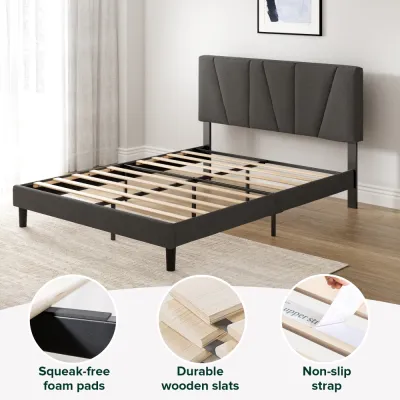
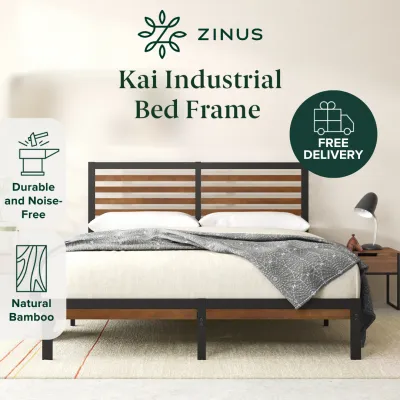


Prices are valid at publication and may change. Please refer to the product page for the latest price.
The most common standards you will encounter are the European Standards (EN) and the American Society for Testing and Materials (ASTM) standards. These frameworks dictate everything from structural stability and load-bearing capacity to chemical safety limits for paints and finishes. Voluntary certifications, such as GREENGUARD Gold for low chemical emissions or FSC certification for responsibly sourced timber, offer additional peace of mind regarding indoor air quality and environmental impact, but they should always be viewed as secondary to core structural safety standards.
When browsing local showrooms or online marketplaces, remember that a retailer’s general compliance with local consumer laws does not automatically mean every product has undergone rigorous third-party safety testing. It is up to the buyer to look for specific, documented compliance with international kids’ furniture standards to ensure the frame can withstand daily use.
Recognizing Valid Safety Certifications and Labels
To navigate the sea of marketing claims, you must learn to distinguish legitimate testing laboratory marks from generic, self-declared badges. Look for clear references to specific standards on the product packaging, assembly manual, or the manufacturer’s official documentation. For bunk beds and high beds, the European standard EN 747-1 (and its testing counterpart EN 747-2) is a critical benchmark, while ASTM F1427 serves a similar purpose in the United States. For toddler beds, look for ASTM F1821 or British Standard BS 8509.

A genuine certification indicates that a sample of the bed has undergone rigorous mechanical testing in an accredited laboratory to verify its resistance to impact, fatigue, and structural failure. These tests simulate years of typical use, ensuring that joints do not fail and materials do not splinter under stress. When reviewing product specifications, verify that the testing covers both the frame construction and the support system.
When reading product labels, pay close attention to the specified maximum weight limits, recommended age ranges, and compatible mattress dimensions. A label should also clearly state warnings regarding potential hazards, such as the risk of falls from upper bunks for children under six years old. Ensure the documentation confirms that all finishes are non-toxic and lead-free, protecting younger children who may chew on the bed frame during teething.
Physical Safety Inspection Checklist for Kids' Beds
While certifications provide a theoretical safety guarantee, a physical inspection is essential to verify the bed’s real-world build quality. Start by measuring the gaps between the guardrails and the bed frame, as well as the spacing between individual slats. To prevent dangerous head, torso, or limb entrapment, these gaps must be strictly controlled; standard safety guidelines dictate that gaps should either be smaller than 75 millimeters to prevent limbs from slipping through, or larger than 230 millimeters to prevent a child’s head from getting stuck.
Next, evaluate the mattress fit within the bed frame. There should be no significant gaps between the mattress edges and the frame—ideally less than 30 millimeters—to prevent limbs from slipping down and becoming trapped. A mattress that is too small for the frame creates a severe safety hazard, so always cross-reference the manufacturer’s recommended mattress dimensions with the actual mattress you plan to use.
Run your hands along all accessible surfaces to check for sharp edges, exposed hardware, or protruding corner posts. Corner posts should not extend more than 5 millimeters above the end panels, as protruding posts can easily snag loose clothing, drawstrings, or necklaces, posing a serious strangulation hazard. Ensure all bolts, screws, and brackets are recessed or flush with the wood or metal surface.
Additionally, consider the practicalities of Singaporean apartments. Before purchasing, measure your doorways, hallways, and lift access dimensions to ensure the flat-packed or pre-assembled frame can be safely transported into your home. Forcing a large frame through tight spaces can cause structural damage, such as hairline fractures in timber or bent metal brackets, which compromises the bed’s overall stability once assembled.
Safety Requirements for Different Kids' Bed Styles
Different bed designs present unique structural risks that require specific safety features. For bunk beds and loft beds, ladder stability is paramount; the ladder must be securely anchored to the frame, with slip-resistant steps that are evenly spaced. The top-tier guardrails must extend at least 160 millimeters above the top surface of the mattress to prevent accidental falls during sleep, which means you must verify the maximum mattress thickness allowed by the manufacturer before buying a mattress.
Given the standard ceiling height of approximately 2.6 meters in most Singapore HDB flats, you must also calculate vertical clearance. Ensure there is adequate space—ideally at least 75 to 90 centimeters—between the top of the mattress and the ceiling so your child can sit up comfortably without risk of head injury. If your room features a ceiling fan, ensure the bed is positioned well outside the sweep path of the fan blades.
For toddler beds, look for a low-profile design that sits close to the floor, minimizing the fall distance for young children transitioning from a cot. These beds should feature sturdy side rails that cover at least the upper half of the bed to prevent rolling out. For convertible and cabin beds, inspect the locking mechanisms of any moving parts, such as pull-out trundles or integrated desks, to ensure they cannot accidentally collapse or pinch small fingers, and verify that the weight distribution remains stable when these features are fully extended.
Verifying Manufacturer Safety Claims and Documentation
Before finalizing your purchase, take proactive steps to validate the retailer’s safety claims. Do not hesitate to request a copy of the certificate of conformity or the specific laboratory test reports from the brand’s official store or customer service team. A reputable retailer should be able to provide documentation showing that the specific model has passed testing by a recognized third-party body, such as TÜV, SGS, or Intertek.
Additionally, search international product recall databases, such as those maintained by the US Consumer Product Safety Commission (CPSC) or the European Union’s safety gate, using the exact brand and model name. This step helps you check for any history of safety alerts, design defects, or manufacturing batches that have been flagged for hazards. A lack of local recall news does not guarantee a product is safe, as many imported beds are manufactured globally.
Finally, review the assembly manual before buying if it is available online. A well-drafted manual should include clear, step-by-step instructions, a complete list of required tools, mandatory safety warnings, and a schedule for routine maintenance checks. If the instructions are vague, poorly translated, or omit crucial anchoring steps, it may indicate a lack of quality control, and you should consider alternative options.
Frequently Asked Questions (FAQ)
Do second-hand kids' beds meet current safety standards?
Buying a second-hand kids’ bed carries inherent risks, as older models may not comply with modern safety standards or may have suffered invisible structural wear. Before accepting or purchasing a used bed, inspect it thoroughly for missing hardware, stripped screw holes, hairline cracks in the wood, or bent metal joints. Ensure the original assembly manual is available so you can verify that all structural components, especially guardrails and safety brackets, are present and correctly installed. You must also research the specific model online to confirm it has not been recalled due to safety hazards.
How often should I check the structural integrity of my child's bed?
You should perform a comprehensive structural check immediately after the initial assembly to ensure all joints are tight and the bed is completely stable. Following this, conduct routine inspections every three to six months, or sooner if your child frequently jumps on the bed. Singapore’s high humidity can cause timber to expand and contract, which may gradually loosen screws and bolts over time. During these checks, tighten any loose hardware, inspect the slats for sagging or cracks, and verify that guardrails and ladders remain securely anchored to the frame.

Community discussion
Share your experience or ask a question. Comments are reviewed before publication.