
Finding the right dining table often feels like a balancing act between maximizing floor space and ensuring everyone has a comfortable seat, leaving many homeowners torn between classic rectangular designs and intimate round alternatives. The ideal shape depends entirely on your room’s physical proportions, your typical daily seating requirements, and how you intend to use the surface beyond meal times. While rectangular tables excel in long, narrow rooms and accommodate larger gatherings, round tables optimize traffic flow in square spaces and foster easier face-to-face conversation.
Choosing a table is not just about aesthetics; it is about spatial dynamics, traffic flow, and daily usability. A table that looks beautiful in a showroom might block a doorway in your home or leave guests feeling cramped during dinner. By evaluating your specific space and household habits, you can select a shape that enhances both your daily routine and your home’s layout.
How Does Your Room Layout Dictate the Best Table Shape?
Your room’s physical dimensions and architectural layout are the primary factors that determine whether a round or rectangular table will function efficiently. Rectangular tables naturally complement elongated spaces, whereas round tables are highly efficient at preserving traffic flow in square rooms or open-concept living areas.
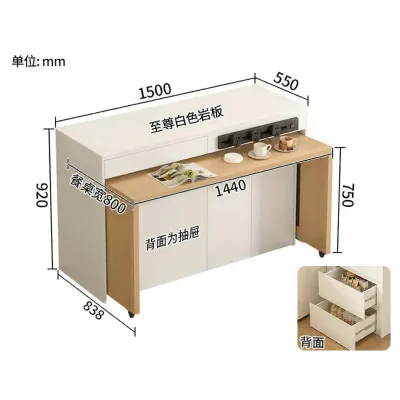
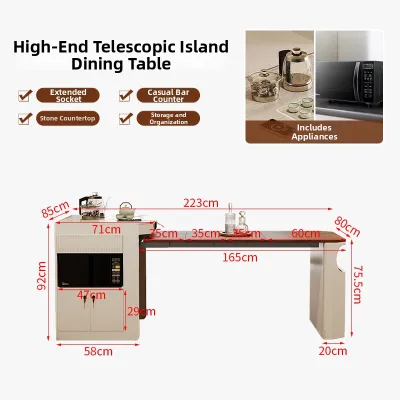
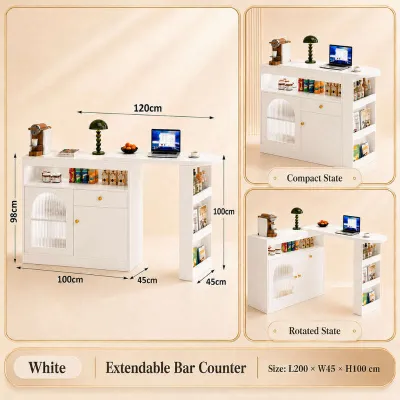
Products mentioned in this guide
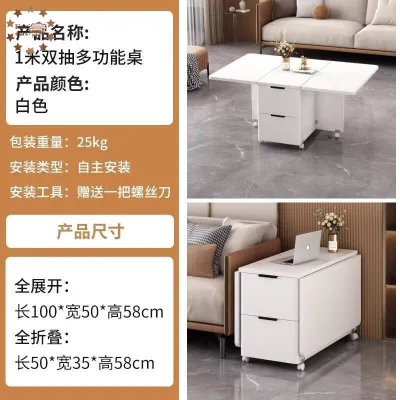
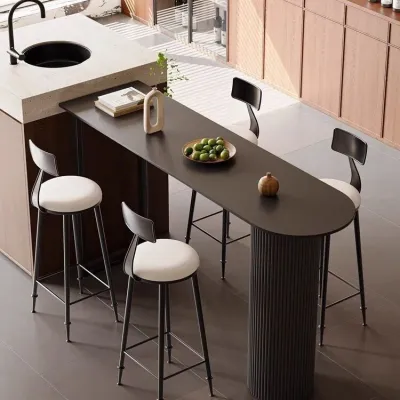
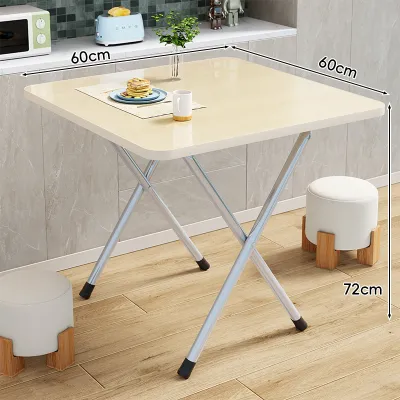
115 Lazada user ratings
I got the table, and it feels just right in size. It's pretty sturdy and overall feels great!
The material is okay, but it started to peel once I got it on the table.
This is my second purchase, great value, totally enough! Haha!
The quality is great, and I highly recommend buying it.
The quality is great, and I recommend buying it!
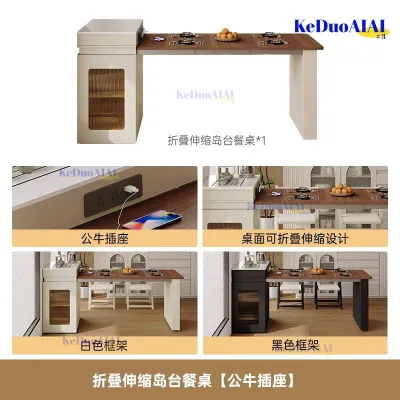
1 Lazada user ratings
The bar cabinet I've been longing for has finally been installed. The appearance level is indeed high. When placed in the living room, the a…Read full reviewShow less
The bar cabinet I've been longing for has finally been installed. The appearance level is indeed high. When placed in the living room, the atmosphere is fully enhanced. The countertop material is thick, the texture is smooth, the color is very accurate, and it matches well with my home decoration style. The storage space is also reasonable. The lower cabinet can hold many things, and the top can also hold fruit plates. The overall shopping experience is great. Buying this at this price and getting such quality and service is well worth it.

Prices are valid at publication and may change. Please refer to the product page for the latest price.
When matching a table shape to your room’s proportions, the goal is to mirror the room’s footprint. An elongated dining room or a long, narrow open-plan zone benefits from a rectangular table because it aligns with the room’s natural lines, preventing the space from looking empty or disjointed. Conversely, placing a rectangular table in a perfectly square room often creates tight, awkward corners and leaves unused dead space on either side. In square rooms, a round table sits harmoniously in the center, maintaining equal distance from all walls and creating a balanced visual layout.
Traffic flow is another critical consideration, particularly in high-traffic zones or open-plan layouts where the dining area connects to the kitchen or living room. Round tables lack sharp corners, which makes navigating around them much smoother and reduces the risk of bumping into edges when carrying dishes. In tight spaces, this curved profile allows for more flexible pathways, as people can slip past at various angles. Rectangular tables, with their rigid corners, require more structured walkways and can easily create bottlenecks if placed too close to walls or doorways.
Finally, consider the visual weight of the table base. Round tables often feature a central pedestal base rather than four corner legs, exposing more floor to make a small room feel larger. Rectangular tables, especially those with thick corner legs, have a more substantial visual presence that grounds a large, open-plan space but can overwhelm a smaller room.
How Does Household Size and Seating Needs Influence Your Choice?
The number of people you feed daily and how frequently you host guests will dictate which table shape provides the most practical seating capacity. Rectangular tables offer predictable, scalable seating along straight edges, while round tables excel at creating intimate, flexible seating arrangements for smaller groups.

When comparing standard seating capacities, rectangular tables are generally more efficient for larger households. They provide a structured layout where each diner has a defined space, typically requiring 60 to 70 cm of table width. Round tables can become impractical at larger sizes; while a 120 cm round table comfortably seats four people, expanding that capacity to eight requires a diameter of 150 cm or more, which quickly dominates a room.
Flexibility for occasional guests is another area where the two shapes differ. Round tables offer excellent flexibility for squeezing in an extra chair because there are no hard corners to avoid, and a central pedestal base means no diner has to straddle a table leg. However, if you frequently host large gatherings, a rectangular extension table is often the more practical choice, scaling up to accommodate a crowd without permanently sacrificing your floor space.
Conversational dynamics also play a major role in how a table feels during group meals. Round tables place every diner at an equal distance from one another, ensuring that everyone is included in a single, shared conversation. This layout eliminates the feeling of being “left out” at the end of the table. Rectangular tables, on the other hand, naturally segment conversations into smaller groups, as it is difficult to speak to someone seated several places away or at the far end of a long table.
What Are the Safety and Daily Usability Differences for Your Family?
Daily usability and physical safety depend heavily on how your household interacts with the table’s edges and support structures. Round tables offer a safer environment for active households due to their lack of sharp corners, while rectangular tables provide highly stable, traditional support across a larger surface area.
For homes with young children or active pets, safety is often a primary concern. The sharp, 90-degree corners of a standard rectangular table sit right at eye or head level for small children, presenting a constant bumping hazard. Round tables eliminate this risk entirely with their smooth, continuous edges. If you prefer a rectangular shape, look for designs with rounded or eased corners to mitigate the risk of injury.
Usability also extends to how easily diners can interact with the table’s contents. Passing dishes is generally much simpler at a round table, as every seat is equidistant from the center. On a long rectangular table, reaching across the surface is more difficult, often requiring diners to constantly pass platters down the line or necessitating multiple sets of serving dishes.
Stability and base design must also be evaluated. Round tables with a single pedestal base offer excellent legroom, but they must be checked for stability to ensure the table does not wobble when heavy downward pressure is applied to the outer edges. Rectangular tables, supported by four sturdy corner legs, are inherently highly stable and less prone to tipping, making them a reliable choice for heavy daily use.
Which Table Shape Aligns Better With Your Dining Habits and Activities?
Your choice of table shape should reflect how you use the surface for daily tasks, hobbies, and serving styles. Rectangular tables are highly suited for multi-functional tasks and structured dining, whereas round tables are ideal for shared, communal meals and casual gatherings.
In many modern homes, the dining table serves as a multi-functional hub for remote work, homework, or crafts. Rectangular tables excel here because they provide distinct, separated zones. One person can set up a laptop at one end of the table, while another works on a project at the opposite end. Round tables, by contrast, force a shared central focus, which is perfect for playing board games but less practical for multiple independent tasks.
Your preferred serving style also influences which shape will feel more natural. If you enjoy traditional plated meals or formal dining, a rectangular table provides a structured layout that accommodates individual place settings beautifully. For buffet-style serving, rectangular tables offer a long, stable center line for dishes. Round tables can quickly become cluttered when multiple serving dishes are placed in the center, though adding a rotating tray can make sharing food much easier.
Managing table decor and centerpieces is another practical consideration. A rectangular table allows for linear decor, such as a row of small candles or a long, low floral arrangement, which adds visual interest without blocking sightlines. On a round table, centerpieces must be kept compact and low to the surface to prevent them from obstructing views and cutting off conversation between diners sitting opposite each other.
What Exact Measurements and Clearances Must You Verify Before Buying?
Before committing to any dining table, you must verify the physical limits of your room, your seating, and your home’s entry points to avoid costly delivery or layout mistakes. Ensuring you have adequate clearance for chairs and walkways is just as critical as measuring the table itself.
To determine the maximum table size your room can accommodate, start by measuring the available floor space and subtracting required walkway clearances. As a general rule, allow at least 90 cm of clearance between the edge of the table and the nearest wall or doorway. This clearance allows diners to pull their chairs out fully. For high-traffic pathways where people need to walk behind seated diners, increase this clearance to 100 cm or 120 cm.
Next, carefully check the delivery access routes into your home. A table that fits perfectly in your dining room is of no use if it cannot get through the front door. Measure the width and height of all doorways, hallways, stairwells, and elevator cabins. Round tables with non-detachable pedestal bases can be surprisingly difficult to maneuver through tight corners, while exceptionally long rectangular tabletops may not fit into standard apartment lifts.
Finally, verify the ergonomic compatibility between your table and your dining chairs. Standard dining tables typically stand around 75 cm high, while standard chair seats are about 45 cm high. Ensure there is a clearance of at least 30 cm between the top of the chair seat and the underside of the tabletop or apron to allow comfortable leg movement. Also, check that the table legs or pedestal do not block your knees when you sit down.

Community discussion
Share your experience or ask a question. Comments are reviewed before publication.