
Finding the ideal reclining office chair in Singapore requires looking beyond flashy marketing campaigns and focusing on how a chair’s mechanical design, structural integrity, and materials align with your daily routine. True value is not determined by a low price tag alone, nor is it guaranteed by a premium brand name. Instead, it is found when the chair’s specifications match your physical space, body type, and work habits. By evaluating key engineering details and material choices, you can make an informed decision that supports both your posture and your budget.
What Defines True Value in a Reclining Office Chair?
To determine the true value of a reclining office chair, you must weigh the upfront purchase price against the expected lifespan of the product. A cheaper chair that requires replacement after a year of heavy use often costs more in the long run than a mid-range model built to last five years or more. Consider how many hours you spend in the chair daily and how frequently you intend to use the recline function, as these factors dictate the level of mechanical wear the chair must endure.
The mechanical sophistication of the recline function is a major cost driver. Basic tilt mechanisms allow the backrest and seat to rock back together at a fixed ratio, which can lift your feet off the floor and strain your thighs. Advanced multi-position recline or synchronous tilt mechanisms allow the backrest to tilt independently of the seat, keeping your feet flat on the ground and maintaining proper ergonomic alignment.
Products mentioned in this guide
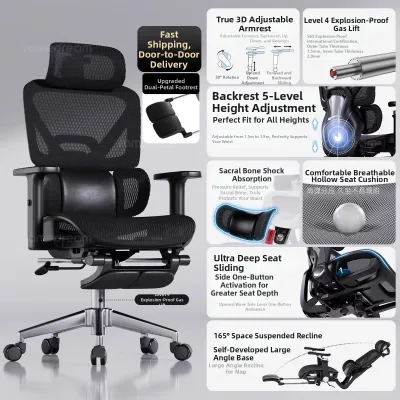
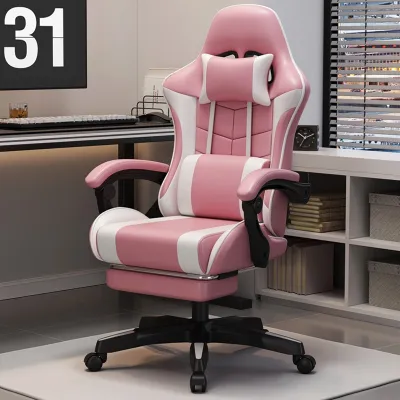
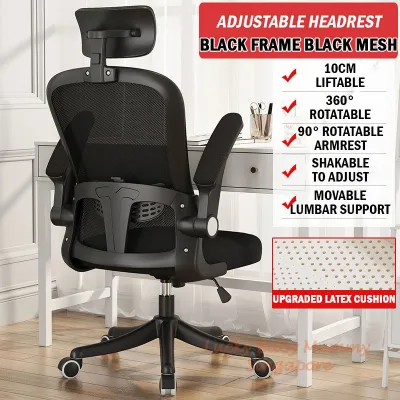
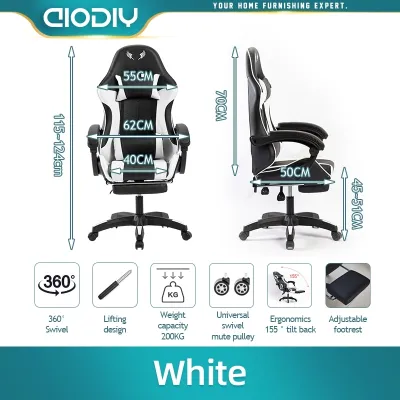
![[SG Ready Stocks] PRO Ergonomic Full Mesh Chair – Lumbar/Headrest/Armrest Support – Adjustable Height & Recline – Home & Office Use](https://img.lazcdn.com/g/p/b651adc585c719c5348574418e1859bc.jpg_400x400q80.jpg_.webp)
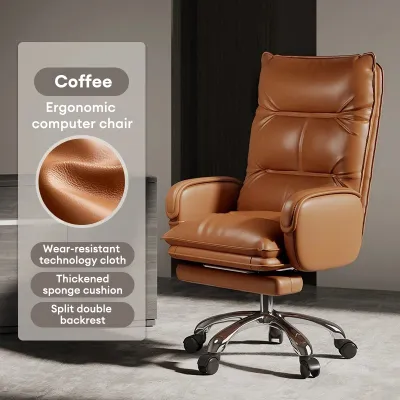
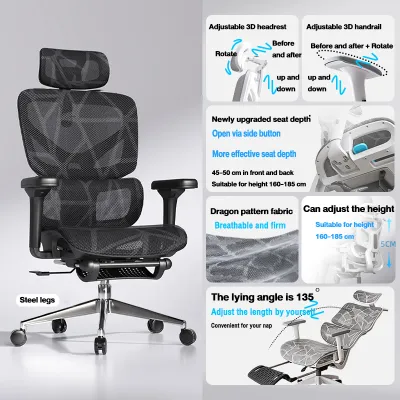
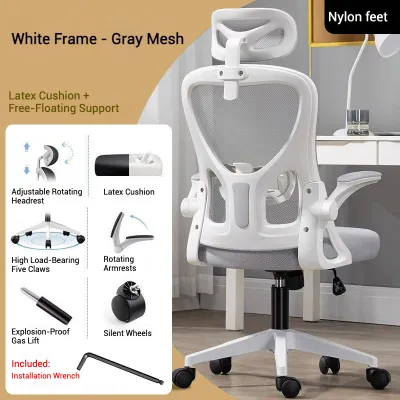
Prices are valid at publication and may change. Please refer to the product page for the latest price.
Budget constraints inevitably force trade-offs in material quality and mechanical smoothness. Lower-priced models often utilize thinner plastic components, lower-density foam that flattens over time, and less stable recline joints. Understanding these trade-offs helps you decide whether to invest more upfront for smoother transitions and more durable materials or to opt for a simpler design that fits a tighter budget.
Essential Specifications to Compare Before Buying
When comparing different models, start by examining the maximum recline angle and the number of locking positions available. A chair that reclines up to 135 or 150 degrees offers a comfortable posture for resting or reading, but it requires a robust locking mechanism to remain secure. Look for chairs that offer multiple locking angles rather than just a single upright lock, as this allows you to customize the angle for different tasks like typing, video calls, or relaxing.

Weight capacity and base stability are critical safety factors, especially when the chair is fully reclined. Check the manufacturer’s specified weight limit and look for a wide, five-star base made of reinforced nylon, aluminum, or steel. A wider base diameter prevents the chair from tipping backward when your center of gravity shifts during a deep recline.
Spatial planning is essential, particularly in compact Singapore apartments where study rooms or bedroom workspaces may have limited floor area. You must measure the finished dimensions of the chair when fully upright and when fully reclined with the footrest extended. Ensure there is sufficient clearance behind the chair so the backrest does not strike walls or furniture, and verify that the chair can easily pass through your doorways and lift access during delivery.
Evaluating Comfort and Recline Mechanisms
The type of recline mechanism directly influences your comfort and posture throughout the workday. Synchronous tilt mechanisms are generally preferred for ergonomic use because they tilt the backrest and seat at a dynamic ratio, which opens up your hip angle without lifting your knees. Independent backrest recline systems allow you to adjust the back angle separately, which is highly customizable but may require manual adjustments to maintain proper lumbar alignment.
Lumbar support and headrest positioning must remain effective even when you tilt backward. Many basic chairs have fixed lumbar supports that shift away from your lower back when you recline, leading to slouching. Look for adjustable lumbar systems that track with your spine’s movement and a headrest that can be angled forward to support your neck while your body is reclined.
If you plan to use the recline function for extended relaxation, an integrated footrest can enhance comfort. Evaluate the deployment method—whether it slides out smoothly from under the seat or folds down—and inspect the support bars. Metal support bars offer significantly better stability and weight capacity than thin plastic alternatives, which can bend or snap under the weight of your legs.
Indicators of Build Quality and Durability
To assess a chair’s durability, look closely at the materials used in the internal frame and the base. A steel-reinforced frame provides the necessary rigidity to handle the dynamic forces of reclining over several years. Avoid chairs that rely heavily on thin plastic joints in high-stress areas, such as the connection point between the backrest and the seat mechanism.
Upholstery choice is another critical factor, particularly in Singapore’s warm and humid climate. While PU leather offers a sleek look and is easy to wipe clean, it tends to trap heat and moisture, which can lead to peeling and discomfort over time. High-tensile mesh fabric provides superior breathability, allowing air to circulate and keep you cool, though it requires regular vacuuming to prevent dust buildup.
A manufacturer’s warranty is a strong indicator of their confidence in the chair’s build quality. Pay close attention to the specific terms of the warranty, as some brands offer a long warranty on the frame but only cover the gas lift, recline mechanism, and moving parts for a single year. A comprehensive warranty that covers these mechanical components for three to five years offers much better protection for your investment.
Navigating Price Tiers and Feature Expectations
In the entry-level price tier, typically under S$200, you can expect basic tilt mechanisms, fixed armrests, and simpler materials. While these chairs are highly accessible, they often feature lower-density foam padding that may compress permanently within a year of daily use. The recline action on budget models may feel less fluid, and integrated footrests in this price range tend to have more flex and lower weight tolerances.
The mid-range tier, generally spanning from S$200 to S$600, represents the sweet spot for most home office users in Singapore. In this bracket, you will find chairs with synchronous tilt mechanisms, adjustable armrests, and more durable mesh or high-density molded foam. These models offer a much smoother recline motion, more reliable locking positions, and sturdier footrest attachments that can withstand regular use.
Premium chairs, priced above S$600, focus on advanced ergonomic engineering, high-grade materials, and extensive customization. These models often feature auto-weight sensing tension control, which automatically adjusts the recline resistance based on your body weight. They also utilize premium materials like polished aluminum bases, specialized elastomeric mesh, and offer comprehensive warranties that cover all components for up to ten years or more.
Decision Framework: Matching a Chair to Your Work Style
Choosing the right reclining office chair depends heavily on how you plan to use it throughout the day. If your routine involves long hours of focused computer work interspersed with dedicated breaks for reading, brainstorming, or watching media, a heavy-duty chair with a multi-lock recline mechanism and an integrated footrest is highly suitable. This setup allows you to transition easily from an active working posture to a fully relaxed state without leaving your desk.
Conversely, if your home office space is limited or you primarily use your desk for short, active tasks, a compact chair with a basic tilt function may be more practical. These models have a smaller footprint, making them easier to maneuver in tight spaces, and they still provide enough flexibility for occasional postural shifts to relieve spinal pressure.
It is important to note that while reclining office chairs offer excellent comfort for general use, they are not a substitute for specialized medical seating. If you have chronic back pain, spinal conditions, or require specific orthopedic support, you should consult a healthcare professional before making a purchase. A medical expert can provide personalized recommendations based on your specific physiological needs.
Before finalizing your purchase, verify whether the retailer has a physical showroom in Singapore where you can test the chair in person. Testing the chair allows you to feel the recline tension, check if the seat depth fits your thighs, and ensure the lumbar support aligns correctly with your spine. If visiting a showroom is not possible, carefully review the retailer’s return policy and warranty terms to ensure you can exchange or return the chair if it does not meet your ergonomic expectations.
Frequently Asked Questions (FAQ)
Can I use a reclining office chair as a primary bed for napping?
While a reclining office chair is excellent for short power naps, it should not be used as a primary bed for overnight sleep. Office chairs are designed to support your body in seated or semi-reclined postures, and they do not provide the flat, uniform support needed for natural spinal alignment during deep sleep. Additionally, sleeping on an office chair for extended periods subjects the recline mechanism and gas lift to prolonged static loads, which can accelerate mechanical wear and increase the risk of the chair tipping if you roll over.
Do reclining office chairs require more floor space than standard chairs?
Yes, reclining office chairs require a significantly larger operational footprint than standard, non-reclining models. To plan your space accurately, you must account for the clearance needed behind the chair when the backrest is fully tilted, as well as the space in front for the footrest to deploy. A practical method is to measure the distance from the back of your desk to the nearest wall or obstacle, ensuring you have at least 1.2 to 1.5 meters of clear space to accommodate the full range of motion without obstruction.

Community discussion
Share your experience or ask a question. Comments are reviewed before publication.