
Deciding between a ready-made and a custom kitchen cabinet with wheels for your Singapore home comes down to your kitchen’s exact floor plan, your budget, and your specific storage needs. Ready-made options offer immediate availability and lower upfront costs, making them ideal for standard layouts and quick setups. Custom mobile cabinets, while requiring a higher investment and longer lead times, allow you to maximize awkward gaps, match existing built-in carpentry, and select reinforced materials tailored to heavy kitchen appliances.
Ready-made mobile cabinets are mass-produced units with standardized dimensions. You can find these off-the-shelf options at local furniture retailers and online marketplaces, ready for quick delivery and assembly. Because they are manufactured in large quantities, they are highly cost-effective, though you are limited to the colors, materials, and configurations pre-determined by the manufacturer.
Custom mobile cabinets are built-to-order by local carpenters or interior design firms. This route gives you complete control over the cabinet’s width, depth, height, and internal shelving configuration. While this bespoke approach requires several weeks of design and fabrication, it ensures the finished piece integrates seamlessly with your kitchen’s aesthetic and physical boundaries.
Products mentioned in this guide
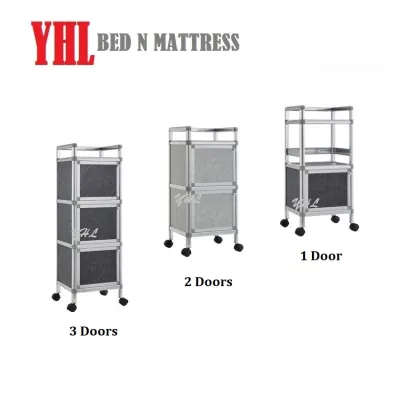
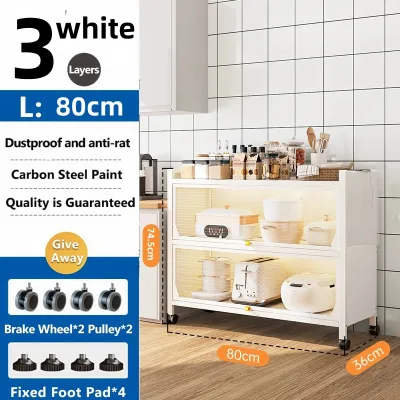
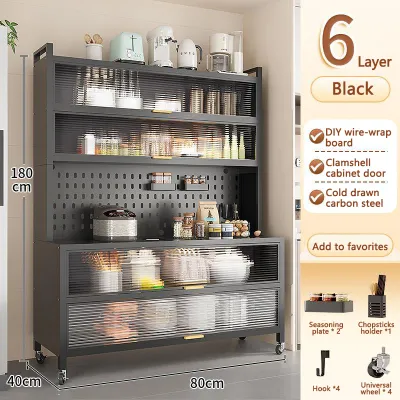
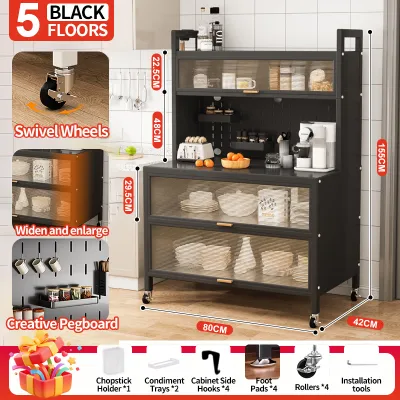
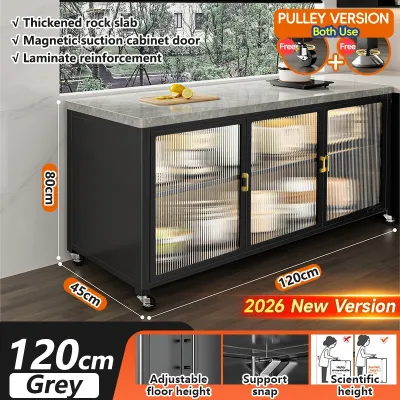
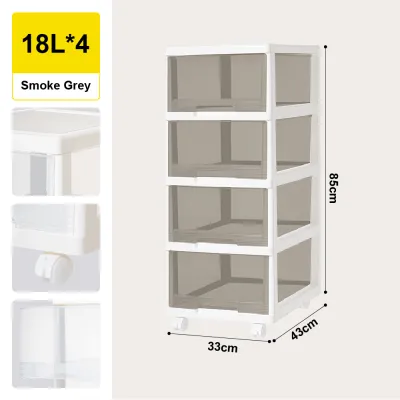
Prices are valid at publication and may change. Please refer to the product page for the latest price.
Adding wheels, or casters, introduces unique structural requirements for both types of cabinetry. Ready-made units often feature pre-drilled holes for standard wheels, but their base panels may require careful weight monitoring to prevent sagging. Custom mobile units can be engineered from the ground up with reinforced sub-frames and heavy-duty casters, ensuring the cabinet remains stable and easy to maneuver even when fully loaded with heavy cookware.
Key Decision Factors for Your Kitchen
Choosing the right mobile cabinet requires balancing your physical kitchen environment with your household budget and daily cooking habits. Evaluating these three primary pillars—spatial fit, financial impact, and functional storage—will help you identify which option aligns best with your home.
Space Constraints and Layout Flexibility
Singapore kitchens, particularly in HDB flats and compact condominiums, require careful space planning to maintain smooth traffic flow. Before purchasing or commissioning a cabinet, measure your available floor space, taking into account the door swing clearances of nearby refrigerators, ovens, and entryways. A mobile cabinet must be able to glide in and out of its designated parking spot without scraping adjacent surfaces.
Ready-made cabinets come in fixed widths that may not perfectly match the gaps between your existing appliances or countertops. If a standard unit is too wide, it will not fit; if it is too narrow, it leaves an awkward gap that easily accumulates dust, grease, and kitchen debris. Custom millwork eliminates this issue by allowing you to specify dimensions down to the millimeter, ensuring a flush, built-in look when the cabinet is parked.
Another critical spatial consideration is the wheel swivel radius. Casters need room to rotate 360 degrees as you change directions, which can add unexpected width to the cabinet’s movement path. When planning your layout, ensure there is sufficient clearance for the wheels to turn freely without bumping into baseboards or the plinths of fixed cabinetry.
Budget and Long-Term Value
Your budget is a major determining factor when choosing between off-the-shelf convenience and bespoke carpentry. Ready-made kitchen cabinets with wheels are generally budget-friendly, with prices varying based on size and material. However, you must factor in potential hidden costs such as delivery fees, professional assembly charges, and the cost of upgrading basic plastic wheels to floor-friendly rubber casters.
Custom carpentry involves a higher upfront investment in S$, reflecting the personalized design service, manual labor, and localized fabrication. When obtaining quotes from local carpenters, ensure the price includes delivery, installation, hardware, and a clear breakdown of the caster specifications. While the initial cost is higher, a custom unit built with high-quality materials can offer better long-term value by resisting the wear and tear of a busy kitchen.
Material longevity and warranty terms also differ significantly between the two options. Ready-made units often come with limited retail warranties that may not cover wear on the wheels or moisture damage to the cabinet body. Local carpenters may offer more direct service agreements, allowing you to contact them directly if a drawer runner misaligns or a caster requires replacement after installation.
Storage Needs and Ergonomics
What you plan to store inside your mobile cabinet should dictate its internal structure. Ready-made units typically feature fixed horizontal shelves or basic drawer configurations. If you intend to store tall appliances like stand mixers, blenders, or deep stockpots, standard shelf heights may force you to store these items elsewhere, defeating the purpose of the mobile workstation.
Custom builds allow you to design the interior around your specific kitchen inventory. You can incorporate deep pull-out drawers, adjustable vertical dividers for baking sheets, or specialized spice racks. This level of customization ensures that every square centimeter of the cabinet is utilized efficiently, reducing clutter on your main countertops.
Ergonomics and load-bearing capacity are equally vital. The height of a custom cabinet can be tailored to your physical height, creating a comfortable prep surface that prevents back strain. Furthermore, you must verify the load rating of the cabinet’s base; heavy appliances require a robust platform and high-capacity wheels to prevent the unit from bowing or becoming too heavy to push safely.
Comparing the Options: When to Choose Which
To help finalize your decision, it is helpful to evaluate your living situation against a clear set of practical conditions. Your choice should reflect not only your current needs but also your future housing plans.

Choose a ready-made kitchen cabinet with wheels if you are currently renting your home, as you can easily pack up and transport the unit to your next property. This option is also ideal if you need immediate storage solutions, have a standard kitchen layout with common appliance dimensions, or are working within a strict, predefined budget.
Choose a custom mobile cabinet if your kitchen has an irregular floor plan, such as an awkward alcove or a curved wall, where standard furniture cannot fit. Custom is also the right path if you want the mobile unit to match the exact laminate, countertop material, and handle hardware of your existing built-in kitchen cabinets, creating a cohesive design.
Before making any purchase, verify the structural conditions of your kitchen floor. Mobile cabinets require a level surface to prevent unwanted drifting; if your kitchen floor slopes toward a floor drain, you will need to prioritize high-quality locking brakes. Additionally, consider the weight distribution of the cabinet to ensure it remains stable when moving across tile grout lines.
| Feature | Ready-Made Cabinets | Custom Cabinets |
|---|---|---|
| Lead Time | Immediate to a few days | Several weeks for fabrication |
| Dimension Flexibility | Fixed standard sizes | Fully customizable to the millimeter |
| Cost Range | Lower upfront cost (S$ variable) | Higher initial investment (S$ variable) |
| Internal Layout | Standard shelves and drawers | Tailored to specific appliances |
| Warranty | Retailer-specific terms | Carpenter-specific agreement |
Essential Checks Before You Buy or Build
Before finalizing your order or signing off on a carpentry design, run through these essential checks to ensure your mobile cabinet is safe, functional, and durable.
First, inspect the caster specifications carefully. Look for non-marking polyurethane or soft rubber wheels, which glide smoothly without scratching sensitive kitchen flooring like vinyl, tile, or parquet. Ensure that at least two of the wheels—preferably those at the front—feature robust, easy-to-engage locking brakes to keep the cabinet stationary during food preparation.
Second, plan for adequate clearance and ventilation. If you intend to park your mobile cabinet next to heat-generating appliances like an oven or a refrigerator, leave a gap of at least 50mm to allow heat to dissipate. Placing a cabinet too close to a heat source without proper ventilation can damage the cabinet’s finish or affect the appliance’s efficiency.
Third, perform a stability and center-of-gravity check. Tall, narrow cabinets with wheels are prone to tipping if they are top-heavy. Ensure that heavier items, such as cast-iron pans or liquid storage, are kept in the bottom compartments. If you are opting for a custom build, ask your carpenter to design a wider base or incorporate anti-tip hardware to keep the unit stable when drawers are fully extended.
Finally, review the material care guidelines. Kitchens are high-moisture environments prone to spills, steam, and grease. Check that the cabinet’s surfaces, whether laminate, solid wood, or stainless steel, are sealed properly against moisture. Regularly wipe down the cabinet and inspect the wheel axles for accumulated hair, dust, or kitchen debris that could impede smooth rolling.
Frequently Asked Questions (FAQ)
Can I add wheels to my existing fixed kitchen cabinets?
Retrofitting wheels onto a standard, fixed kitchen cabinet is possible but requires careful structural assessment. Standard cabinets are designed to distribute their weight evenly across a flat plinth or adjustable legs. Simply screwing casters into the bottom panel can cause the wood to split or sag under load. To do this safely, you must reinforce the base with a solid plywood or metal sub-frame to distribute the weight to the wheel mounting points. If you are unsure about the structural integrity of your cabinet, consult a professional carpenter to perform the modification.
How do I prevent a mobile cabinet from rolling on an uneven floor?
If your kitchen floor has a slight slope for drainage, a mobile cabinet may drift when unlocked. To prevent this, ensure you install heavy-duty locking casters with high-friction rubber treads that grip the floor securely. Another effective solution is to use a combination of wheels and adjustable leveling feet; some specialized hardware systems allow you to wind down leveling pads to lift the wheels slightly off the ground when the cabinet is stationary. Alternatively, placing a low-profile, non-slip silicone or rubber floor mat under the cabinet’s parking spot can provide enough resistance to keep the unit in place.

Community discussion
Share your experience or ask a question. Comments are reviewed before publication.