
Deciding between a portable back massager and a full massage chair comes down to balancing your physical relief needs, available home space, and budget. While a portable unit offers targeted, flexible relief that fits into almost any living arrangement, a full massage chair provides an immersive, multi-sensory recovery experience at a much higher physical and financial footprint. Understanding how each option integrates into your daily routine and home layout is essential before making an investment.
Assess Your Back Relief Needs and Usage Habits
To determine which device fits your lifestyle, start by analyzing the nature of your physical discomfort and how often you seek relief. If your tension is localized—such as lower back stiffness from sitting at a desk or shoulder tightness from a specific workout—a portable back massager is often highly effective. These compact devices allow you to position the nodes precisely against the troublesome spot, offering on-demand, targeted kneading or vibration.
Conversely, if you experience systemic fatigue, chronic full-body tension, or require a comprehensive daily recovery routine, a full massage chair is designed to address multiple muscle groups simultaneously. These chairs utilize complex roller tracks, air compression sleeves, and foot rollers to deliver a coordinated massage from your neck down to your calves and feet.
Products mentioned in this guide
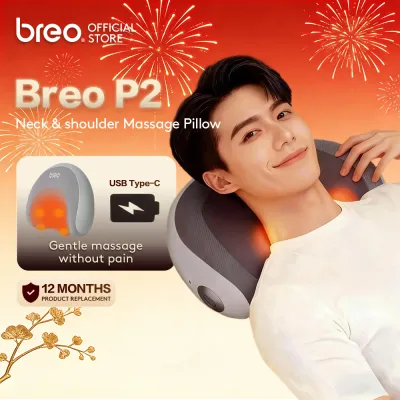
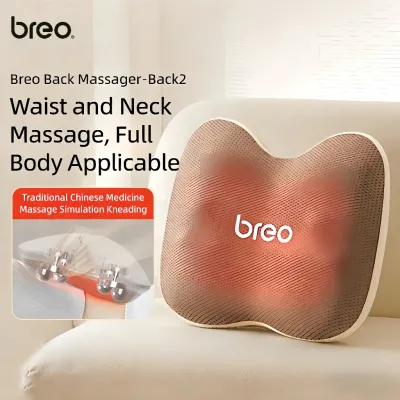
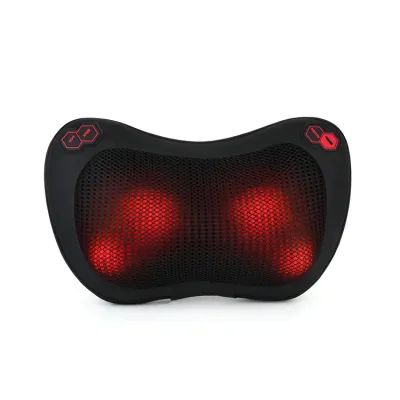
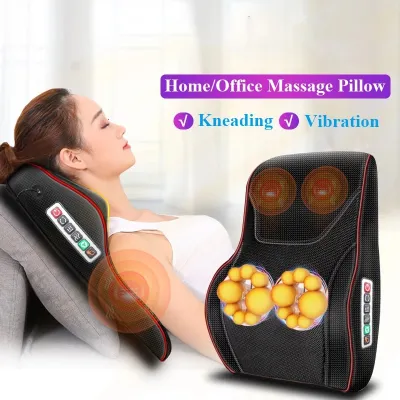
![[SG Seller] Electric Neck Shoulder Back Massager Pillow – Deep Tissue Kneading Heat Therapy Pain Relief Ready Stock](https://img.lazcdn.com/g/ff/kf/Sad3b870dab464f398212a687130ff7e8C.jpg_400x400q80.jpg_.webp)
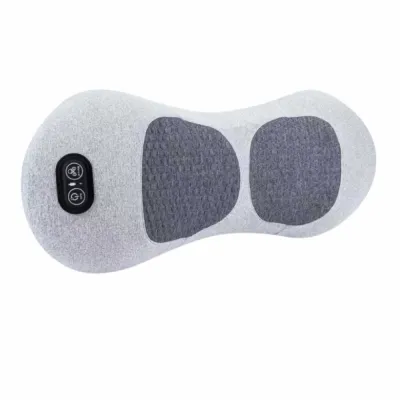
Prices are valid at publication and may change. Please refer to the product page for the latest price.
When evaluating either option, check the manufacturer specifications for adjustable intensity levels, heat functions, and roller track configurations. Portable units typically offer basic circular nodes or small vertical tracks, whereas full chairs feature advanced S-track or L-track systems that follow the natural curvature of your spine down to your glutes.
Consider also who will use the device and where. A portable massager can easily be shared among family members, packed in a suitcase, or taken to the office. A full massage chair, once installed, becomes a permanent fixture in a single room, meaning users must always go to the chair rather than bringing the relief to their preferred seating area.
Evaluate Your Living Space and Setup Requirements
Integrating wellness equipment into your home requires careful spatial planning, particularly in space-conscious urban environments like Singapore. A full massage chair demands a significant physical footprint. Beyond its static dimensions, you must measure the clearance required for the chair to recline fully. Many modern chairs feature “wall-hugging” designs that slide forward as they tilt back, but they still require a designated buffer zone behind and in front of the unit.

Before purchasing a heavy-duty chair, verify the delivery logistics. Measure the width and height of your doorways, hallways, staircases, and lift doors. Many high-rise apartments and condominiums have strict lift size limits that can prevent fully assembled chairs from reaching your floor. Check if the retailer offers professional assembly inside your home or if the unit must arrive pre-assembled, which requires wider entry pathways.
In contrast, a portable back massager requires virtually no dedicated floor space. It can be strapped to an existing office chair, placed on a sofa, or stored in a wardrobe when not in use.
Power management is another critical factor. Both options require proximity to a power outlet, but a full massage chair has higher power demands and a thick, heavy cable that can present a tripping hazard if run across a room. Ensure your intended setup area has a nearby wall outlet to avoid relying on extension cords, which can degrade over time under heavy electrical loads.
Compare Budget, Maintenance, and Long-Term Value
The financial commitment of these two product categories represents a vast divide. A portable back massager is a low-risk investment, typically ranging from double-digit to low triple-digit S$ amounts. This makes it an accessible entry point for those testing whether mechanical massage therapy helps manage their discomfort.
A full massage chair is a major furniture purchase, often costing several thousand S$. Because of this substantial outlay, you must evaluate the long-term support structure. Check the warranty terms carefully, focusing on the duration of coverage for mechanical parts, electronics, and labor. Confirm that the brand has an established local service center in Singapore to handle repairs, as shipping a heavy chair back to an overseas manufacturer is logistically and financially impractical.
Maintenance requirements also differ significantly. Portable massagers usually feature removable, washable fabric covers that simplify hygiene. Full massage chairs are typically upholstered in synthetic leather or polyurethane (PU) materials. In Singapore’s warm, humid climate, these materials require regular cleaning with specialized, non-alcohol-based conditioners to prevent peeling and cracking over time.
Additionally, consider future relocation costs. Moving a portable massager is as simple as placing it in a box. Relocating a full massage chair requires professional movers, specialized disassembly, and careful transport to avoid damaging the internal calibration of the roller tracks.
Decision Matrix: When to Choose Which Option
To simplify your decision, evaluate which of the following scenarios aligns closest with your current living situation and physical needs.
Choose a portable back massager if:
- Your budget is limited to a few hundred S$ or less.
- You live in a compact apartment, such as a rental room or a smaller HDB flat, where floor space is at a premium.
- You want a device you can easily move between your office chair, sofa, and bed.
- Your muscle tension is occasional and localized to specific areas like the lower back or shoulders.
Choose a full massage chair if:
- You have a dedicated, permanent space of at least two square meters with sufficient clearance for full reclining.
- You are prepared for a long-term financial investment and have verified the local warranty and service support.
- You require comprehensive, full-body relief that targets the neck, back, glutes, calves, and feet simultaneously.
- You seek advanced features like zero-gravity positioning, full-body air compression, and integrated foot rollers.
Regardless of your choice, safety must come first. If you have severe spinal conditions, osteoporosis, cardiovascular issues, medical implants like pacemakers, or are pregnant, stop and consult a qualified medical professional before using any mechanical massage device. Mechanical rollers and compression airbags exert significant physical force that may not be suitable for all health conditions.
Frequently Asked Questions (FAQ)
Can a portable back massager provide the same relief as a full massage chair for chronic pain?
No, a portable back massager cannot replicate the comprehensive relief of a full massage chair for chronic, widespread pain. Portable units rely on your body weight pressing against a static set of nodes or a short, localized track. They lack the structural stability and mechanical depth to deliver deep-tissue therapy across the entire spine. Full massage chairs use advanced, multi-dimensional roller tracks (such as L-tracks) that utilize calibrated mechanical pressure and body-scanning technology to adjust the massage depth to your specific anatomy. However, for localized, minor chronic tension, a portable unit can still serve as a helpful, cost-effective daily maintenance tool. Always check the manufacturer’s maximum force limits and consult a healthcare professional to ensure mechanical massage is safe for your specific chronic condition.
Do full massage chairs require special electrical or floor reinforcement?
Generally, standard household electrical outlets in Singapore are fully capable of powering a massage chair, as most models consume between 100 to 300 watts during operation—similar to a desktop computer or a small television. However, it is highly recommended to use a dedicated surge protector to safeguard the chair’s sensitive electronic control boards from power fluctuations.
Regarding floor load-bearing capacity, standard residential floors in Singapore are designed to support typical furniture loads. However, because a full massage chair can weigh anywhere from 80 to over 150 kilograms, the concentrated weight on its small caster wheels or feet can potentially indent soft flooring materials like vinyl, laminate, or parquet. Placing a dense, protective rubber or foam mat underneath the chair is an effective way to distribute the weight evenly and protect your flooring. If you live in an older property or have concerns about structural limits, check your building’s load guidelines or consult building management.

Community discussion
Share your experience or ask a question. Comments are reviewed before publication.