
Finding the right balance between entryway space and shoe storage is a common challenge for Singapore homeowners. When space is at a premium, a plastic shoe cabinet offers a lightweight, versatile, and moisture-resistant option. However, determining exactly how many pairs of shoes a plastic cabinet can hold requires looking beyond the manufacturer’s advertised capacity. The actual capacity depends heavily on your household’s footwear habits, the physical dimensions of the cabinet, and the layout of your entryway.
Assessing Your Household's Shoe Storage Needs
To find the right storage capacity, start by auditing your household’s current footwear collection. A practical baseline is to allocate space for about four to six pairs of shoes per person for daily and weekly use. This typically includes work shoes, school shoes, casual sneakers, and sandals or slippers. Specialty footwear, such as running shoes, hiking boots, or formal heels, can quickly increase this number and may require different storage solutions.
It is also wise to plan for future household growth or lifestyle changes. If you frequently host guests, having a designated shelf or a separate open rack for visitors’ shoes prevents entryway clutter. Families with young children should also anticipate that shoe sizes will increase, meaning the same cabinet that fits twelve pairs of toddler shoes today might only fit six pairs of teenage sneakers in a few years.
Products mentioned in this guide
![[SG Stock]Plastic Shoe Rack Plastic Shoe Storage Cabinet DIY Shoe Storage Cabinet Multi-layer Shoes Rack](https://img.lazcdn.com/g/p/0d40be943a4bffe6751ae672988ced0f.jpg_400x400q80.jpg_.webp)
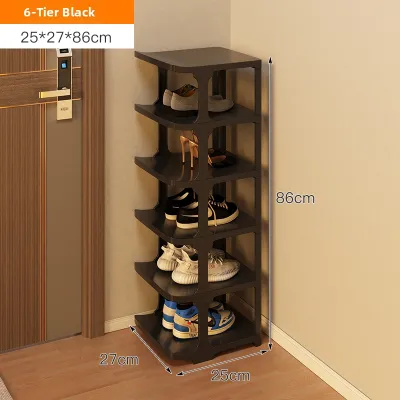
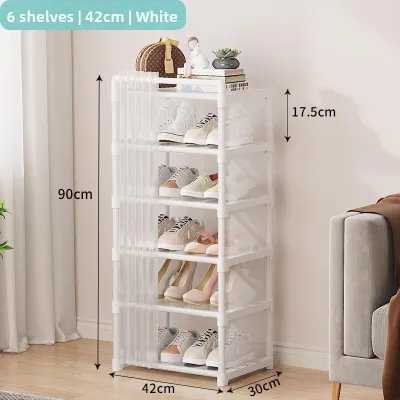
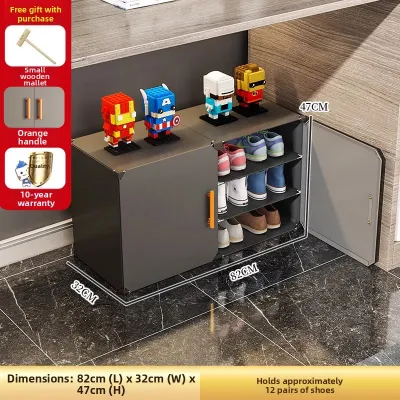
Prices are valid at publication and may change. Please refer to the product page for the latest price.
When planning your layout, consider separating your storage into two distinct zones. An open shoe rack is ideal for daily grab-and-go pairs, allowing damp shoes to air out after outdoor use. Meanwhile, an enclosed plastic shoe cabinet is better suited for long-term storage, protecting less frequently worn pairs from dust and light exposure.
Decoding Plastic Shoe Cabinet Capacity and Dimensions
When browsing online marketplaces or furniture stores, you will often see plastic shoe cabinets advertised with a specific “pair capacity,” such as a “24-pair shoe cabinet.” It is crucial to understand that these estimates are typically based on standard, low-profile flat shoes, such as women’s flats or slim sandals. If your household owns bulkier footwear, such as high-top sneakers, basketball shoes, or platform heels, the actual capacity will be significantly lower.

To avoid disappointment, always check the internal height clearance of the shelves. Standard shelves in plastic cabinets often have a fixed height of around 15 to 18 centimeters, which is sufficient for flats and standard sneakers but too tight for ankle boots or high heels. Look for cabinets that feature adjustable or removable shelf panels, allowing you to customize the interior layout to accommodate taller footwear without wasting vertical space.
Before making a purchase, review the exact physical dimensions provided in the product manual or listing. Pay close attention to the internal depth of the cabinet. A standard adult shoe requires an internal depth of at least 30 to 35 centimeters to sit flat on the shelf. If the cabinet is too shallow, you may have to store larger shoes sideways, which instantly cuts your storage capacity in half.
Measuring Your Entryway and Clearance Space
Before selecting a plastic shoe cabinet, precise measurements of your entryway are essential to ensure a proper fit. Measure the available floor width and depth where you plan to place the cabinet. Remember to account for skirting boards, which can prevent the cabinet from sitting flush against the wall, as well as uneven plastering or nearby electrical outlets that must remain accessible.
In Singapore, entryway space is often tight, particularly in HDB flats and condominiums. You must verify the door swing clearance of both your main entrance door and the cabinet doors themselves. If space is exceptionally narrow, consider a plastic cabinet with sliding doors or tipping buckets instead of traditional swing doors. Additionally, ensure the cabinet does not obstruct the main walkway, maintaining a safe and comfortable passage for daily movement.
If you plan to place the cabinet in a common corridor, you must comply with local housing corridor regulations. For instance, Singapore’s Civil Defence Force (SCDF) guidelines require maintaining a minimum clear escape passage of 1.2 meters along HDB corridors. Furthermore, because Singapore’s tropical climate is highly humid, enclosed plastic cabinets can trap moisture and lead to mold growth on leather shoes. Look for cabinets with built-in ventilation slots or louvers to promote airflow, and avoid placing damp shoes directly into closed storage.
Common Sizing and Capacity Mistakes to Avoid
One of the most common mistakes is relying solely on the maximum advertised pair count without verifying the actual shelf dimensions. A cabinet advertised for 30 pairs might only hold 15 pairs of men’s running shoes or formal dress shoes. Always calculate capacity based on the physical width of the shelves divided by the average width of your shoes.
Another critical error is placing a bulky cabinet in a way that blocks natural light or creates a tripping hazard in transitional spaces. Entryways should remain clear and welcoming. A cabinet that protrudes too far into the hallway can make the space feel cramped and increase the risk of accidental bumps, especially when carrying groceries or moving large items.
Finally, do not overload plastic shelves beyond their intended design limits. While plastic is highly resistant to moisture, it lacks the structural rigidity of solid wood or metal. Overloading shelves with heavy boots or stacking multiple pairs on top of each other can cause permanent bowing, joint separation, or overall cabinet instability. Always check the manufacturer’s specified load capacity per shelf and distribute weight evenly, placing heavier shoes on the bottom shelves.
Frequently Asked Questions (FAQ)
Can I adjust the shelves in a plastic shoe cabinet for taller shoes?
Yes, many modern plastic shoe cabinets feature adjustable shelves. Look for models designed with molded slots along the inner walls or removable plastic panels that allow you to change the shelf height. When adjusting the configuration, ensure the remaining shelves are securely locked into their slots to maintain structural stability. Keep in mind that removing a shelf to accommodate taller boots will reduce the overall pair capacity of the cabinet, so plan your layout carefully to balance height and storage volume.
Does a tall plastic shoe cabinet need to be anchored to the wall?
Yes, tall or narrow freestanding plastic shoe cabinets should be anchored to the wall to prevent tipping. Because plastic is lightweight, a fully loaded cabinet can become top-heavy, especially if heavier shoes are placed on the upper shelves. Check the manufacturer’s assembly instructions for included anti-tip hardware or wall-anchoring brackets. Securing the unit is particularly important in households with young children or pets, as pulling on a door or shelf could cause the cabinet to fall forward.

Community discussion
Share your experience or ask a question. Comments are reviewed before publication.