
To find the optimal plastic cabinet storage for a compact HDB bedroom, look for a depth of 35 to 45 cm to preserve essential walking paths, a collapsible or modular mechanism that aligns with your long-term storage needs, and space-saving door configurations—such as sliding doors or magnetic flaps—that do not encroach on your bed clearance. Balancing these physical dimensions with Singapore’s humid climate and your specific floor plan ensures a safe, durable, and highly functional storage solution.
Measuring Your HDB Bedroom for the Right Cabinet Dimensions
Measuring the usable floor footprint is the first step in selecting a cabinet that fits seamlessly into your room layout. HDB common bedrooms often have tight configurations where a queen-sized or single bed occupies a significant portion of the space. Use a measuring tape to map out the clear floor area, ensuring you maintain a comfortable walking path of at least 60 cm between the cabinet and other furniture. If you have built-in wardrobes, measure the swing radius of their doors to ensure they can open fully without colliding with your new cabinet.
When measuring the floor footprint, do not forget to account for skirting boards. These small wooden or tiled borders run along the base of HDB walls and can prevent a cabinet from sitting completely flush against the wall, stealing up to 1.5 cm of depth. Additionally, identify the locations of wall-mounted electrical outlets. Blocking an outlet with a heavy cabinet is not only inconvenient but can also bend plugs or restrict access to switches. Ensure your measurements allow for a gap of at least 5 cm if you must place the cabinet in front of an active wall socket.
Products mentioned in this guide
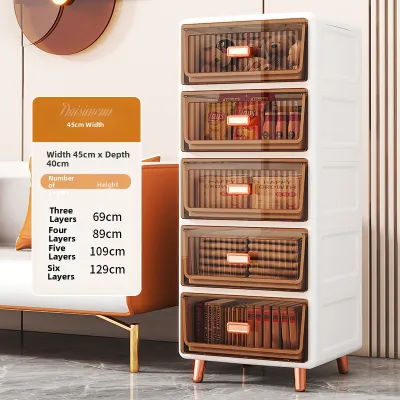
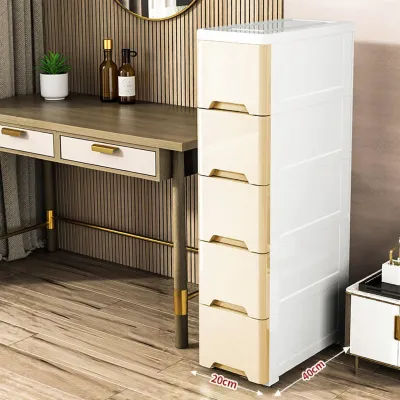
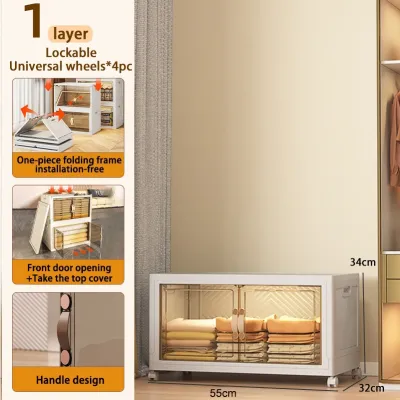
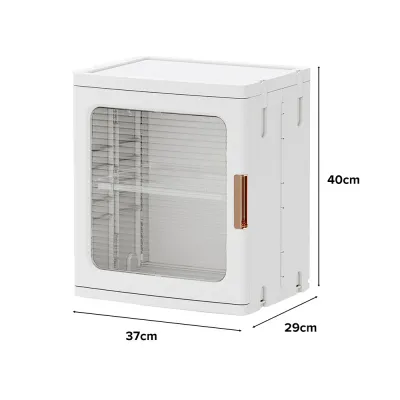
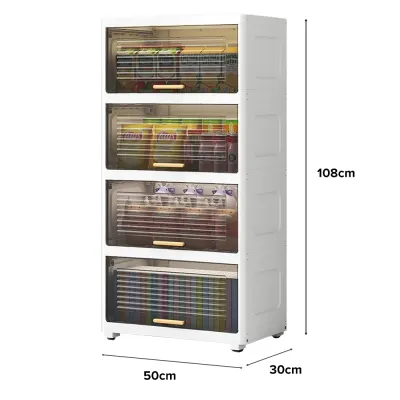
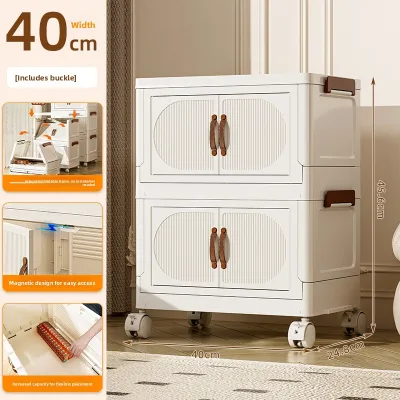
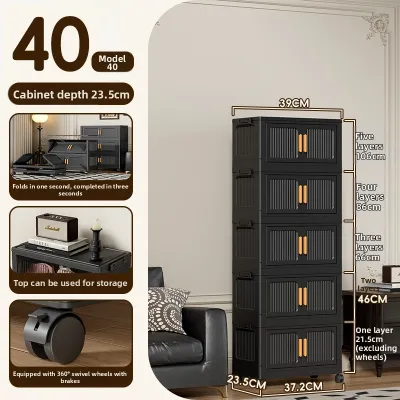
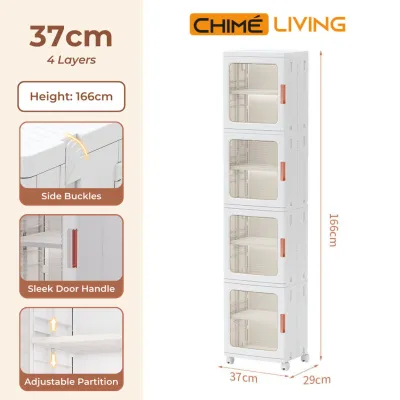
Prices are valid at publication and may change. Please refer to the product page for the latest price.
Before finalizing your purchase, verify the delivery route and entry points. Even though plastic cabinets are lightweight and often arrive flat-packed, you must ensure the packaging or pre-assembled units can navigate the journey to your bedroom. Measure your HDB main door width, bedroom door frames, and the internal dimensions of your estate’s passenger lift. If you are purchasing a pre-assembled modular unit, check that its finished dimensions do not exceed the narrowest point of your entry corridor.
Height clearance is another critical dimension that requires careful evaluation. Standard HDB ceiling heights typically range from 2.6 to 2.8 meters, but structural features like air-conditioner trunking, window sills, and ceiling-mounted fixtures can restrict your vertical space. Measure the height from the floor to the bottom of any trunking or window frames. Placing a tall cabinet directly under air-conditioning trunking can block access for servicing, while blocking a window sill can restrict natural light and ventilation.
Collapsible vs. Modular Plastic Cabinets: Choosing the Right Mechanism
Collapsible plastic cabinets offer a highly flexible storage solution, particularly useful for temporary living arrangements or managing seasonal wardrobe overflows. These units typically feature integrated folding panels and built-in hinges that allow the entire structure to collapse flat within minutes. When shopping for a collapsible model, inspect the hinge design and joint locks. High-quality collapsible units use reinforced snap-lock mechanisms that click securely into place, preventing the frame from folding unexpectedly under load. Check the manufacturer’s specifications for the folded thickness, as many models collapse down to under 10 cm for easy storage under a bed when not in use.

When assembling or unfolding your cabinet for the first time, perform a manual check of all locking tabs. Apply gentle downward pressure on each shelf to ensure the joints are fully seated and do not slip. If a snap-lock joint feels loose or fails to click into place, consult the manufacturer’s instructions before loading any items. Never force a misaligned plastic component, as this can stress the material and cause permanent hairline fractures that compromise the cabinet’s structural integrity.
Modular plastic cabinets are designed for scalable, long-term organization. These systems consist of individual cubic units or stackable drawers that lock together using specialized connectors, grooves, or interlocking tabs. This modularity allows you to customize the height and width of your storage to fit awkward corners or under-utilized wall space. When evaluating modular systems, pay close attention to the interlocking mechanism. Look for deep-groove alignments or heavy-duty connector clips that prevent the individual modules from shifting or sliding apart.
Regardless of the mechanism you choose, you must understand the structural limits of plastic materials. Polypropylene and ABS plastics are lightweight and moisture-resistant, but they do not possess the rigid structural strength of wood or metal. Overloading a plastic shelf can lead to bowing, joint separation, or structural failure. Always check the manufacturer’s specified weight capacity per shelf or module before purchasing. To maintain structural integrity, distribute weight evenly across the shelf surface and place heavier items on the lowest levels to keep the cabinet’s center of gravity low.
Space-Saving Doors, Mobility, and Climate-Specific Features
In a tight HDB bedroom aisle, the way a cabinet door opens can dictate where the furniture can be placed. Traditional swing doors require a clear clearance arc equal to the width of the door panel, which can easily block walking paths or strike the side of your bed. To maximize your floor space, look for alternative door mechanisms. Sliding doors operate entirely within the cabinet’s frame, requiring zero external clearance. Bi-fold doors fold back on themselves, reducing the outward swing radius by half. Magnetic flap doors, which lift upward and slide back into the top of the compartment, also keep the front aisle completely unobstructed during use.
Mobility and stability options should be selected based on your cleaning habits and floor surface. Some plastic cabinets come equipped with casters, allowing you to easily roll the unit aside to sweep, vacuum, or mop. This is highly beneficial in compact bedrooms where dust can quickly accumulate in hard-to-reach corners. However, if you plan to store heavier items or have uneven flooring—such as rustic tiles with deep grout lines—look for cabinets with adjustable leveling feet instead of wheels. Leveling feet allow you to compensate for minor floor slopes, ensuring the cabinet remains perfectly upright and stable.
Maintenance of plastic cabinets is relatively straightforward, but using the wrong cleaning agents can damage the finish. Avoid using abrasive scrubbing pads or harsh chemical solvents, which can scratch the smooth plastic surface and make it more susceptible to trapping dirt. Instead, wipe the cabinet down with a soft microfiber cloth dampened with mild soapy water. Always dry the surfaces thoroughly afterward, especially in Singapore’s humid environment, to prevent lingering moisture from attracting dust or encouraging mold growth on the exterior.
Singapore’s tropical climate, characterized by high humidity, presents unique challenges for closed storage. Enclosing fabrics, bedding, or leather goods in airtight plastic containers can trap ambient moisture, leading to musty odors and mold growth. To protect your belongings, prioritize plastic cabinets designed with ventilation in mind. Look for features such as slatted door fronts, breathable back panels, or integrated ventilation micro-vents that facilitate continuous airflow. Additionally, consult the manufacturer’s care instructions for both the cabinet and your stored items to determine if supplementary moisture absorbers are recommended.
Common Sizing and Safety Mistakes to Avoid in Compact Rooms
One of the most common sizing errors is ignoring the open footprint of the storage unit. It is easy to find a cabinet that fits perfectly against a wall when closed, only to realize later that you cannot fully open the drawers or doors because the bed frame is in the way. When measuring your room, always calculate the depth of the cabinet with its drawers fully extended or its doors swung open. For example, a cabinet with a closed depth of 40 cm and drawers that pull out by 30 cm requires a total clear operating depth of at least 70 cm, plus an additional 40 to 50 cm of space for you to stand comfortably in front of it.
Stacking hazards and tipping risks represent significant safety concerns, especially with lightweight plastic modular units. Because plastic is light, a tall, narrow stack of storage cubes can easily become top-heavy once loaded with clothes or household items. Stacking modular units beyond the manufacturer’s recommended height without proper interlocking connectors or wall-anchoring hardware can lead to accidental tip-overs. If you plan to assemble a configuration taller than waist height, verify if the product includes wall-anchoring brackets or anti-tip straps. Securing the cabinet to a solid wall is highly recommended, particularly in households with young children or pets.
Another mistake is failing to account for material degradation caused by direct sunlight. If your HDB bedroom receives strong afternoon sun, placing a standard plastic cabinet directly next to the window can severely shorten its lifespan. Prolonged exposure to ultraviolet radiation breaks down the chemical bonds in many common plastics, causing them to become brittle, lose their structural strength, and fade or yellow in color. To prevent this, place your plastic cabinet in shaded areas of the room, use UV-blocking window films, or verify with the manufacturer if the plastic has been treated with UV-stabilizing additives.
Frequently Asked Questions (FAQ)
How high can I safely stack modular plastic cabinets?
The maximum safe stacking height for modular plastic cabinets depends entirely on the manufacturer’s engineering, joint design, and weight distribution guidelines. As a general rule, freestanding plastic modular cubes should not be stacked more than three to four tiers high without structural reinforcement. Always check the product label or instruction manual for the specific stacking limit of your model. If you need to build a taller vertical storage unit, you must secure the modules together using the manufacturer’s approved interlocking clips and anchor the entire assembly to a solid wall using anti-tip hardware to prevent tipping hazards.
Are plastic storage cabinets suitable for storing heavy books or electronics?
Standard plastic storage cabinets are primarily designed for lightweight household items such as clothing, linens, toys, and light accessories. They are generally not suitable for storing dense, heavy items like large book collections, heavy tools, or bulky electronics. Placing excessive weight on plastic shelves can cause them to bow, warp, or crack over time. Before attempting to store heavier items, verify the exact load-bearing specifications printed on the product packaging. If your storage needs exceed the weight limits of plastic, consider reinforced metal shelving units or solid wood alternatives that are engineered to support heavier loads safely.

Community discussion
Share your experience or ask a question. Comments are reviewed before publication.