
Maximising floor space in a Singapore HDB flat requires a strategic approach to layout planning, especially as smart home appliances become standard household fixtures. Integrating a robot storage cabinet with multi-functional foldable furniture offers an elegant solution to keep your living areas uncluttered while maintaining an automated cleaning routine. By housing your robot vacuum’s bulky docking station inside a dedicated cabinet and pairing it with space-saving furniture, you can reclaim valuable square footage without sacrificing the utility of either item. Successfully executing this setup depends on understanding clearance requirements, managing traffic flow, and selecting compatible furniture designs that do not interfere with your robot’s daily operations.
Understanding the Robot Storage Cabinet Footprint in HDB Flats
A robot storage cabinet is a specialized furniture piece designed to conceal a robotic vacuum or mop docking station, keeping water tanks, dustbins, and charging cables hidden from view. Before purchasing or custom-building one of these cabinets, you must carefully measure your available space and cross-reference it with the cabinet’s finished dimensions. Standard docking stations require a surprisingly large operational footprint that extends well beyond the physical boundaries of the cabinet itself. You must account for the door swing radius if the cabinet has front-facing doors, as well as the ramp clearance required for the robot to smoothly exit and enter its dock.
Beyond the physical dimensions, deployment zones are critical for successful docking. Most robot manufacturers recommend leaving a clear runway of at least 1.0 to 1.5 metres directly in front of the dock, along with 0.5 metres of clearance on either side. When these docks are enclosed in a cabinet, the bottom opening must be wide and high enough to allow the robot to navigate without scraping its bumper or losing its connection to the docking sensors. Additionally, you must verify the entryway and lift access of your HDB block to ensure the fully assembled cabinet can be safely delivered to your unit.
Products mentioned in this guide
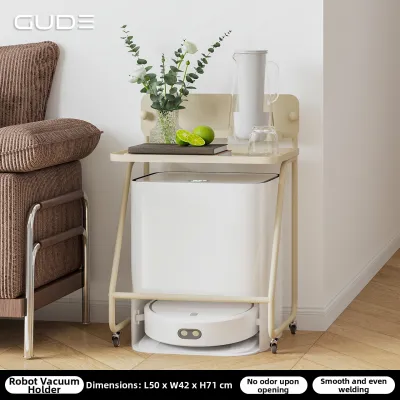
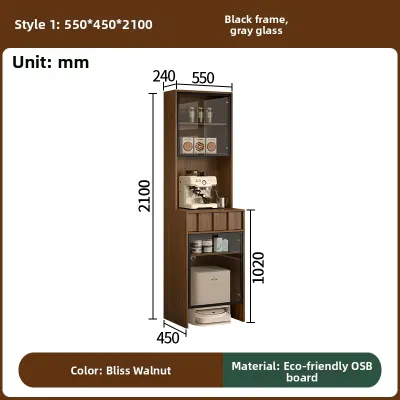
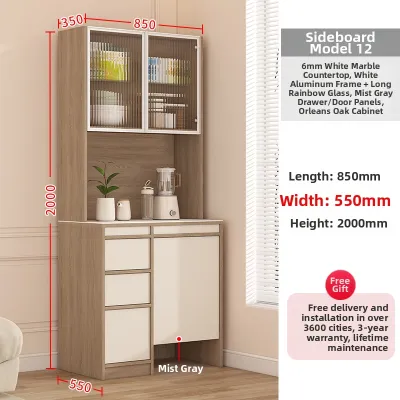
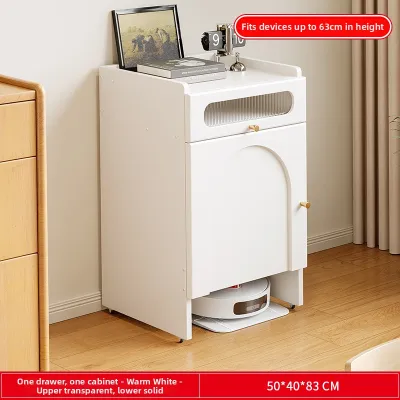
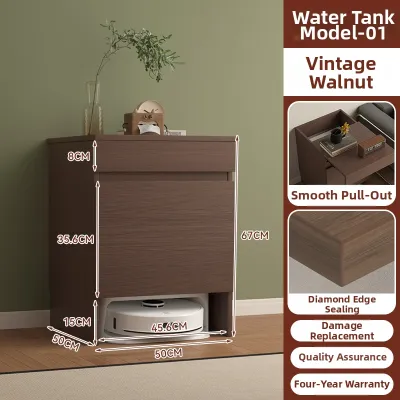
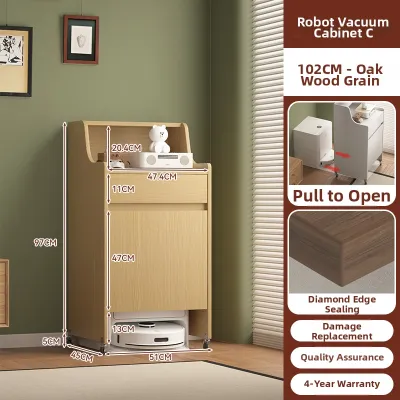
Prices are valid at publication and may change. Please refer to the product page for the latest price.
Electrical infrastructure is another vital planning dimension. Robot docks require a dedicated, continuous power supply to charge their lithium-ion batteries and run auto-empty suction motors. In a compact HDB layout, trailing extension cords across walkways creates a significant tripping hazard and a messy visual aesthetic. Ensure your chosen location has a nearby wall outlet, and plan for clean cable routing through pre-drilled grommets within the cabinet structure. By addressing these foundational spatial and electrical needs first, you lay the groundwork for pairing the cabinet with versatile folding furniture.
Best Pairings: Robot Cabinets and Foldable Furniture
Combining smart home storage with folding furniture requires a clear understanding of how each piece operates throughout the day. The goal is to create a symbiotic layout where the furniture can be tucked away when not in use, leaving the floor completely clear for the robot’s cleaning cycle.

Pairing with Foldable Dining Tables and Work Desks
In tight HDB dining areas or study nooks, a robot storage cabinet can be positioned directly underneath or adjacent to a wall-mounted drop-leaf table or a gate-leg table. When the table leaves are folded down, the cabinet serves as a sturdy side console or a decorative end table, utilizing what would otherwise be dead vertical space. This layout strategy keeps the floor clear during the day, allowing the robot to execute its scheduled cleaning runs without navigating a maze of table legs.
Before finalizing this arrangement, you must perform precise clearance checks. Verify the finished dimensions of both the table and the cabinet to ensure that when the table is fully folded, its support legs or hanging leaves do not block the robot’s deployment pathway. Gate-leg tables, for example, rely on swing-out wooden frames to support the tabletop; if these frames are deployed while the robot is scheduled to clean, they can trap the robot or prevent it from returning to its dock. Always measure the height from the floor to the lowest point of the folded table to ensure the cabinet fits comfortably underneath with at least 5cm of breathing room.
Managing the operational sequence of these paired items is key to a seamless routine. If your robot is programmed to clean at 10:00 AM while you are out of the flat, you must establish a habit of folding the table and clearing away any folding chairs before you leave. If chairs are left scattered or the table is left half-extended, the robot may fail to clean the entire dining area or get stuck on a table leg, draining its battery before it can return to the dock.
Integrating with Wall Beds and Foldable Sofas
In studio apartments, 2-room Flexi flats, or multi-purpose spare rooms, floor space is highly contested. Integrating a robot storage cabinet near a Murphy bed (wall bed) or a fold-out sofa bed requires careful zoning to prevent physical conflicts. The robot cabinet can serve as a low-profile room divider or a bedside console, anchoring the layout of the room while keeping the floor open for the bed’s deployment.
The operational sequence must be planned to avoid blocking the bed’s descent or the sofa’s folding mechanism. The cabinet’s doors must not swing into the path of the descending bed, and the robot’s docking runway must remain completely clear of the bed’s footprint when it is lowered. If you sleep with the wall bed down overnight, ensure the robot is not scheduled to clean during those hours, as it will likely collide with the bed frame or find its docking station completely blocked.
Stability and leveling checks are paramount when pairing automated cabinets with heavy mechanical furniture. Wall beds and folding sofas exert significant physical force and vibration when they are transitioned between states. If the robot cabinet is physically attached to or placed flush against a wall bed frame, the movement can shift the cabinet out of alignment. A cabinet that is even slightly unlevel can prevent the robot from docking correctly, leading to charging failures or water leakage from automated mop-washing reservoirs. Always verify that the foldable furniture is anchored securely to the wall using HDB-approved structural fasteners, and keep the robot cabinet physically independent or use heavy-duty leveling feet to maintain a perfectly flat docking surface.
Space Layout and Traffic Flow Planning
To maintain a functional and uncluttered HDB flat, you must plan your layout around both human traffic and the robot’s cleaning path. Start by mapping the robot’s cleaning route. Modern robots use LiDAR or optical sensors to create a digital map of your home. If your foldable furniture is constantly shifting between ‘folded’ and ‘unfolded’ states, it can confuse the robot’s navigation system, leading to unmapped dead zones or repetitive cleaning patterns. To minimize this, program your primary cleaning runs during times of the day when your furniture is in its most consistent state—typically folded away to maximize open floor space.
Human traffic flow must also be prioritized. Standard HDB corridors and primary walkways should maintain a minimum clearance of 90cm to 100cm to allow for comfortable daily movement. Placing a bulky robot cabinet in a narrow hallway can create a bottleneck. Instead, position the cabinet in wider zones, such as the living room corner or beneath a window sill, ensuring that its deployment runway does not cross directly over high-traffic walking paths where family members might trip over the moving robot.
Cable management is a critical safety consideration when dealing with moving furniture parts. Foldable desks, sliding panels, and folding bed hinges can easily pinch, fray, or sever electrical cords if they are not routed correctly. Keep the power cables for your robot storage cabinet completely isolated from any moving joints. Use adhesive cable clips, protective plastic sleeves, or surface-mounted cable trunking to secure wires flat against the wall or the static parts of your furniture.
Finally, consider the visual weight of your paired setup. To prevent your home from looking like a chaotic collection of mismatched space-saving gadgets, select finishes that match or complement your existing decor. If you have a light oak folding dining table, look for a robot storage cabinet with a matching wood grain or a neutral matte white finish. Some homeowners prefer completely concealed designs, where the robot cabinet is integrated into a custom floor-to-ceiling carpentry unit that also houses a fold-out desk. This creates a clean, cohesive built-in look that visually expands the perceived size of your HDB flat.
Pairing Taboos and Safety Boundaries
While combining automated cabinets and folding furniture is highly effective, ignoring basic safety and operational boundaries can lead to damaged equipment, compromised home safety, or voided warranties.
- Heat and Ventilation: Robot vacuum docking stations house high-capacity lithium-ion batteries and powerful suction motors that generate significant heat during charging and auto-empty cycles. Never enclose a robot storage cabinet inside a completely sealed, unventilated cupboard or beneath a tightly folded mattress. Ensure the cabinet has adequate air vents, a mesh back panel, or at least 10cm of rear clearance to allow heat to dissipate safely. Overheating can degrade the robot's battery life and, in extreme cases, present a fire hazard.
- Structural Conflicts: Heavy foldable furniture, such as wall beds or large drop-leaf tables, requires robust structural support. Never mount or anchor these heavy items directly onto a lightweight, freestanding robot cabinet. Wall beds must be anchored securely to concrete walls using appropriate masonry plugs and heavy-duty brackets. If you are mounting a folding desk above your robot cabinet, ensure the desk's mounting brackets are anchored to the wall studs or concrete, leaving the robot cabinet completely free of any downward mechanical load.
- Sensor Interference: Modern robotic cleaners rely on infrared sensors, optical cameras, and LiDAR towers to navigate and locate their docks. Avoid placing highly reflective, mirrored, or high-gloss foldable furniture panels directly opposite or adjacent to the robot storage cabinet. These reflective surfaces can bounce sensor signals, causing the robot to misidentify its docking location, collide with walls, or get lost in a loop trying to dock. Opt for matte, textured, or satin finishes on any furniture panels near the docking zone.
- Moisture Risks: Many advanced robot cabinets feature automated mop-washing stations with large clean and dirty water tanks. This introduces a risk of localized humidity, minor spills, or leaks during the refilling process. Avoid pairing these cabinets with moisture-sensitive materials like untreated particleboard or low-grade MDF folding furniture. If you place the cabinet near a kitchen folding table, ensure both pieces feature moisture-resistant laminates or water-resistant sealants. Regularly check the floor around the dock for any signs of water accumulation to prevent warping of your vinyl or laminate flooring.
Frequently Asked Questions (FAQ)
Can I build a custom foldable cover over my robot storage cabinet?
You can build a custom cover, but you must prioritize ventilation, clearance, and sensor line-of-sight. The cover must feature open grilles or mesh panels to prevent heat buildup from the charging dock. It must also provide enough vertical clearance if your dock has a top-opening lid for water tanks or dustbags. Crucially, the cover must not block the robot’s infrared or optical sensors used for docking. Blocking these sensors or restricting airflow can cause the robot to malfunction and may void your manufacturer’s warranty. Always consult your robot’s user manual for specific clearance guidelines before building any custom enclosure.
Do I need to reinforce the HDB floor for these paired setups?
Standard HDB residential floors are designed to support a load of up to 150 kg per square metre, which is more than adequate for standard robot cabinets and off-the-shelf foldable furniture. However, if you are installing a heavy, custom-built solid wood cabinet paired with a large, mechanical wall bed, you should calculate the combined weight of the units. Ensure the weight is distributed evenly across a wider surface area rather than concentrated on a few sharp contact points. If you plan to install exceptionally heavy, floor-to-ceiling custom carpentry, it is best to consult a qualified contractor to ensure compliance with HDB renovation guidelines.

Community discussion
Share your experience or ask a question. Comments are reviewed before publication.