
Maximizing vertical storage is a practical necessity in compact apartments, where floor space is at a premium. When looking to hang coats, bags, or daily wear, a door clothes hanger offers an efficient, tool-free solution that utilizes underused vertical surfaces. However, choosing the wrong mounting style can lead to scratched paint, warped door frames, or fallen garments. The choice between an over-the-door hanger and an adhesive-mounted option depends on your door’s physical dimensions, the weight of your items, and your tenancy status. Over-the-door hangers provide robust, immediate utility for standard interior doors with sufficient top clearance, while adhesive hangers offer flexible placement on smooth, non-porous surfaces where over-door brackets cannot fit.
Assessing Your Door and Space Constraints
Before purchasing any door clothes hanger, you must evaluate the physical characteristics of your door and the surrounding frame. The first step is to measure the door thickness using a standard tape measure. Most standard interior doors range between 35mm and 45mm in thickness, but custom doors or heavy fire-rated entrance doors can be significantly thicker. Over-the-door brackets are typically manufactured to fit specific door profiles, so matching these dimensions is critical to prevent the hanger from sliding or tilting.
Next, check the clearance gap at the top of the door frame. You can do this by placing a small coin, such as a five-cent or ten-cent coin, on top of the door and closing it. If the door closes smoothly without catching, there is likely enough clearance for a thin metal bracket. If the door jams or scrapes, an over-the-door hanger will damage the frame and prevent proper closure, making an adhesive alternative a more suitable choice.
Products mentioned in this guide
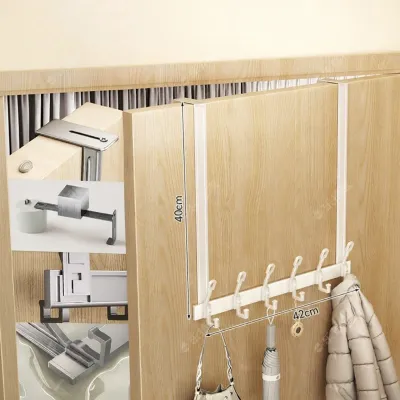
![[Ship in 24h]Behind Door Hanger Hooks No Drill Aluminum Clothes Hooks Wall Hook Over-The-Door Hooks/Hangers For HDB Door Main Door Bedroom Door Kitchen Door](https://img.lazcdn.com/g/p/f316264f7858512fb01a8a8222a3394f.jpg_400x400q80.jpg_.webp)
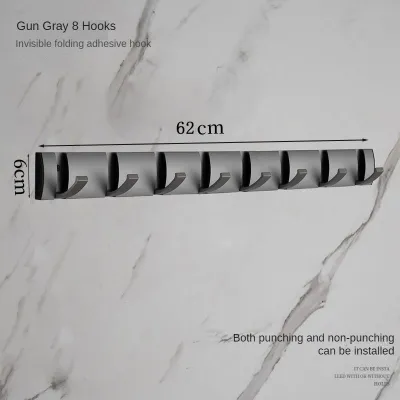
![[SG Seller]No Drill Heavy Duty Wall Hook Door Hooks Clothes Hangers Hooks Hanging for KitchenBathroomToilet](https://img.lazcdn.com/g/p/46c43018fa493f86ea1426596809780e.jpg_400x400q80.jpg_.webp)
Prices are valid at publication and may change. Please refer to the product page for the latest price.
The material and finish of your door also dictate which hanger type is viable. Solid wood, hollow-core wood, metal, and glass doors react differently to weight and adhesives. For instance, high-gloss painted surfaces or varnished wood may suffer damage from strong adhesives, while textured or unfinished wood surfaces will not allow adhesives to bond securely.
Finally, review your tenancy agreement or building management guidelines. Renters in Singapore must be particularly cautious about modifications that leave permanent marks or strip paint. If your lease agreement mandates returning the property in its original condition, you must choose a mounting method that guarantees zero damage upon move-out.
Over-the-Door Hangers: Capabilities and Limitations
Over-the-door clothes hangers are highly favored for their immediate utility and high weight capacity. These units feature brackets that drape over the top edge of the door, distributing the weight of your garments vertically along the door’s structure. Because they rely on gravity and mechanical leverage rather than chemical bonding, they can generally support heavier loads, such as winter coats, heavy bags, or multiple damp bath towels, provided the door itself is structurally sound.

The primary advantage of this design is its complete portability. You can install or remove the hanger in seconds without tools, making it easy to relocate from a bedroom door to a bathroom door as your storage needs change. This makes them an excellent option for temporary living arrangements or seasonal storage adjustments.
However, over-the-door hangers have distinct limitations that require careful consideration. If the bracket depth does not match your door thickness precisely, the hanger will rattle every time the door is opened or closed. This movement can gradually scratch the door’s paint or varnish, leaving unsightly marks. To mitigate this, look for models that include foam padding or rubber bumpers on the inside of the brackets to cushion the contact points.
Additionally, these hangers can affect the alignment of your door over time. Hanging excessively heavy items on one side of a door can place uneven stress on the hinges, potentially causing the door to sag or misalign within its frame. You must also ensure the bracket does not interfere with the door latch or strike plate, which could compromise your privacy or security.
Adhesive Door Hangers: Capabilities and Limitations
Adhesive door clothes hangers offer a sleek, highly customizable alternative for spaces where over-the-door brackets are impractical. These hangers utilize high-strength adhesive strips or pads to bond directly to the flat surface of the door. Because they do not require top-edge clearance, they can be mounted on sliding doors, flush-to-ceiling doors, or at custom heights that are easily reachable for children or shorter family members.
For a successful installation, the door surface must be completely smooth, clean, and non-porous. Dust, grease, moisture, or textured wood grain will prevent the adhesive from forming a secure bond, leading to premature failure. You must clean the area thoroughly with rubbing alcohol and allow it to dry completely before applying the adhesive pad.
Patience is critical when installing adhesive hangers. Most manufacturers specify a curing time—often 12 to 24 hours—during which no weight should be applied to the hook. Skipping this step is the most common cause of adhesive failure, causing the hanger to fall off under minimal load.
While modern adhesives are incredibly strong, they are generally limited to lighter items. They are ideal for hanging lightweight garments, keys, hats, or dry towels. Attempting to hang heavy backpacks or wet laundry can exceed the shear strength of the adhesive, causing the hook to pull away from the door. When this happens, there is a significant risk that the adhesive will tear away the door’s paint, veneer, or laminate finish, resulting in costly repairs.
Key Comparison Factors for Your Living Situation
Choosing between these two mounting styles requires balancing your immediate storage needs against the long-term preservation of your living space. Homeowners may have more freedom to choose, but they still want to avoid damaging expensive designer doors. Renters, on the other hand, must prioritize damage prevention to secure the return of their rental deposits. Understanding how these systems compare in real-world scenarios will help you make an informed decision.
Installation and Reversibility
The installation process highlights a clear contrast in effort and preparation. Over-the-door hangers require zero preparation; you simply unpack the unit and hang it over the door edge. Removal is equally effortless and leaves absolutely no residue, making it the ultimate reversible storage solution.
In contrast, adhesive hangers require meticulous surface preparation and a strict waiting period before use. Removing them safely requires specific techniques, such as heating the adhesive with a hairdryer to soften the bond before slowly pulling the tab. If removed too quickly or without heat, the adhesive can rip off paint layers or leave a sticky residue that requires specialized solvents to clean.
Weight Capacity and Door Material Checks
From a physics perspective, over-the-door hangers leverage the structural integrity of the entire door and its hinges, allowing them to support substantial weight. However, you must still check the manufacturer’s specified weight limit and distribute the load evenly across all hooks to prevent localized stress.
Adhesive hangers rely entirely on surface tension and chemical adhesion. They should not be used on raw wood, delicate wallpaper, or highly textured surfaces, as the bond will fail. Additionally, if you plan to use adhesive hooks in high-humidity environments like bathrooms, you must verify that the adhesive is specifically rated for moisture resistance, as standard adhesives will degrade quickly when exposed to steam.
How to Decide: A Step-by-Step Selection Checklist
To finalize your decision, follow this systematic checklist to determine which door clothes hanger best fits your home:
- Measure and Inspect: Measure your door's thickness and check the top clearance gap using a coin. Inspect the surface finish to see if it is smooth and non-porous.
- Define the Load: Estimate the total weight of the items you intend to hang. If you plan to hang heavy winter coats, bags, or multiple wet towels, prioritize an over-the-door model. If you only need to hang light accessories, hats, or a single bathrobe, an adhesive option is suitable.
- Review Tenancy Rules: If you are renting, check your lease agreement. If paint damage is a major concern, an over-the-door hanger with protective foam padding is generally the safer, more reversible choice.
- Select the Mount: Choose an over-the-door hanger if your door has standard dimensions and sufficient top clearance. Choose an adhesive hanger if your door lacks top clearance, is a sliding door, or if you require a custom mounting height for lighter items.
Frequently Asked Questions (FAQ)
Can I use adhesive hooks on a hollow-core door?
Yes, you can use adhesive hooks on a hollow-core door, but you must exercise caution regarding the surface finish. Because hollow-core doors have a thin outer veneer or painted skin, the primary risk is not the structural failure of the door itself, but rather the adhesive pulling off the paint or laminate when removed. Always test a small, inconspicuous area first and follow the manufacturer’s removal instructions carefully.
Will an over-the-door hanger damage my fire-rated apartment door?
Fire-rated doors, commonly used as main entrance doors in Singapore apartments, are thicker and heavier than standard interior doors. You must check your tenancy agreement and local building guidelines before hanging anything over them, as some fire doors require a tight, uninterrupted seal to maintain their safety rating. If permitted, choose an over-the-door hanger equipped with thick foam or rubber padding to prevent scratching the heavy metal or solid wood surface of the fire door.

Community discussion
Share your experience or ask a question. Comments are reviewed before publication.