
To maximize storage in compact Singapore HDB and condo entryways without obstructing walkways or door function, the ideal door hanging rack must match your door’s exact physical clearances, weight capacity, and mounting style. Selecting the right rack involves measuring the top gap of your door, verifying the swing radius, and choosing between non-invasive over-the-door hooks or secure wall-mounted alternatives. By taking precise measurements and understanding your door’s structural limits, you can create an organized, clutter-free entryway that remains fully functional.
Measure Your Door and Entryway Clearances Before Buying
Before purchasing any door hanging rack, taking accurate measurements of your door and the surrounding entryway is essential to avoid clearance issues. Many Singapore apartments feature heavy, thick main doors, especially fire-rated doors in HDB flats and newer condominiums. These doors often require wider hooks than standard internal bedroom doors, making a quick measurement of the door thickness your very first step.
To determine if an over-the-door rack will fit without damaging your door frame, you must measure the clearance gap at the very top of the door. A simple way to test this is by placing a S$1 coin flat on top of the door panel and gently closing it. If the door closes smoothly without catching or scraping the coin against the frame, you generally have enough clearance for standard metal hooks. If the coin jams, a traditional over-the-door rack will likely prevent your door from latching properly or damage the weatherstripping.
Products mentioned in this guide
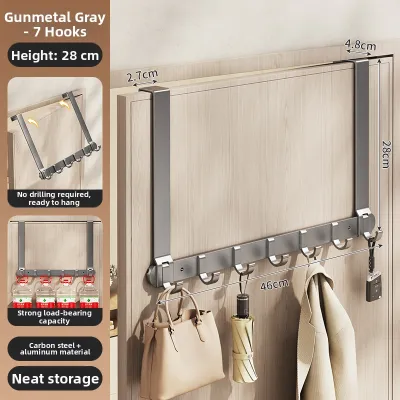
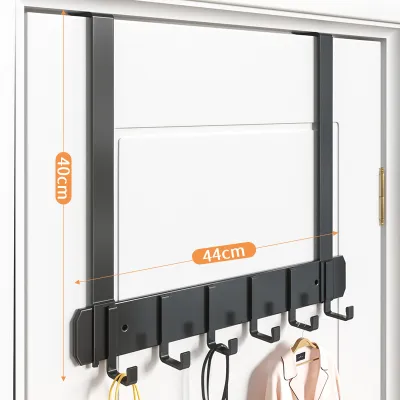
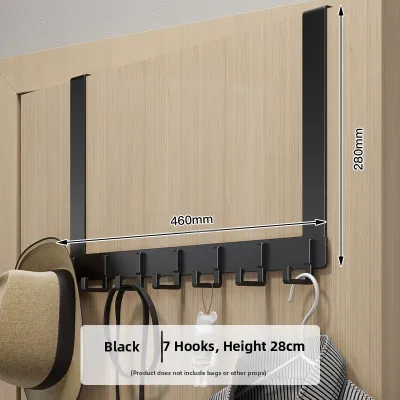
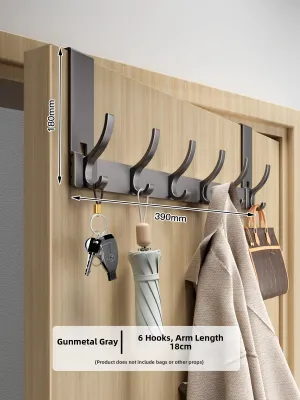
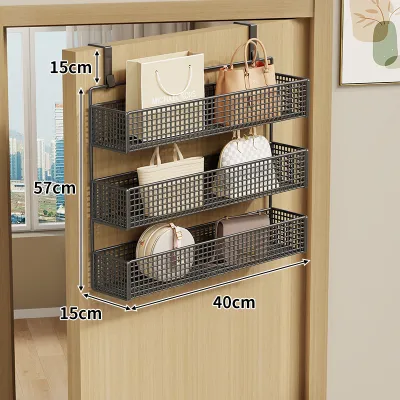
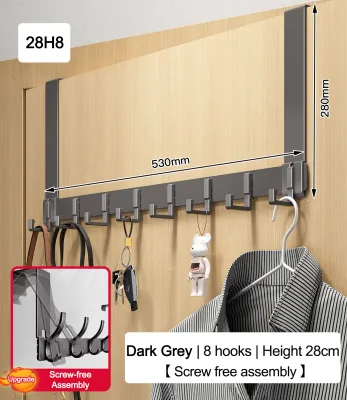
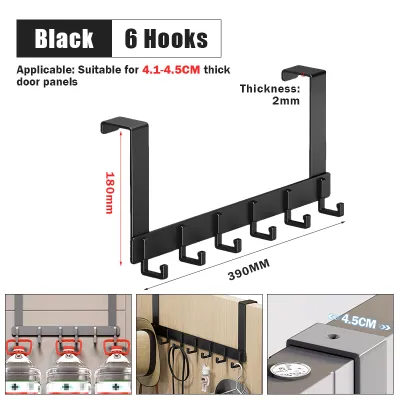
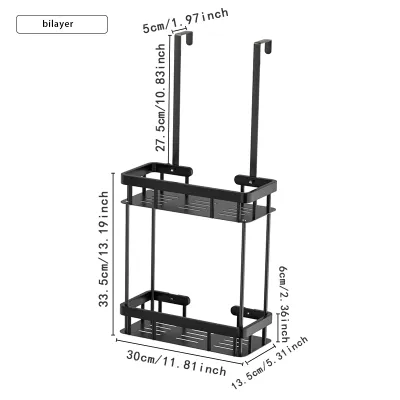
Prices are valid at publication and may change. Please refer to the product page for the latest price.
Beyond the door itself, you must evaluate the door swing radius and the available walkway width in your entryway. When the door is fully opened, any items hanging on the rack—such as bulky backpacks, winter coats, or umbrellas—will protrude into the room. Ensure that these hung items do not strike adjacent walls, block narrow corridors, or interfere with nearby shoe cabinets. If your entryway is exceptionally tight, you may need to look for ultra-slim profiles or alternative mounting locations.
Finally, inspect the door for any physical obstructions such as decorative moldings, hinges, and lock mechanisms. Modern digital locks are incredibly common in Singapore homes and often feature large indoor handle assemblies or battery compartments. A hanging rack that sits too low or swings freely can collide with these digital locks, potentially scratching the finish or interfering with the locking mechanism. Note the position of these components to ensure your rack hangs completely clear of them.
Choose Between Over-the-Door and Mounted Options
Selecting the right installation method depends heavily on your living situation, door structure, and how much weight you plan to hang. Over-the-door racks are highly popular because they require absolutely no drilling, making them an excellent choice for tenants who need to return their apartments in pristine condition. These racks simply slip over the top edge of the door panel, allowing you to set up your entryway storage in a matter of seconds.

However, over-the-door models require a precise fit to function safely. You must verify that the hook thickness is thinner than the gap between the top of your door and the frame. If the hook is too thick, forcing the door shut can warp the door hinges, strip the paint, or prevent the latch from engaging. Additionally, because these racks hang loosely, they can shift or slide horizontally when the door is opened or closed quickly, which can lead to surface scratches over time.
For homeowners or those with heavy storage needs, wall-mounted or door-screwed racks offer a far more stable and permanent solution. These racks are ideal for doors with zero top clearance or for heavy-duty storage where over-the-door hooks might bend. Before drilling, always check the material of your door or wall. For concrete or masonry walls common in Singapore entryways, you must use a hammer drill and appropriate plastic wall plugs to secure the screws.
If you are considering screwing a rack directly into a door, exercise extreme caution. HDB fire-rated main doors have complex internal structures, and drilling into them can void their fire certification or compromise their structural integrity. For these doors, mounting the rack on an adjacent concrete wall is almost always the safer and more compliant choice. If you must mount on a non-fire-rated wooden door, ensure the screws are short enough not to pierce through to the other side.
For extremely tight entryways where space is at a premium, foldable or retractable designs offer excellent utility. These racks feature hooks that flip up or retract flat against the frame when not in use. This prevents the hooks from catching on clothing or bumping into family members walking through a narrow corridor, opening up valuable physical space when your entryway storage is empty.
Match the Rack Layout and Weight Limits to Your Items
To get the most out of your entryway storage, the layout of the hanging rack should match the specific items you use daily. If you primarily need to store heavy work bags, loaded backpacks, or large umbrellas, look for a rack with deep, widely spaced hooks. This spacing prevents bulky items from overlapping, which can make the rack look cluttered and make it difficult to retrieve a single item without knocking others down.
For smaller, lightweight essentials like keys, lanyards, access cards, and compact folding umbrellas, a multi-hook rail with shallow, closely spaced hooks is much more efficient. Some specialized entryway racks even combine hooks with small built-in baskets or mail slots, providing a dedicated spot for letters, hand sanitizers, and pocket items. Matching the hook style to your daily routine ensures that everything has a designated, easy-to-reach spot.
Never assume the strength of a rack based solely on its material name, such as “stainless steel” or “solid wood.” Instead, always check the manufacturer’s stated maximum weight capacity on the product label or packaging. A metal rack with poorly welded joints or thin mounting brackets can fail under a load that a well-engineered plastic or wooden rack could easily support. Keep in mind that the overall weight limit is often determined by the mounting method rather than the rack itself.
To prevent damage and ensure long-term stability, plan for an even distribution of weight across the entire rack. Concentrating all heavy bags on one side can cause an over-the-door rack to tilt diagonally, leading to uneven wear on your door frame and potential scratches. For mounted racks, uneven weight distribution puts concentrated leverage on a single screw, which can gradually loosen the wall anchor and cause the entire unit to pull out of the wall.
Avoid Common Sizing and Installation Mistakes
One of the most frequent mistakes when installing an over-the-door rack is ignoring the door gap and forcing a thick hook into a tight space. When you force a door closed over a hook that is too thick, you compress and damage the rubber weatherstripping or door seals. Over time, this can let dust, noise, and hallway odors into your apartment, and it can even prevent your main door from locking securely, creating a serious security vulnerability.
Another common error is overloading the rack far beyond its rated specifications. It is easy to underestimate the cumulative weight of multiple daily-use items. A single backpack loaded with a laptop and water bottle, combined with several heavy umbrellas and wet jackets, can easily exceed the weight limit of a standard hanging rack. This overload can bend the hooks, strain your door hinges, or cause wall-mounted anchors to fail completely, resulting in a falling hazard.
Finally, avoid placing the hanging rack too close to essential door hardware. If the rack hangs too low or too close to the edge of the door, hung items can drape over the door handle, deadbolt, or digital lock sensor. This makes it difficult to grip the handle or scan your fingerprint when entering your home. Always position the rack high enough and centered sufficiently so that all hanging items remain completely clear of your door’s operating hardware.
Frequently Asked Questions (FAQ)
Will an over-the-door rack damage my apartment door?
An over-the-door rack can damage your door if it is installed without protective barriers or overloaded. Metal hooks rubbing directly against wood veneer, laminate, or paint will eventually cause scratches, scuffs, or paint chips due to the natural movement of the door. To prevent this, look for racks that come with pre-applied foam padding, or add your own felt pads or rubberized tape to the inside of the hooks. Additionally, hanging excessive weight on the door can place undue strain on the hinges, potentially causing the door to sag over time; always adhere to the manufacturer’s weight limits to protect your door’s alignment.
How do I prevent a door hanging rack from rattling when the door moves?
Rattling occurs when there is excess space between the over-the-door hook and the door panel, allowing the rack to bounce whenever the door is opened or closed. To eliminate this noise, you can apply adhesive foam tape, silicone bumpers, or double-sided mounting tape to the back of the rack where it makes contact with the door surface. This fills the gap, cushions the impact, and dampens any vibrations. Ensuring a snug fit by choosing a rack with adjustable brackets or inserting small cardboard or felt shims inside the hook channel will also keep the rack firmly in place.
Community discussion
Share your experience or ask a question. Comments are reviewed before publication.