
Choosing an office chair for your home workspace requires balancing physical comfort with practical home constraints. When comparing Newstar Furniture to other mid-range brands, the decision often comes down to how well a chair’s specific adjustments, materials, and physical dimensions match your daily routine. While many mid-range options look similar in online listings, subtle differences in lumbar support, seat depth, and frame materials can significantly affect your comfort during long working hours.
In Singapore’s typical residential layouts, where study rooms or work corners are often compact, the physical footprint of your chair is just as important as its ergonomic features. A chair that is too wide may not slide under your desk, while one with hard casters might scratch your flooring. By evaluating these chairs through a structured framework of ergonomics, material suitability, spatial requirements, and warranty terms, you can make an informed choice that supports both your posture and your home environment.
Core Ergonomic Features to Compare
Ergonomic adjustability is the foundation of any reliable work-from-home chair. When comparing Newstar Furniture with other mid-range brands, the lumbar support mechanism is often the first point of differentiation. Some mid-range chairs feature a fixed lumbar curve built directly into the backrest frame, which relies entirely on the user fitting the pre-molded shape. Other models offer adjustable lumbar support, allowing you to shift the support pad vertically or adjust its depth to match the natural curve of your lower spine. If you sit for more than four hours a day, prioritizing adjustable lumbar depth can prevent slouching and reduce lower back strain.
Products mentioned in this guide
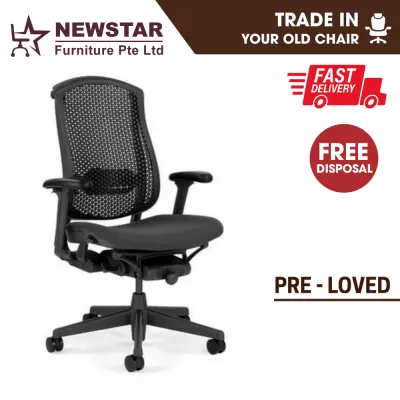
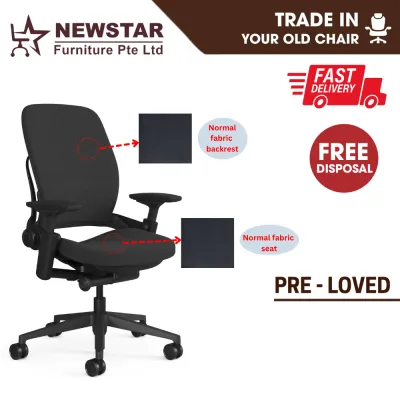
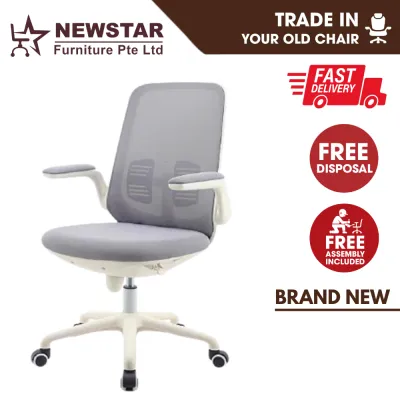
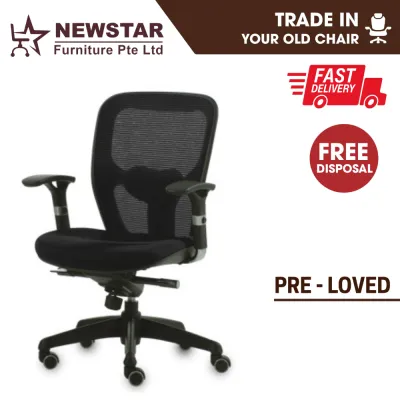
![[Pre-Loved] Steelcase Series 1 Sustainable Ergonomic Office Chair 6 Months Warranty - Newstar Furniture](https://img.lazcdn.com/g/p/ecceaab13c81bbb50612b84be270b3a1.png_400x400q80.png_.webp)
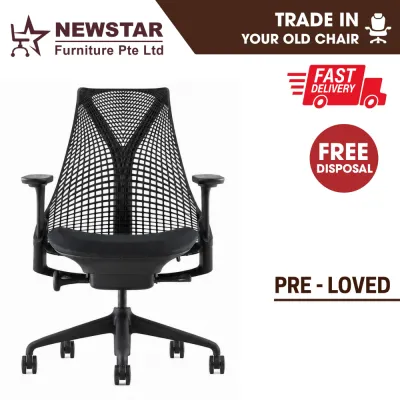
Prices are valid at publication and may change. Please refer to the product page for the latest price.
Seat depth and height adjustment ranges are equally critical, especially when sharing a chair with other family members. A proper seat depth adjustment allows you to slide the seat pan forward or backward, ensuring there is a gap of about two to three fingers between the edge of the seat and the back of your knees. This prevents the seat from cutting off circulation in your legs. Before purchasing, measure your inseam and compare it to the manufacturer’s minimum and maximum seat height specifications to ensure your feet can rest flat on the floor while your thighs remain parallel to the ground.
Armrest adjustability directly impacts shoulder and neck comfort. Mid-range chairs typically offer either fixed armrests, 3D adjustability (height, angle, and forward-backward slide), or 4D adjustability (which adds width adjustment). Adjustable armrests allow you to position your elbows close to your body at a 90-degree angle, reducing strain on your upper trapezius muscles. However, wide or highly adjustable armrests can sometimes prevent the chair from tucking fully under your desk when not in use, so you must check the outer width of the armrests against your desk’s under-table clearance.
The tilt and recline mechanism determines how the chair supports your movement throughout the day. Look for chairs that offer a synchro-tilt mechanism, where the backrest reclines at a greater ratio than the seat pan, keeping your feet flat on the floor as you lean back. A reliable mid-range chair should feature adjustable recline tension, allowing you to control the resistance of the backrest, along with multiple locking positions so you can secure the chair at your preferred angle for focused work or brief rests.
Material, Comfort, and Climate Suitability
The choice of upholstery material directly affects your daily comfort, particularly in Singapore’s warm and humid tropical climate. High-density foam seats wrapped in fabric or leatherette offer plush initial comfort but tend to retain body heat over extended sitting periods, which can lead to discomfort in non-air-conditioned rooms. In contrast, full mesh backrests and seats promote continuous airflow, keeping you cool throughout the day. When evaluating mesh, look for high-tensile elastomeric mesh that retains its shape over time, as lower-quality mesh can sag after a few months of heavy use, compromising ergonomic support.

The structural integrity of the chair depends heavily on the frame and base materials. Mid-range chairs generally utilize either reinforced nylon or die-cast aluminum bases. Reinforced nylon bases are lightweight and highly resistant to impact, making them a practical choice for standard home use. Aluminum bases offer a more premium aesthetic and typically support higher weight capacities, but they also add weight to the chair, making it slightly harder to roll on thick carpets. Always check the manufacturer’s specified weight capacity to ensure the frame can safely support your body weight over years of daily use.
Caster selection is a frequently overlooked detail that affects both mobility and floor preservation. Hard nylon casters are standard on many mid-range chairs and roll smoothly on carpeted floors, but they can scratch or scuff hard surfaces like vinyl, laminate, or polished tiles. For hard flooring, look for soft polyurethane (PU) casters, which provide a quieter roll and grip the floor better, preventing the chair from sliding away when you sit down. If the chair you prefer only comes with hard casters, you may need to purchase compatible PU casters separately or use a protective floor mat.
Space, Assembly, and Daily Usability
Before finalizing your purchase, you must ensure the chair physically fits your designated workspace. Measure the width of your doorway, hallway, and lift access to avoid delivery complications, especially if the chair arrives fully assembled. In tight study corners, a chair with a wide five-star base can easily collide with desk legs or nearby cabinets. Compare the maximum outer diameter of the chair’s base with the clear floor space under your desk to ensure you have enough room to move and turn comfortably.
Stability is another key factor, particularly if your home flooring is slightly uneven. A wider base diameter generally provides better stability and prevents the chair from tipping when you lean fully back or reach for items on your desk. Check the product specifications for the base diameter, which typically ranges from 60 to 70 centimeters in the mid-range category. If your workspace has uneven tiles or transition strips, a slightly wider and heavier base can offer a more secure feel.
Assembly is a common hurdle for work-from-home setups, as many mid-range chairs are delivered flat-packed to save on shipping costs. Review the assembly instructions or online video guides before buying to see if the necessary tools, such as Allen keys, are included in the box. Flat-packed chairs can take anywhere from twenty minutes to an hour to assemble, and handling heavy components like the seat mechanism or base can be challenging for a single person. Additionally, consider the disposal of bulky packaging materials, such as large cardboard boxes and protective foam, which you will need to manage after setup.
Value and Warranty Considerations
Evaluating the long-term value of a mid-range office chair requires looking beyond the initial purchase price to examine the warranty structure. A comprehensive warranty is a strong indicator of a manufacturer’s confidence in their product’s durability. Standard warranties in the mid-range category often range from one to five years, but the coverage is rarely uniform. It is common for manufacturers to offer longer coverage on the structural frame and steel base, while limiting coverage on moving parts like the gas lift, tilt mechanism, and casters to a shorter period, and excluding upholstery wear entirely.
When purchasing through online marketplaces or official brand stores, pay close attention to the return policies and trial periods. Some brands offer a risk-free trial period, allowing you to test the chair in your home for a set number of days, while others only accept returns for unopened items in their original packaging. If you decide to return a chair, be aware of potential restocking fees and the logistical challenge of repackaging a partially assembled chair, as shipping costs for bulky items can be substantial.
The availability of replacement parts is another crucial factor for extending the lifespan of your chair. Over years of daily use, components like gas lifts can lose pressure, casters can wear down, and armrest pads can crack. Brands that maintain a local inventory of spare parts allow you to easily repair your chair rather than replacing the entire unit. Before buying, check if the brand sells individual replacement parts or if their customer service department can supply them after the warranty period expires.
Decision Framework: Which Chair Fits Your WFH Setup?
To choose the right chair for your home office, you must align your physical dimensions, budget, and spatial constraints with the specific strengths of each brand. Newstar Furniture is often a suitable choice if you are looking for a reliable, standard ergonomic chair that fits comfortably within a strict mid-range budget. Their designs generally cater well to standard body proportions and offer the essential adjustments—such as seat height, basic lumbar support, and tilt tension—needed for comfortable daily use without a complex setup.
On the other hand, you should consider competing mid-range brands if your physical requirements or work habits demand highly specialized adjustments. For instance, if you require advanced 4D armrests to align perfectly with a custom desk height, a highly adjustable independent headrest for neck support during long video calls, or a reinforced frame designed for heavier weight capacities, exploring alternative mid-range options may be necessary. These specialized features often come at a slightly higher price point but can make a significant difference in long-term comfort.
If your desk height is unusually high or low, or if your physical proportions fall outside the standard ranges accommodated by mid-range chairs, neither option may provide a perfect fit. In such cases, you should avoid making a purchase based on visual design alone. Instead, measure your workspace carefully, check the detailed manufacturer specification sheets for minimum and maximum adjustment heights, and consider consulting an ergonomics specialist or visiting a physical showroom to test the chairs in person before committing.
Frequently Asked Questions (FAQ)
How do I check if an office chair's gas lift is safe?
To verify the safety and condition of your office chair’s gas lift, start with a visual inspection of the cylinder. Look for any signs of oil leakage, cracks, or excessive wobbling where the cylinder meets the seat mechanism or the base. You should also check the manufacturer’s weight limit label, usually located on the underside of the seat pan, to ensure you are within the safe operating range. If the chair begins to sink unexpectedly while you are sitting, or if you experience sudden drops in height, stop using the chair immediately and consult a professional or replace the gas lift cylinder to prevent sudden failure.
What is the best way to clean mesh office chair upholstery?
Cleaning mesh upholstery requires a gentle approach to avoid damaging the woven fibers or stretching the material. Begin by vacuuming the backrest and seat using a soft brush attachment to remove dust, crumbs, and loose debris from the mesh openings. For spot cleaning stains or spills, mix a small amount of mild liquid soap with warm water and gently dab the area with a clean microfiber cloth. Avoid using harsh chemical cleaners, bleach, abrasive scrubbers, or excessive moisture, as these can degrade the synthetic fibers and weaken the mesh tension. Allow the chair to air dry completely in a well-ventilated indoor area before using it again.

Community discussion
Share your experience or ask a question. Comments are reviewed before publication.