
Working from home for eight or more hours a day demands a seating solution that actively supports your body and adapts to your daily movements. In compact living environments and warm, humid climates, finding the right desk chair involves balancing physical comfort, spatial constraints, and material durability. Rather than relying on brand marketing or aesthetic appeal, making an informed decision requires a close examination of adjustable specifications, structural materials, and how well a chair matches your unique body proportions. Selecting a chair is an investment in your long-term physical well-being, where understanding the mechanics of ergonomic design helps you identify a model that provides sustained comfort throughout the longest working days.
Key Ergonomic Features to Compare Across Brands
When comparing different desk chairs, the level of adjustability is the most critical factor separating basic seating from high-performance ergonomic designs. The first feature to examine is the lumbar support mechanism. Lower-end models often feature fixed plastic bands or simple cushions that cannot be adjusted. High-quality ergonomic chairs offer adjustable lumbar height and depth, allowing you to position the support precisely against your lumbar spine to maintain the natural inward curve of your lower back. Some advanced designs feature dynamic, auto-tuning lumbar support that automatically pivots and adjusts tension as you shift angles.
Seat depth adjustment is equally vital for maintaining healthy lower-body circulation. A seat slider mechanism allows you to adjust the distance between the backrest and the front edge of the seat pan. Ideally, you should be able to sit fully back against the backrest while leaving a gap of two to three fingers between the back of your knees and the edge of the seat. This prevents the seat from pressing against the blood vessels and nerves in your legs. Additionally, look for a waterfall seat edge design, where the front of the cushion slopes gently downward, further reducing pressure on your thighs and promoting continuous blood flow.
Products mentioned in this guide
![[NEW LAUNCH] Hinomi Q2 Pro Ergonomic Office Chair Adjustable Lumbar Support Memory Foam Headrest Armrest Legrest](https://img.lazcdn.com/g/p/0b7241fcc12b459ca71f9ff200c641b3.jpg_400x400q80.jpg_.webp)
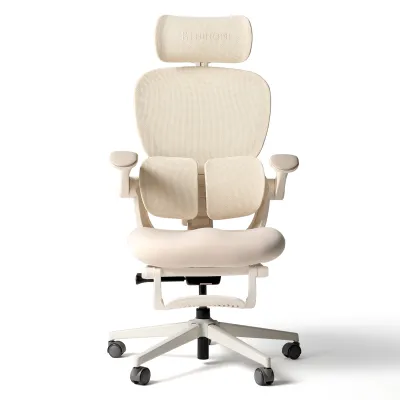
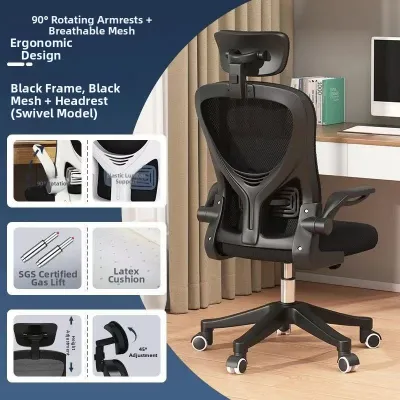
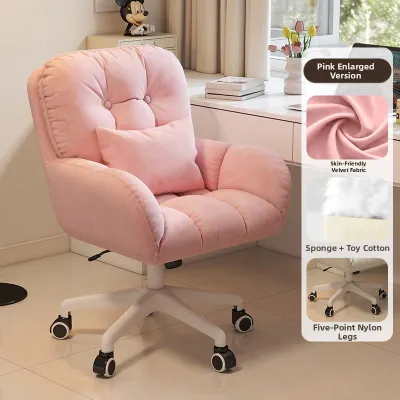
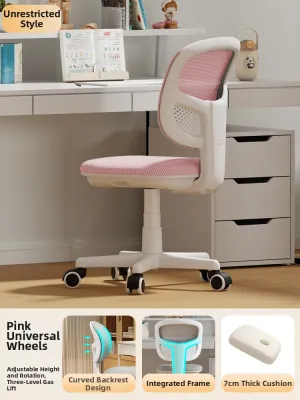
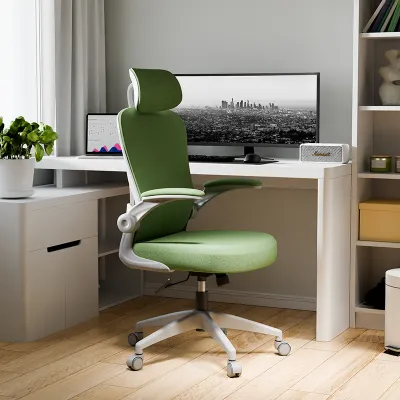
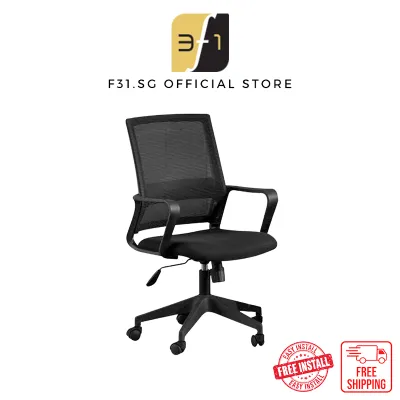
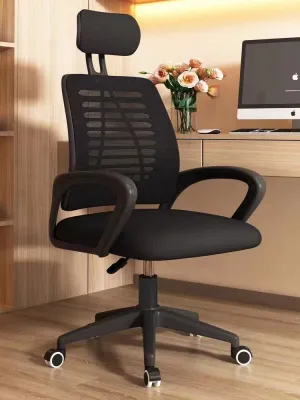
Prices are valid at publication and may change. Please refer to the product page for the latest price.
Armrest adjustability directly impacts upper-body tension, particularly in your shoulders and neck. Look for three-dimensional (3D) or four-dimensional (4D) armrests that adjust in height, width, depth, and pivot angle. Properly adjusted armrests should allow your elbows to rest comfortably at a 90-degree angle, level with your desk surface, without forcing you to shrug your shoulders or reach outward. This alignment minimizes strain on the trapezius muscles and helps prevent repetitive strain injuries in your wrists and forearms.
Finally, evaluate the recline and tilt mechanisms. Basic chairs use a simple tilt lock that tilts the entire chair back as a single unit, which can lift your feet off the floor and strain your thighs. Superior ergonomic chairs utilize a synchro-tilt mechanism, where the backrest reclines at a faster rate than the seat pan (typically a 2:1 ratio). This keeps your feet flat on the floor, maintains proper pelvic alignment, and opens up your torso to encourage deep breathing and better circulation during periods of relaxation. Recline tension controls are also essential, allowing you to adjust the resistance of the backrest to match your body weight.
Durability and Material Considerations for Daily Use
The materials used in a desk chair dictate both its daily comfort and its long-term durability under high-frequency use. The choice between mesh and high-density foam is one of the most significant decisions you will make. In warm, tropical climates, mesh backrests and seats are highly advantageous due to their exceptional breathability, which prevents heat and moisture buildup. However, not all mesh is created equal; low-quality polyester mesh can stretch and sag over time, losing its supportive tension. Look for elastomeric mesh, which offers superior elasticity and shape retention. Conversely, high-density molded foam cushions provide excellent pressure distribution and a more traditional, cushioned feel. Ensure the foam is rated for high density (typically above 50 kg/m³) to prevent the cushion from bottoming out or permanently compressing after a few months of use.

The structural integrity of the chair relies heavily on its frame and base materials. Heavy-duty nylon, glass-filled nylon, polished aluminum, and steel are the standard materials for high-quality frames. When comparing chairs, always verify the manufacturer-stated weight capacity limits, which typically range from 110 kg to over 150 kg. A higher weight capacity often indicates more robust structural joints and a higher-quality gas cylinder.
The base and casters of the chair must be compatible with your home flooring to ensure smooth movement and prevent damage. A five-star base made of reinforced nylon or aluminum provides the necessary stability to prevent tipping. For hard surfaces like hardwood, laminate, or vinyl flooring, select soft polyurethane (PU) or rubberized casters that glide quietly without scratching the surface. For carpeted floors, harder nylon casters are preferred as they provide enough traction to roll smoothly over fabric fibers.
Before finalizing a purchase, carefully read the manufacturer’s warranty terms, as they are a strong indicator of expected lifespan. Be aware that a highly advertised “10-year warranty” may only cover the structural steel frame, while moving parts like the gas lift cylinder, tilt mechanism, armrests, and upholstery may only be covered for one to three years. Look for brands that offer comprehensive coverage on all components, and check for specific exclusions regarding normal wear and tear of mesh or fabric.
Matching Desk Chair Categories to User Profiles
Ergonomic chairs are designed around specific anthropometric data, meaning that a chair highly rated by one person may feel uncomfortable to another with different body proportions. Understanding your physical profile is essential for narrowing down your options.
Chairs Designed for Tall or Heavier Users
Users with larger frames require chairs with specific structural reinforcements and extended adjustment ranges. A high backrest is essential to provide full support to the thoracic spine and shoulders, and an adjustable headrest must extend high enough to cradle the neck without pushing the head forward. The seat pan must be wide and deep enough to accommodate larger dimensions comfortably without restricting movement. Additionally, look for chairs equipped with heavy-duty Class 4 gas cylinders and reinforced steel or aluminum bases to ensure long-term structural safety and smooth height adjustments under higher loads.
Chairs Designed for Petite or Lighter Users
Smaller-statured users often struggle with standard office chairs that do not adjust low enough. For proper ergonomics, your feet must rest flat on the floor to distribute your weight evenly. Look for chairs with a low minimum seat height, ideally starting at 40 cm or lower. The seat depth must also be shallow enough, or have a highly adjustable seat slider, to prevent the front edge of the seat from pressing into the sensitive area behind your knees. Furthermore, look for armrests that can adjust inward to a narrower width, preventing you from having to flare your elbows outward to rest them, which can cause shoulder strain.
Chairs Designed for Active Sitters
If you find yourself constantly shifting positions, leaning forward to focus, or stretching back throughout the day, you may benefit from a chair designed for active sitting. These chairs feature flexible backrests that twist with your torso and multi-dimensional tilt mechanisms that support dynamic movement. Some designs incorporate seat pans that tilt slightly forward to align the pelvis during active typing tasks. While these dynamic systems encourage micro-movements that can reduce muscle stiffness, they often sacrifice the rigid, locked-in lumbar support that some users prefer for deep, stationary focus.
How to Verify Fit and Comfort Before Committing
To avoid the hassle of returning a heavy, bulky item, you should perform several spatial and practical checks before making a commitment. Start by measuring your workspace dimensions. Measure the height from the floor to the underside of your desk, as well as the clear width between the desk legs. Ensure the chair’s armrests can slide completely under the desk when adjusted to your preferred working height, allowing you to sit close enough to your keyboard without leaning forward. Also, verify that the diameter of the chair’s five-star base (typically between 65 cm and 70 cm) has enough clearance to rotate freely within your under-desk space.
If you are purchasing online without the opportunity to test the chair in a physical showroom, scrutinize the retailer’s return policy. Look for brands that offer a risk-free home trial period, which typically ranges from 14 to 30 days. Verify who covers the cost of return shipping for these heavy items, as return freight can be expensive. Additionally, check if there are restocking fees or if you are required to disassemble the chair and return it in its original packaging, which can be extremely difficult once the gas cylinder is compressed into the base.
Upon unboxing your chair, pay close attention to the assembly requirements and initial quality. Ensure all necessary tools and clear instructions are provided. Once assembled, systematically test every adjustment lever, knob, and slider. The gas lift should operate smoothly without sticking, the recline tension should be easily adjustable, and the armrests should lock securely into their positions without excessive wobbling. Any grinding noises, squeaks, or loose fittings during the initial setup should be addressed immediately with customer support.
Decision Framework: Which Chair Category Fits You?
To finalize your decision, consider how your daily work habits and physical environment align with different chair designs. If you are someone who frequently changes postures, reclines during calls, and prefers a lightweight, breathable feel, prioritize a highly adjustable mesh chair featuring a synchro-tilt mechanism, a seat slider, and 3D or 4D armrests. This setup provides the dynamic support needed to accommodate varied movements throughout an eight-hour shift.
If you prefer a highly structured, upright posture for focused tasks and require firm, targeted support for your lower back, choose a high-back chair with a dedicated, depth-adjustable lumbar support system and a high-density molded foam cushion. This configuration provides a stable, supportive cradle that discourages slouching during long periods of intense concentration.
Keep in mind that even the most advanced ergonomic chair cannot resolve discomfort if your desk height is non-adjustable and falls outside standard ergonomic ranges. If your desk is too high and cannot be lowered, you may need to raise your chair to align your elbows correctly, which will require you to use a supportive footrest to keep your feet flat and maintain proper circulation. Always verify your complete workstation dimensions before assuming a new chair will solve all postural issues.
Finally, if you suffer from pre-existing medical conditions, chronic back pain, sciatica, or joint issues, do not rely solely on standard ergonomic product descriptions. Consult a qualified healthcare professional or physical therapist to obtain personalized recommendations regarding the specific support features and sitting angles required for your condition.
Frequently Asked Questions (FAQ)
How much should I budget for a desk chair used 8 hours daily?
For a desk chair intended for intensive daily use, entry-level ergonomic options with basic adjustments typically range from S$150 to S$300. Mid-range chairs offering robust adjustability, better materials, and longer warranties generally cost between S$300 and S$700. Premium, highly adjustable chairs with comprehensive warranties often exceed S$1,000. To evaluate the true value, calculate the cost-per-year by dividing the purchase price by the manufacturer’s warranty period; a higher upfront investment with a 10-year warranty often proves more economical than a cheap chair that requires replacement every year.
Are gaming chairs a suitable alternative to ergonomic office chairs for WFH?
While gaming chairs are popular, their design priorities differ significantly from dedicated ergonomic office chairs. Gaming chairs typically feature a bucket-seat design inspired by race cars, which includes raised side bolsters that can restrict leg movement and shoulder flare, potentially limiting natural posture shifts. They also frequently rely on removable strap-on pillows for lumbar and neck support rather than integrated, adjustable mechanisms. For long WFH sessions, a dedicated ergonomic office chair with a flexible backrest, adjustable seat depth, and breathable materials generally offers superior support and heat dissipation.
Community discussion
Share your experience or ask a question. Comments are reviewed before publication.