
Finding the right coffee table involves balancing form, material, and spatial harmony. MUJI’s signature aesthetic—characterized by clean lines, unadorned natural wood, and functional simplicity—offers a versatile foundation for modern living rooms. Whether your home leans toward warm Scandinavian design, rustic industrialism, or classic contemporary styles, selecting the ideal piece requires looking beyond mere utility to understand how different materials and shapes interact with your existing decor.
To choose the right style, you must evaluate how a table’s visual weight, height, and material finish align with your daily habits and room layout. A low-profile wooden table can make a compact apartment feel more open, while a structured piece with integrated storage helps manage daily clutter. By matching these design elements to your specific living environment, you can create a cohesive space that feels both curated and comfortable.
Understanding MUJI's Design Language for Coffee Tables
The design philosophy behind these coffee tables is rooted in utility, material honesty, and the elimination of unnecessary decoration. This minimalist approach ensures that the furniture does not compete for attention but instead integrates seamlessly into the background of daily life. By stripping away ornate carvings and loud colors, the focus shifts entirely to the natural texture of the wood and the clean geometry of the frame.
Products mentioned in this guide
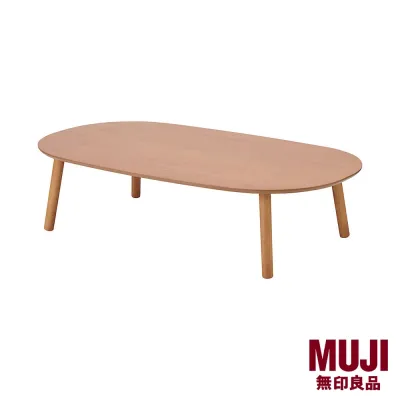
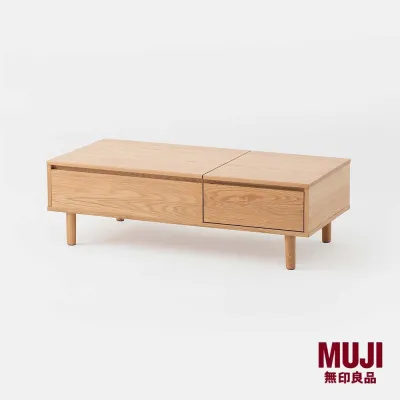
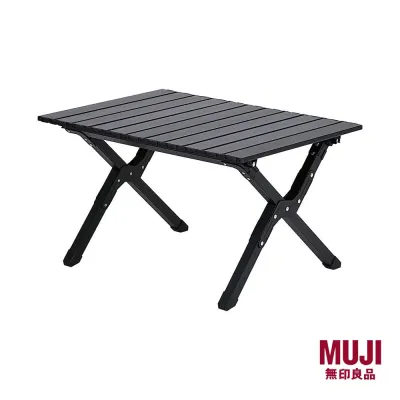
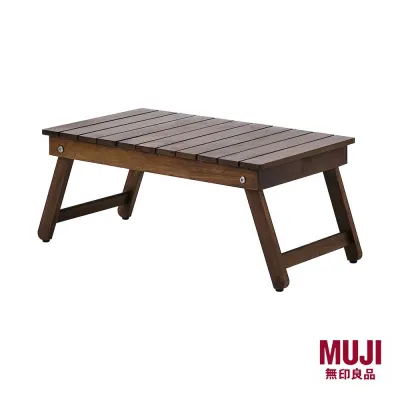
Prices are valid at publication and may change. Please refer to the product page for the latest price.
One of the most defining characteristics of this collection is the low-profile silhouette. Many of these tables sit lower to the ground than conventional Western furniture, drawing inspiration from traditional floor-centric living. This low height reduces the visual footprint of the table, allowing light and air to pass unimpeded across the room. In smaller living spaces, such as modern apartments or high-rise flats, this design choice prevents the center of the room from feeling cramped or closed off.
Color palettes are kept strictly neutral, relying on the natural tones of light oak, warm walnut, and occasional muted metal or glass accents. These organic hues do not dictate a room’s color scheme; instead, they absorb and reflect the surrounding light, enhancing the overall brightness of the space. The light honey tones of oak bring a breezy, cheerful energy to a room, while the deeper, richer shades of walnut introduce a sense of grounded warmth and quiet sophistication.
Furthermore, the functional simplicity of these designs means that every line serves a purpose. Joints are often concealed or made into subtle design details, and legs are kept slender yet structurally sound. This balance of form and function ensures that the table remains highly practical while maintaining an understated elegance that complements a wide variety of interior design styles.
Matching Materials to Your Living Room Aesthetic
The choice of material is the primary driver of a coffee table’s visual warmth and tactile experience. Natural wood finishes, such as oak and walnut, are the cornerstones of this aesthetic, offering unique grain patterns that ensure no two pieces are identical. Oak, with its prominent grain and light coloration, is highly suited for bright, airy interiors like Japandi, Scandinavian, or modern coastal styles. Walnut, with its tighter grain and rich chocolate tones, pairs beautifully with mid-century modern, industrial, or moody contemporary aesthetics.

When selecting a wooden table, it is essential to check the manufacturer’s care instructions regarding surface treatments. Many minimalist wooden tables utilize either a polyurethane lacquer finish or an oil finish. Lacquer finishes provide a protective barrier against minor spills and scratches, making them easier to maintain in active households. Oil finishes, on the other hand, highlight the raw, natural texture of the wood but require periodic reapplication of wood-safe oils and are more susceptible to water rings and heat damage.
Beyond wood, incorporating elements of glass or metal can dramatically alter the mood of your living room. A table featuring a glass top or a slender steel frame introduces a modern, slightly industrial edge that contrasts beautifully with soft upholstery. Glass surfaces allow the pattern of an underlying rug to remain visible, adding layers of depth to the room’s design. Metal accents, when kept matte and dark, provide a sharp, clean outline that anchors lighter colored sofas and textiles.
To achieve a cohesive look, consider how the table’s material interacts with your existing flooring and furniture. Placing a light oak table directly onto a light oak floor can sometimes result in a washed-out appearance; in such cases, introducing a textured rug in a contrasting shade can create the necessary visual separation. Similarly, pairing a rich walnut table with a dark leather sofa creates a cozy, enclosed feel, whereas pairing it with a light linen sofa offers a striking, sophisticated contrast.
Choosing the Right Shape and Proportions for Your Layout
Selecting the shape of your coffee table is not just an aesthetic decision; it directly dictates the traffic flow and usability of your living room. Rectangular and oval tables are classic choices that pair exceptionally well with standard linear sofas. A rectangular table mirrors the long, straight lines of a three-seater sofa, providing convenient surface access for everyone seated. Oval tables offer a similar functional length but feature rounded corners that soften the room’s flow and reduce the risk of painful bumps in tight spaces.
For sectional sofas, L-shaped seating arrangements, or compact living areas, round and square tables are often more appropriate. A round table fits snugly into the nook of a sectional, allowing easy movement around the seating area without sharp corners blocking the path. Square tables provide a generous, centralized surface area that works well in spacious, symmetrical seating arrangements, serving as a strong focal point that balances the surrounding furniture.
Proportion is key to ensuring your living room feels balanced rather than awkward. As a general guideline, the length of your coffee table should be approximately one-half to two-thirds the length of your sofa’s seating cushion area. This ratio ensures the table is large enough to be functional without overpowering the sofa. Additionally, the height of the table should ideally sit within two to five centimeters of your sofa’s seat cushion height, allowing for comfortable reaching without straining.
Clearance distances are equally vital for maintaining a comfortable and safe walking path. Aim to leave a gap of approximately 30 to 45 centimeters between the edge of the sofa and the edge of the coffee table. This distance provides ample legroom while keeping drinks and books within easy reach. For main walkways around the outer perimeter of the table, maintain a clearance of at least 60 to 75 centimeters to allow household members to pass through smoothly without having to squeeze sideways.
Aligning Functional Features with Daily Habits
A coffee table should adapt to your lifestyle, whether you use your living room primarily for entertaining, working, or relaxing. If you struggle with clutter, look for designs that incorporate hidden storage solutions. Tables with integrated drawers or lower open shelves are invaluable for stowing away remote controls, coasters, reading materials, and tablet devices. Keeping these everyday items out of sight preserves the clean, minimalist aesthetic of the tabletop, allowing a single decorative vase or candle to take center stage.
For those who value flexibility and multi-functional spaces, lightweight tables or designs equipped with castors offer significant advantages. In a multi-use living room—where you might need to clear space for a home workout, a children’s play area, or a folding guest bed—the ability to easily slide the coffee table aside is incredibly convenient. Lightweight wooden or metal-framed tables can be repositioned with minimal effort, making routine vacuuming and floor cleaning much simpler.
The height of the table also dictates how you interact with your living space. Low-height designs, often sitting around 30 centimeters or lower, are perfect for homes that embrace floor-cushion seating or low-slung, relaxed sofas. This setup encourages a casual, grounded atmosphere reminiscent of traditional East Asian interiors. Conversely, if you frequently eat meals, work on a laptop, or host formal tea gatherings at your coffee table, a standard height of 40 to 45 centimeters paired with a supportive sofa will provide a far more ergonomic and comfortable experience.
Pre-Purchase Verification: Dimensions, Access, and Safety
Before finalizing your purchase, it is crucial to conduct a thorough physical audit of your home to prevent delivery-day disappointments. Begin by measuring the entry path from the street to your living room. In high-rise residential buildings, this means measuring the height, width, and diagonal clearance of elevator doors and cabins, as well as tight corners in stairwells and corridors. Compare these measurements against the packaged dimensions provided by the retailer, as flat-packed or pre-assembled furniture boxes can be surprisingly bulky.
Next, evaluate the structural stability and weight capacity of the table, especially if you have an active household. If you have young children or pets, a table with a low center of gravity and rounded edges is inherently safer, reducing the risk of accidental tip-overs or injuries from sharp corners. Check the manufacturer’s specifications for the maximum weight limit; a table intended solely for decorative use may not withstand the weight of a person leaning on it or a heavy stack of art books.
Finally, review the assembly requirements of the specific model you are considering. Some minimalist tables are delivered fully assembled, while others require manual setup. If assembly is required, verify whether the package includes the necessary tools, such as hex keys, or if you will need your own screwdriver or rubber mallet. Ensure you have a clean, carpeted, or blanket-covered floor space to assemble the table safely without scratching the fresh wood or lacquer finish during the process.
Frequently Asked Questions (FAQ)
How do I protect a wooden MUJI coffee table from heat and moisture?
To preserve the natural beauty of a wooden coffee table, always consult the specific product manual or care label for its finish type and resistance limits. As a general rule, wooden surfaces are highly sensitive to extreme temperatures and standing liquids. Always use protective coasters under cold drinks to prevent condensation rings, and place heat-resistant trivets or mats under hot mugs or teapots to avoid scorching the wood fibers.
If a spill occurs, wipe it up immediately with a soft, dry, or slightly damp microfiber cloth. Avoid letting moisture sit on the surface, as it can penetrate the finish and cause the wood veneer to swell or discolor. When cleaning, steer clear of harsh chemical sprays, abrasive scrubbing pads, or ammonia-based cleaners, which can strip away protective lacquer or dry out natural oil finishes. Instead, use a mild, highly diluted dish soap solution if necessary, followed immediately by a dry wipe.
Can I mix a MUJI coffee table with non-minimalist furniture?
Yes, a minimalist coffee table can serve as an excellent balancing element in more eclectic, traditional, or highly decorated living rooms. Because of its clean lines and neutral tones, a simple wooden table acts as a visual anchor, grounding the room and preventing busy patterns, colorful upholstery, or ornate decor from overwhelming the senses. It provides a quiet spot where the eye can rest amidst a vibrant design scheme.
To integrate the table smoothly, look for subtle ways to bridge the different styles. You can coordinate the wood species or tone of the coffee table with other wooden elements in the room, such as picture frames, shelving, or the legs of an armchair. Alternatively, drape a textured textile runner or place a ceramic bowl that reflects the room’s color palette onto the table. To maintain the table’s design integrity, ensure you preserve some negative space around and on top of it, allowing its simple form to remain distinct.

Community discussion
Share your experience or ask a question. Comments are reviewed before publication.