
Selecting a motorised office chair for your home office in Singapore involves balancing advanced automation with practical space and structural constraints. While traditional ergonomic chairs rely on manual levers, motorised models introduce automated adjustments—such as powered recline, active lumbar support, and integrated massage functions—to simplify posture changes throughout the workday. To find the right option among the brands available in Singapore, you must evaluate how these electronic features integrate with your daily workflow, your home’s electrical layout, and the physical space of your study or living room.
Comparing these brands requires looking beyond marketing promises of ultimate comfort. Instead, focus on the reliability of the internal motors, the noise levels during operation, and how well the chair performs when the power is turned off. Because Singapore home offices often serve multiple purposes, factors like cable management, power outlet proximity, and the breathability of materials in a humid climate play a decisive role in long-term satisfaction. By analyzing these core dimensions, you can make an informed investment that enhances your productivity and physical well-being.
Understanding "Motorised" Features in Office Chairs
Motorised office chairs represent a distinct shift from conventional seating by replacing manual tension knobs and levers with electric actuators. The primary appeal lies in effortless customization, allowing you to adjust your seating position with the press of a button. However, the term “motorised” covers a wide spectrum of features, and not all brands offer the same suite of automated functions.
Products mentioned in this guide
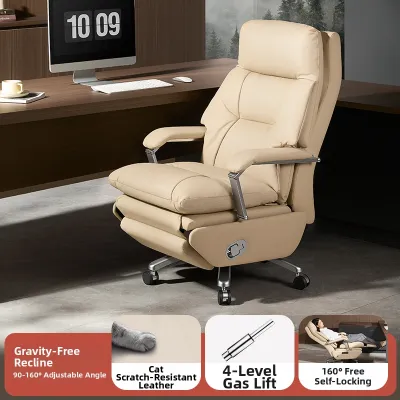
Prices are valid at publication and may change. Please refer to the product page for the latest price.
The most common motorised feature is powered recline, which allows the backrest to tilt smoothly to a precise angle without requiring you to push back with your body weight. Some premium models also feature motorised lumbar support, where internal air bladders or mechanical rollers adjust their depth and height via an electronic control panel. Additionally, wellness-focused brands often integrate built-in massage mechanisms into the backrest, utilizing vibrating motors or rolling nodes to relieve muscle tension during breaks. Motorised height adjustment, while less common than pneumatic gas lifts, is also available in select high-end models to provide ultra-precise seat height calibration.
Integrating these electronic components introduces specific power requirements that you must plan for in your home office layout. Most motorised chairs rely on a continuous power connection via an external AC adapter, which means your chair must remain within reach of a wall outlet. This setup requires careful cable management to prevent the power cord from becoming a tripping hazard or getting caught in the chair’s casters as you move. While some models offer rechargeable battery packs for cordless operation, these batteries require regular charging cycles and add weight to the overall structure.
It is vital to remember that motorised features do not automatically guarantee superior ergonomic support. An electric motor can adjust a backrest or lumbar support to a specific position, but if the underlying structural design does not match your body’s natural curvature, the chair may still cause discomfort over long hours. Manual mechanical adjustability—such as seat slide depth, armrest height, and headrest tilt—remains a crucial foundation for daily posture. When comparing brands, treat motorised features as a convenient delivery system for ergonomics rather than a replacement for sound structural design.
Core Dimensions for Comparing Motorised Chair Brands
To compare motorised chair brands in Singapore, evaluate them across practical performance dimensions that address how the chair functions in a real-world home environment.

First, compare the precision of motorised adjustments against traditional manual levers. Motorised systems should allow for micro-adjustments, letting you stop the recline or lumbar support at the exact millimeter that feels comfortable. Check if the control system allows you to save memory presets, similar to motorised standing desks. This feature is highly beneficial if multiple family members share the same chair, allowing each user to restore their preferred ergonomic settings instantly.
Noise levels are also critical during quiet home office hours or virtual meetings. Internal motors should operate with a low, unobtrusive hum rather than a loud grind. When researching brands, look for specifications or user feedback regarding motor decibel levels. A noisy motor can be highly distracting during a quiet workday and may disrupt others in a compact apartment.
The control interface significantly impacts daily usability. Brands typically use integrated side panel buttons, a wired remote control, or a smartphone application. Integrated side panels offer a clean look but can be difficult to reach or operate blindly. Wired remotes provide easy access but add visual clutter. Smartphone apps offer advanced customization and preset saving, but they require a stable wireless connection and can become obsolete if software updates cease.
Finally, consider weight and portability. The addition of electric motors, wiring, and power supplies makes motorised chairs significantly heavier than manual counterparts. This added bulk makes it more difficult to roll the chair across floor types like parquet, vinyl, or ceramic tiles. If you frequently move your chair between rooms, verify the total weight and ensure the casters are rated for both smooth rolling and floor protection.
Assessing Build Quality, Safety, and Longevity
Investing in a motorised office chair requires assessing build quality and safety features to ensure long-term reliability. Because these chairs combine mechanical loads with electrical components, verifying the durability of both systems is essential.
Start by checking the manufacturer’s specifications for the motor’s rated lifespan and the maximum weight capacity. High-quality brands clearly state the weight limits their motors can safely adjust under load. Additionally, pay close attention to warranty terms. Manufacturers often offer a long warranty on the structural frame (five to ten years) but a much shorter warranty on electronic components, motors, and power adapters (one to two years). Ensure you understand these distinctions before purchasing.
Safety is paramount with powered furniture in a residential setting. Inspect the routing of all internal cables to ensure they are shielded from moving parts and cannot be pinched during adjustments. The power adapter should carry recognized electrical safety certifications relevant to Singapore’s electrical standards (such as the Safety Mark) to prevent overheating. If you choose a model with a rechargeable lithium-ion battery, verify that the battery pack has undergone rigorous safety testing.
Beyond electronics, evaluate the non-motorised structural elements. The base should be constructed from heavy-duty materials like aluminum or reinforced nylon to provide a stable foundation that prevents tipping when fully reclined. The upholstery material must also be durable and easy to maintain. In Singapore’s warm and humid climate, highly breathable mesh or premium fabric is more comfortable for long-term use than synthetic leather, which can trap heat and sweat, leading to premature peeling.
As a general safety rule, always monitor the performance of electronic components. If you notice erratic movement, unusual grinding noises, excessive heat from the motor housing, or unusual odours, stop using the motorised functions immediately. Unplug the power adapter from the wall outlet and consult the manufacturer or a qualified professional to resolve the issue before restoring power.
Decision Framework: Choosing the Right Motorised Chair
To navigate the options available in Singapore, use this conditional decision framework to match specific motorised features to your unique home office workflow and physical space.
Choose a motorised recline or massage model if your daily routine includes scheduled breaks where you prefer to relax, read, or watch media directly from your desk. These models are ideal for users who want a multi-functional chair that transitions from a focused work tool to a relaxation lounge. However, measure your workspace carefully before choosing this option. A fully reclining chair requires a larger physical footprint, so you must ensure there is sufficient clearance behind your desk and that the chair will not obstruct walkways or hit nearby walls.
Choose a motorised lumbar or precision-adjustment model if you suffer from chronic back discomfort or require highly specific ergonomic support throughout the day. The ability to make micro-adjustments without straining to reach manual levers allows you to maintain optimal spinal alignment as your posture shifts. This is particularly valuable if you share the chair with another user, as motorised memory presets ensure you can return to your exact ergonomic setup without manual trial and error.
Before purchasing, verify the layout of your home office. If your workspace lacks accessible power outlets near the desk, or if you prefer a clean, cable-free aesthetic, you must plan for extension cords, cable tracks, or opt for a model with a rechargeable battery pack. Additionally, if you frequently move your chair between rooms or have a compact study with limited space, a heavy motorised chair may prove too cumbersome to maneuver.
Neither option may fit your needs if you require a lightweight, highly portable seating solution, or if your work involves frequent, sensitive audio calls where even a low motor hum could be picked up by your microphone. In these scenarios, a high-quality manual ergonomic chair remains the more practical and reliable choice, offering excellent physical support without the added complexity, weight, and power requirements of motorised components.
Frequently Asked Questions (FAQ)
Are motorised office chairs safe for prolonged daily use?
Yes, motorised office chairs are safe for daily use, provided you strictly adhere to the manufacturer’s stated weight limits and operational guidelines. The structural support of the chair remains active whether the motors are running or not, meaning you can sit in it for a standard workday just like a traditional chair. However, active motorised features, such as built-in massage functions or continuous lumbar movement, are typically designed for short, intermittent intervals rather than continuous operation while you are typing. To ensure electrical safety during long hours of use, always verify that the power adapter and internal wiring carry recognized safety certifications and are free from physical damage.
How do I maintain the motorised components of my office chair?
Maintaining a motorised office chair involves protecting both its electronic and mechanical parts. Keep all liquids, cleaning sprays, and excessive moisture away from the control panels, cable connections, and motor housings to prevent electrical shorts. Regularly inspect the power cables for any signs of fraying, pinching, or wear, especially around the pivot points of the chair’s frame. For the mechanical joints and moving parts, consult your specific user manual to see if the manufacturer recommends periodic lubrication or professional servicing. If the chair utilizes a companion app, keep the firmware updated to ensure stable connectivity and optimal motor performance.

Community discussion
Share your experience or ask a question. Comments are reviewed before publication.