
Choosing between a Mid-Century Modern and a Contemporary pedestal accent table depends on whether your living room benefits more from the warm, organic nostalgia of mid-20th-century design or the sleek, sculptural minimalism of modern forms. While Mid-Century Modern tables introduce retro charm and structural warmth, Contemporary options offer fluid, experimental shapes and industrial materials that adapt to evolving trends. The right choice balances your existing furniture silhouettes, the physical constraints of your floor plan, and the specific visual weight required to anchor your seating arrangement. By understanding how these two design movements approach form, material, and space, you can select an accent pedestal that serves as a functional companion to your sofa while elevating your overall interior aesthetic.
Defining the Core Aesthetics
Mid-Century Modern (MCM) design, which flourished from the late 1940s through the 1960s, remains celebrated for its focus on functionality, organic shapes, and clean lines. This aesthetic emerged during an era of post-war optimism, where designers sought to create furniture that was both mass-producible and deeply human in scale. The core visual traits of MCM accent pedestals include gentle curves, tapered profiles, and an emphasis on natural wood grains. This style brings a sense of structured nostalgia and understated elegance to a room, offering a warm, inviting vibe that feels grounded and historical without feeling dated.
Contemporary design, by contrast, is not anchored to any single historical period; instead, it represents the design philosophies of the present moment. This style is fluid, constantly evolving, and highly receptive to current artistic and technological trends. Contemporary accent pedestals often showcase bold experimentation with form, featuring sharp geometric angles, asymmetrical structures, or hyper-minimalist profiles. The mood of contemporary design is sleek, sophisticated, and occasionally avant-garde, prioritizing clean surfaces, high-contrast color palettes, and a sense of quiet luxury that complements modern architectural spaces.
Products mentioned in this guide
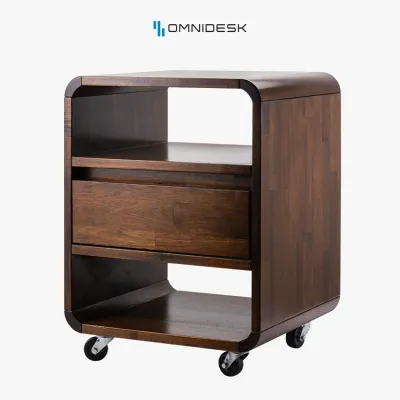
Prices are valid at publication and may change. Please refer to the product page for the latest price.
The primary visual difference between these two styles lies in the contrasting atmosphere they project. An MCM pedestal table acts as a warm, comforting element, utilizing soft contours and earthy tones to make a living room feel cozy and lived-in. A Contemporary pedestal table, on the other hand, often functions as a crisp, high-contrast statement piece that defines the room’s modern edge. While MCM design looks back to a classic era of organic structuralism, Contemporary design looks forward, embracing abstract shapes and industrial finishes that challenge traditional furniture boundaries.
Comparing Silhouettes and Pedestal Bases
The silhouette of a pedestal table is defined entirely by its central support, which replaces the traditional four-legged structure to create a clean, singular focal point. Mid-Century Modern pedestal bases typically favor organic, flowing curves or slender, tapered columns. The classic tulip base, inspired by mid-century pioneers, flares gently at the floor and narrows as it meets the tabletop, mimicking shapes found in nature. Other MCM variations feature fluted wooden columns or tripod-like central clusters that emphasize vertical lines and create an illusion of height and lightness.

Contemporary pedestal bases reject traditional symmetry in favor of bold geometric, cylindrical, or abstract sculptural forms. You will often find contemporary tables supported by solid concrete cylinders, heavy cubic blocks, or intricate wireframe structures made of powder-coated steel. Some contemporary designs utilize asymmetrical pedestals where the support is offset from the center, creating a striking visual tension. These bases are designed to be noticed, often resembling miniature gallery sculptures rather than standard furniture supports.
The visual weight and footprint of the base significantly influence how the table anchors your surrounding furniture. A solid, blocky contemporary base commands immediate attention, making it an excellent anchor for a large, low-profile sectional sofa. Its heavy footprint provides a strong sense of permanence and stability in open-plan layouts. Conversely, the slender, tapered profile of an MCM pedestal base has a much lighter visual weight, allowing light and air to circulate freely around the seating area, which prevents a crowded room from feeling claustrophobic.
The proportion between the tabletop and the pedestal base also dictates the perceived scale of the piece. A table with a wide, substantial base and a relatively small top feels grounded and sturdy, but it requires more dedicated floor space to prevent accidental tripping. A table with a slender pedestal and a wider top maximizes legroom and visual openness, making it highly functional next to deep armchairs. Balancing this ratio ensures the table fits comfortably within your seating arrangement without obstructing movement or overwhelming nearby furniture.
Materials, Textures, and Finishes
Material selection is a defining characteristic that separates the tactile experience of these two styles. Mid-Century Modern design relies heavily on warm, natural hardwoods such as walnut, teak, and oak. These woods are typically finished with satin or matte lacquers that highlight the rich, swirling patterns of the natural grain. To complement the wood, MCM tables often incorporate brushed brass, antique copper, or molded fiberglass accents, adding subtle metallic warmth and structural variety without disrupting the organic color palette.
Contemporary design embraces a much broader and more industrial spectrum of materials, focusing on texture, reflection, and contrast. Common contemporary materials include polished natural stone like marble or travertine, tempered glass, matte-finished metals, and high-gloss or textured resins. These materials allow for sharp, clean edges and seamless joints that are difficult to achieve with traditional woodworking. A contemporary table might pair a rough, textured concrete base with a perfectly smooth, smoked-glass top, playing with contrasting tactile sensations.
When selecting a table, it is essential to verify the actual material specifications and care instructions rather than assuming durability based on the style name alone. For instance, a table labeled as “walnut” may feature a thin wood veneer over engineered wood, which requires careful protection from moisture and heat to prevent peeling. Similarly, a contemporary “marble” pedestal top is highly porous and susceptible to etching from acidic spills unless it has been treated with a professional-grade sealant. Always check the manufacturer’s guidelines regarding scratch resistance, weight limits, and recommended cleaning agents to ensure the materials align with your household’s daily habits.
Integrating with Your Living Room Decor
To successfully integrate an accent pedestal into your living room, begin by assessing your existing furniture pieces. Look closely at the leg styles, frame materials, and overall scale of your sofa and coffee table. If your primary seating features exposed wooden legs or warm fabric upholstery, an MCM pedestal table will create a cohesive, harmonious connection. If your living room is dominated by a low-profile, blocky sectional sofa or metal-framed accent chairs, a sculptural contemporary pedestal can break up the dominant horizontal lines and introduce an interesting geometric contrast.
Spatial constraints are particularly important when planning layouts for typical Singapore homes, where optimizing floor space in HDB flats or compact condominiums is a priority. A pedestal table is exceptionally space-efficient because its single central leg eliminates the outer corner legs of traditional side tables, allowing you to tuck it closer to seating corners. Measure the clearance between your sofa arm and the adjacent wall, ensuring there is at least a few centimeters of breathing room. Additionally, verify that the table’s height aligns comfortably with your sofa’s armrest, allowing for easy access to drinks or remote controls.
Decide whether you want the accent pedestal to serve as a striking focal point or a subtle supporting piece. If your living room features a neutral color palette and minimalist decor, a bold, black concrete contemporary pedestal can act as an eye-catching sculptural element that draws the eye. If your room already has several dominant patterns or a large, colorful rug, a warm teak MCM table with a slender profile will serve as a quiet, functional companion that supports the room’s existing visual balance without competing for attention.
Final Decision Framework
To make a confident purchase, evaluate your living room against these specific style indicators:
Choose a Mid-Century Modern pedestal accent table if:
- Your living room already features warm wood tones, retro-inspired textiles, or earthy color palettes such as olive green, mustard yellow, or rust.
- You prefer a cozy, lived-in aesthetic that emphasizes organic curves, natural grain patterns, and historical design continuity.
- You want to soften a room filled with sharp, angular furniture by introducing gentle, flowing silhouettes like a classic tulip base.
Choose a Contemporary pedestal accent table if:
- Your home leans toward a minimalist, industrial, or highly modern aesthetic characterized by clean lines and open space.
- You enjoy high-contrast design elements, such as pairing matte black metals with polished white marble or textured concrete.
- You want a unique, sculptural statement piece that challenges traditional furniture forms and acts as a conversation starter.
Before finalizing your selection, always complete these essential verification checks:
- Measure the exact finished dimensions of the table and compare them to your sofa arm height to ensure comfortable usability.
- Check the delivery requirements, including doorway, hallway, and lift clearance, especially if you are purchasing a heavy, solid-stone contemporary pedestal that cannot be disassembled.
- Confirm the manufacturer's stated load capacity to ensure the table can safely support your intended items, such as heavy ceramic table lamps or stacks of books, without compromising its structural stability.
Frequently Asked Questions (FAQ)
How do I prevent a pedestal table from tipping in a high-traffic area?
To prevent a single-base pedestal table from tipping, always check the manufacturer’s specifications for the base-to-top weight ratio and the overall footprint. A wider, heavier base lowers the center of gravity, significantly increasing the table’s stability. In active households or high-traffic walkways, place the table in a protected nook, such as between a sofa arm and a wall, rather than in an open path. If the table is placed on hard flooring, check if the manufacturer permits the use of non-slip silicone pads or temporary stabilization materials like museum wax under the base, while strictly adhering to the product’s official safety and installation guidelines.
Can I mix Mid-Century Modern and Contemporary styles in the same room?
You can absolutely mix Mid-Century Modern and Contemporary styles in the same living room to create a curated, eclectic look. The key to maintaining visual cohesion is establishing a common design thread, such as a shared metal finish (like brushed brass) or a consistent color palette. A practical approach is to keep your large anchor pieces, such as the sofa and media console, in one dominant style, and use the accent pedestal as a transitional bridge. This allows you to introduce a contrasting texture or silhouette, such as a contemporary stone pedestal next to an MCM wooden armchair, without disrupting the room’s overall design harmony.

Community discussion
Share your experience or ask a question. Comments are reviewed before publication.