
Finding a reliable metal clothes rack stand in Singapore requires looking past brand marketing and focusing on physical specifications. In Singapore’s humid climate, a poorly constructed rack can quickly sag, wobble, or rust, turning a budget-friendly purchase into a recurring expense. To secure the best durability and value, you must evaluate structural elements such as tube wall thickness, joint connection mechanisms, and protective surface finishes. This guide outlines how to inspect these critical features, balance upfront costs against long-term utility, and select a rack that matches your home’s spatial constraints and storage demands.
Key Durability Indicators for Metal Clothes Racks
To ensure a clothes rack stand metal frame can withstand daily use, you must first assess the physical dimensions of its structure. The load-bearing capacity of a metal rack is primarily determined by the outer diameter and the wall thickness of its steel tubes. When shopping, look for manufacturers that explicitly state a tube wall thickness of at least 1.0 mm to 1.2 mm for standard household use, or 1.5 mm and above for heavy-duty storage. Thinner tubes are highly susceptible to bending or crimping under the weight of heavy garments, wet laundry, or dense fabrics.
The method used to connect the metal tubes is another critical factor in determining long-term stability. Welded joints offer the highest structural integrity but make the rack difficult to transport. For flat-pack furniture, screw-in or bolted connections are standard; however, you should verify if the joints use threaded metal inserts or if the screws thread directly into the thin metal walls. Threaded inserts and through-bolts with locking nuts provide a much tighter grip and resist loosening over time. Conversely, snap-fit or plastic connector joints are prone to cracking under stress and often lead to a persistent wobble.
Products mentioned in this guide
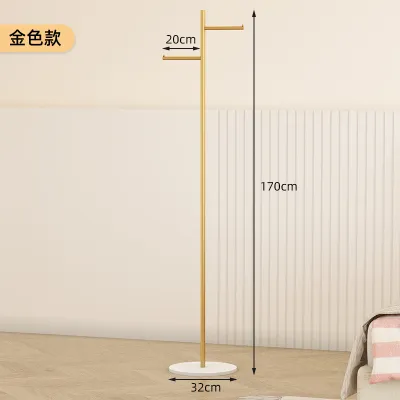
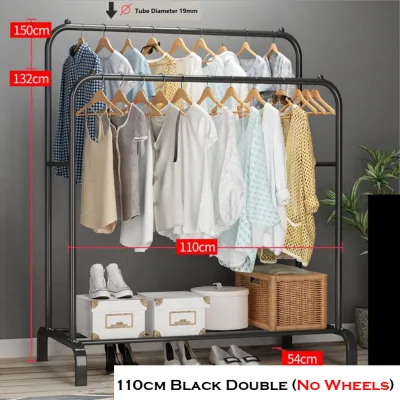
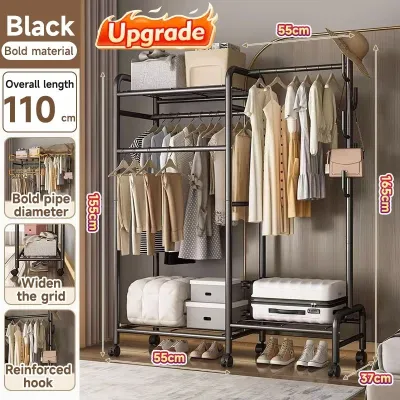
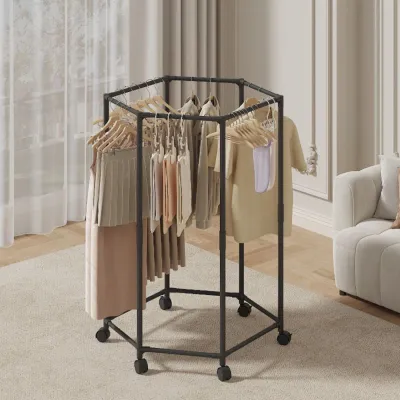
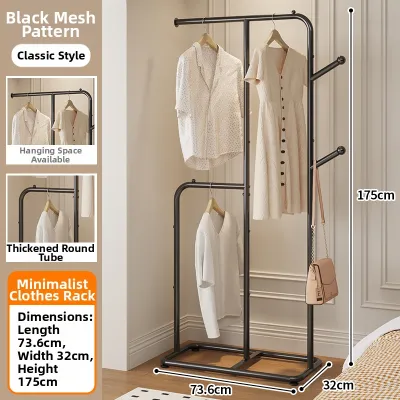
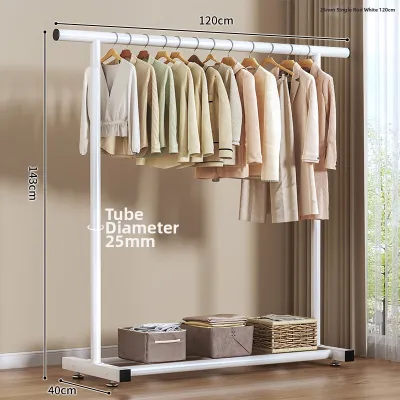

Prices are valid at publication and may change. Please refer to the product page for the latest price.
Singapore’s high relative humidity makes rust prevention a primary concern for any metal furniture. Standard wet-spray paint only provides a thin cosmetic layer that easily chips, exposing the underlying steel to moisture and accelerating corrosion. Powder coating is a far superior surface treatment for humid environments. This process involves applying a dry powder electrostatically and curing it under heat to form a thick, resilient barrier that resists scratches, moisture, and impact. When evaluating a metal rack, check the product specifications for terms like “powder-coated steel” or “epoxy powder finish” to ensure the frame can withstand humid utility rooms or balcony areas.
Finally, the base design and weight distribution of the rack dictate its resistance to tipping. A wide, low-profile base lowers the overall center of gravity, making the unit inherently more stable. Look for models with crossbar reinforcements near the bottom, which not only strengthen the frame but also provide a secondary shelf for shoes or storage boxes. If the rack features caster wheels, ensure they are heavy-duty, lockable, and rated for the fully loaded weight of the rack. Plastic casters often warp or flat-spot under continuous load, whereas metal or polyurethane wheels roll smoothly and distribute weight more evenly across your flooring.
Evaluating Value: Balancing Price and Build Quality
Determining the true value of a clothes rack stand metal involves looking beyond the initial retail price. Hidden costs can quickly inflate your total investment, particularly when purchasing larger or heavier units. For instance, delivery fees for bulky metal frames can vary significantly depending on the retailer and whether the item requires special handling. Additionally, consider the availability of replacement hardware; a rack that becomes useless because of a single lost screw or broken caster offers poor long-term value compared to a slightly pricier model that uses standard, easily replaceable parts.

Value also depends on how well the rack’s design aligns with your specific storage needs and budget. A basic, single-rail freestanding model is highly cost-effective if you only need to hang a few lightweight shirts or daily outfits. However, if you plan to use the rack as a primary wardrobe replacement for heavy denim, suits, or winter wear, investing in a higher-end, heavy-duty steel rack is more economical than buying a cheap model that will need replacement within a few months.
When researching options, analyzing user feedback can reveal long-term performance signals that are not apparent from product photos. Look for reviews that specifically mention joint stability, rail sagging, or rust formation after several months of use. A rack that receives praise for its initial aesthetic appeal but has multiple reports of structural failure within a year represents poor value. Focus on feedback regarding the ease of assembly and whether the pre-drilled holes align correctly, as poor manufacturing tolerances are a common source of structural weakness.
Sourcing and Verifying Racks in Singapore
Finding a reliable metal clothes rack in Singapore involves navigating both physical showrooms and online marketplaces. Local furniture showrooms allow you to physically test the rack’s stability, check the thickness of the metal, and feel the quality of the surface finish before committing to a purchase. This hands-on inspection is the most reliable way to verify build quality. On the other hand, online marketplaces offer a much broader selection and convenient home delivery, but they require you to rely heavily on written specifications and customer reviews.
Before making a purchase, carefully review the retailer’s return policies and warranty terms. A reputable seller should offer a clear return window for items that arrive damaged, missing parts, or with manufacturing defects such as misaligned pre-drilled holes. While long-term warranties are rare for basic household racks, look for guarantees that cover structural integrity or weld failures for at least a few months. This protection is especially important when buying online, where you cannot inspect the physical product prior to delivery.
Upon delivery, conduct a thorough inspection of the components before beginning assembly. Check the metal tubes for any signs of shipping damage, such as dents, bends, or deep scratches that have penetrated the protective powder coating. When assembling the rack, follow the manufacturer’s instructions strictly and avoid over-tightening the screws, which can strip the threads or deform the metal tubing. Once assembled, test the rack’s stability on a flat surface by gradually adding weight to ensure the frame does not wobble or sway.
Decision Framework: Matching the Rack to Your Needs
To select the ideal clothes rack stand metal for your home, you must match the rack’s structural design to your specific storage requirements and living environment. Heavy-duty industrial-style racks, often constructed from thick steel pipes with welded or heavy-bolted joints, are best suited for utility rooms, laundry areas, or households with large volumes of heavy garments. These racks prioritize strength and stability over aesthetics, making them ideal for long-term, high-capacity storage where visual design is secondary.
If you are working with a compact bedroom, a walk-in closet, or a shared living space, adjustable or multi-tier racks offer the best spatial efficiency. These designs allow you to maximize vertical storage by utilizing multiple hanging rails or integrated wire shelves for folded clothes, shoes, and storage bins. When choosing an adjustable model, verify that the locking mechanisms—such as spring-loaded pins or heavy-duty clamps—are robust enough to hold the adjusted height securely under a full load without slipping.
For visible areas of the home, such as entryways or open-concept bedrooms, minimalist single-rail designs are often preferred. These racks feature clean lines, slim profiles, and elegant finishes that complement modern interior decor. Before finalizing your choice, verify that the intended location in your home can accommodate the rack’s physical dimensions. Measure the available floor space, taking into account any skirting boards, door swings, or nearby furniture that might restrict access.
Frequently Asked Questions (FAQ)
How can I prevent a metal clothes rack from rusting in a humid room?
To prevent rust, place your metal clothes rack away from direct moisture sources, such as open bathroom doors, washing machines, or uncovered windows. Ensure the room has adequate ventilation by using a fan or dehumidifier to lower ambient humidity levels. Regularly wipe down the metal frame with a dry microfiber cloth to remove accumulated dust and condensation, which can trap moisture against the surface. Avoid using harsh chemical cleaners or abrasive pads that can scratch and strip away the protective powder coating. If you notice any chips or scratches in the finish, apply a small amount of rust-inhibiting touch-up paint recommended by the manufacturer to seal the exposed metal.
What is the safest way to distribute weight on a freestanding metal rack?
The safest way to load a freestanding rack is to place the heaviest items, such as coats, denim, or storage boxes, on the lowest shelves or near the center of the base. This lowers the overall center of gravity and significantly reduces the risk of the rack tipping over. Avoid hanging all heavy garments on one end of a single-rail rack, as this lateral imbalance can cause the frame to warp or tip sideways. Distribute your clothing evenly across the entire length of the hanging rail. Always check the manufacturer’s stated maximum weight capacity and leave a reasonable safety margin rather than loading the rack to its absolute limit.
Are tension rod-style metal racks durable enough for everyday use?
Tension rod-style metal racks rely entirely on friction between the floor and ceiling to remain upright, making them less stable than freestanding or wall-mounted alternatives. They are generally suitable only for lighter, temporary loads, such as airing out a few shirts or organizing lightweight accessories. If installed on uneven, carpeted, or porous surfaces, the tension rods can easily slip, leading to a sudden collapse that can damage your walls, ceiling, and clothing. For heavy, everyday wardrobe storage, a freestanding metal rack with a solid base or a securely anchored wall-mounted system is a much safer and more durable choice.

Community discussion
Share your experience or ask a question. Comments are reviewed before publication.