
Finding the right coat rack for a compact Singapore apartment requires balancing high storage capacity with a minimal physical footprint. In typical HDB flats and condominiums, entryway space is highly contested, often serving as a transition zone for shoes, bags, and daily mail. To maximize hanger storage without cluttering your home, you must look past generic marketing claims and focus on structural efficiency, precise physical dimensions, and verified load capacities. Rather than relying on brand names alone, the key to successful organization lies in matching the specific architectural constraints of your foyer with a rack design that utilizes vertical space safely.
Measuring Your Entryway for High-Capacity Coat Rack Storage
Before purchasing any hanger storage system, you must accurately assess the physical limits of your entryway. Begin by measuring the available floor footprint, the wall width, and the total vertical clearance from floor to ceiling. It is vital to account for the swing radius of your front door, nearby room doors, and any adjacent shoe cabinets to ensure the rack does not obstruct daily foot traffic.
In many Singaporean homes, entryways feature specific architectural elements like electrical distribution board (DB) boxes, household shelter doors, or narrow corridors. A common sizing error is measuring only the frame of the coat rack while ignoring the depth added by hanging garments. A standard hanger is approximately 40 to 45 centimetres wide, meaning clothes hung flat against a wall or on a projecting hook will extend significantly past the rack’s physical frame. If you select a rack with fold-down hooks or swing-out arms, you must also calculate the clearance required when these mechanisms are fully extended to avoid blocking walkways.
Products mentioned in this guide
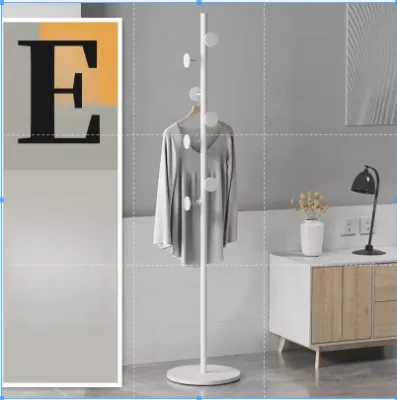
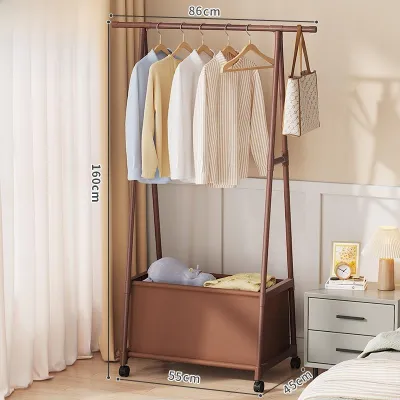
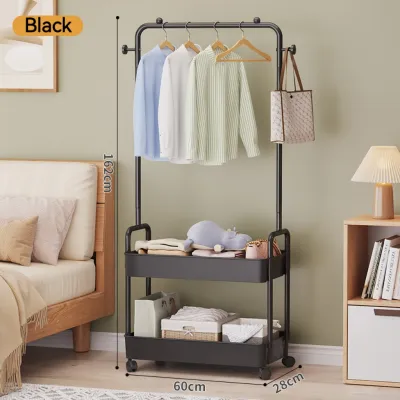


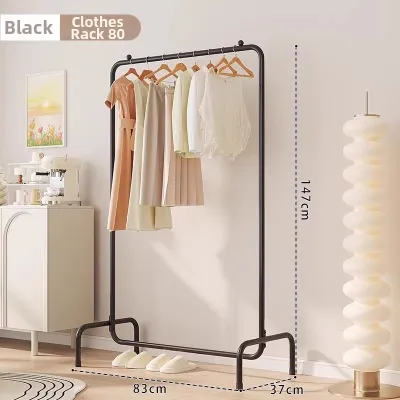
Prices are valid at publication and may change. Please refer to the product page for the latest price.
Space-Saving Designs That Maximize Hanger and Clothing Storage
When floor space is at a premium, the structural design of your coat rack dictates how much clothing you can store without creating visual clutter. Different configurations offer distinct trade-offs between storage density, ease of access, and floor space consumption. To make an informed decision, you must compare these designs against your measured entryway dimensions.

Wall-Mounted and Fold-Down Solutions
Wall-mounted coat racks are highly effective for maximizing vertical storage because they leave the floor entirely clear. This setup is ideal for narrow HDB corridors where a freestanding base would block the path. Some high-capacity wall units feature retractable or fold-down hooks that lie flat when empty, preserving a clean aesthetic and preventing accidental bumps in tight spaces.
However, wall-mounted systems require careful structural evaluation. You must identify the wall material before installation; concrete walls, such as those of a household shelter, require heavy-duty masonry plugs, while drywall partition walls require locating studs or using specialized hollow-wall anchors. Because the weight capacity of a wall rack is strictly limited by the strength of the wall and the quality of the fixing hardware, you must verify the manufacturer’s installation guidelines and load limits before hanging heavy bags or multiple damp umbrellas.
Vertical Freestanding and Multi-Function Racks
Freestanding racks that utilize vertical height are highly versatile, often integrating hanger rods, hooks, and lower shelves for shoes or storage boxes. These multi-tier designs allow you to separate daily-use items from seasonal gear, keeping your entryway organized. By combining multiple storage functions into a single footprint, you reduce the need for separate furniture pieces in a small foyer.
Despite their convenience, tall freestanding racks carry inherent stability risks. When heavily loaded with bags, wet coats, or unevenly distributed items, a tall rack with a narrow base can easily tip over. To mitigate this risk, look for models with a wide, heavy base or those that include anti-tip wall anchoring hardware. Always check the total footprint of the base to ensure it does not extend into high-traffic zones or create a tripping hazard near your main entrance.
Evaluating Brand Specifications for Weight and Capacity Limits
When shopping on online marketplaces or visiting local furniture showrooms, you will encounter various brands claiming to offer high-capacity storage. To identify a truly durable product, you must look past marketing terms like “heavy-duty” or “ultra-stable” and critically evaluate the manufacturer’s technical specifications.
First, search the product description for explicit maximum load-bearing limits, usually stated in kilograms. A reliable specification sheet will break down the weight limits by component, indicating how much weight the main hanger rod, individual hooks, and lower shelves can safely support. Next, examine the physical construction details. Look for specifications detailing the material thickness (such as the gauge of the steel tubing), the diameter of the hanger rod, and the reinforcement of the joints. Thicker metal tubes and welded joints generally offer superior structural integrity under full loads compared to thin, snap-together plastic connectors.
Additionally, do not assume that a high number of hooks automatically translates to a higher usable capacity. If the hooks are spaced too closely together, bulky garments like winter jackets, heavy canvas bags, or thick blazers will overlap. This overlap not only makes items difficult to access but also concentrates weight unevenly, which can warp the frame or cause a freestanding rack to tip.
Installation, Clearance, and Stability Requirements
Before finalizing your purchase, you must plan for the delivery, assembly, and long-term safety of the coat rack. Ensure that the packaged product dimensions allow the box to pass easily through your building’s passenger lift, stairwells, and your apartment’s main door. Some long, single-piece garment rails cannot be easily maneuvered in tight lift spaces, requiring self-assembly models instead.
During assembly, follow the manufacturer’s instructions precisely. Use the recommended tools and avoid over-tightening screws, which can strip the threads of metal frames and permanently weaken the joints. If you are installing a wall-mounted unit, ensure you use the correct drill bit size and anchor type matching your specific wall material.
Establish a strict safety stop condition during installation: if you are unsure of the wall material, if the provided mounting hardware feels loose or inadequate, or if the assembled freestanding rack wobbles when a light load is applied, halt the process immediately. In these scenarios, do not attempt to load the rack; instead, consult a qualified professional handyman to secure the unit safely.
Frequently Asked Questions (FAQ)
How many coats can a standard freestanding rack realistically hold?
The practical capacity of a freestanding rack depends on the weight and bulk of your garments rather than the physical number of hooks. While a rack may feature ten hooks, hanging ten heavy winter coats or dense bags can easily exceed the unit’s safe load limit and compromise its stability. To determine realistic capacity, estimate the total weight of your typical daily items and compare this figure against the manufacturer’s stated maximum weight capacity, ensuring the load is distributed evenly across the base.
Are tension rod coat racks safe for heavy winter clothing?
Tension rod coat racks rely entirely on friction between the floor and the ceiling to remain upright. In many Singapore apartments, false ceilings or plaster boards are common; these surfaces can flex or crack under the high pressure required to secure a tension rod. If loaded with heavy, high-density winter clothing, the rod can easily slip and collapse. You should check the manufacturer’s explicit weight rating and avoid using tension rods for heavy storage unless the product is specifically engineered, tested, and rated for high-load capacity on solid concrete surfaces.

Community discussion
Share your experience or ask a question. Comments are reviewed before publication.