
Finding the perfect shoe rack for your Singapore home requires balancing your household’s footwear collection with the physical constraints of your entryway. Whether you live in a cozy HDB flat or a modern condominium, a cluttered doorway can disrupt the flow of your home and create safety hazards. By measuring your available floor space, calculating your storage needs, and comparing these figures with the specifications of Vhive furniture, you can select a shoe cabinet that keeps your entryway organized and your walkways completely clear.
Assessing Your Entryway Space and Walkway Clearances
Before browsing any furniture catalog, you must establish the maximum physical boundaries of your entryway. Start by measuring the absolute width, depth, and height of the designated area using a standard measuring tape. Do not rely on visual estimates, as even a few centimeters can prevent a cabinet door from opening fully or block a vital pathway.
When measuring, look closely for hidden architectural details that might interfere with a flush installation. Take note of skirting boards, wall switches, electrical DB boxes, and uneven plastering that could push the shoe rack away from the wall. If your entryway features a recessed niche, measure the width at the front, middle, and back to ensure the furniture piece will slide in smoothly without getting wedged.
Products mentioned in this guide
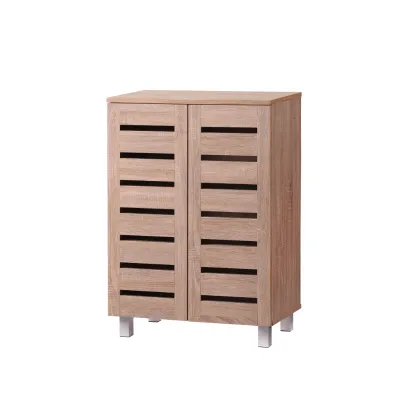
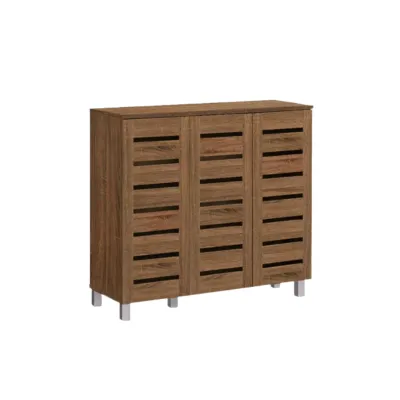
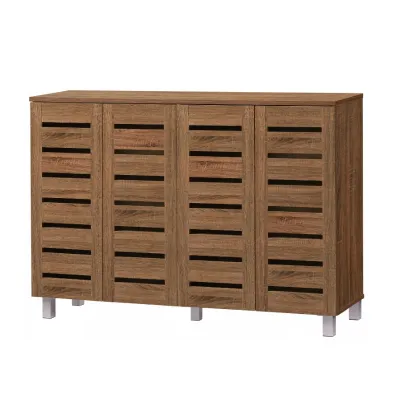
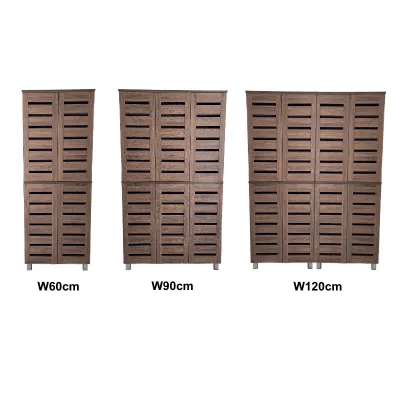
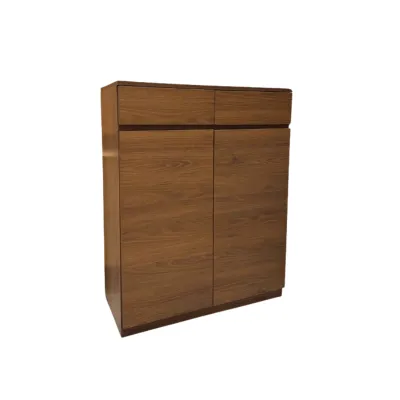
Prices are valid at publication and may change. Please refer to the product page for the latest price.
Walkway clearance is another critical factor, especially in high-traffic entryways. You need to account for the door swing arcs of both your main entrance door and the shoe cabinet doors themselves. Ensure there is at least 90 to 100 centimeters of clear walking space in front of the unit when all doors are closed, allowing family members to pass each other comfortably.
For homes with external corridors or shared lobbies, you must also consider local safety regulations. In Singapore, HDB corridor guidelines require maintaining a minimum clear escape passage of 1.2 meters to ensure safe evacuation during emergencies. Placing a bulky shoe rack in a narrow shared corridor can violate these fire safety rules, so always verify your building’s specific bylaws before planning any external storage.
Calculating Your Household Shoe Storage Capacity Needs
Once you know how much physical space you have, the next step is determining how many pairs of shoes your household actually needs to store. A simple way to calculate your baseline capacity is to multiply the number of family members by the average number of pairs each person wears regularly. For example, a family of four where each person uses three pairs of daily shoes will require immediate access to at least 12 pairs of footwear.

Different types of footwear require different amounts of vertical and horizontal space. Standard sneakers and flat shoes can easily sit on shelves with a height clearance of 15 centimeters, but high heels, ankle boots, and high-top trainers demand more vertical room. If your collection includes diverse styles, look for storage units that offer adjustable shelving so you can customize the interior height of each tier.
Overcrowding your main entryway unit is a common mistake that leads to scuffed shoes and trapped odors. To prevent this, plan to store seasonal footwear, formal dress shoes, or rarely worn items in bedroom closets or secondary storage areas. Keep only daily-use shoes, school shoes, and a few pairs of guest slippers in the primary entryway cabinet to maintain a clean, organized look.
Translating Space and Capacity into Vhive Shoe Rack Options
With your measurements and capacity requirements in hand, you can begin evaluating the Vhive furniture lineup to find a suitable match. Vhive offers a variety of shoe storage designs, ranging from slim, upright cabinets with tilting compartments to wide, multi-door credenzas. Matching these designs to your specific layout is key to maximizing both storage and floor space.
For narrow HDB niches or tight condo foyers, slim-profile cabinets with slanted or tilting shoe compartments are highly effective. These designs store shoes vertically rather than horizontally, allowing the cabinet depth to remain under 30 centimeters. If you have a wider entryway or a dedicated foyer, a traditional double-door cabinet with flat shelves offers greater depth and can accommodate larger shoe sizes without bending the heels or toes.
Always verify the finished external dimensions listed on the Vhive product labels or official specifications sheet against your measured clearances. Pay close attention to the depth measurement, and remember to add a few centimeters of clearance if the cabinet doors swing outward. If space is exceptionally tight, open-shelf shoe racks or models with sliding doors can eliminate door-swing obstructions entirely.
The internal configuration of the cabinet is just as important as its exterior size. Check whether the shelves are fixed or adjustable, and verify the maximum weight capacity per shelf specified by the manufacturer. Choosing a model with removable shelves gives you the flexibility to adapt the storage space as your household’s footwear collection changes over time.
Installation, Stability, and Safety Checks for Entryway Furniture
Ensuring your new shoe rack is stable and safely installed is crucial, particularly in a busy entryway where people frequently lean on furniture or rush past. Tall, narrow shoe cabinets have a higher center of gravity and can become unstable when multiple drawers or doors are opened simultaneously. To prevent accidental tip-overs, always use the manufacturer-provided wall-anchoring brackets to secure tall units firmly to the wall.
Before securing the furniture, check the levelness of your entryway floor. Many tiled or concrete floors in HDB flats and condos have slight slopes for drainage or natural settling, which can cause a tall cabinet to wobble. Use a spirit level to identify any unevenness, and utilize adjustable leveling feet or shim pads to stabilize the unit before loading it with shoes.
If your home has thick baseboards, the shoe rack may not sit flush against the wall, leaving a gap that reduces stability and collects dust. Some furniture designs feature a baseboard cutout at the back to accommodate this, but if yours does not, you may need to install spacer blocks or secure the anchoring brackets to bridge the gap safely.
Finally, always adhere to the assembly instructions and weight limits detailed in the product manual. Overloading shelves can cause them to bow or collapse, damaging your footwear and the cabinet structure. If you encounter any structural conflicts during assembly, or if you are unsure about drilling into your specific wall type, stop and consult a qualified professional installer or contact the manufacturer for guidance.
Frequently Asked Questions (FAQ)
How do I measure an HDB corridor for a shoe rack without blocking the walkway?
To measure an HDB corridor safely, start by identifying the exact boundary of your unit’s property line and locate any fixed obstacles such as fire hydrants, utility risers, or your neighbor’s doorway. Use a measuring tape to ensure that placing a shoe rack in the corridor will still leave a continuous, unobstructed pathway of at least 1.2 meters, which is the standard requirement for emergency escape routes. If your corridor is too narrow to accommodate a standard cabinet while maintaining this clearance, prioritize ultra-slim, wall-mounted shoe organizers or keep your footwear storage entirely inside your home.
Can I fit tall boots in standard Vhive shoe racks?
Fitting tall boots into a standard shoe rack depends entirely on the internal shelf clearance and whether the model features adjustable shelving. Before purchasing, measure the shaft height of your tallest boots and compare it to the internal tier heights listed in the product specifications. If the cabinet has fixed shelves with low clearance, your boots may have to be stored horizontally, which can crease the material, or kept in another storage area. To accommodate boots easily, look for Vhive models that allow you to remove or adjust individual shelves to create custom, high-clearance compartments.

Community discussion
Share your experience or ask a question. Comments are reviewed before publication.