
Selecting a solid wood wardrobe for your Singapore HDB flat requires balancing the natural appeal of timber with the practical realities of limited floor space. Because solid wood furniture is rigid, heavy, and permanent, choosing the wrong dimensions can quickly lead to blocked walkways, inaccessible power sockets, or doors that cannot open fully. To find a wardrobe that fits seamlessly, you must evaluate your specific bedroom layout—whether it is a master bedroom or a smaller common room—and understand the critical clearance zones required for daily comfort.
Core Space-Matching Rules for HDB Bedrooms
To maintain a functional and comfortable bedroom, you must establish non-negotiable clearance zones around your furniture. A wardrobe that fits physically on a wall can still make a room feel unusable if it restricts your movement.
Walkway Clearances: Standard ergonomic guidelines suggest maintaining a clear walkway of at least 60cm to 70cm around your bed and in front of your wardrobe. This space allows you to walk naturally without turning sideways. If the pathway leads to an en-suite bathroom or is a primary thoroughfare in the room, increasing this clearance to 75cm or 90cm will significantly improve the flow of the space.
Products mentioned in this guide
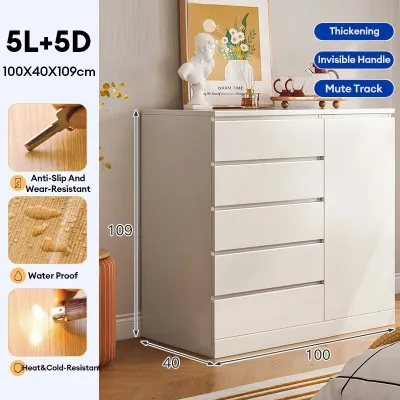
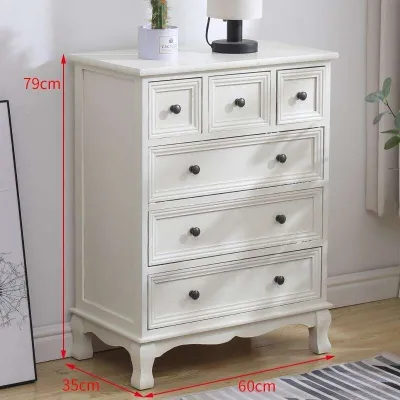
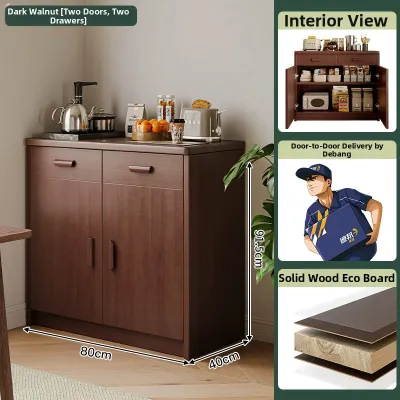
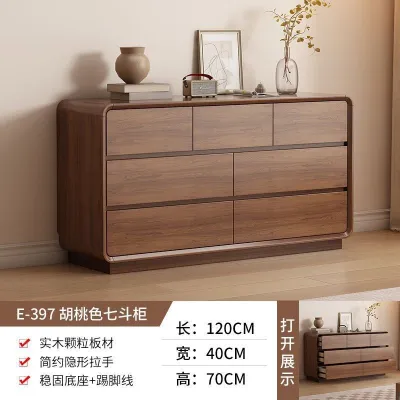
Prices are valid at publication and may change. Please refer to the product page for the latest price.
Door Swing Space: If you select a wardrobe with hinged doors, you must account for the arc of the door swing. Standard wardrobe doors are typically 40cm to 50cm wide. To open these doors fully and stand comfortably in front of the cabinet to retrieve your clothes, you need a minimum clearance of 50cm to 60cm between the wardrobe face and any adjacent furniture, such as your bed frame.
Visual and Physical Volume: Solid wood cabinets possess a distinct visual weight that can easily overwhelm a standard HDB bedroom, which typically ranges from 9 to 12 square metres. To prevent the room from feeling like a cramped storage unit, avoid running a massive, dark-toned wardrobe all the way to the entrance door. Leaving a small visual gap near the entry or opting for lighter wood species can help maintain an open, airy atmosphere.
How to Measure Your Room for a Solid Wood Cabinet
Before purchasing a solid wood cabinet, a precise measuring routine is essential to avoid costly fitment issues. Because solid wood cannot be shaved down or squeezed into tight spots like custom built-in carpentry, your measurements must be exact.

Measure Width at Multiple Heights: Walls in residential flats are rarely perfectly straight due to plastering variations or structural settling. Always measure the available wall width at three distinct points: near the floor, at chest height, and near the ceiling. Use the smallest of these three measurements as your absolute maximum width limit. Additionally, check for any protruding structural columns or beams that might reduce the usable wall length.
Account for Skirting and Fixtures: Skirting boards along the base of your walls can prevent a freestanding solid wood wardrobe from sitting flush against the wall, often adding 1cm to 2cm to the depth requirement. Furthermore, map out the exact locations of power sockets, light switches, and data ports. Blocking these fixtures with a heavy cabinet can render them useless, so plan to position your wardrobe away from them or consult an electrician to relocate them beforehand.
Verify Vertical Clearances: Measure the height from your finished floor to the ceiling. Pay close attention to overhead obstructions such as air-conditioning trunking, ceiling fans, light fixtures, and decorative cornices. Air-conditioning pipes often run along the top of bedroom walls and can severely limit the height of the wardrobe you can install. Ensure there is at least a 5cm to 10cm clearance above the wardrobe to allow for assembly and proper air circulation.
Adapting to Master and Common Bedroom Layouts
The layout of your bedroom dictates the maximum depth and door mechanism of your solid wood wardrobe. Master bedrooms and common bedrooms present very different spatial opportunities and constraints.
Master Bedroom Layouts: Master bedrooms in 3-room, 4-room, and 5-room HDB flats offer more generous floor areas, but they also feature en-suite bathroom doors and entryways that complicate furniture placement. When positioning a solid wood cabinet, ensure it does not obstruct the swing path of the bathroom door. If you place the wardrobe parallel to the bed, verify that the clearance between the foot of the bed and the wardrobe doors is sufficient for two people to pass each other.
Common Bedroom Layouts: Common bedrooms are highly compact, often requiring you to balance storage with study desks, dressing tables, or guest beds. In these tight spaces, a standard 1.8m-wide wardrobe may leave no room for other furniture. Opting for a compact 1.2m-wide solid wood cabinet allows you to maximize storage while preserving dedicated zones for work or relaxation. Placing the wardrobe adjacent to a desk can also create a cohesive, multi-functional layout.
Hinged vs. Sliding Doors: Choosing between hinged and sliding doors is a critical decision for tight layouts. Sliding doors are excellent for narrow rooms because they do not require outward clearance to open. However, sliding door mechanisms and tracks typically add about 5cm to 10cm to the overall depth of the wardrobe compared to hinged models. If your room is narrow but deep, a hinged wardrobe might actually save valuable floor space, provided you have the clearance for the door swing.
Overcoming HDB Delivery and Assembly Limitations
A common oversight when purchasing heavy solid wood furniture is failing to plan for the delivery process. Because solid wood pieces are exceptionally dense and often arrive semi-assembled, they must be able to navigate the physical journey into your home.
Check Lift and Corridor Dimensions: Before ordering, verify the dimensions of your HDB block’s lift cabin, including the door height, interior depth, and weight capacity. Large solid wood panels or pre-assembled frames may not fit inside standard lifts. Additionally, measure the corridor width and the turning radiuses at staircase landings. Rigid, non-modular frames cannot bend around tight corners, and manual carrying up stairs can be highly difficult or incur significant delivery surcharges.
Assess Floor Leveling and Support: Heavy hardwood wardrobes exert significant concentrated pressure on your flooring. Ensure your bedroom floor is level; uneven floors can cause the heavy frame to settle unevenly, leading to misaligned doors and sticking drawers over time. If your floor is slightly uneven, use adjustable leveling feet or solid shims to stabilize the cabinet. Always check the manufacturer’s specifications regarding the weight of the piece to ensure your flooring material can support it safely.
Frequently Asked Questions (FAQ)
Do solid wood cabinets require special moisture care in HDB bedrooms?
Humidity Impacts: Singapore’s humid tropical climate can cause natural wood to expand and contract. You may notice doors sticking during wet seasons or slight gaps appearing during drier periods. Mold or musty odors can also develop if moisture becomes trapped.
Ventilation and Placement: To protect your solid wood cabinet, avoid pushing it completely flush against external-facing walls, which are prone to temperature changes and condensation. Leave a gap of 2cm to 5cm behind the wardrobe to allow air to circulate freely. Using dehumidifiers or placing moisture-absorbing sachets inside the cabinet can also help maintain a stable environment.
Manufacturer Care: Different wood finishes, such as lacquer, oil, or wax, require specific maintenance routines. Always consult the manufacturer’s care instructions to determine the appropriate cleaning products and protective treatments for your specific wardrobe.
Can a solid wood wardrobe be safely anchored to an HDB partition wall?
Wall Types: HDB flats feature both structural concrete walls and non-load-bearing partition walls (such as drywall or lightweight concrete blocks). Structural walls offer excellent support, whereas partition walls have limited load-bearing capacity.
Anchoring Requirements: Because solid wood wardrobes are exceptionally heavy and can pose a serious tip-over hazard, anchoring them to the wall is highly recommended. If you must anchor the cabinet to a partition wall, you must locate the internal studs or use specialized heavy-duty hollow-wall anchors designed for heavy loads.
Professional Guidance: If you are unsure about the structural integrity of your wall or the appropriate anchoring hardware, consult a professional installer or structural specialist to ensure the wardrobe is safely secured without causing damage to your home.

Community discussion
Share your experience or ask a question. Comments are reviewed before publication.