
Selecting the right kitchen trolley table is a highly effective way to expand your workspace and storage without committing to expensive, permanent renovations. In Singapore’s high-density housing layouts, such as HDB flats and condominiums, kitchens are often designed with compact galley or open-concept configurations. A permanent kitchen island is frequently impractical due to space constraints, structural pillars, or rigid layouts.
A mobile kitchen trolley table offers a flexible, non-permanent alternative that can be repositioned as your daily needs change. To ensure your kitchen remains visually cohesive and highly functional, it is essential to select a trolley that complements your existing cabinetry. When chosen carefully, a mobile trolley table acts as a seamless extension of your primary kitchen setup rather than an isolated piece of furniture.
How to Match Your Trolley Table to Existing Kitchen Cabinets
Achieving a cohesive look requires balancing visual elements with physical proportions. A mismatched trolley can disrupt the flow of your kitchen, while a well-coordinated unit enhances both the aesthetic and the overall utility of the space.
Products mentioned in this guide
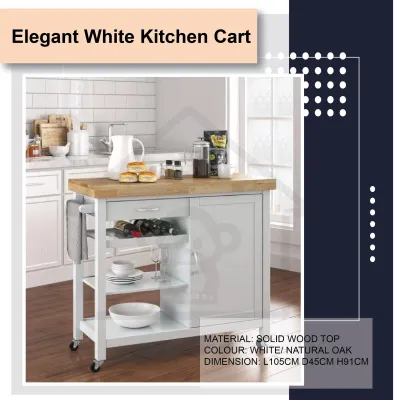
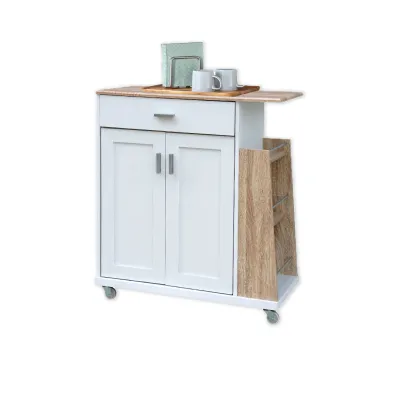
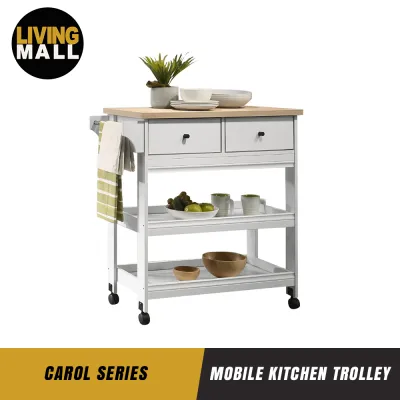
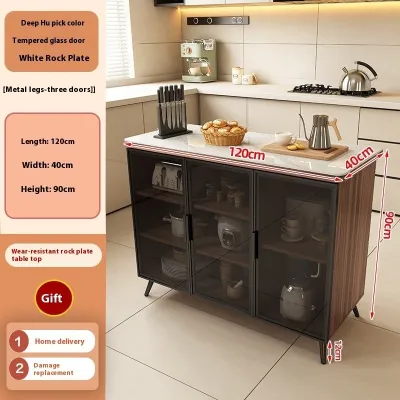
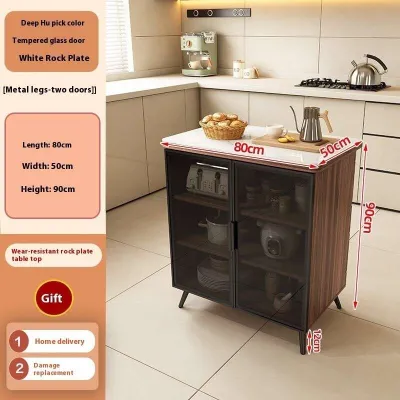
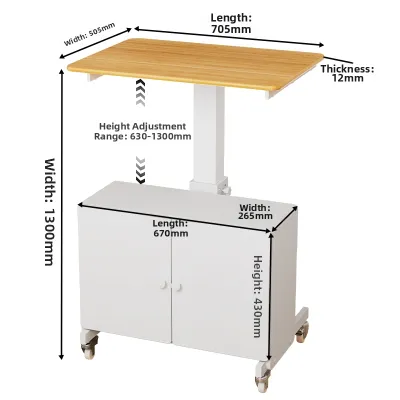
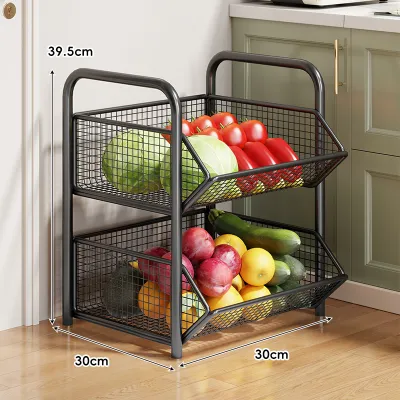
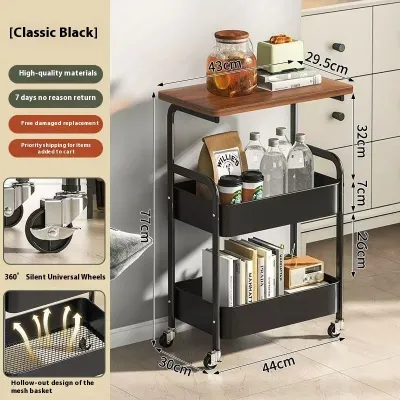
Prices are valid at publication and may change. Please refer to the product page for the latest price.
Visual and Material Alignment
Coordinating the finishes of your trolley table with your existing cabinets does not mean they have to match exactly. Homeowners can choose between matching or intentionally contrasting their finishes. For a matched look, identify the dominant color and material of your cabinet doors and seek a trolley with a similar finish, such as matte laminate or powder-coated steel. If you prefer a contrast, pair dark charcoal cabinets with a warm oak-topped trolley table to soften the space.
When evaluating countertop materials like wood, stainless steel, or engineered stone, it is critical to note that a material name alone does not guarantee performance. Homeowners should verify the manufacturer’s care instructions and surface treatment specifications rather than assuming inherent scratch or water resistance. For example, check if a wooden top requires regular oiling with food-safe mineral oil or if it has a pre-applied sealant. Similarly, coordinate hardware finishes by matching the trolley’s handles, knobs, or metal accents with your existing cabinet fixtures, such as brushed brass or matte black pulls.
Spatial and Functional Proportions
To ensure the trolley table integrates seamlessly into your kitchen’s physical workflow, start by analyzing its height. Most standard kitchen cabinets in Singapore are installed at a height of 850mm to 900mm to accommodate comfortable standing prep work. To create a continuous workspace, look for a kitchen trolley table that aligns closely with this height. A trolley that is too low will cause back strain during extended prep sessions, while one that is too high will disrupt the visual line of your countertops.
In tight kitchen layouts, door and walkway clearance must be measured precisely. Ensure that when the trolley table is parked in its primary spot, there is still a comfortable walkway of at least 900mm to 1000mm so two people can pass each other safely. You must also measure the clearance required for your existing cabinet doors, drawers, and built-in appliances like ovens or dishwashers to open fully without hitting the trolley. Always check the trolley’s footprint—both with any drop-leaf extensions folded down and fully extended—against your actual floor space before purchasing.
Pairing Guides for Popular Kitchen Cabinet Styles
Different cabinet designs require distinct pairing strategies to maintain design integrity. Matching the style of your trolley to the design language of your cabinets creates a balanced and intentional look.

Sleek, Handleless, and Minimalist Cabinets
Many modern Singaporean homes feature handleless, flat-panel cabinet designs, which rely on clean lines, hidden joints, and uncluttered surfaces. To pair with this style, select a kitchen trolley table with a streamlined silhouette. Look for models with integrated finger-pull drawers, concealed shelving behind flat doors, and a monochromatic color scheme like matte black, slate grey, or crisp white.
Avoid trolleys with ornate moldings, bulky external hinges, or rustic wooden slats that clash with a streamlined aesthetic. The castors should also be subtle; low-profile wheels or those partially hidden by the trolley’s frame help maintain the clean, floating look characteristic of modern minimalist design. Opt for smooth matte or high-gloss finishes that mirror the sleek surfaces of your primary cabinetry.
Traditional, Shaker, and Wood-Grain Cabinets
Shaker-style cabinets, characterized by their recessed center panels, are a timeless choice that pairs beautifully with trolley tables embracing classic furniture details. Look for a trolley featuring framed drawer fronts, turned wooden legs, or traditional metallic hardware like cup pulls and round knobs in antique brass or oil-rubbed bronze.
When matching wood finishes, pay close attention to the color temperature of the wood grain. A cool, grey-toned oak cabinet will clash with a warm, reddish cherry-wood trolley. If an exact match is difficult to find, it is often safer to choose a painted trolley frame in a complementary color, such as navy blue, forest green, or classic off-white, topped with a neutral wood or stone-effect surface that coordinates with your overall kitchen palette.
Industrial and Open-Concept Shelving
Industrial-themed kitchens—featuring exposed brick, concrete screed, or open metal shelving—benefit from a highly functional, utilitarian aesthetic. For these spaces, look for kitchen trolley tables constructed with robust metal frames, wire basket drawers, and heavy-duty lockable castors. Stainless steel utility carts or powder-coated iron trolleys with reclaimed wood tops fit this style perfectly.
Because Singapore’s tropical climate brings high humidity, it is vital to verify the rust-resistance specifications and protective coating care instructions for any metal-framed trolley. Ensure the metal has been powder-coated or treated to withstand moisture, and clean it according to the manufacturer’s guidelines to prevent corrosion over time. The open shelving on these trolleys allows for quick access to frequently used pots and pans, mimicking a professional culinary environment.
Practical Features to Check Before Buying a Trolley Table
Beyond aesthetics, the mechanical and structural specifications of a kitchen trolley table determine its daily usability and longevity. Always review the product label or specification sheet before making a decision.
- Castors and Mobility: The mobility of your trolley table relies entirely on its castors. Verify the wheel material before buying. Hard plastic or nylon wheels can easily scratch or dent softer flooring materials common in Singapore homes, such as vinyl, laminate, or engineered timber. Instead, look for trolleys equipped with polyurethane (PU) or soft rubber castors, which roll smoothly and protect your floors. Additionally, confirm that the trolley has at least two locking castors to prevent it from shifting dangerously during food preparation.
- Weight Capacity and Stability: Before placing heavy kitchen appliances on your trolley, check the manufacturer's stated weight limits. A standard microwave can weigh between 10kg and 15kg, while heavy stand mixers or coffee machines can add significant weight. Furthermore, operating a stand mixer creates dynamic forces that can cause a flimsy trolley to wobble. Look for a trolley table with a robust frame, a low center of gravity, and clearly stated load capacities for both the top surface and individual shelves.
- Storage Configuration: Evaluate what storage features are missing from your primary kitchen cabinets. If you lack drawer space, prioritize a trolley with deep, smooth-gliding drawers. If you need quick access to fresh produce, look for wire mesh baskets that promote airflow. Some trolleys come with specialized accessories like integrated knife blocks, spice racks, towel rails, or wine bottle holders. Choose a configuration that directly addresses your daily cooking habits.
- Assembly and Maintenance: Many kitchen trolley tables are sold flat-packed and require self-assembly. Review the assembly instructions beforehand to ensure you have the necessary tools and space, as poorly assembled joints can compromise the trolley's structural integrity. Additionally, kitchens are prone to grease, steam, and food spills. Examine the cleaning instructions for the trolley's moving parts, drawer slides, and joints, opting for designs with smooth, easily wipeable surfaces.
Measuring and Sourcing Your Trolley Table in Singapore
Before finalizing your purchase, consider the logistical journey of the trolley table into your home. In Singapore, delivery routes often involve tight corners, passenger lifts, and narrow front doors. Measure the width and height of your estate’s service elevator, your main entrance gate, and your kitchen doorway. Standard passenger lift doors are typically 800mm to 900mm wide, while standard HDB main doors range from 850mm to 900mm. Ensure the packaged box or the fully assembled trolley can easily clear these spaces without causing damage.
When sourcing, explore local furniture showrooms, official brand stores, and reputable online retailers. While online shopping offers convenience, relying solely on digital images can be risky. Whenever possible, visit a physical showroom to evaluate the actual scale, weight, finish texture, and wheel smoothness in person. If buying online, carefully review the retailer’s return policies, delivery terms, and warranty coverage—especially for moving components like castors, hinges, and drawer runners. A robust warranty provides peace of mind that the trolley will withstand daily mobile use.
Frequently Asked Questions (FAQ)
Can a kitchen trolley table replace a built-in kitchen island?
A kitchen trolley table is an excellent, cost-effective alternative to a built-in kitchen island, especially in rented properties or compact layouts where a permanent structure is not feasible. However, it cannot fully replace a built-in island in terms of heavy-duty utility. Fixed islands can support heavy stone countertops, integrated cooktops, sinks, plumbing, and electrical outlets—features that are impossible or unsafe to install on a mobile unit. A trolley table is best suited for light prep work, temporary serving space, and flexible storage. For safety, always engage the wheel locks fully before performing any active kitchen tasks like chopping or mixing.
How do I protect my kitchen floor from trolley table wheels?
To protect your kitchen flooring from damage caused by rolling wheels, start by selecting the right caster material. Polyurethane (PU) or soft rubber wheels are much gentler on surfaces like luxury vinyl tiles (LVT), laminate, and polished porcelain tiles compared to hard plastic or nylon wheels. If your trolley came with hard wheels, consider purchasing aftermarket soft rubber castors of the same size to replace them. You can also place a durable, low-profile kitchen mat or runner rug in the trolley’s primary parking area to cushion the floor, ensuring it has a non-slip backing to prevent tripping hazards. Finally, clean the wheels regularly with a damp cloth to remove trapped grit, dirt, and kitchen grease, which can scratch your floors when the trolley is moved.

Community discussion
Share your experience or ask a question. Comments are reviewed before publication.