
Choosing the right dining chair leather comes down to balancing your upfront budget, how much time you want to spend on maintenance, and how long you expect the chairs to last. Genuine leather offers unmatched longevity and a premium feel but requires regular care and a higher investment. Polyurethane (PU) leather is highly practical, budget-friendly, and simple to clean, though its synthetic surface has a finite lifespan. Bonded leather serves as a low-cost entry point but is highly susceptible to peeling and cracking under daily use.
In the context of dining room seating, where spills, crumbs, and constant movement are inevitable, each material behaves differently. There is no single “best” choice; the ideal option depends entirely on your household’s daily habits, the presence of children or pets, and your willingness to maintain the upholstery. Understanding these material trade-offs ensures you select chairs that remain both functional and visually appealing over the years.
Quick Comparison: Genuine vs. PU vs. Bonded Leather
When evaluating dining chair leather, the three primary options differ significantly in their construction, performance, and price points. Genuine leather is a natural, breathable material made from animal hide, offering the highest durability and a premium aesthetic that ages gracefully. PU leather is a completely synthetic polymer coating applied to a fabric base, designed to mimic the look of real leather while providing excellent spill resistance at a moderate price. Bonded leather is a composite material made from shredded leather scraps glued together with polyurethane binders, offering a low-cost alternative that unfortunately suffers from a high risk of premature peeling.
Products mentioned in this guide
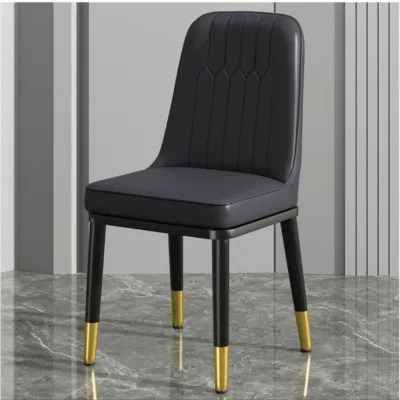
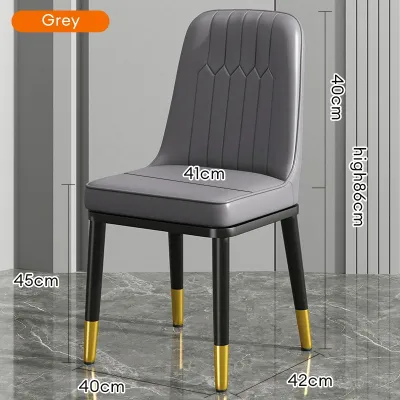
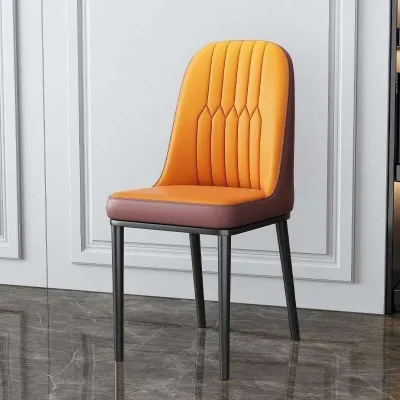
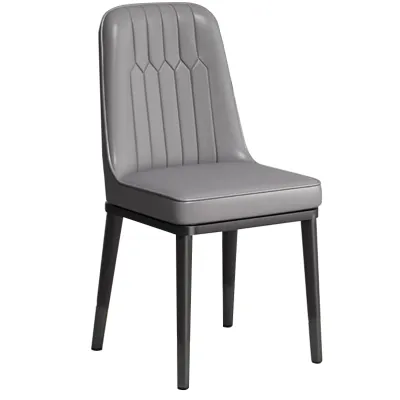
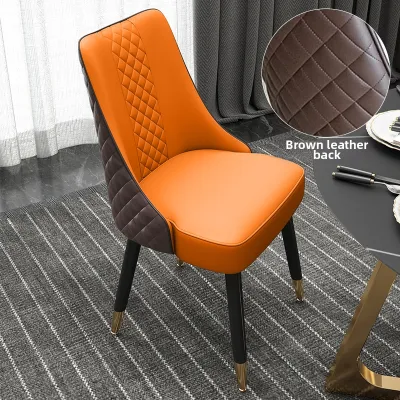
Prices are valid at publication and may change. Please refer to the product page for the latest price.
Your decision should align with your household’s daily traffic and maintenance preferences. If you are looking for a long-term investment and do not mind performing routine conditioning, genuine leather is highly rewarding. For busy family spaces where quick cleanup is essential, PU leather provides a highly practical, stress-free solution. Bonded leather is best reserved for low-use areas or temporary staging where upfront cost is the primary constraint.
Genuine Leather Dining Chairs: Premium Feel and Required Upkeep
Investing in genuine leather dining chairs introduces a classic, natural element to your dining space that can last for decades when properly maintained. However, because it is an organic material, it demands a specific level of care and environmental control to preserve its appearance and structural integrity.

Material Characteristics and Aging
Genuine leather is highly breathable and features a unique, non-repeating grain pattern that synthetic alternatives cannot perfectly replicate. Over time, high-quality genuine leather undergoes a natural aging process known as developing a patina. Rather than wearing out, the material softens, deepens in color, and develops a distinct character based on how your household uses it.
This organic nature also means genuine leather remains porous and susceptible to absorbing liquids, oils, and grease from food. If a protective finish is not applied or maintained, acidic spills like red wine, citrus juice, or tomato sauce can quickly stain the fibers. Additionally, the surface can be vulnerable to scratches from sharp objects or rough clothing rivets if the outer protective layer is compromised.
Maintenance and Climate Considerations
Keeping genuine leather dining chairs in pristine condition requires a consistent maintenance routine. This includes weekly dusting with a dry, soft microfiber cloth to prevent abrasive dust particles from settling into the pores. Spills must be blotted immediately with a clean, dry cloth rather than wiped, which can push the liquid deeper into the leather fibers. Periodic application of a dedicated leather conditioner every six to twelve months is necessary to restore lost moisture and prevent the material from drying out or cracking.
In hot, high-humidity climates like Singapore, environmental factors play an exceptionally large role in leather preservation. Excess moisture in the air can settle on organic fibers, creating an ideal breeding ground for mold and mildew. To mitigate this risk, ensure your dining area is well-ventilated, utilize dehumidifiers during particularly damp seasons, or run air conditioning periodically to lower indoor humidity levels. Always avoid using harsh household detergents, multi-surface sprays, or excessive water, as these strip away the natural oils that keep the leather supple.
Ideal Household Profile
Genuine leather dining chairs are best suited for households that view their furniture as a long-term investment. If you appreciate the natural evolution of materials and are willing to dedicate time to routine conditioning and immediate spill cleanup, this material offers excellent value over its long lifespan.
These chairs are highly appropriate for formal dining rooms, adult-centric households, or spaces where the risk of heavy food spills is minimal. While they can withstand daily use, they are less ideal for households with very young children or active pets with sharp claws, unless you are comfortable with the distressed, worn look that scratches and minor stains will create.
PU Leather Dining Chairs: Easy Maintenance and Synthetic Limits
Polyurethane (PU) leather represents a highly popular, modern alternative for dining room seating. It offers a convincing leather-like appearance at a fraction of the cost, combined with a highly practical cleaning profile that appeals to busy households.
Material Characteristics and Durability
PU leather is a completely synthetic material created by applying a polyurethane coating over a fabric backing, such as cotton or polyester. Because it is engineered, the surface is non-porous, meaning it does not absorb liquids, oils, or food spills. This makes it exceptionally resistant to immediate staining, allowing you to wipe away messy spills without panic.
However, the primary trade-off with PU leather is its long-term durability limit. Over a period of several years, the synthetic topcoat is prone to peeling, cracking, or undergoing a chemical breakdown known as hydrolysis. Hydrolysis occurs when moisture from humidity or sweat reacts with the polyurethane molecules, causing the surface to soften, become sticky, and eventually flake off the fabric backing. Unlike genuine leather, which can last decades, PU leather dining chairs typically have a functional lifespan of three to seven years depending on usage and environmental conditions.
Cleaning and Care Requirements
The daily maintenance of PU leather dining chairs is remarkably straightforward, requiring minimal effort. Routine cleaning involves nothing more than wiping the surface with a slightly damp microfiber cloth and a drop of mild, pH-neutral dish soap to remove grease and food residue.
It is critical to avoid using alcohol-based sanitizers, abrasive scrub brushes, or harsh chemical cleaners, as these solvents will rapidly dissolve the protective polyurethane topcoat and accelerate peeling. Furthermore, you should never apply natural leather conditioners or oils to PU leather; because the surface is non-porous, these products cannot penetrate the material and will instead leave a sticky, dust-attracting residue. Once a PU surface begins to flake or crack, it cannot be repaired or reconditioned, and the chair will eventually require reupholstering or replacement.
Ideal Household Profile
PU leather is highly recommended for active families with young children or anyone seeking a low-maintenance dining setup. The ability to quickly wipe away sticky handprints, spilled milk, and dropped food makes it an incredibly forgiving choice for daily family meals.
This material is also ideal for budget-conscious buyers who want a sleek, modern aesthetic without a premium price tag. It suits those who prefer the flexibility of updating their home decor every few years, as the lower upfront cost aligns well with the material’s shorter, finite lifespan.
Bonded Leather Dining Chairs: Budget Compromise and Peeling Risks
Bonded leather is often marketed under confusing terms that lead buyers to believe they are purchasing a high-durability, semi-natural product. In reality, bonded leather is the most fragile of the three options and requires careful consideration before purchase.
Composition and Structural Limits
Bonded leather is manufactured by shredding genuine leather scraps, offcuts, and dust from tanneries, then mixing these fibers with polyurethane binders. This mixture is extruded onto a fabric or paper backing and finished with a synthetic topcoat that is stamped with a realistic leather grain.
Although bonded leather technically contains real leather fibers—typically accounting for less than 20% to 30% of its total composition—it completely lacks the continuous structural integrity of a whole animal hide. It is essentially the particleboard of the leather world, relying entirely on chemical glues to hold the shredded fibers together. This lack of natural structure makes the material highly susceptible to tearing and delamination under physical stress.
Durability and Peeling Risks
In a dining environment, where chairs experience constant friction as users slide in and out, bonded leather is highly prone to rapid degradation. The primary failure mode is severe peeling and flaking, which typically begins at high-wear areas like the front edge of the seat cushion and the corners of the backrest.
This degradation is accelerated by temperature fluctuations, direct sunlight, and body sweat, which weaken the adhesive bonds holding the shredded fibers and synthetic topcoat together. Once the topcoat begins to separate from the backing, the peeling spreads rapidly across the entire chair. Because the material lacks a solid fibrous structure, there are no effective conditioning treatments or repair kits that can permanently fix or halt this peeling process.
Ideal Household Profile
Bonded leather dining chairs are generally only recommended for very strict budgets where immediate, low-cost furnishing is the absolute priority. They can serve well in low-traffic spaces, such as formal dining rooms that are only used a few times a year during major holidays.
Additionally, bonded leather is a practical temporary solution for staging homes for sale or furnishing short-term rental properties where the aesthetic must look polished initially, but long-term durability is not a primary concern. For daily family dining, however, the rapid wear and tear usually make bonded leather a poor investment, as the chairs often require replacement within one to two years.
Matching Leather Type to Your Household and Lifestyle
Selecting the right dining chair leather requires a realistic assessment of your household’s daily habits, budget, and long-term expectations. To make an informed decision, you can evaluate your needs against a simple decision matrix. If you have a flexible budget and are willing to commit to regular conditioning, genuine leather provides unmatched longevity and character. If you prioritize easy cleaning, resistance to immediate spills, and a lower upfront cost, PU leather is the most practical choice. If your budget is extremely constrained and the chairs will see minimal use, bonded leather can fill the gap temporarily.
When pets are part of the equation, additional care is required. No leather type is entirely proof against sharp cat or dog claws; claws can easily puncture PU leather and permanently scratch the surface of genuine leather. However, textured or distressed PU leathers tend to hide minor claw marks better than smooth, aniline-finished genuine leather, while bonded leather should be avoided entirely as pet claws will quickly initiate widespread peeling. For young children, the non-porous nature of PU leather makes it the clear winner for handling frequent spills and sticky fingers without staining.
To ensure you get what you pay for, always verify product descriptions and material labels carefully. Look for clear, unambiguous terms such as “100% Genuine Leather,” “Top Grain Leather,” or “Polyurethane (PU) Leather.” Be highly skeptical of vague marketing terms like “leather-rich blend,” “eco-leather,” “engineered leather,” or “leather gel,” which are almost always clever euphemisms for low-durability bonded leather or basic synthetics.
Finally, remember that the upholstery material is only one component of a dining chair’s overall longevity. Before purchasing, check the quality of the chair’s frame and internal support. Look for solid wood frames (such as oak, ash, or rubberwood) or sturdy metal bases rather than medium-density fibreboard (MDF) or particleboard. Inspect the joints to ensure they are screwed, glued, or doweled rather than simply stapled together, and verify that the seat cushion utilizes high-density foam that will resist sagging over years of daily use. Additionally, ensure you measure your available dining space and check the finished dimensions of the chairs to guarantee a comfortable fit around the table, keeping in mind doorway and lift access for delivery.
Frequently Asked Questions (FAQ)
Here are answers to some of the most common questions buyers have when choosing between different leather options for their dining room seating.
How can I tell if my dining chairs are genuine or faux leather?
You can determine the authenticity of dining chair upholstery through several simple physical checks. First, perform a visual and tactile inspection; genuine leather features natural, irregular pores and non-repeating grain patterns, and it feels warm and supple to the touch. Faux leather, such as PU, typically displays a perfectly repeating embossed pattern and feels cooler or slightly plasticky. Second, examine any exposed cut edges, such as around the underside of the seat frame or zipper seams; genuine leather has a rough, fibrous edge, whereas synthetic options will reveal a clean cut with a visible woven fabric or mesh backing. Finally, perform a quick smell test; genuine leather retains a distinct, rich, organic aroma, while synthetic materials will emit a neutral or slightly chemical, plastic-like scent.
Is faux leather safe and practical for dining chairs if I have pets?
Faux leather, specifically high-quality PU leather, is a highly practical choice for pet owners, though it is not completely indestructible. While no leather material can withstand deep gouges from determined pet claws, textured PU leather is excellent at resisting minor scratches and does not trap pet hair or dander the way fabric upholstery does. From a safety perspective, modern PU leather used by reputable furniture manufacturers is non-toxic once fully cured and off-gassed. However, you should monitor your pets to ensure they do not chew on the chairs; ingesting loose synthetic flakes from peeling PU or the chemical binders found in bonded leather can cause serious digestive blockages in dogs and cats. If your pet has a habit of scratching or chewing furniture, providing alternative scratching posts and choosing chairs with metal legs can help protect your investment.

Community discussion
Share your experience or ask a question. Comments are reviewed before publication.