
Quick Answer: Which King Koil Firmness is Best for Your Sleep Style?
Choosing the right firmness for a King Koil mattress depends primarily on your physical proportions and your dominant sleeping posture. Because a mattress must support the spine while relieving pressure on sensitive joints, a single firmness level cannot suit every individual. Finding the correct balance ensures that muscles can fully relax during the sleep cycle, preventing chronic stiffness and morning fatigue.
- Choose Plush or Medium-Soft if you are a strict side sleeper. This sleep style concentrates your entire body weight onto the narrowest contact points: the shoulders and the hips. A softer comfort layer allows these joints to sink sufficiently into the mattress, keeping your spine in a straight, horizontal line and preventing numbness in your arms.
- Choose Medium or Medium-Firm if you sleep on your back or frequently change positions throughout the night. Back sleepers require a balanced surface that fills the gap at the lumbar spine while preventing the pelvis from sinking too deeply. This middle-ground firmness offers enough surface contouring to cushion the shoulder blades while maintaining robust core support.
- Choose Firm or Extra-Firm if you sleep primarily on your stomach or have a heavier body frame. Stomach sleepers need a highly resistant surface to prevent the pelvis and abdomen from bowing downward. Keeping the midsection elevated is crucial to avoid hyperextending the lower back, which is a primary cause of chronic lumbar strain.
Keep in mind that marketing designations such as “Cushion Firm,” “Luxury Plush,” or “Orthopedic Firm” can vary significantly between different product lines and regional collections. To ensure you are getting the exact feel you require, always locate the physical product tag, check the manufacturer’s official specifications, or consult an authorized retailer to verify the precise firmness rating before finalizing your purchase.
Understanding the King Koil Firmness Scale
To navigate the mattress selection process effectively, it helps to understand the standard 1-to-10 firmness scale used across the bedding industry. On this scale, a rating of 1 represents an extremely soft surface with almost no resistance, while a 10 represents a surface as rigid as a carpeted floor. Most residential mattresses fall between a 3 and an 8, as these levels provide the necessary structural support for human sleep anatomy.
Products mentioned in this guide
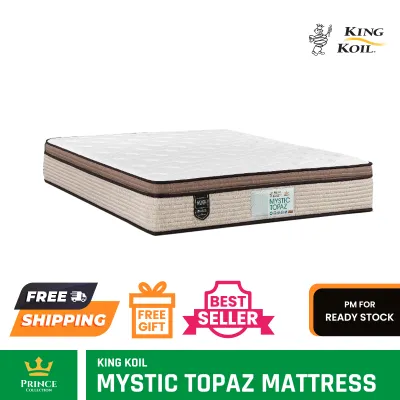
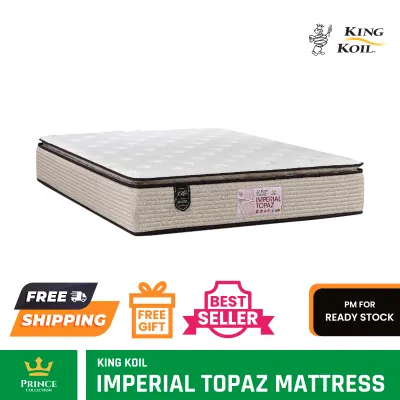
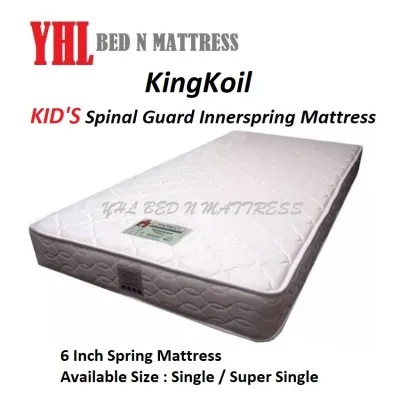
Prices are valid at publication and may change. Please refer to the product page for the latest price.

- Plush (Ratings 3 to 4): These mattresses feature thick, cloud-like comfort layers, often incorporating thick memory foam, natural latex, or high-loft fiber quilting. When you lie down, you will experience an immediate sinking sensation as the mattress contours closely to your body shape. This level maximizes surface pressure relief but offers less resistance against deep compression.
- Medium (Ratings 5 to 6): Often considered the universal sweet spot, medium mattresses offer an equal balance of initial cushioning and upward push-back. The comfort layers are deep enough to absorb prominent joint curves, but the underlying support core—typically pocketed springs—prevents you from feeling stuck or trapped when trying to turn over.
- Firm to Extra-Firm (Ratings 7 to 8+): These models prioritize structural alignment and surface stability. The comfort layers are thinner and denser, meaning you sleep "on top" of the mattress rather than "in" it. This style provides immediate resistance to body weight, which is essential for maintaining spinal alignment under heavier loads.
King Koil mattresses achieve these varying feels by adjusting both the comfort layers and the underlying spring tension. Many models feature zoned pocketed coil systems, where different zones of the mattress utilize varying wire gauges to provide targeted support. For example, a firmer spring zone may be placed under the hips to prevent sagging, while softer springs support the shoulders. Understanding this underlying engineering helps you look past subjective marketing terms and focus on how the mattress actually distributes your body weight.
Matching Firmness to Your Primary Sleeping Position
Your sleeping position dictates how gravity acts on your skeletal structure during the night. The primary goal of a mattress is to counteract gravity, keeping your spine in the same neutral alignment it maintains when you are standing upright with good posture.
Side Sleepers: Prioritizing Pressure Relief
Side sleeping is one of the most common positions, but it presents unique challenges for spinal alignment. When you lie on your side, your shoulders and hips act as pivot points that bear the brunt of your body weight. If the mattress surface is too rigid, these areas cannot sink in, forcing your spine to curve downward in the middle and placing intense pressure on your shoulder joints and outer thighs.
To prevent this, side sleepers should look toward the softer end of the scale, specifically Plush to Medium-Soft options. These levels allow the prominent curves of the shoulders and hips to compress the upper layers of the mattress. As these areas sink, the mattress fills the spaces around the waist and knees, distributing your weight more evenly across the entire surface. This even distribution minimizes pressure spikes, which helps prevent the tossing and turning caused by restricted blood circulation.
If a side sleeper uses a mattress that is too firm, the consequences are often felt immediately. You may wake up with a dull ache in your shoulders, stiffness in your neck, or a tingling sensation in your arms. Over time, this lack of pressure relief can lead to chronic joint inflammation. If you are a dedicated side sleeper, prioritize models with generous comfort layers, such as thick pillow-tops or Euro-tops, paired with a supportive pocketed spring system.
Back Sleepers: Balancing Support and Contour
Back sleepers have a more even distribution of body weight than side sleepers, but they require precise support to maintain the natural “S” curve of the spine. The primary danger for a back sleeper is the pelvis sinking too far into the mattress. Because the hip area is the heaviest part of the human body, an overly soft mattress will allow the midsection to sag, creating a hammock-like curve that strains the lower back muscles and spinal discs.
For optimal alignment, back sleepers generally thrive on Medium to Medium-Firm mattresses. This firmness level provides enough surface cushioning to accommodate the slight protrusion of the shoulder blades and the buttocks, while the robust coil system underneath keeps the lumbar spine supported. The mattress should fill the small gap between your lower back and the bed surface without pushing your hips upward or allowing them to drop.
When a back sleeper chooses a mattress that is too soft, the lower back muscles must work throughout the night to keep the spine aligned, leading to a tight, aching sensation upon waking. Conversely, a mattress that is too firm will leave a hollow space beneath the lumbar spine, forcing the lower back to support its own weight without assistance. A balanced medium-firm surface ensures that the mattress bears the load, allowing your back muscles to fully recover.
Stomach Sleepers: Preventing Lower Back Strain
Stomach sleeping is widely considered the most taxing position for the human body, as it naturally forces the neck to turn to one side and places significant gravity-induced pressure on the lower back. When you lie on your stomach, the majority of your weight is concentrated around your pelvis and abdomen. If the mattress surface offers too much give, your midsection will sink deep into the comfort layers, pulling your spine into an unnatural, hyperextended arch.
To mitigate this risk, stomach sleepers require a Firm or Extra-Firm mattress. A rigid surface ensures that your pelvis remains on the same horizontal plane as your shoulders and chest. By preventing the hips from sinking, the mattress keeps your spine as close to a neutral position as possible, reducing the shear stress placed on your lumbar vertebrae and surrounding ligaments.
While sleep posture training is often recommended to transition stomach sleepers to their back or side, those who cannot change their habits must rely on a highly supportive mattress to protect their back health. If you sleep on your stomach, avoid plush pillow-tops or thick memory foam layers that encourage deep sinking. Instead, look for tight-top models that feature high-tension pocketed springs and dense, low-profile comfort materials.
Beyond Sleep Position: Weight and Lifestyle Modifiers
While your primary sleeping position is the most critical factor, several secondary variables can alter how a specific firmness level feels to you. Physical attributes, sleeping arrangements, and local environmental conditions all play a role in determining the ideal mattress configuration.
Body Weight and Compression: Your physical weight directly influences how much force you exert on the mattress layers. Lighter individuals (typically under 60 kg) exert less downward force, meaning they may not compress the comfort layers enough to experience their contouring benefits. For a light sleeper, a standard “Medium” mattress may feel quite firm, so they may need to opt for a softer model to achieve adequate pressure relief. Conversely, heavier individuals (over 90 kg) exert substantial force, compressing the comfort layers completely and resting directly on the firmer support core. To prevent bottoming out and maintain proper alignment, heavier sleepers generally require a firmer mattress with a heavy-duty coil system.
Partner Disturbance and Motion Isolation: If you share your bed with a partner, you must consider how motion transfers across the mattress surface. Softer mattresses with thick memory foam or pocketed springs tend to absorb motion exceptionally well, preventing one person’s movements from disturbing the other. However, couples often have conflicting firmness preferences. In these scenarios, a Medium-Firm mattress is typically the most successful compromise, offering enough surface comfort for a side-sleeping partner while providing the structural integrity required by a back- or stomach-sleeping partner.
Edge Support and Usable Surface Area: Edge support refers to the stiffness of the mattress perimeter. High-quality King Koil mattresses often feature reinforced foam encasements or heavier-gauge coils around the outer border. This design is particularly important in Singapore’s compact residential layouts, where bedroom space is limited and beds are frequently used as seating areas during the day. Strong edge support prevents the rolling-off sensation when sleeping near the perimeter, effectively maximizing the usable sleeping surface of a standard Queen or King size mattress.
Local Climate and Material Heat Retention: Singapore’s warm, humid tropical climate can influence how mattress materials behave. Traditional memory foam tends to soften as it absorbs body heat, which can make a mattress feel progressively softer and warmer throughout the night. If you sleep hot, look for models that incorporate breathable natural latex, open-cell foams, or specialized cooling fabrics like Tencel. These materials help dissipate heat and moisture, ensuring that the mattress maintains its intended firmness level and comfortable sleep temperature regardless of the weather.
How to Verify and Test Your Mattress Choice
Purchasing a mattress is a significant long-term investment in your physical well-being. Because comfort is highly subjective, relying solely on online descriptions or brief showroom sits can lead to buyer’s remorse. Taking a methodical approach to testing and verification will help ensure you select the perfect model.
When visiting a physical showroom, do not feel rushed. To get an accurate assessment, lie on the mattress in your primary sleeping position for at least 10 to 15 minutes. Wear comfortable, loose-fitting clothing that allows you to move naturally. Pay close attention to how your body feels after several minutes: look for any pressure points in your shoulders or hips, and check if your lower back feels supported or strained. If you sleep with a partner, test the mattress together to evaluate motion transfer and edge stability under joint weight.
Before making a final decision, always verify the technical specifications of the mattress. Ask the sales representative to show you the official manufacturer spec sheet or look for the law tag attached to the physical product. This tag lists the materials used in the comfort and support layers, allowing you to verify if the mattress contains the high-density foams, natural latex, or pocketed spring systems you expect. Do not rely on subjective marketing names, as these can change across different retail outlets.
If you prefer to purchase your mattress online, carefully review the retailer’s policies regarding sleep trials, returns, and exchanges. Many authorized distributors offer a trial period during which you can test the mattress in your own home. Because it can take up to 30 days for your body to adjust to a new support system, a home trial is the most reliable way to confirm your choice. Ensure you understand any potential return fees, delivery charges, or exchange conditions before completing the transaction.
Finally, consider the physical logistics of delivering and installing your new mattress. High-end pocketed spring mattresses can be exceptionally heavy and thick. Measure your bed frame’s internal dimensions, and ensure there is clear access through your home’s doorways, narrow corridors, and HDB lifts. Verifying these spatial constraints beforehand will prevent delivery-day complications and protect both your new mattress and your home from accidental damage.
Frequently Asked Questions (FAQ)
Can I change the firmness of my King Koil mattress after buying it?
While you cannot alter the internal spring tension or core support structure of a mattress after purchase, you can modify its surface feel using a mattress topper. A thick, soft topper made of memory foam or natural latex can add plushness and pressure relief to a mattress that feels too rigid. However, a topper cannot make an overly soft or sagging mattress firmer, as the underlying support layers will still allow your body to sink. If your mattress does not provide adequate core support, adding a topper will not resolve the issue, making it essential to select the correct base firmness at the point of purchase.
Is a firm mattress always better for back pain?
No, the belief that an extremely firm mattress is the universal cure for back pain is a common myth. While a firm surface is beneficial for stomach sleepers and some back sleepers, it can exacerbate back pain in side sleepers by forcing the spine out of alignment and creating painful pressure points. Clinical studies suggest that a medium-firm mattress generally provides the best balance of support and pressure relief for general lower back pain. If you suffer from chronic or severe back issues, you should consult a qualified physiotherapist or medical professional to receive personalized guidance tailored to your specific diagnosis.

Community discussion
Share your experience or ask a question. Comments are reviewed before publication.