
Choosing the right sofa for a Singapore Housing & Development Board (HDB) flat is a balancing act between maximizing comfort and preserving precious floor area. In compact living spaces—such as those found in modern 2-room Flexi, 3-room, or 4-room Build-To-Order (BTO) flats—every square centimeter counts. The Sea Horse 2-seater fabric sofa is a frequent consideration for homeowners seeking a blend of supportive seating and space-conscious design. However, determining whether this specific piece of furniture is a truly good fit for your home requires looking beyond aesthetics. You must systematically evaluate your living room’s physical layout, verify the sofa’s exact dimensions against your space, assess how the fabric upholstery handles Singapore’s humid climate, and plan for the logistics of delivery. Taking these steps ensures that your new furniture enhances your daily living experience rather than creating physical bottlenecks or maintenance headaches.
Assessing Your HDB Living Room Space and Layout
To set yourself up for success, start by mapping out the physical boundaries of your living room. Grab a measuring tape and record the total length and width of the area where you intend to place the sofa. It is crucial to measure the “clear” floor space—the actual usable area after accounting for existing items like TV consoles, bookshelves, or dining tables. Do not simply measure from wall to wall; instead, subtract the depth of any furniture that will sit opposite or adjacent to the sofa. This gives you a realistic picture of the remaining space available for the sofa and the necessary walking paths.
In HDB flats, structural features often dictate furniture placement. Pay close attention to the location of your household shelter door. These heavy steel doors require a wide swing clearance to open fully, and placing a sofa too close can block emergency access or make it difficult to retrieve items stored inside. Similarly, look out for built-in distribution board (DB) boxes, structural pillars, and air-conditioner ledges that might create awkward wall recesses. If your living room features low-hung windows or windows that swing inward, measure the sill height to ensure the sofa’s backrest will not obstruct the window’s operation or block natural light.
Products mentioned in this guide
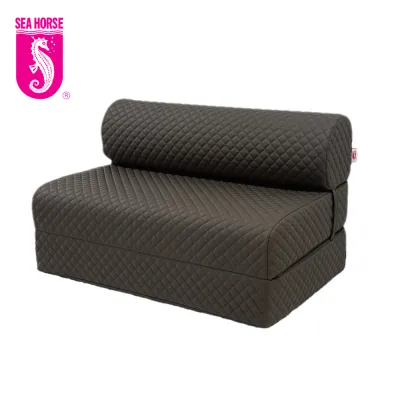
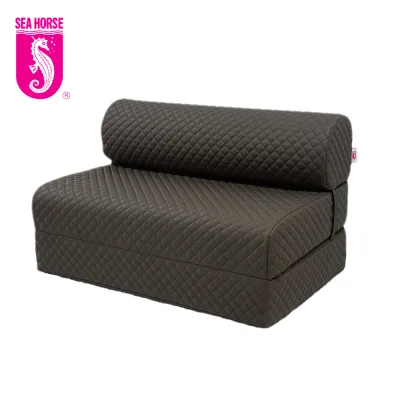
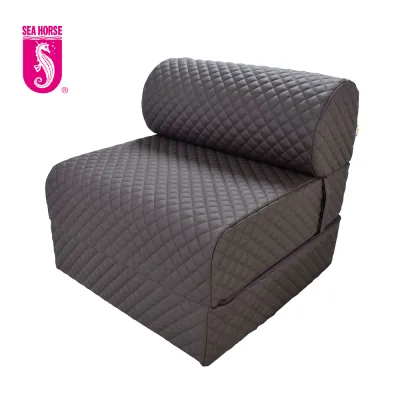
Prices are valid at publication and may change. Please refer to the product page for the latest price.
Electrical outlets and media ports are another critical constraint. If you plan to place floor lamps, side tables with charging stations, or phone chargers near your sofa, check where the wall sockets are located. Blocking these outlets with a heavy sofa makes them inaccessible and can bend plug heads, creating potential electrical hazards. Ensure there is at least a 10 cm gap between the back of the sofa and the wall if you must utilize sockets directly behind it. By identifying these structural and electrical constraints early, you can determine the exact zone where your sofa can sit comfortably without disrupting the functionality of your home.
Verifying Sea Horse 2-Seater Sofa Dimensions and Proportions
Once you have mapped your room, the next step is to cross-reference your measurements with the specific Sea Horse 2-seater fabric sofa model you are eyeing. Sea Horse offers various designs, and while they are classified as “2-seaters,” their physical dimensions can vary significantly. Do not rely on generic furniture size guides. Instead, visit the manufacturer’s official product page or showroom to obtain the exact width, depth, and height specifications. Pay attention to the total depth of the sofa, which is the measurement from the absolute back of the frame to the front edge of the seat cushions. In narrow HDB living rooms, a sofa with an excessive depth can severely restrict the distance between your seating and the television screen, leading to eye strain and a cramped feel.

The design of the armrests and seat cushions also plays a major role in how the sofa fits visually and physically. Some Sea Horse models feature thick, plush armrests that offer excellent arm support but consume valuable horizontal space. If a 2-seater sofa has a total width of 150 cm but features 25 cm armrests on each side, the actual seating area is reduced to just 100 cm. For smaller households, an armless design or a model with slim, streamlined armrests maximizes the usable seating area while keeping the overall footprint compact. Additionally, consider the seat height; a lower seat height can make a low-ceilinged HDB living room feel more spacious and open.
To eliminate guesswork, use painter’s tape to map out the sofa’s exact footprint on your living room floor. Tape out the width and depth of the Sea Horse model you want to buy, and leave the tape on the floor for a few days. Walk around the taped area as you go about your daily routine. This simple visual aid will help you feel how much physical space the sofa will occupy. It allows you to test whether you can comfortably walk past, open nearby cabinets, or sweep the floor without bumping into the imaginary sofa. If the taped area feels too restrictive, you will know before making a financial commitment.
Evaluating Fabric Upholstery for Daily HDB Living
The choice of upholstery material is just as important as the sofa’s physical size, especially when living in Singapore’s hot and humid climate. Fabric sofas are highly favored for their warmth, comfort, and cozy aesthetic, but they require careful consideration to maintain their appearance and hygiene. When evaluating a Sea Horse fabric sofa, check the composition of the fabric. Highly breathable weaves, such as cotton blends or advanced synthetic polyesters, are ideal because they do not trap body heat, keeping you cool during warm afternoons. Avoid tightly woven, heavy synthetic fabrics that offer poor ventilation, as they can feel sticky and uncomfortable to sit on without air conditioning.
Maintenance is another critical factor to verify. Before purchasing, check the manufacturer’s care labels to see if the fabric covers are removable and machine-washable. Removable cushion covers are a massive advantage in an HDB household, allowing you to easily wash away sweat, dust mites, and accidental spills. If the Sea Horse model you prefer has fixed upholstery, ask the sales representative about the fabric’s stain-resistance rating. You may need to apply a commercial fabric protector spray or plan for regular professional deep-cleaning services to keep the sofa smelling fresh and free from mold, which can thrive in humid environments.
Your household’s lifestyle should ultimately dictate the type of fabric you choose. If you have young children, pets, or a habit of hosting dinners in the living room, fabric sofas are highly susceptible to stains, pet hair, and odors. Tight, flat-weave fabrics are generally more resistant to pet claws and easier to vacuum than loose, textured weaves. If your living room receives direct sunlight through the windows, check if the fabric is UV-resistant to prevent premature fading. Taking the time to match the fabric’s characteristics with your daily habits will ensure your sofa remains a comfortable and clean centerpiece for years to come.
Navigating HDB Delivery, Lift Access, and Assembly
A sofa might fit perfectly in your living room, but it is useless if it cannot get through your front door. Before finalizing your purchase, you must plan the delivery route from the unloading bay to your living room. Start by measuring the dimensions of your HDB block’s passenger lift. Record the height of the lift door, the width of the entrance, and the internal depth and height of the lift cabin. Compare these measurements with the packaged dimensions of the Sea Horse sofa, which are often larger than the sofa’s actual dimensions due to protective cardboard and bubble wrap.
For older HDB estates, delivery can present unique challenges. Some older blocks have narrower corridors, low-hanging pipes, or lifts that do not stop on every floor, requiring the delivery team to carry the furniture up the stairwell. Measure the turning clearance in your stairwell and the width of your corridor to ensure there is enough room for the delivery personnel to maneuver. If the sofa cannot fit into the lift or navigate the stairs, you may face hefty hoisting fees or, worse, have to return the item.
Additionally, clarify the assembly process with the retailer. Find out if the Sea Horse 2-seater sofa arrives fully assembled as a single solid frame or if it comes in modular parts that are assembled on-site. Modular sofas are significantly easier to transport through tight doorways and narrow corridors. If assembly is required, check whether the delivery service includes professional installation or if you will need to assemble the legs and frame yourself. Understanding these logistical details beforehand prevents unexpected delivery day stress and ensures a smooth setup.
Space-Saving Alternatives and Layout Adjustments
If your measurements reveal that a standard Sea Horse 2-seater fabric sofa is slightly too large or visually heavy for your living room, do not worry. There are several clever layout adjustments and design alternatives you can employ to make the space work. First, look for modular or armless configurations within the Sea Horse range. Removing the armrests instantly reduces the sofa’s physical width and visual bulk, making the room feel more open while preserving the same amount of seating space.
Another option is to look for compact loveseats or models specifically designed for small spaces. These pieces often feature shallower seat depths and slimmer profiles, allowing them to tuck neatly into tight corners or sit flush against short walls. If the manufacturer offers customizable options, inquire if you can order a model with slightly reduced dimensions to perfectly match your living room’s layout.
You can also free up floor space by rethinking the surrounding furniture. Instead of a traditional, bulky rectangular coffee table, opt for a set of nesting tables that can be tucked away when not in use. Alternatively, use a C-shaped side table that slides over the sofa’s armrest, eliminating the need for a central table altogether. Replacing floor lamps with wall-mounted sconces and swapping standing bookshelves for floating wall shelves will also open up the floor area, making your living room feel spacious and allowing your 2-seater sofa to sit comfortably without overcrowding the room.
Frequently Asked Questions (FAQ)
How much clearance should I leave around a 2-seater sofa?
To maintain a comfortable and safe living environment, you should aim for a minimum of 70 to 90 cm of clear walkway space around the front and sides of your 2-seater sofa. This clearance ensures that family members can walk past without having to turn sideways or squeeze through tight gaps. If your sofa is positioned opposite a TV console or coffee table, keeping a 75 cm gap allows you to stretch your legs comfortably and access storage drawers easily. If you choose a model with reclining seats or a pull-out sofa bed mechanism, you must measure the fully extended length of the sofa and ensure there is still at least 50 cm of clearance remaining in front of the footrest when it is completely open.
Can I use a fabric sofa in an HDB flat with an open-concept kitchen?
Yes, you can use a fabric sofa in an open-concept HDB flat, but it requires proactive maintenance to prevent the fabric from absorbing cooking odors and airborne grease. When you cook, microscopic grease particles and strong aromas travel through the air and easily settle into fabric fibers, leading to stubborn smells and a sticky texture over time. To mitigate this, always turn on your kitchen cooker hood and open nearby windows to maximize ventilation while cooking. Vacuum your fabric sofa at least once a week using an upholstery attachment to remove settled dust and grease particles. Additionally, using a washable sofa throw or slipcover during heavy cooking sessions can protect the underlying fabric, and scheduling professional deep cleanings once or twice a year will keep the upholstery fresh.

Community discussion
Share your experience or ask a question. Comments are reviewed before publication.