
Choosing the right fabric sofa for a Housing & Development Board (HDB) flat in Singapore requires balancing compact dimensions, humid-weather fabric performance, and reliable local delivery logistics. While many brands offer beautiful designs, the ideal choice for an HDB flat must physically fit through standard lift doors, leave adequate walking clearance in the living room, and withstand Singapore’s tropical climate. Instead of looking for a single brand, homeowners should evaluate options based on modular configurations, fabric specifications, and delivery terms tailored to high-rise living.
By focusing on structural adaptability and material durability, you can find a sofa that enhances your living space without causing logistical headaches. This guide outlines the essential spatial, material, and logistical factors to consider when selecting a fabric sofa for your HDB flat.
Core Dimensions and Space Planning for HDB Flats
HDB living rooms have evolved, with newer BTO (Build-To-Order) flats generally featuring more compact layouts compared to older resale units. A typical modern HDB living room width ranges from 3.0 to 3.6 meters. To maintain a comfortable flow, you must leave at least 60 to 75 centimeters of walking clearance between the edge of the sofa and any central furniture like a coffee table. This ensures that family members can move freely without having to squeeze past each other.
Products mentioned in this guide
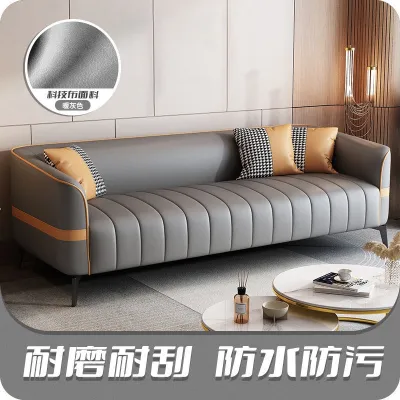
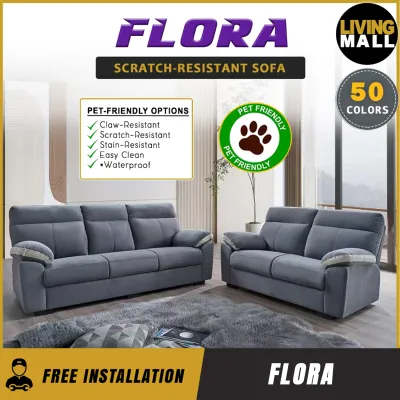
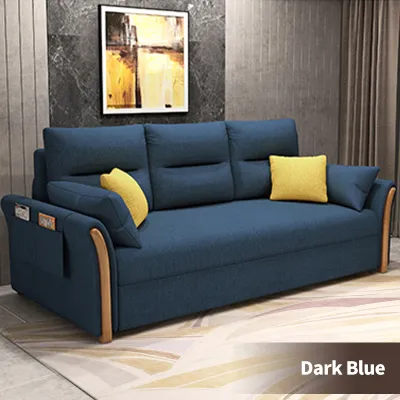
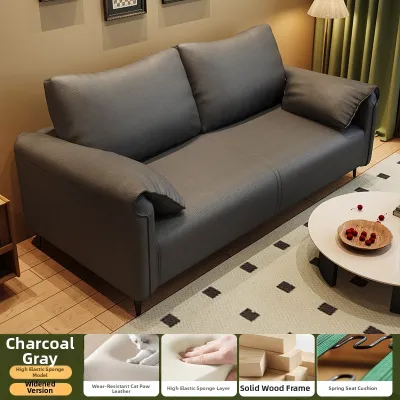
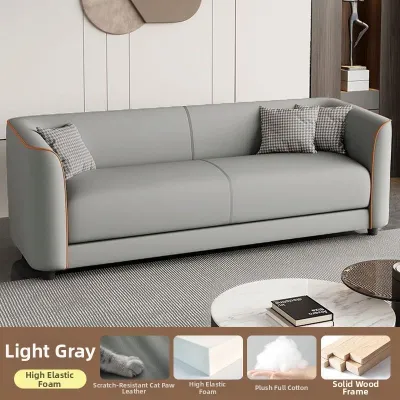
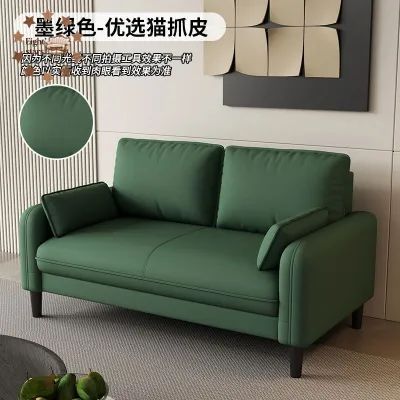
Prices are valid at publication and may change. Please refer to the product page for the latest price.
Sofa depth is a critical but often overlooked dimension. A deep sofa (over 100 centimeters) might feel incredibly comfortable for lounging, but it severely restricts the remaining space for a TV console and walkway. For standard HDB layouts, a sofa depth of 85 to 95 centimeters strikes the best balance between seating comfort and floor space preservation. This depth allows for a standard TV viewing distance of approximately 2.0 to 2.5 meters without feeling cramped.
When planning your layout, do not rely solely on wall-to-wall measurements. You must account for existing architectural features and built-in carpentry. For instance, built-in shoe cabinets near the entryway or custom TV feature walls can shave precious centimeters off your usable wall length. Always measure the distance from the edge of these installations rather than the bare wall to ensure your new furniture fits perfectly.
Additionally, look upward and downward for hidden obstacles. Air-conditioning trunking running along the top or side of a wall can prevent a tall-backed sofa from sitting flush against the wall. Similarly, the placement of power outlets, fiber broadband ports, and light switches must remain accessible. Blocking these utilities with a heavy, non-modular sofa can make daily tasks highly inconvenient and restrict access to essential home connectivity.
How to Evaluate Fabric Sofa Brands for Local Needs
When shopping for a fabric sofa in Singapore, the brand’s adaptability to local housing constraints is just as important as the aesthetic appeal of their furniture. The first criterion to evaluate is whether a brand offers modular configurations or customizable sizing. Brands that cater specifically to the local market often provide sofas in increments of 10 to 20 centimeters, or allow you to choose the exact number of seat cushions to match your living room wall length. This level of customization is invaluable for maximizing tight corners.

Warranty coverage and after-sales support are crucial indicators of a brand’s reliability. Because Singapore’s high humidity can accelerate wear on joints and foam, look for brands that offer a clear, local warranty of at least 2 to 5 years on the internal wooden frame and suspension system. Furthermore, inquire if the brand provides fabric replacement services or sells individual slipcovers. A brand that allows you to purchase replacement covers years down the road offers excellent long-term value, saving you from replacing the entire sofa if the fabric becomes stained or worn.
High-rise delivery logistics present unique challenges that international online retailers often overlook. A reliable local brand should have a transparent delivery policy that explicitly addresses HDB lift access. You must verify whether the brand’s delivery team handles assembly on-site or delivers the sofa fully assembled. On-site assembly is highly preferable for tight HDB corridors, as it allows the delivery team to transport the sofa in smaller, manageable boxes before putting it together in your living room.
Choosing the Right Fabric for Singapore's Climate
Singapore’s tropical climate, characterized by high humidity and warm temperatures, demands careful consideration of fabric composition. To prevent a sticky, uncomfortable seating experience, prioritize highly breathable fabrics. Natural fibers like linen and cotton blends are excellent for air circulation, though they may require more care to prevent wrinkling. Synthetic fibers like polyester and nylon blends are highly durable, but you should ensure they are woven loosely enough to allow heat dissipation.
Before making a purchase, always check the manufacturer’s fabric specifications, specifically the Martindale rub count. The Martindale test measures a fabric’s abrasion resistance; for a standard household sofa, a rub count of 15,000 to 20,000 is sufficient, while homes with pets or young children should look for heavy-duty fabrics with a rub count of 30,000 or higher. Additionally, look for performance fabrics that feature built-in stain resistance, which prevents liquids from immediately soaking into the fibers.
The choice between removable, washable covers and fixed upholstery is a major decision point for long-term maintenance. Removable covers are highly practical for HDB households, as they allow you to periodically wash the fabric or take it to a professional dry cleaner. If you choose a sofa with fixed upholstery, ensure the fabric is treated with a water-resistant coating, and be prepared to use specialized fabric vacuum cleaners or professional upholstery cleaning services to keep the material fresh and free of dust mites.
Sofa Configurations That Maximize HDB Living Spaces
The configuration of your sofa directly impacts how spacious your HDB living room feels. For smaller or narrow living areas, a compact 2-seater or a streamlined 3-seater sofa is usually the most practical choice. These configurations keep the center of the room open and allow you to place side tables or floor lamps at the ends without blocking walkways.
If you prefer more lounging space, an L-shaped sofa or a sofa with a chaise lounge can be highly comfortable, but it requires careful placement. To maintain a smooth traffic flow, place the chaise section against a wall or a window rather than letting it project into the middle of the room where it can block the path to the kitchen or bedrooms. Reversible chaise lounges are particularly valuable for HDB flats, as they allow you to move the lounge section from the left to the right side if you decide to rearrange your living room layout in the future.
For homeowners who frequently host guests or live in multi-generational households, modular sofas and sofa beds offer excellent versatility. Modular sofas consist of individual seats that can be rearranged or separated to create different seating layouts depending on the occasion. A high-quality sofa bed can transform your living room into a temporary guest bedroom, but you must ensure there is enough clearance in front of the sofa to fully extend the bed mechanism without hitting your TV console or other furniture.
Pre-Purchase Measurement and Delivery Checklist
To avoid the frustration of a sofa that cannot physically enter your home, you must perform a thorough logistical check before finalizing your purchase. Start by measuring the dimensions of your HDB flat’s main door, including the clear opening width and height when the door is fully open. Do not forget to account for any metal gates, shoe racks, or decorative ceiling fixtures in your entryway that could restrict movement.
Next, measure the common areas of your high-rise building. This includes the height, width, and diagonal depth of the HDB lift car, as well as the lift door opening. If your flat is located on a floor that requires navigating tight corridor corners or turning radiuses, measure these spaces as well. Many furniture brands charge additional stair-carry fees—often ranging from S$10 to S$20 per floor—if the sofa cannot fit into the lift and must be carried up the stairs.
Before placing your order, create a physical mock-up of the sofa’s footprint in your living room. Use masking tape or newspaper to outline the exact length and depth of the sofa on your floor. Leave this mock-up in place for a few days to physically experience how the sofa will affect your daily movement, ensuring you can comfortably open nearby cabinets, walk past the coffee table, and access power outlets.
Frequently Asked Questions (FAQ)
How often should I vacuum or clean a fabric sofa in a humid climate?
In Singapore’s humid climate, dust mites and ambient moisture can quickly accumulate in fabric fibers. It is recommended to vacuum your fabric sofa at least once a week using a clean upholstery attachment. This prevents dust, pet dander, and skin cells from settling deep into the weave. For a deeper clean, check the manufacturer’s care label for specific cleaning codes (such as W for water-based cleaners or S for solvents) and aim for a professional deep cleaning once every 12 to 18 months.
Can I use a fabric protector spray on any sofa material?
Not all fabric protector sprays are suitable for every type of upholstery. Before applying any aftermarket spray, you must verify compatibility by checking both the spray’s instructions and your sofa’s warranty terms, as some manufacturers void the warranty if third-party chemical treatments are applied. Always perform a spot test on a small, hidden area of the sofa—such as the back of a cushion or the lower rear frame—to ensure the spray does not cause discoloration, color bleeding, or changes in the fabric’s texture.
Community discussion
Share your experience or ask a question. Comments are reviewed before publication.