
Placing a children’s bed on or directly against a bay window is highly discouraged by safety experts due to the severe risks of falls, glass impact, and extreme thermal discomfort. While the architectural charm of a bay window often tempts parents to utilize the ledge as a space-saving sleeping nook, doing so introduces critical hazards that standard bedroom layouts avoid. If you are considering this setup, you must rigorously evaluate the structural load capacity of the ledge, verify compliance with international safety standards, and install robust physical barriers before allowing a child to sleep there.
Core Safety Risks of Bay Window Bed Placement
Elevating a child’s sleeping area to the height of a window sill significantly increases the risk of accidental falls. Standard window sills are typically positioned high enough to prevent toddlers from reaching them easily from the floor. However, placing a bed frame flush against the window raises the child’s starting height, turning the window sill into an easily accessible climbing platform. If a window is left open for ventilation, or if a child learns to operate the latch, a fall from a high-rise apartment can have catastrophic consequences.
Glass breakage is another severe hazard when active play occurs near large window panes. Children naturally bounce, toss toys, and roll around dynamically during sleep or play. A sudden impact from a heavy toy or a child’s body striking the glass can easily shatter standard window panes. Unlike safety glass, standard window glazing can break into large, sharp shards, posing an immediate threat of severe lacerations and deep cuts to a sleeping or playing child.
Products mentioned in this guide
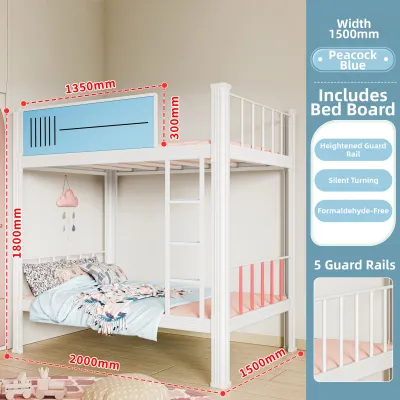
Prices are valid at publication and may change. Please refer to the product page for the latest price.
The microclimate around a bay window also presents significant comfort and health challenges. In tropical climates like Singapore, large glass surfaces act as thermal traps, absorbing and radiating intense solar heat throughout the day. This direct sunlight exposure can cause the sleeping area to become uncomfortably hot, disrupting sleep patterns and increasing the risk of heat exhaustion. Conversely, during heavy rainstorms, the temperature near the glass can drop rapidly, leading to high humidity, condensation on the mattress, and subsequent mold growth.
Finally, placing a bulky bed frame against a bay window can severely restrict emergency egress and compromise room ventilation. In the event of an emergency, such as a fire, quick access to the window may be blocked by the bed structure. Furthermore, obstructing the window opening limits natural cross-ventilation, trapping stale air and humidity within the bedroom, which can exacerbate respiratory issues and allergies in young children.
Structural and Building Requirements to Verify
Before considering any furniture placement on a bay window, you must distinguish between structural concrete ledges and decorative extensions. Many modern apartments feature bay windows designed purely as architectural accents rather than load-bearing floors. A solid concrete ledge integrated into the building’s main structural frame is vastly different from a decorative timber box, a hollow plasterboard extension, or a cantilevered ledge. Placing the weight of a bed frame, mattress, and a growing child on a non-structural platform can lead to structural sagging, cracking, or sudden failure.

To ensure safety, you must check the original building plans or consult your property management office or local housing authorities. For public housing under the Housing & Development Board (HDB) or private condominiums in Singapore, the structural load limits of bay windows are strictly documented. These ledges often have a design load capacity that is significantly lower than the standard floor load capacity of 150 kg/m2. Never assume a ledge can support a bed without verifying these official structural specifications first.
You must also evaluate the physical dimensions of the bay window ledge against the footprint of the bed frame. A safe bed setup requires the entire frame to sit flat on a stable, level surface without any overhanging edges. If the ledge is too narrow, attempting to balance a bed frame so that it extends past the edge compromises the center of gravity. This imbalance makes the bed highly susceptible to tipping over when a child sits, steps, or jumps on the overhanging section.
If you cannot find documented proof of the ledge’s load-bearing capacity, or if you observe any signs of structural wear, you must halt your plans. Hairline cracks in the concrete, gaps between the ledge and the wall, or a hollow sound when tapping the surface are clear warning signs. In such cases, stop the setup immediately and consult a qualified structural engineer to perform a professional assessment before proceeding.
Kids Bed and Window Safety Standards to Check
When selecting furniture for a child’s room, always look for recognized international safety certifications on the product labels. Standards such as EN 716 (for children’s cots) or ASTM F1427 (for bunk beds) indicate that the furniture has undergone rigorous testing for structural integrity, stability, and non-toxic materials. These safety marks ensure that the bed frame can withstand dynamic forces and will not collapse or tip over during normal use.
You must also verify the manufacturer’s certified specifications regarding guardrail height and gap widths. To prevent falls, guardrails must extend at least 160 mm above the top of the mattress. Additionally, the gaps between the vertical spindles or rails must be strictly controlled—typically between 50 mm and 60 mm. This precise spacing prevents entrapment hazards, ensuring a child’s head, limbs, or torso cannot become stuck between the rails.
Window accessories and safety hardware must also meet stringent safety guidelines. If you install window restrictors or limiters, verify that they comply with standards such as BS EN 13126-5, which governs the strength and durability of window hardware. Any safety films applied to the glass should meet impact standards like ANSI Z97.1 to ensure they can successfully contain shattered glass fragments under heavy impact.
Finally, ensure that all assembly hardware and instructions match the certified product specifications exactly. Never attempt to modify a certified bed frame to fit a tight bay window space by cutting wood, drilling new holes, or omitting critical support legs. Unauthorized modifications invalidate the manufacturer’s safety certification and can introduce hidden structural weaknesses that lead to sudden failure.
Risk Reduction and Safe Setup Guidelines
If your bay window ledge is structurally approved and you decide to proceed, installing physical window limiters is your most critical line of defense. These mechanical restrictors must be securely anchored to the window frame to prevent the sash from opening wider than 100 mm (10 cm). This specific limit allows for natural ventilation while ensuring the opening is too narrow for a child’s head or body to pass through, effectively eliminating the risk of falls.
Applying a high-quality, shatter-resistant safety film to all adjacent glass panes is another essential mitigation step. This transparent polyester film acts as a protective membrane. If a child accidentally strikes the window with a heavy toy, the film holds the broken glass fragments together in a single, cohesive sheet, preventing sharp shards from scattering onto the bed and causing severe injuries.
You must also ensure that the bed’s built-in guardrails remain fully effective and properly aligned. Do not rely on the window glass or the adjacent wall to act as a substitute for a guardrail. Over time, mattresses can shift, creating dangerous gaps where a child could become trapped. Keep the bed’s certified guardrails installed on all sides, even the side facing the window, to maintain a continuous, safe barrier.
To prevent the bed frame from shifting during active play, secure it firmly to the adjacent wall or floor using heavy-duty brackets. A shifting bed can widen gaps between the frame and the window sill, creating new fall or entrapment hazards. When anchoring the frame, ensure you do not drill into hidden utility pipes or compromise the structural concrete of the bay window ledge.
When to Avoid Bay Window Placement Entirely
There are several strict conditions under which a bay window bed setup must be completely abandoned in favor of a standard wall placement. If your structural assessment reveals that the window sill is hollow, constructed from lightweight timber, or cantilevered without direct support, do not place a bed on it. These decorative structures are simply not engineered to bear the static and dynamic loads of a sleeping child.
You must also avoid this setup if the room features floor-to-ceiling glass panels without robust, certified safety barriers or impact-rated glazing. Sleeping directly against full-height glass without a solid structural wall or heavy-duty metal grilles poses an unacceptable risk of accidental falls and glass impact.
Rooms that suffer from extreme sun exposure, poor climate control, or persistent condensation are also highly unsuitable. High heat makes the sleeping area uncomfortable and potentially dangerous, while constant moisture on the glass can lead to hidden mold growth behind the mattress, compromising your child’s respiratory health.
Lastly, if placing the bed on the bay window blocks the only emergency escape route or completely obstructs access to essential window controls, you must choose an alternative layout. Maintaining clear, unobstructed access to emergency exits and ventilation is a fundamental safety requirement that must never be compromised for aesthetic or space-saving reasons.
Frequently Asked Questions (FAQ)
Can I use a standard toddler bed on a bay window ledge?
Generally, no. Standard toddler beds are designed to sit flat on a spacious, level floor. Most bay window ledges lack the necessary depth to accommodate the full width of a toddler bed, which typically requires at least 70 cm to 90 cm of flat space. Placing a standard bed on a narrow ledge leads to dangerous overhangs, making the bed highly unstable and prone to tipping over when the child moves.
Do I need a permit to modify a bay window for a bed in Singapore?
Yes, structural modifications require official approval. In Singapore, if you plan to hack, extend, or structurally alter a bay window ledge in an HDB flat or a private condominium, you must obtain written permission from the Housing & Development Board or your condo’s Management Corporation Strata Title (MCST). Simply placing loose furniture on the ledge does not require a permit, but any physical alteration to the building’s structure or window frames is strictly regulated and requires professional submission.
What is the safest type of window covering for a kids bed area?
The safest window coverings are completely cordless designs, such as cordless roller shades or motorized blinds. Traditional curtains or blinds with loose, hanging pull cords present a severe strangulation hazard to children sleeping or playing nearby. If you must use corded coverings, ensure you install safety cleats high out of the child’s reach to keep cords taut and secure, and verify that the coverings do not block access to window safety limiters.

Community discussion
Share your experience or ask a question. Comments are reviewed before publication.