
Deciding on a Meizhaishenghuo fabric sofa for your HDB flat requires balancing modern aesthetic appeal with the practical realities of Singapore’s high-rise living. While these sofas offer attractive designs online, determining if they are a reliable choice depends entirely on how well a specific model’s dimensions, fabric durability, and delivery requirements align with your home’s layout. Because online-first furniture brands often present products in idealized, spacious settings, you must take a proactive approach to verify the physical specifications before making a purchase.
Evaluating a sofa online means looking past styled photography to focus on concrete product data. By understanding how to assess frame construction, fabric resilience, and spatial clearance, you can determine whether a Meizhaishenghuo model will serve as a long-term centerpiece or become a logistical headache. This guide provides the essential frameworks and verification steps to help you make an informed decision for your living room.
Quick Assessment: Is Meizhaishenghuo Right for Your Space?
Before diving into specific product listings, establish a clear evaluation framework based on three core pillars: spatial fit, fabric resilience, and budget alignment. HDB living rooms, particularly in newer Build-To-Order (BTO) flats, have strict spatial limitations that leave little room for error. A sofa that looks perfectly proportioned on a screen can easily overwhelm a compact living area if you do not account for physical clearances.
Products mentioned in this guide
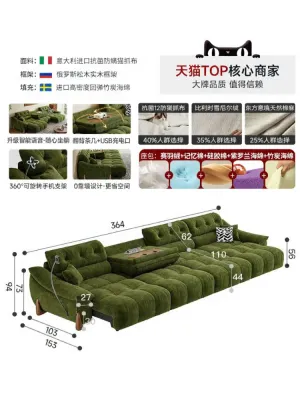
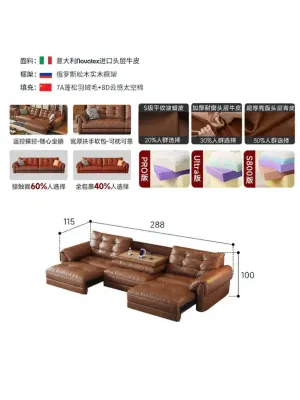
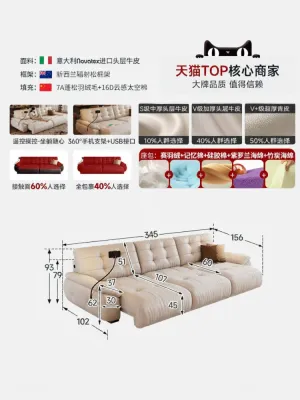
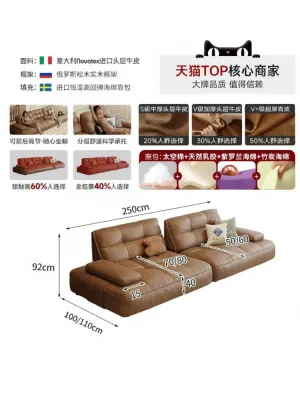
Prices are valid at publication and may change. Please refer to the product page for the latest price.
Rather than relying on general brand reputation, focus your assessment on verifying the exact specifications of the individual model you desire. Different models under the same brand can vary significantly in frame construction, cushion filling, and upholstery quality. Treat every product listing as a unique set of specifications that must be cross-referenced with your household’s daily habits.
To prepare for your search, locate your official HDB floor plan and take precise physical measurements of your designated living room area. Note the positions of fixed elements such as power outlets, television console conduits, and air conditioning units. Having these baseline numbers ready will allow you to quickly filter out sofa models that are structurally incompatible with your room layout.
Space and Sizing Checks for HDB Layouts
When measuring your living room footprint, do not simply match the length of the sofa to an empty wall. You must account for a comfortable walking clearance of at least 60 to 75 centimeters around the sofa to ensure natural traffic flow. If you plan to place a coffee table in front of the seating, ensure there is a gap of at least 30 to 45 centimeters between the edge of the seat cushions and the table.

Logistical access is another critical bottleneck for HDB deliveries, especially in older estates where elevators may have lower ceiling heights or narrower door frames. Before placing an order, measure the height, width, and diagonal clearance of your block’s elevator cabin, as well as the width of your main entrance door and any narrow corridor turns. Non-modular, long-frame sofas often cannot clear these tight angles, leading to failed deliveries or unexpected handling fees.
Visual weight is just as important as physical dimensions in a compact HDB living room. A sofa with a deep seat profile exceeding 100 centimeters or an exceptionally high backrest can block natural light from your windows, making the entire room feel cramped. For smaller spaces, consider models with raised legs that expose the floor underneath, creating an illusion of openness, and keep backrest heights below 90 centimeters to preserve sightlines.
Evaluating Fabric Quality and Daily Durability
Singapore’s tropical climate, characterized by high humidity and warm temperatures, demands fabric upholstery that can breathe and resist moisture buildup. When reviewing fabric specifications, look for synthetic blends such as polyester or nylon, which generally offer better resistance to stretching, fading, and moisture retention than pure natural fibers. Avoid tightly sealed synthetic leathers if your living room does not have continuous air conditioning, as these materials can feel sticky against the skin.
If your household includes young children or pets, fabric durability is a non-negotiable priority. Check the product description for weave density; a tighter, flatter weave is less susceptible to pet claw snags and is easier to vacuum free of pet hair and dust. For households prone to spills, look for fabrics treated with water-resistant coatings, though you should verify whether these treatments require reapplication over time.
Maintenance is another area where practical design triumphs over aesthetics. Always verify whether the sofa covers are fully removable and check the specific care instructions provided by the seller. Ideally, cushion covers should be machine-washable on a gentle cycle, but many high-density fabrics require professional dry cleaning to prevent shrinkage and color fading. If the covers are fixed, you will need to invest in a fabric spot-cleaning machine or professional upholstery cleaning services to manage stains.
Assessing Value, Pricing, and Support
To determine if a sofa offers genuine value for money, look closely at the internal construction details hidden beneath the fabric. A reliable frame is typically constructed from kiln-dried solid wood or high-grade plywood, which resists warping in humid conditions; avoid models that rely heavily on low-grade particleboard. For seating support, look for a combination of serpentine springs and high-density polyurethane foam, which retains its shape and support much longer than low-density dacron fiber fill.
Warranty terms are a strong indicator of a manufacturer’s confidence in their product’s longevity. When purchasing through online marketplaces, carefully read the warranty fine print to distinguish between frame coverage and fabric coverage. A standard warranty might cover structural frame failure for several years, while only covering fabric defects or cushion sagging for a few months. Be clear on how to initiate a claim and whether you will be responsible for transport costs during a repair.
Finally, calculate the total cost of ownership by factoring in delivery fees, assembly charges, and return policies. Some sellers on online marketplaces list low base prices but add substantial surcharges for delivery to high floors without lift access, or charge extra for on-site assembly. Review the return policy carefully: returning a large piece of furniture due to a change of mind can incur heavy restocking fees and return shipping costs that make the transaction impractical.
Your Final Decision Checklist
Before finalizing your purchase, run through this essential checklist to ensure no detail has been overlooked:
- Confirm physical clearances: Verify that the sofa length, depth, and height fit your floor plan while leaving adequate walking space.
- Check delivery pathways: Measure your HDB lift door, cabin interior, corridor turns, and main entryway to guarantee the sofa can physically reach your living room.
- Verify fabric specifications: Ensure the material is breathable, matches your household's pet and child situation, and has clear care instructions.
- Clarify warranty and assembly: Confirm what structural elements are covered under warranty and whether assembly is included in the delivery fee.
If any of these specifications are missing or ambiguous on the product page, do not guess. Use the platform’s messaging system to ask the seller directly for exact dimensions, frame materials, and fabric care details. If you remain uncertain about the fabric texture or color accuracy, check if the seller offers physical fabric swatches for order, or search for customer reviews that feature unedited, real-life photos of the sofa in actual home environments.
Frequently Asked Questions (FAQ)
How do I test fabric durability before buying online?
While you cannot physically touch the fabric online, you can look for standardized testing metrics in the product specifications. The Martindale rub test is a widely accepted industry standard for measuring fabric abrasion resistance; for general domestic use, look for a rating of 15,000 to 20,000 rubs, while households with heavy use or pets should aim for 25,000 rubs or higher. Additionally, zoom in on high-resolution customer review photos to observe how the fabric drapes and whether it shows early signs of pilling or loose threads in high-wear areas.
Are modular sofas better for HDB living rooms?
Modular sofas offer significant advantages for HDB flats because they are delivered in smaller, individual sections that easily fit into standard passenger lifts and narrow doorways. This modularity eliminates many of the delivery risks associated with long, fixed-frame three-seater sofas. Furthermore, modular designs allow you to reconfigure your seating layout to adapt to different social occasions or easily fit into a new layout if you move to a different flat in the future.
What should I check regarding sofa delivery to an HDB flat?
Prior to delivery, you must confirm the exact dimensions of your building’s lift and ensure there are no low-hanging pipes or light fixtures in your corridor that could obstruct the delivery team. Communicate any potential obstacles to the seller beforehand, including narrow doorway frames or the need to carry the sofa up stairs if your unit is on a mezzanine level. Clarify whether the delivery fee includes unpacking, assembly, and the disposal of packaging materials, as well as any potential surcharges for weekend deliveries or specific time slots.

Community discussion
Share your experience or ask a question. Comments are reviewed before publication.