
Buying a sofa from China for a Singapore HDB flat has become an increasingly popular option for homeowners seeking a balance of modern aesthetics, customizability, and cost-effectiveness. With the rise of cross-border e-commerce platforms and reliable sea freight forwarders, sourcing furniture directly from manufacturing hubs in China is highly accessible. However, navigating the vast sea of options requires a structured approach to ensure the piece you select is durable, fits your living space, and survives the journey to your home. By focusing on material specifications, precise spatial measurements, and seller verification, you can confidently secure a high-quality fabric sofa that perfectly complements your HDB layout.
How to Evaluate the Quality of Chinese Fabric Sofas
The internal frame is the foundation of any sofa, determining its structural integrity and lifespan. When browsing listings on Chinese platforms, look for manufacturers that specify the type of wood used. Solid hardwoods like larch or eucalyptus are preferred for their strength and natural resistance to warping. Avoid frames constructed entirely of low-grade particleboard or thin plywood, which can sag or crack under consistent weight. Ask the seller for diagrams or photos of the internal frame. High-quality construction features mortise and tenon joints reinforced with corner blocks and screws, rather than simple glue and staples. Additionally, check if the frame utilizes a combination of serpentine steel springs and high-density elastic webbing, which provides a resilient support system that prevents the seat from sagging over time.
The choice of fabric directly impacts both the comfort and maintenance of your sofa in Singapore’s tropical climate. Common options include linen-cotton blends, chenille, polyester, and the highly popular “tech fabric” (科技布). Tech fabric is a synthetic material designed to mimic the appearance of leather while retaining the breathability of woven cloth. While it is highly water-resistant and easy to wipe clean, you must verify its breathability rating to ensure it does not feel sticky in humid weather. For traditional woven fabrics, look for materials with a high Martindale rub count (ideally 20,000 rubs or higher for regular domestic use) to ensure resistance to wear and pilling. Removable and washable cushion covers are highly recommended for HDB households, as they allow for easy cleaning and maintenance.
Products mentioned in this guide
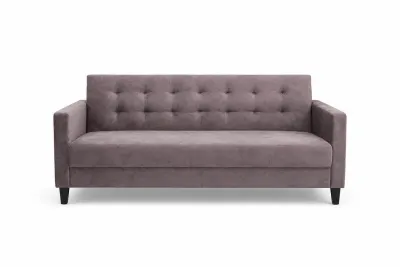
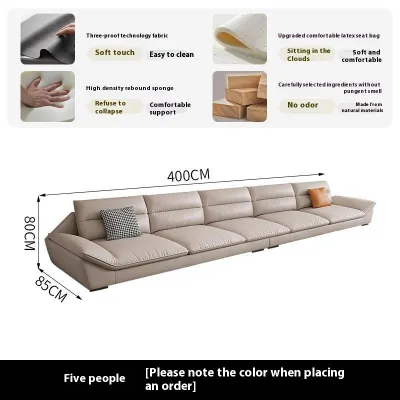
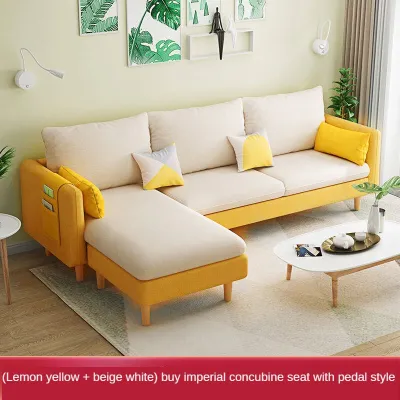
Prices are valid at publication and may change. Please refer to the product page for the latest price.
Cushion comfort and longevity depend heavily on the density of the foam used. Chinese manufacturers often use a “D” rating to indicate foam density, which represents kilograms per cubic meter. For a durable seat cushion that retains its shape, look for high-resilience (HR) foam with a density rating of at least D35 to D45. Lower density foam (below D30) may feel soft initially but will flatten rapidly with daily use. Some premium models incorporate a layer of natural latex or pocket springs beneath the foam to provide a more responsive, supportive sit. Ensure the product description explicitly details the composition of each cushion layer, and avoid listings that only use vague terms like “soft sponge filling” without specifying density metrics.
Measuring Your HDB Space and Delivery Route
Before finalizing your sofa selection, precise spatial planning is essential to avoid overcrowding your HDB living room. Measure the designated sofa wall, keeping in mind that you need to maintain clear walking paths of at least 70 to 80 centimeters around the furniture. Consider the depth of the sofa as well; deep-seated models (over 100 centimeters) can quickly overwhelm a standard 3-room or 4-room HDB living room, leaving little space for a coffee table or TV console. Use masking tape on your living room floor to map out the exact footprint of the prospective sofa, allowing you to visualize how the piece interacts with your daily movement and existing furniture.

The journey from the delivery truck to your living room is often the most challenging phase of importing a sofa. You must measure every point of entry along the delivery route. Start with the HDB lift door width and height, as well as the internal cabin depth and diagonal clearance. Standard passenger lifts in older HDB blocks can be surprisingly tight, sometimes failing to accommodate single-piece three-seater sofas exceeding 2.2 meters in length. Next, measure the width of the common corridor, the turning clearance at your front door, and the clear opening of your metal gate and main door frame. If your building requires navigating stairwells, measure the height and turning radius of the landing areas.
To mitigate delivery risks, consider opting for modular or split-frame designs rather than a single, massive frame. Many Chinese manufacturers offer three-seater or L-shaped sofas that are split into two or three individual sections that lock together securely once assembled inside your home. Detachable legs are another crucial feature to look for, as removing the legs can reduce the overall height of the sofa frame by 10 to 15 centimeters, making it much easier to maneuver through tight door frames and lift doors. Always confirm with the seller whether the sofa is shipped fully assembled or in modular components, and request the exact packaging dimensions rather than just the finished product dimensions.
Finding Trustworthy Sellers on E-Commerce Platforms
Navigating Chinese e-commerce platforms requires a discerning eye to separate reputable manufacturers from low-quality resellers. Prioritize official brand flagship stores, which are typically verified by the platform and have a direct reputation to uphold. These stores often feature a “flagship” (旗舰店) or “brand” label on their profile. Check the seller’s overall rating, paying close attention to the sub-scores for product description accuracy, service attitude, and shipping speed. Read through customer reviews, specifically filtering for reviews that include real-life photos and videos. Look for feedback from buyers who have used the sofa for several months, as this provides a more accurate picture of long-term durability than initial unboxing impressions.
Understanding the logistics of cross-border shipping is critical to avoiding unexpected costs and delays. Most furniture purchases from China are shipped via sea freight due to the weight and volume of the items. You can choose to use the e-commerce platform’s official shipping service or hire a third-party freight forwarder. Third-party forwarders often provide more flexible consolidation services and can handle customs clearance, GST payment, and local delivery in Singapore. Clarify the shipping terms with your forwarder: confirm whether the price includes door-to-door delivery, lift access handling, and the Singapore Goods and Services Tax (GST). Be prepared for delivery timelines that typically range from three to six weeks, depending on customs processing and shipping schedules.
One of the main trade-offs of purchasing a sofa directly from China is the limitation on warranties and returns. While many reputable brands offer multi-year structural warranties, shipping a defective sofa back to China is often logistically impractical and prohibitively expensive. To manage this risk, communicate extensively with the seller before purchasing to confirm their policy on transit damage. Many sellers will agree to ship replacement parts, extra fabric, or touch-up kits free of charge if damage occurs during the initial journey. Additionally, check if the seller offers any local warranty support through Singapore-based partners, though this is rare and usually limited to high-end brands.
Final Checks Before Placing Your Order
To eliminate guesswork regarding color and texture, ask the seller if they can provide high-resolution, unedited photos or videos of the fabric under natural lighting. Some buyers choose to have physical fabric swatches sent to their freight forwarder’s warehouse in China first, allowing them to inspect the material quality and color accuracy before the actual sofa is manufactured and shipped. This step is highly recommended if you are trying to match the sofa to a very specific interior color palette or if you have pets and need to test the fabric’s scratch resistance firsthand.
Double-check all technical drawings and dimensions provided by the seller. Confirm not only the overall length, depth, and height, but also specific measurements like seat height (to ensure comfortable seating for family members), armrest width (which affects the usable seating area), and leg clearance. Leg clearance is particularly important if you use a robot vacuum, as you will want to ensure the vacuum can easily pass underneath the sofa to clean. If you require any customization, such as altering the leg material or adjusting the overall length, ensure these details are explicitly written and confirmed in the chat log with the seller before making payment.
Be cautious of listings that feature exceptionally low prices paired with vague, overly poetic product descriptions that lack concrete technical specifications. If a listing does not specify the wood species of the frame, the density of the foam, or the rub count of the fabric, it is highly likely that lower-grade materials have been used to cut costs. Avoid sellers who are unwilling to provide real-life photos of the product or those who pressure you to complete the transaction outside the official platform’s payment system, as this strips away your buyer protection and recourse in the event of a dispute.
Frequently Asked Questions (FAQ)
Are Chinese fabric sofas suitable for Singapore's humid climate?
Yes, provided you select the right materials and maintain them properly. Opt for highly breathable fabrics such as linen-cotton blends or high-quality synthetic polyesters that do not trap heat and moisture. If you choose tech fabric, verify with the manufacturer that it has a breathable polyurethane layer. To prevent mold and mildew growth in Singapore’s humid environment, ensure your living room is well-ventilated, utilize dehumidifiers during exceptionally wet seasons, and avoid placing the sofa directly against damp walls. Regularly vacuuming the fabric also prevents dust accumulation, which can attract moisture.
How do I handle assembly if the sofa arrives flat-packed?
Before the sofa ships, ask the seller for the assembly manual or an instructional video to assess the complexity of the setup. Most modular or flat-packed sofas come with the necessary hardware and basic tools, but having a personal toolkit with a power drill can significantly speed up the process. If the assembly looks too complex or if the components are too heavy to lift safely, you can hire local professional furniture assembly services in Singapore. Many third-party freight forwarders also offer optional assembly services for an additional fee upon delivery, which can be arranged prior to the shipment’s arrival.

Community discussion
Share your experience or ask a question. Comments are reviewed before publication.