
To verify safety standards for a kids’ bed with a study table in Singapore, you must check for compliance with recognized international safety standards, inspect physical design features like guardrail heights and gap sizes, and ensure the materials use non-toxic, low-emission finishes. Because these units combine an elevated sleeping platform with an active workspace, they introduce unique structural and ergonomic risks. Ensuring your child’s safety requires looking beyond aesthetic appeal to verify structural stability, entrapment prevention, and proper room integration.
Understanding Safety Regulations for Children's Furniture
In Singapore, children’s furniture is generally classified as non-controlled goods under the Consumer Protection (Safety Requirements) Regulations. While they do not require a mandatory safety mark from Enterprise Singapore before sale, they must still comply with general product safety guidelines. This means the responsibility often falls on you, the buyer, to verify that the furniture meets established international safety benchmarks.
When browsing options, look for manufacturer declarations of compliance with recognized international standards. The most common standards for elevated beds and bunk beds are the European Standard (EN 747) and the American Standard (ASTM F1427). These standards govern structural strength, guardrail requirements, and entrapment hazards. A reputable manufacturer should be able to provide a certificate of compliance or a test report from an accredited laboratory upon request.
Products mentioned in this guide

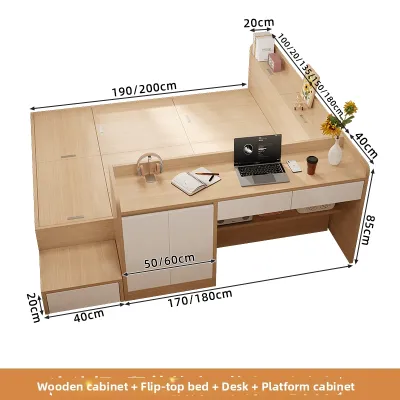
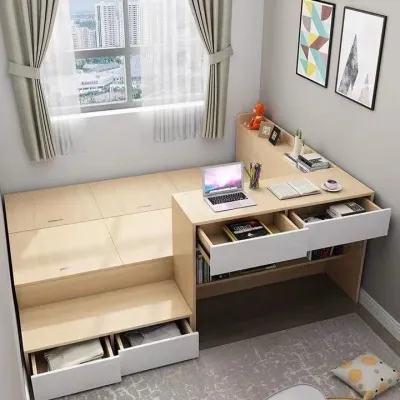
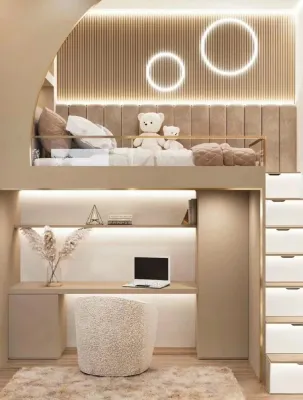
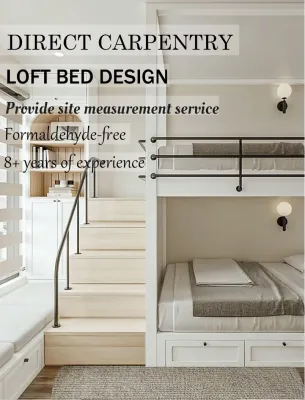

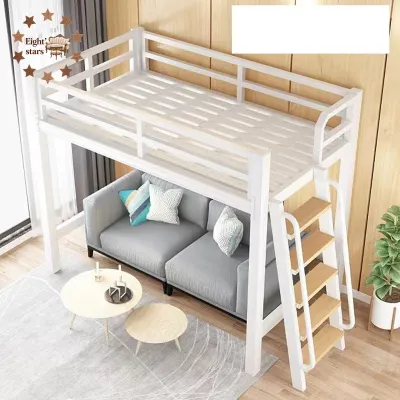
Prices are valid at publication and may change. Please refer to the product page for the latest price.
Additionally, always check the manufacturer’s age recommendations and weight limits. Most international safety standards advise that elevated beds, such as loft beds or high sleepers, are not suitable for children under six years of age due to the risk of falls. The weight limit should clearly state the maximum capacity for both the sleeping platform and the integrated study desk, allowing you to choose a unit that safely supports your child’s growing body and school supplies.
Physical Safety Checks for the Bed and Study Table
A combined bed and study table is a highly functional, space-saving solution, but its dual-purpose design requires a double layer of safety inspections. You must evaluate the unit not just as a place to sleep, but also as an active study environment where your child will spend hours writing, reading, and using devices.

Whenever possible, inspect the furniture in person at a showroom before making a purchase. If you are buying online, request detailed technical drawings showing exact dimensions and joint mechanisms. Upon delivery and assembly, perform a thorough physical inspection before allowing your child to use the furniture.
Guardrails, Gaps, and Entrapment Risks
The guardrails on the elevated bed are the primary defense against falls, making their height and construction critical. Verify that the guardrails run continuously along all four sides of the bed, with the only permissible opening being the access point for the ladder. The top of the guardrail must extend at least 160 mm above the top surface of the mattress. To ensure this safety margin is maintained, you must check the manufacturer’s recommended mattress thickness, as an overly thick mattress will compromise the guardrail’s effectiveness.
Entrapment is another serious hazard associated with children’s furniture. Children can easily get their heads, limbs, or fingers caught in poorly spaced gaps. Check that all gaps between the guardrails, slats, and the main frame are either less than 75 mm or greater than 230 mm. Gaps within this range can trap a child’s head or neck, posing a severe safety risk. Pay close attention to the transition zone where the bed frame meets the study table structure, ensuring there are no narrow, tapering gaps.
The ladder or steps leading to the bed must also be exceptionally secure. Look for wide, flat steps rather than thin, round rungs, as flat steps provide better foot support and reduce the risk of slipping. The treads should have a slip-resistant texture, and the ladder must be rigidly attached to the bed frame with heavy-duty hardware. Avoid ladders that wobble or can be easily detached by a child.
Stability, Weight Capacity, and Tip-Over Prevention
Elevated furniture has a higher center of gravity, making stability a paramount concern. When inspecting the unit, check the manufacturer’s specified weight capacity for both the upper bed and the lower study desk. The bed should easily support the combined weight of your child, the mattress, and bedding, with a generous safety margin. The study table should also be rated to handle the weight of heavy textbooks, computer monitors, and the downward pressure of a child leaning on the surface.
Tip-over accidents are a major risk for tall furniture. Any loft bed or high-sleeper unit must be securely anchored to the wall. Check if the product includes an anti-tip kit or specific wall-anchoring hardware. In Singapore’s concrete HDB walls, this requires drilling and using appropriate wall plugs and screws. If the manufacturer does not provide anchoring instructions or hardware, you should consult a professional installer to secure the unit safely.
Examine the connection points where the study table integrates with the bed frame. The hardware used at these joints should consist of robust, metal-to-metal bolts rather than simple wood screws. Metal-to-metal connections are far less likely to strip or loosen over time, especially under the constant vibrations of a child climbing up and down the ladder or working at the desk.
Material and Finish Safety Considerations
The materials and finishes used in your child’s furniture can directly impact their health and daily comfort. Look for manufacturer declarations certifying that the paints, varnishes, and adhesives used are non-toxic and low in volatile organic compounds (VOCs). Formaldehyde emissions from engineered wood products, such as MDF or particleboard, should meet strict standards, such as the E1 or E0 classification. This is particularly important in Singapore’s warm, humid climate, which can accelerate the off-gassing of harmful chemicals in enclosed, air-conditioned bedrooms.
Physical contact safety is equally important. Run your hands along all accessible surfaces of the bed frame and study table to check for smooth, splinter-free finishes. All edges and corners, especially on the desk surface where your child’s arms will rest, should be rounded or chamfered. Sharp corners pose a significant risk of cuts or bruising during active play or study sessions.
Additionally, inspect any moving parts for safety features. If the study table includes drawers, keyboard trays, or pull-out desk extensions, verify that they are equipped with anti-pinch mechanisms or soft-close runners. These features prevent drawers from slamming shut on small fingers and stop heavy drawers from being pulled completely out of their tracks, which could cause them to fall onto your child.
Space Planning and Installation Requirements
Proper space planning is essential to ensure that a combined bed and study table fits safely into your home without creating new hazards. In Singapore, where HDB flat ceiling heights typically average around 2.6 meters, vertical clearance is a critical constraint. Measure your ceiling height carefully before purchasing. There should be at least 75 cm to 1 meter of clearance between the top of the mattress and the ceiling. This allows your child to sit up comfortably in bed without risking head injuries.
Before ordering, you must also plan the delivery route. Measure the dimensions of your doorways, corridors, stairwells, and the apartment lift. Many loft beds feature large, pre-assembled side panels or long support beams that may not fit into standard residential lifts. Verifying these dimensions beforehand prevents delivery failures and ensures the components can be transported safely to your room.
The layout of the bedroom must be carefully arranged to avoid hazardous zones. Never place an elevated bed directly next to a window, even if the window has safety grilles. Keep the bed well away from window blind cords, electrical outlets, and wall-mounted shelves. Most importantly, ensure there is a safe distance between the top of the bed and any ceiling fans. The fan blades must be completely out of reach of a child standing on the bed, with a recommended minimum clearance of 1.5 meters from the edge of the bed to the fan blades.
Finally, consider the assembly process. Due to the structural complexity of combined loft beds and desks, professional installation is highly recommended. A professional installer will have the correct tools and experience to ensure all joints are tightened to the correct torque, the frame is perfectly level, and the wall anchors are securely fixed into the concrete wall. If you choose to assemble the unit yourself, strictly follow the manufacturer’s step-by-step instructions and never skip any structural components or fasteners.
Pre-Purchase Verification Checklist
To simplify your decision-making process, use this consolidated checklist when comparing different models of kids’ beds with study tables:
- Certifications: Verify compliance with EN 747 or ASTM F1427 standards.
- Age and Weight Limits: Confirm the bed is rated for children aged six and older, and check the maximum weight capacities.
- Guardrails: Ensure guardrails are present on all sides and stand at least 160 mm above the mattress.
- Gaps: Check that all gaps are either under 75 mm or over 230 mm to prevent entrapment.
- Ladder: Verify the ladder has wide, slip-resistant steps and is securely bolted to the frame.
- Wall Anchoring: Confirm the unit includes an anti-tip kit and can be anchored to your wall type.
- Materials: Look for low-VOC, E1 or E0 formaldehyde ratings, and non-toxic paint certifications.
- Edges and Hardware: Check for rounded corners, smooth finishes, and soft-close drawer runners.
If any of these specifications are missing, unclear, or if the assembly instructions seem inadequate, stop and consult the manufacturer or a qualified professional before finalizing your purchase.
Frequently Asked Questions (FAQ)
Can I use a standard adult mattress on a kids' loft bed with a study table?
You should avoid using a standard adult mattress unless its thickness matches the manufacturer’s exact specifications. Standard adult mattresses are often much thicker than those designed for kids’ loft beds. Using a mattress that is too thick reduces the effective height of the guardrails, significantly increasing the risk of your child falling over the side. Always check the manufacturer’s maximum mattress thickness guideline—typically around 15 cm or less—and choose a mattress that leaves at least 160 mm of guardrail clearance.
How often should I check the bolts and joints on a combined bed and desk?
You should perform a routine safety check on all bolts, screws, and joints every six months. Children’s furniture is subjected to constant movement, climbing, and shifting weight, which can cause hardware to loosen gradually over time. Additionally, Singapore’s high humidity can cause wood to expand and contract, potentially affecting joint tightness. If you notice any squeaking, wobbling, or visible gaps at the connection points, restrict use of the bed immediately and tighten all hardware according to the manufacturer’s instructions.

Community discussion
Share your experience or ask a question. Comments are reviewed before publication.