
Ensuring a high wooden loft bed is safe for children requires verifying both physical structural dimensions and legitimate safety certifications. Because safety standards vary by region and manufacturer, parents must rely on observable structural checks, verifiable certification labels, and strict adherence to assembly guidelines rather than marketing claims alone. This guide outlines the critical safety boundaries and inspection steps needed to make an informed and secure choice for your child’s bedroom.
Core Structural Safety Features to Inspect
Guardrails are the primary defense against accidental falls, making their height and coverage the first critical check. They must run continuously along all four sides of the bed, with the only permissible gap being the ladder opening. To verify this safety margin, measure the distance from the top of the mattress to the top of the guardrail. This effective height must be at least 127 millimetres (5 inches) to prevent a sleeping child from rolling over the edge.
Gap and entrapment risks require careful measurement of all openings. Children can get their limbs or head caught in poorly spaced gaps between guardrail slats, ladder rungs, or the mattress and the frame. Ensure that any gap is either smaller than 90 millimetres (3.5 inches) to prevent a child’s body from slipping through, or larger than 230 millimetres (9 inches) so their head can pass through safely without getting stuck.
Products mentioned in this guide
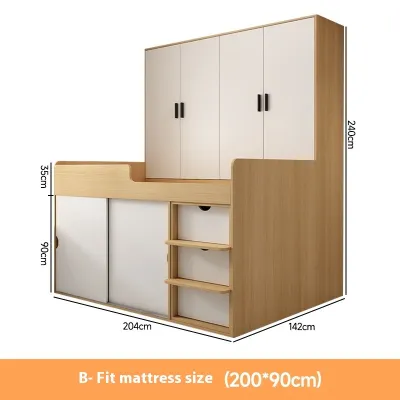
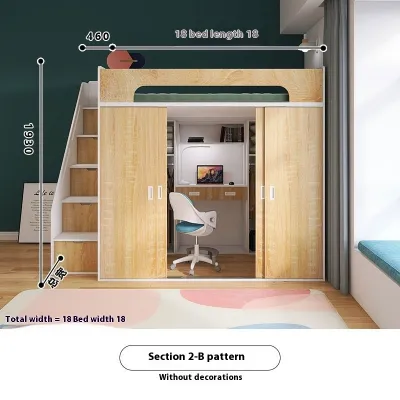

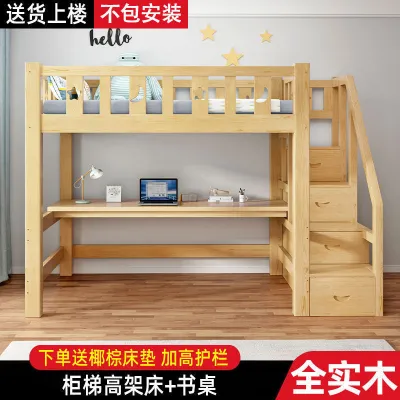
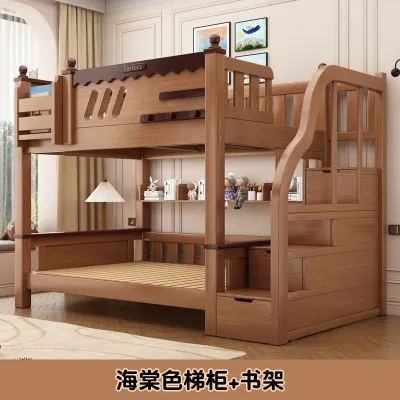
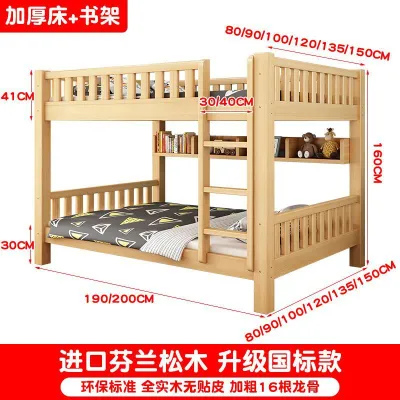
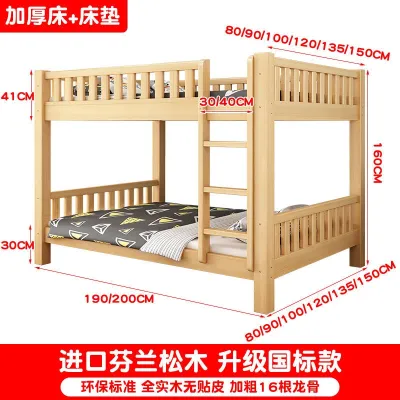
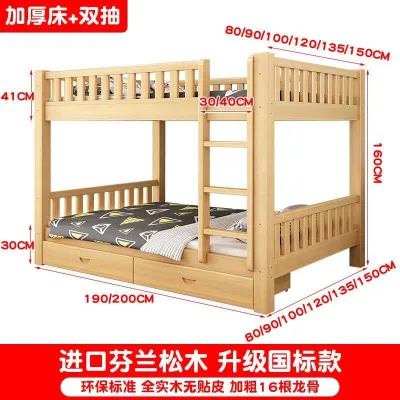
Prices are valid at publication and may change. Please refer to the product page for the latest price.
The ladder design and its attachment mechanism are crucial for safe daily access. Inspect how the ladder connects to the main frame; it should be bolted securely with heavy-duty metal brackets rather than simply hooked over the side rail, which can slip or lift. The rungs should be wide enough to support a child’s foot comfortably, spaced evenly, and feature slip-resistant textures or grooves to prevent slips during climbs.
Slat support and weight distribution determine the bed’s overall structural integrity. Rather than assuming a bed is strong simply because it is made of solid wood, inspect the foundation structure. The slats must be made of sturdy wood or engineered materials and should be screwed individually into the side rails to prevent shifting. A central support rail or a rigid slat-roll system is essential to distribute weight evenly and prevent individual slats from bowing or breaking.
How to Verify Safety Certifications and Labels
Legitimate safety certifications are never just mentioned in online product descriptions; they must be physically present on the product or its documentation. Look for a permanent, non-detachable label affixed to an inconspicuous part of the bed frame, such as the inside of a post or under the mattress base. This label, or the assembly manual, should explicitly reference recognized structural safety standards such as EN 747 (the European standard for bunk beds and high beds) or ASTM F1427 (the American standard).

Cross-referencing claimed certifications with official databases is the best way to confirm authenticity. If a manufacturer claims compliance with safety standards, ask the retailer for the official test report or Certificate of Compliance (CoC). This document should list a reputable testing laboratory, such as SGS, TÜV Rheinland, or Intertek, along with the specific model number of the bed. You can verify these certificate numbers directly on the testing body’s online database to ensure they are valid and active.
It is vital to distinguish between general material certifications and specific structural safety standards. Many parents see labels like “FSC-certified wood” (which relates to sustainable forestry) or “Greenguard Gold” (which certifies low chemical emissions) and assume the bed is structurally safe. While these chemical and environmental certifications are excellent for health, they do not test whether the bed can withstand a heavy load or resist tipping. Ensure the product carries both material safety and structural safety certifications.
Recognizing red flags can save you from purchasing an unsafe product. Be cautious of vague marketing phrases like “safety tested,” “meets all international guidelines,” or “certified kid-safe” without any specific standard numbers or testing bodies mentioned. Other warning signs include missing manufacturer contact details, instruction manuals with poor translations and no safety warnings, or labels that appear altered, photocopied, or missing entirely from the packaging.
Assembly and Installation Safety Boundaries
Strict adherence to the manufacturer’s assembly manual is non-negotiable for structural safety. A high loft bed is a complex structural system where every bolt, dowel, and connector plays a role in overall stability. Never skip steps, substitute hardware with spare parts from your toolbox, or modify the design. Avoid using high-torque power drills unless the manual explicitly permits it, as power tools can easily over-tighten screws, stripping the wood fibers and permanently weakening the joints.
Evaluating the need for wall anchoring is a critical step during installation. Because high loft beds have a high center of gravity, they are susceptible to tipping if a child climbs on the outer frame or plays rough. Many manufacturers include wall-anchoring kits or explicitly state in the manual that the bed must be secured to the wall. Evaluate your wall type—such as concrete, brick, or drywall with studs—and use the appropriate heavy-duty wall plugs and brackets to anchor the frame securely.
Floor levelness plays a major role in keeping a tall wooden structure stable over time. All four legs must make solid, equal contact with the ground to prevent uneven stress on the joints. In Singapore apartments, floors are generally flat, but minor unevenness in tiling or flooring transitions can cause a slight wobble. This wobble might seem minor at first, but the repeated shifting of weight will put immense stress on the bed’s joints, leading to loose hardware and structural fatigue. Use a spirit level during installation to verify levelness.
If you encounter any issues during assembly, stop immediately and contact the manufacturer or retailer. If you find that pre-drilled holes do not align, parts are warped, or hardware is missing, do not attempt to force the pieces together, drill new holes, or use adhesive to fix a structural misalignment. Forcing mismatched parts can introduce internal stress into the wood, making it prone to cracking later. Request official replacement parts or professional installation assistance instead.
Ongoing Maintenance and Risk Prevention
Scheduling regular maintenance checks is essential to keep the loft bed safe over years of use. Wood is an organic, dynamic material that expands and contracts with changes in temperature and humidity. Furthermore, the daily physical activity of a child climbing up and down the ladder creates constant micro-vibrations that can gradually loosen screws and bolts. Schedule a thorough inspection every three to six months to check all structural connectors, tightening any loose hardware with hand tools.
Humid climates, such as Singapore’s tropical environment, require extra vigilance when maintaining wooden furniture. High humidity levels can cause wood to absorb moisture, leading to swelling, warping, or the weakening of wood glue. Inspect all wooden surfaces regularly for signs of splitting, cracking, or mold growth. Pay close attention to the joints and the areas around metal fasteners, as moisture can sometimes accumulate there and accelerate wear.
Enforcing strict weight limits and usage rules is crucial for preventing structural failure. Every loft bed has a maximum weight capacity specified by the manufacturer, which must accommodate the weight of the mattress, bedding, and the child. Ensure this limit is never exceeded. Establish strict house rules: the loft bed is for sleeping and quiet reading, not for jumping, rough play, or hosting multiple children at once. The ladder should only be used by one child at a time.
Ensuring adequate ceiling clearance and keeping the surrounding area clear are vital safety measures. There should be at least 75 to 90 centimetres of vertical clearance between the top of the mattress and the ceiling so your child can sit up comfortably without risk of head injury. Additionally, keep the floor space surrounding the loft bed clear of sharp-edged furniture, toys, or hard objects. In the event of an accidental fall, a clear floor space significantly reduces the risk of severe injury.
Frequently Asked Questions (FAQ)
Can I use a standard adult mattress on a kids' high loft bed?
No, standard adult mattresses are typically too thick for kids’ high loft beds. Most adult mattresses range from 20 to 30 centimetres in thickness, which significantly reduces the effective height of the guardrails. To maintain the required safety margin, the top of the guardrail must remain at least 127 millimetres above the mattress surface. Using a thick mattress can leave only a tiny barrier, making it easy for a child to roll off. Always check the manufacturer’s specifications for the maximum recommended mattress thickness, which is usually around 15 centimetres or less, and ensure the mattress fits snugly within the bed frame to prevent gaps.
What should I do if the wooden loft bed starts wobbling after a few months?
If you notice any wobbling or swaying, stop using the loft bed immediately and do not allow your child to climb on it. Begin by checking all the structural bolts, screws, and brackets; in many cases, the wood has simply settled, and the hardware needs to be retightened. If the wobble persists after tightening, inspect the wooden joints for signs of cracking, splitting, or stripped screw holes. Look at the legs to ensure they are all resting evenly on the floor. If you discover any damaged wooden components or stripped hardware, contact the manufacturer or retailer immediately to obtain official replacement parts. Do not attempt temporary DIY fixes with glue or non-standard screws.
Are bunk beds and loft beds subject to the exact same safety standards?
While bunk beds and loft beds share many of the same safety concerns—such as guardrail heights, ladder stability, and entrapment hazards—they are evaluated slightly differently under safety standards like EN 747 or ASTM F1427. Loft beds face unique structural scrutiny because they lack the lower bed frame that naturally stabilizes a bunk bed. This means a loft bed’s tall, open-underneath design must undergo rigorous testing for lateral stability and sway resistance to ensure it won’t tip over during use. Additionally, safety standards for loft beds often include specific requirements for the integrated desks, shelving, or play areas underneath. Always ensure the product is certified specifically for its loft configuration rather than assuming a general bunk bed certification covers it.

Community discussion
Share your experience or ask a question. Comments are reviewed before publication.