
In a typical Singapore HDB bedroom, where floor space is at a premium, the ideal plastic storage drawers generally feature a shallow depth of 40 cm to 45 cm and a width of 35 cm to 45 cm. This compact footprint allows you to preserve the essential 60 cm of clear walkway space required for comfortable movement around the bed. Selecting the right dimensions involves balancing your storage needs with the physical realities of compact bedroom layouts, ensuring that drawers can open fully without striking walls, doors, or other furniture.
Measure Your HDB Bedroom and Walkway Clearances
Walkways in HDB bedrooms, especially in newer Build-To-Order (BTO) flats, are notoriously tight. Before browsing online marketplaces or local home goods stores, you must map out your room’s physical boundaries. Start by identifying potential placement zones. The most common spots are the narrow strip beside the bed (often serving as a bedside table), the space at the foot of the bed, or the gap adjacent to a built-in wardrobe.
Once you identify these zones, measure the exact width and depth of the floor space. However, the static footprint is only half the equation. To maintain comfortable movement, you must subtract the necessary walkway clearance. Ergonomic standards suggest a minimum of 60 cm of clear space for a person to walk sideways, while 75 cm to 90 cm is ideal for walking forward naturally. If your drawer unit reduces this clearance to less than 60 cm, you will constantly bump your shins or have to squeeze past.
Products mentioned in this guide
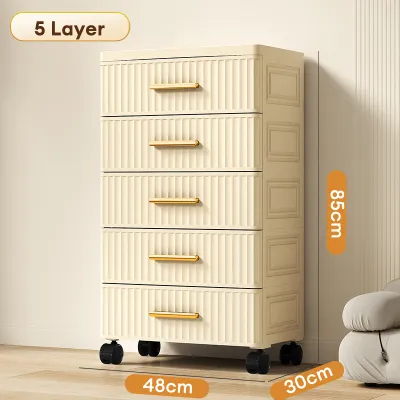
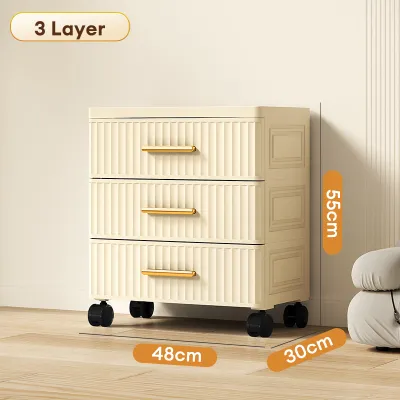
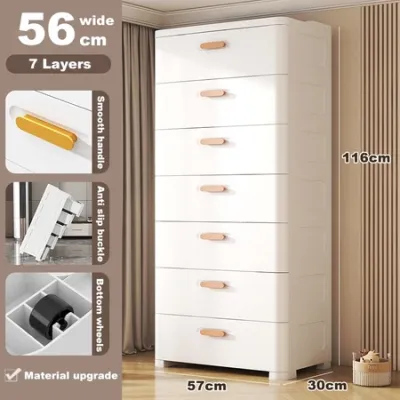
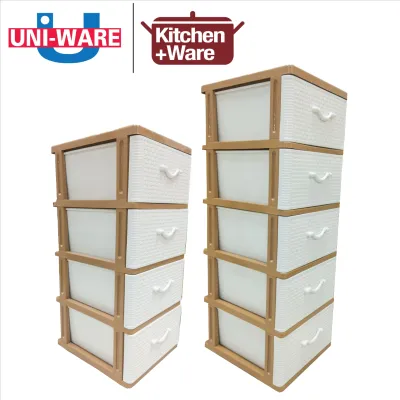
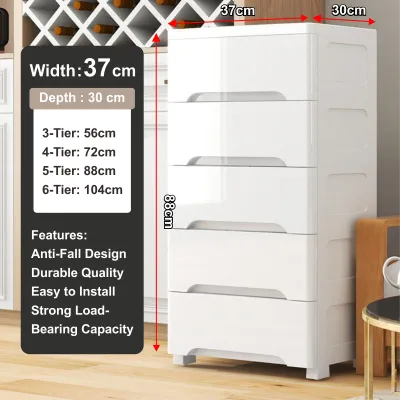
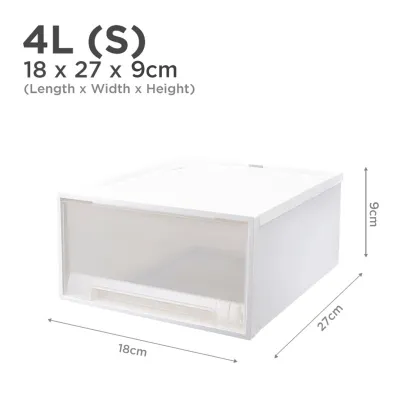
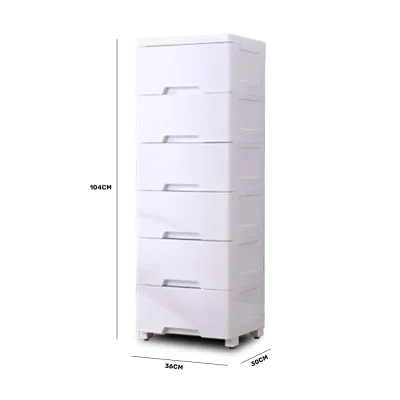
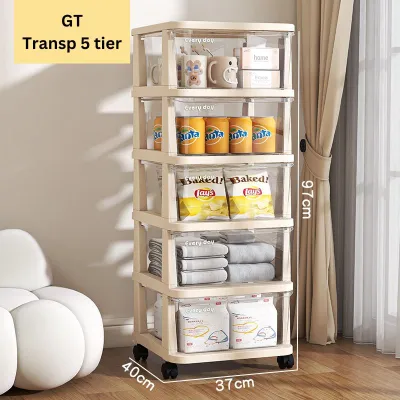
Prices are valid at publication and may change. Please refer to the product page for the latest price.
Do not forget to account for dynamic obstructions. Open your wardrobe doors fully—whether they are swing doors or sliding doors—and measure how much space they occupy. Check the swing radius of your bedroom door and ensure the drawer unit sits well outside this arc. Additionally, factor in window curtains or blinds that hang down, as well as skirting boards along the floor, which can prevent a drawer unit from sitting completely flush against the wall, stealing a few precious centimeters of clearance.
Understand Standard Dimensions for Plastic Storage Drawers
Plastic storage drawers come in several standard size categories, and understanding these ranges helps set realistic expectations for your HDB bedroom. Widths generally fall into three categories: slim (20 cm to 30 cm), medium (35 cm to 45 cm), and wide (50 cm to 60 cm or more). Slim units are excellent for squeezing into awkward gaps beside wardrobes, while medium units offer a practical balance for folded clothes, and wide units are best reserved for spacious corners where they will not impede traffic.

Depth is the single most critical dimension when it comes to preserving walkway space. Standard drawer depths typically range from 35 cm to 55 cm. A drawer with a depth of 50 cm or more might seem highly functional for holding bulky winter wear, but it will project significantly into a narrow walkway. For most HDB bedrooms, keeping the depth strictly under 45 cm is the safest way to ensure the unit does not become a physical obstacle.
Height and tier configurations also play a major role in both storage capacity and the visual weight of the room. Common configurations include 3-tier, 4-tier, and 5-tier units, ranging from roughly 60 cm to over 120 cm in height. While taller units maximize vertical space without increasing the floor footprint, they also carry more visual weight. A tall, bulky tower can make a small room feel claustrophobic, so it is important to balance your vertical storage ambitions with the overall scale of the bedroom.
Match Drawer Depth and Width to Your Room Layout
Choosing the right footprint requires matching the drawer dimensions directly to your specific bedroom layout. If you are placing drawers in a tight walkway—such as the passage between the foot of the bed and the wall—you should prioritize shallow-depth drawers of 35 cm to 40 cm. If you have an open corner or plan to place the plastic drawers inside a built-in wardrobe, you can safely opt for deeper units up to 50 cm, which maximize internal storage volume.
Width selection must also take into account the fixed fixtures in your room. Before committing to a wide drawer unit, check the locations of your power outlets, light switches, and air conditioning controllers. Placing a wide unit directly in front of these fixtures can block access or force you to pull the drawers away from the wall, further encroaching on your walkway. Ensure there is at least a 5 cm buffer between the side of the drawer unit and any wall-mounted switches.
Consider a simple decision framework based on common HDB bedroom layouts. For a layout where the bed is pushed against the window, the foot of the bed is often the only available wall space. Here, a long, low, and shallow drawer unit (depth of 40 cm, height of 80 cm) works best, keeping the walkway to the window clear. For a layout with a central bed and walkways on both sides, a slim, medium-height unit (width of 30 cm, depth of 45 cm) can sit beside the bed, serving as a dual-purpose nightstand and storage chest.
Evaluate Height and Stacking Limits for Safety and Access
When utilizing vertical space, safety must be your primary concern. Plastic storage drawers are inherently lightweight, which makes them easy to move but also susceptible to tipping. This risk increases significantly when multiple drawers are pulled out simultaneously, shifting the center of gravity forward. If you have young children or pets in the home, a tall, unanchored plastic tower poses a serious tip-over hazard.
To ensure safe daily use, keep the maximum height of your drawer unit within a comfortable reach zone. For most adults, a height of 100 cm to 120 cm allows you to access the top drawer easily without needing a step stool or straining your shoulders. Keeping the unit at or below chest height also ensures you can easily see inside the top drawer, making organization much more manageable.
If you are considering modular or stackable plastic drawers, always check the manufacturer’s guidelines regarding stacking limits. Most manufacturers specify a maximum number of tiers (typically no more than four or five units) to prevent the bottom drawers from buckling under the weight. Additionally, look for units that feature built-in interlocking joints or anti-tip connectors to secure the stacked modules together safely.
Common Sizing Mistakes to Avoid in Small Bedrooms
One of the most frequent mistakes is measuring only the static footprint of the drawer unit while ignoring the dynamic clearance required to use it. A drawer with a depth of 40 cm requires an additional 30 cm to 35 cm of clear space in front of it to pull the drawer out fully. If your walkway is exactly 60 cm wide, opening a 40 cm deep drawer will leave you with virtually no space to stand while accessing your items, forcing you to awkward angles.
Another common error is ignoring the visual bulk of the furniture. Opaque, dark-colored, or brightly colored plastic drawers can dominate a small room visually, making the space feel cluttered and small even if the physical dimensions technically fit. To mitigate this, opt for semi-translucent drawers, white or neutral frames, or units with clean, minimalist lines that blend seamlessly into the walls.
Finally, avoid the temptation to buy multiple mismatched plastic drawer units over time. While buying individual units as your storage needs grow seems convenient, it often results in awkward gaps that trap dust and waste usable space. Instead, plan your storage layout in advance and invest in a single, cohesive unit or a matching modular system that utilizes your available wall space efficiently.
Frequently Asked Questions (FAQ)
Can I use shallow plastic drawers under the bed instead of freestanding units?
Yes, under-bed plastic drawers are an excellent way to save walkway space in a compact HDB bedroom. Before purchasing, measure the vertical clearance under your bed frame, accounting for any central support legs or low-hanging side rails. Under-bed drawers offer superior dust protection compared to open storage boxes, but they require a clear floor area beside the bed to slide out fully, so ensure your bedside rug or nearby furniture does not block their path.
Do I need to anchor plastic storage drawers to the wall in an HDB bedroom?
Anchoring is highly recommended for any plastic drawer unit that exceeds 100 cm in height, especially if it is loaded with heavy items or used in a household with children. Because plastic is lightweight, a top-heavy unit can easily topple. To secure it, check your HDB wall type; concrete walls require masonry plugs and screws, while drywall partitions require specialized hollow-wall anchors. Always follow the manufacturer’s instructions for installing anti-tip straps.

Community discussion
Share your experience or ask a question. Comments are reviewed before publication.