
Choosing the right size adjustable coffee table for a compact Singapore apartment requires balancing its closed footprint with its fully expanded dimensions. In typical HDB flats and condominiums, every square centimetre counts, meaning the table must allow for comfortable traffic flow when closed while remaining highly functional when lifted or extended. By focusing on physical clearances, sofa proportions, and mechanism stability, you can select a versatile piece that enhances your living room without overcrowding it.
Measure Your Living Room Layout and Clearances
Before browsing designs, grab a measuring tape to map out the exact footprint your living room can accommodate. Start by measuring the distance from the front edge of your sofa to the opposite wall, TV console, or nearest piece of furniture. In compact Singapore living rooms, maintaining a clear walkway is essential for daily comfort and safety.
To ensure comfortable movement, aim for a clearance of at least 30 to 45 centimetres between the coffee table and the sofa when the table is in its closed position. If the table sits along a primary walkway through the living room, you will want to preserve a wider path of around 60 to 75 centimetres. These boundary lines establish the absolute maximum width and length your new furniture piece can occupy.
Products mentioned in this guide
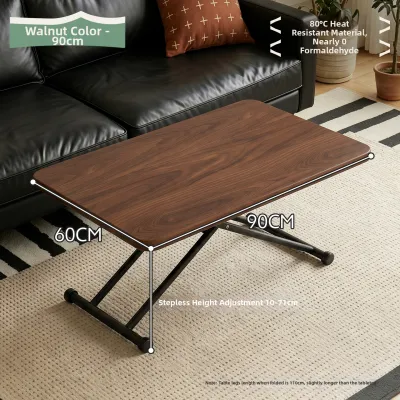
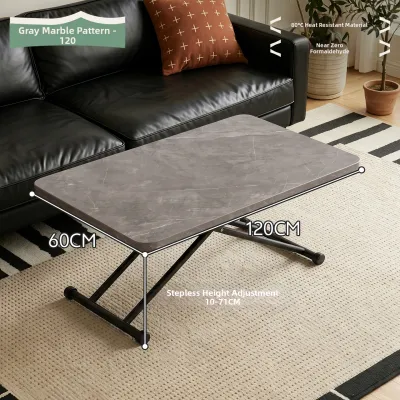
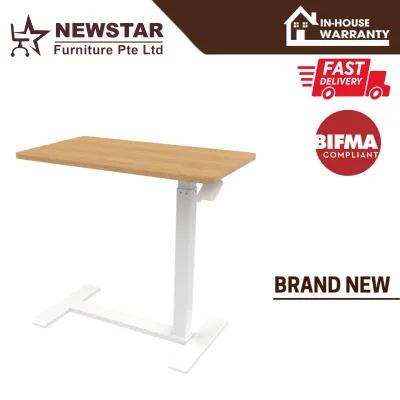
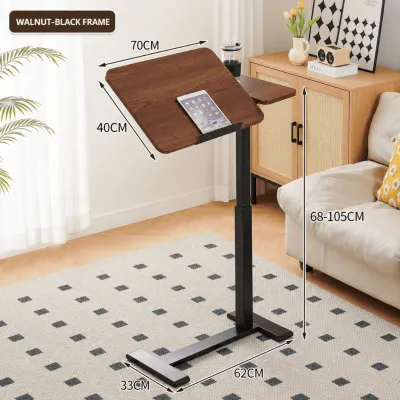
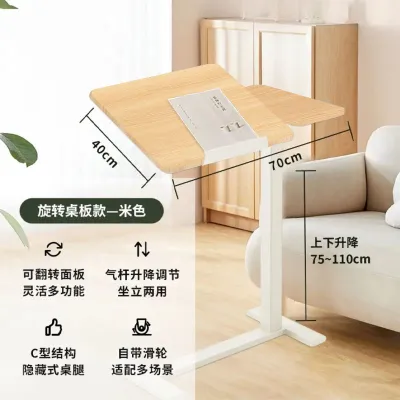
![[SG Seller]Sofa side severe beds table simple tea table adjustable small table movable coffee table Bedroom Bedside Table Bedside Supporter](https://img.lazcdn.com/g/p/d53beb4500f5a1aadaf841ebac01400f.jpg_400x400q80.jpg_.webp)
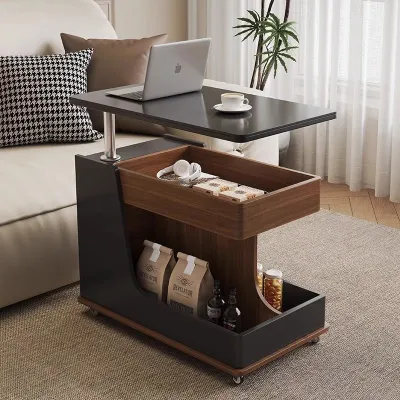
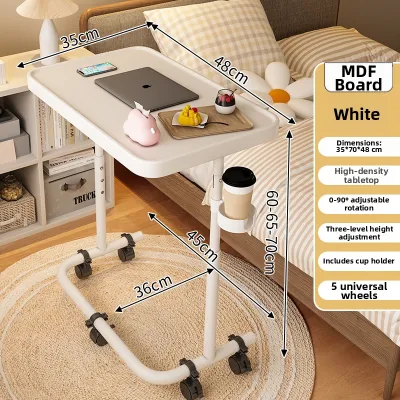
Prices are valid at publication and may change. Please refer to the product page for the latest price.
Next, project the spatial demands of the table when it is fully extended or lifted. Adjustable coffee tables often shift upward and outward, which alters their center of gravity and projects the tabletop closer to your seating. Measure the clearance remaining when the mechanism is fully deployed to ensure you still have enough legroom to sit comfortably without your knees knocking against the frame.
Match Table Dimensions to Your Sofa and Room Proportions
A well-proportioned coffee table anchors the living room visually and physically. As a general guideline, the total length of your coffee table should measure approximately two-thirds of your sofa’s seating width. This proportion ensures that everyone seated on the sofa can easily reach the table surface without the piece looking overwhelmingly large or awkwardly small.

Height alignment is equally critical for comfort and ergonomics. When the adjustable coffee table is in its lowered, standard position, its surface height should sit level with or slightly below your sofa’s seat cushions. This alignment allows you to set down drinks or remote controls naturally without straining or bending downward excessively.
The shape of the table base also influences how spacious your living room feels. Rectangular tables align cleanly with standard multi-seater sofas, maximizing the usable surface area within a narrow footprint. Square and round bases distribute their visual weight differently; round tables, in particular, soften the layout and eliminate sharp corners, making them easier to navigate around in tight quarters.
Evaluate the Adjustable Mechanism and Expanded Footprint
Adjustable coffee tables rely on internal mechanical hardware to transform, and each mechanism demands a different amount of physical clearance. For lift-top models, the tabletop typically moves both upward and forward toward the user. You must verify the manufacturer’s specified lift height and forward projection to ensure the raised surface does not collide with your knees or block your view of the television screen.
Additionally, check the depth and accessibility of any hidden storage compartments beneath the lift-top. While these compartments are excellent for tucking away remote controls, chargers, and books, they require vertical clearance to open. Ensure that accessing this storage does not require clearing off the entire tabletop every time you need to retrieve an item.
For drop-leaf, slide-out, or rotating expandable designs, you must evaluate the maximum dimensions when the table is fully open. Measure your living room layout against these fully expanded specifications to confirm that the extended leaves do not block doorways, balcony access, or adjacent walkways.
Before purchasing, inspect the mechanical hardware or review the manufacturer’s instructions regarding the locking mechanisms. High-quality hinges, gas struts, or spring-assisted lifts should operate smoothly without requiring excessive physical force. Look for built-in safety locks or soft-close features that prevent the tabletop from slamming down unexpectedly, which is particularly important in tight spaces where hands and fingers are close to the moving parts.
Check Stability, Weight, and Floor Protection
An adjustable coffee table must remain stable throughout its entire range of motion. When the tabletop is lifted or extended outward, the center of gravity shifts, which can increase the risk of tipping if the base is too light. Check the product specifications for the overall weight of the table; a heavier, well-weighted base provides the necessary counterbalance to keep the unit steady when the top is fully extended.
If you plan to move the table frequently to clear space for workouts or cleaning, look for models equipped with casters. However, you must verify that the wheels are made of a floor-safe material, such as polyurethane or soft rubber, to prevent scratching delicate vinyl, laminate, or parquet flooring common in Singapore homes. Ensure the casters feature robust, easy-to-engage locking mechanisms so the table remains firmly parked when you are using the lift-top function.
Always review the manufacturer’s maximum load capacity ratings for both the closed and expanded states. The mechanical arms and struts are designed to support a specific weight limit, which is typically much lower when the table is fully extended. Avoid placing heavy items, such as large stacks of books or heavy ceramic serving dishes, on the raised surface to protect the mechanical joints from warping or failing over time.
Common Sizing and Placement Mistakes to Avoid
One of the most common mistakes is failing to account for the “hidden” footprint of the table when it is fully deployed. A table that fits perfectly in its closed state can completely block your living room’s main walkway or press tightly against your shins once the top is lifted. Always map out both the minimum and maximum dimensions on your floor using masking tape before making a final decision.
Another frequent error is selecting a table with sharp, angular corners or an excessively wide base frame in a high-traffic zone. In compact HDB or condo layouts, tight pathways make accidental bumps more likely. Choosing rounded edges or a recessed base design helps minimize painful bumps and bruises as you navigate around the seating area.
Finally, do not forget to account for the height and texture of your living room rug. A thick, high-pile rug can interfere with the smooth movement of wheeled tables or prevent low-clearance bases from sliding easily. If your adjustable table features wheels or a low-slung frame, verify that the clearance height beneath the bottom shelf or base is sufficient to glide over your rug without snagging or dragging the fabric.
Frequently Asked Questions (FAQ)
Can I use a lift-top coffee table if my sofa has a low seat height?
Yes, you can use a lift-top coffee table with a low-profile sofa, but you must carefully check the table’s specific dimensions. If the raised height of the tabletop is too high relative to your low seat, it can create an uncomfortable, non-ergonomic angle for dining or working. Review the product specifications to find a model with a moderate lift height that positions the raised surface at a comfortable chest or elbow level when you are seated.
Are round or rectangular adjustable tables better for small HDB living rooms?
Both shapes offer distinct advantages depending on your layout priorities. Rectangular adjustable tables are highly space-efficient because they align flush with the straight lines of your sofa and walls, maximizing the usable surface area. Round adjustable tables, on the other hand, are excellent for smoothing out traffic flow in very tight spaces, as their lack of sharp corners prevents painful bumps and makes it easier to maneuver around the seating area.

Community discussion
Share your experience or ask a question. Comments are reviewed before publication.