
Quick Guide: Calculating Your Required Shoe Cabinet Capacity
Determining the ideal size for a rotating shoe cabinet requires a systematic approach that balances your household’s active footwear collection with the physical limitations of your entryway. To establish a reliable starting point, you can use a straightforward calculation: Total Required Capacity = (Number of Household Members × Average Number of Shoes per Person) + Guest & Seasonal Buffer. This formula ensures you account for every pair of shoes currently in use while leaving a practical margin for visitors or future purchases.
Unlike traditional static shoe racks, a rotating shoe cabinet is defined by its vertical tiers and the specific number of pairs each circular level can hold. Instead of simply measuring external width and depth, you must evaluate the cabinet’s capacity based on its internal layout and rotating mechanism. Finding the perfect fit requires matching your calculated shoe volume with the precise physical clearances needed for the unit to spin freely without striking walls, doors, or adjacent furniture.
Audit Your Shoe Collection: Everyday vs. Specialty Footwear
Before you begin comparing different cabinet designs or finishes, you must conduct a comprehensive physical audit of your household’s shoe collection. Relying on a rough estimate often leads to purchasing a cabinet that is either too small, resulting in immediate entryway clutter, or unnecessarily large, which wastes valuable floor space.
Products mentioned in this guide
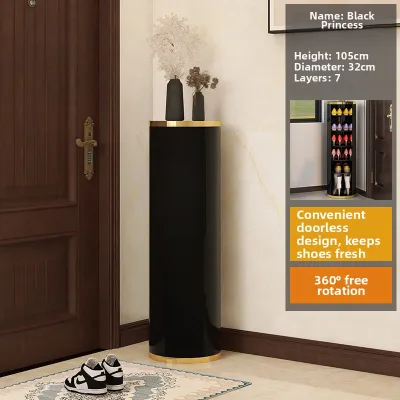
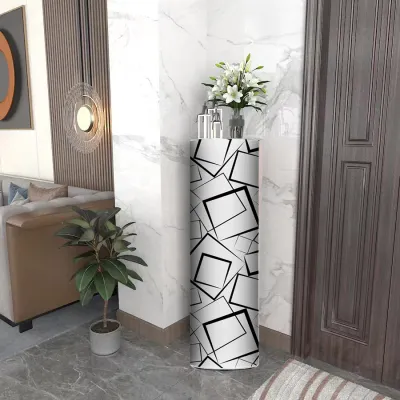
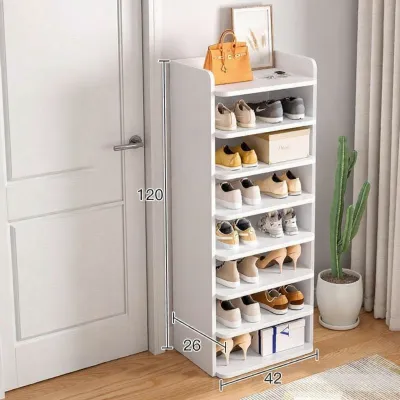
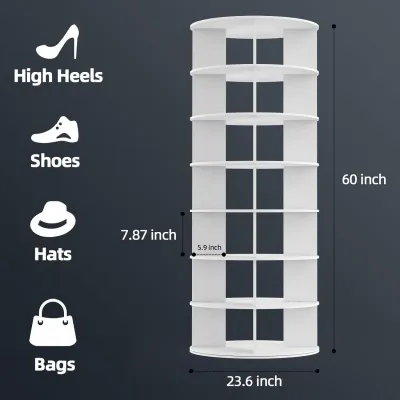
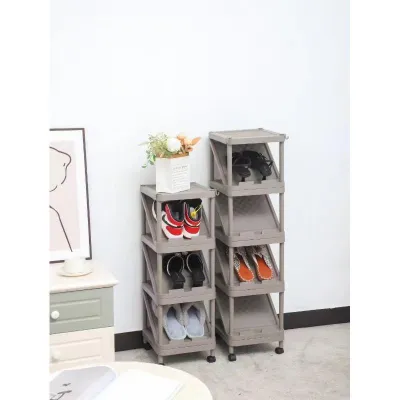
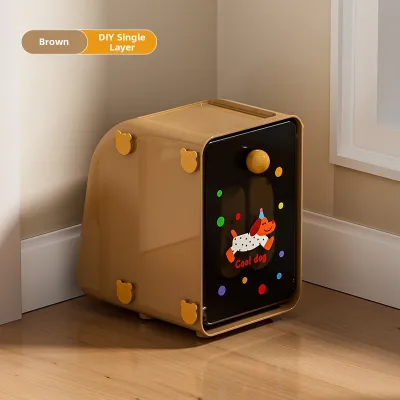
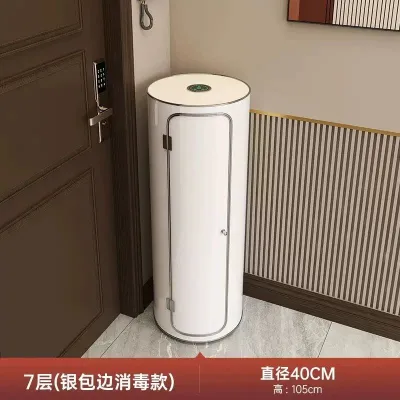
Prices are valid at publication and may change. Please refer to the product page for the latest price.

Counting Daily Wear vs. Bulky Footwear
To start your audit, gather all the shoes currently owned by your household and categorize them by their physical shape and size. Standard low-profile footwear, such as flat sandals, slippers, canvas sneakers, and low-cut loafers, represents your baseline storage unit. These items fit easily onto standard single-tier shelves without requiring extra vertical or horizontal clearance.
In contrast, specialty or bulky footwear requires a much more conservative capacity estimate. High heels, thick-soled running shoes, work boots, and high-top sneakers occupy significantly more physical volume. A single pair of heavy work boots or high heels can take up the horizontal space of 1.5 to 2 pairs of standard flat shoes, or they may require a higher vertical clearance that forces you to adjust the shelf height.
To prevent underestimating your storage needs, physically group your shoes into standard and bulky piles on the floor. This visual representation allows you to see exactly how much volume your collection occupies. It also helps you identify how many tiers will need to be configured with extra height to accommodate your tallest pairs without crushing or damaging the materials.
Adjusting for Household Growth and Collectors
When calculating your required capacity, it is vital to project your household’s needs at least two to three years into the future. If you have young children, their shoe sizes and storage requirements will change rapidly as they grow. A compact rotating cabinet that perfectly holds toddler shoes today will quickly become obsolete when those shoes are replaced by adult-sized sneakers.
For households with avid shoe collectors, fitness enthusiasts, or frequent shoppers, a strict one-in-one-out rule is rarely realistic. If your household tends to accumulate new footwear regularly, you should add a proactive 10% to 20% capacity buffer to your baseline calculation. This buffer ensures that your new purchases can be integrated seamlessly into the cabinet without causing overflow onto the entryway floor.
For more stable households where shoe numbers remain relatively constant, a smaller 5% buffer is usually sufficient. This minor margin accommodates occasional guest footwear or temporary seasonal changes, ensuring your rotating cabinet remains highly functional throughout the year without requiring a complete reorganization of your storage system.
Matching Your Shoe Count to Cabinet Tiers and Layout
With a finalized shoe count in hand, you can now translate that number into the specific structural metrics of a rotating shoe cabinet. This step involves understanding how the cabinet’s physical diameter and vertical tier count work together to deliver the storage capacity you need.
Understanding Pairs per Tier and Cabinet Diameter
The horizontal capacity of a rotating shoe cabinet is directly dictated by its outer diameter. Because these cabinets are cylindrical, a wider diameter creates a larger shelf circumference, allowing more pairs of shoes to be arranged side-by-side on each circular tier. This circular layout maximizes space efficiency, but it requires you to understand the exact dimensions of your footwear.
Always check the manufacturer’s technical specifications for the rated “pairs per tier” rather than assuming a universal standard. Depending on the design, a typical rotating cabinet might feature tiers that hold between 4 and 8 pairs of standard adult shoes. However, these ratings are generally based on average shoe sizes and widths.
If members of your household wear larger shoe sizes, such as men’s UK size 10 or above, the physical width of each pair will be greater than the manufacturer’s baseline testing standard. In this scenario, you must assume a lower actual capacity per tier. For example, a tier rated for 6 standard pairs might only comfortably hold 4 or 5 larger pairs without causing the shoes to overlap or press against the outer frame.
Calculating the Minimum Tiers Needed
To determine the vertical height and number of tiers required for your collection, apply the following division: Total Pairs Needed ÷ Actual Pairs per Tier = Minimum Number of Tiers Required. If your audited collection requires storage for 36 pairs, and your preferred cabinet model holds 4 pairs per tier, you will need a cabinet with at least 9 vertical tiers.
This calculation introduces an important spatial trade-off that you must resolve based on your home’s layout. A taller cabinet with more tiers offers a high storage capacity while maintaining a compact floor footprint, making it ideal for narrow entryways. However, a very tall cabinet can be more difficult for shorter household members or children to reach safely, and it requires careful vertical clearance planning.
Conversely, a wider cabinet with fewer tiers keeps all footwear within easy reach and provides excellent stability, but it demands a much larger floor footprint. Whichever configuration you choose, prioritize models that feature adjustable or removable shelf brackets. This structural flexibility allows you to customize individual tier heights, ensuring you do not waste valuable vertical space when storing flat sandals next to taller boots.
Measuring Your Entryway for a Rotating Shoe Cabinet
A high-capacity rotating shoe cabinet is an excellent space-saving tool, but it is only effective if it can function properly within your designated entryway. Because these units must spin to provide access to your shoes, measuring the physical space requires a different approach than measuring for a standard static cupboard.
Floor Footprint and the Hidden Rotation Radius
The most common installation mistake is measuring only the flat, square footprint of the cabinet’s base against the wall. Because a rotating cabinet spins on a central axis, it requires a complete, unobstructed circular clearance zone throughout its entire height. This means the actual usable radius of the space must be entirely free of walls, skirting boards, light switches, and adjacent furniture.
Before purchasing, mark the cabinet’s maximum rotation diameter on your floor using painter’s tape. Spin a measuring tape from the center point to ensure that no part of the cabinet’s outer edge will scrape against the wall or strike nearby obstacles during operation. You must also account for the swing arcs of your main entrance door, security gate, and any nearby built-in closet doors to prevent costly collisions.
Additionally, carefully inspect the floor surface where the cabinet will be positioned. A rotating cabinet requires a perfectly flat, level surface to operate smoothly and maintain its balance. Uneven floor tiles, prominent grout lines, or thick decorative rugs can cause the unit to wobble during rotation, which places unnecessary strain on the rotating bearings and compromises the cabinet’s overall stability.
Finally, do not forget to verify delivery access. A tall, fully assembled rotating cabinet can be difficult to maneuver through tight spaces. Measure your building’s lift doors, communal corridors, and your apartment’s front doorway to ensure the delivery team can safely transport the unit into your home without damaging the cabinet’s joints or finish.
Ceiling Height Limits and Overhead Obstructions
Because high-capacity rotating cabinets rely on vertical storage to maximize efficiency, they are inherently tall structures. You must measure the exact floor-to-ceiling height in your designated entryway spot, taking care not to rely on generic building plans which may not account for local renovations or structural variations.
Pay close attention to any overhead obstructions that could restrict the vertical clearance of the cabinet. In modern apartments and HDB flats in Singapore, entryways often feature false ceilings, exposed structural beams, low-hanging light fixtures, air conditioning bulkheads, or sprinkler pipes. Any of these elements can severely limit the maximum height of the cabinet you can install.
Always leave a small top clearance gap as specified by the manufacturer’s assembly instructions. This gap is necessary to facilitate the safe installation of the unit, especially if it must be stood upright after assembly, and it prevents the top of the rotating mechanism from scraping against your ceiling. If your ceiling is sloped or features a restrictive bulkhead, avoid forcing a tall cabinet into the space and opt for a wider, lower-profile model instead.
While material choices affect aesthetics, a material name alone does not guarantee moisture or scratch resistance; always inspect the quality of the protective finish, joint connections, and the manufacturer’s care instructions to ensure suitability for your entryway’s humidity levels.
Common Sizing Mistakes That Lead to Cluttered Entryways
To ensure your rotating shoe cabinet remains a safe and highly functional addition to your home, you should actively avoid several common sizing and organizational pitfalls during your selection process.
- Ignoring Weight Distribution: Overloading the top tiers of a tall rotating cabinet with heavy leather boots or thick work shoes while leaving the bottom tiers empty creates a top-heavy hazard. When the cabinet is spun, this uneven weight distribution can cause the unit to wobble or tip over entirely. To maintain structural stability, always place your heaviest footwear on the lowest tiers and store lightweight sandals, slippers, and children's shoes on the upper levels.
- Forgetting the "Guest Shoe" Factor: Failing to allocate dedicated space for visitors' footwear is a frequent oversight. When hosting guests, a lack of available cabinet space means shoes will inevitably end up piled across your entryway floor, creating a tripping hazard and instantly cluttering the space. Reserving at least one or two empty tiers specifically for guests keeps your foyer clean and organized during social gatherings.
- Overlooking Tier Depth: Do not assume that all shoe styles will fit perfectly within the circular shelves of the cabinet. Long men's shoes, pointy-toed heels, or shoes with extended heel tabs can easily overhang the front edge of a standard tier. This overhang can catch on the central support pillar or scrape against the outer frame of the cabinet during rotation, stalling the mechanism and potentially scuffing your expensive footwear.
- Buying for Exact Current Capacity: Purchasing a cabinet that fits your exact current shoe count with zero margin for error is a recipe for future clutter. The moment you purchase a new pair of shoes or host a single guest, your storage system will overflow. Always choose a cabinet with a capacity that slightly exceeds your current inventory to ensure long-term usability and peace of mind.
- Neglecting Stability and Anchoring: High-capacity rotating cabinets are tall and heavy when fully loaded. To ensure safety, verify the manufacturer's anchoring instructions. Many tall models require wall-anchoring brackets to prevent tipping during rotation. Always test the stability of the unit on your floor before loading it with shoes.
Frequently Asked Questions (FAQ)
Can I add more tiers to a rotating shoe cabinet later?
Most freestanding rotating shoe cabinets are engineered as fixed-height units with a central support pole of a predetermined length. While some specialized modular systems may offer extension poles or stackable add-on tiers, these are rare and must be certified by the manufacturer to ensure safety. It is highly recommended to purchase the correct capacity and height upfront rather than relying on future expansions, which can compromise the cabinet’s structural integrity and rotating smooth mechanism.
How do I accommodate tall boots in a standard rotating cabinet?
To store tall boots without damaging their shafts, look for rotating shoe cabinet models that feature removable or adjustable shelf brackets. Removing one or two shelves creates a double-height tier that easily accommodates tall boots, though this modification will reduce the total number of tiers and lower the overall pair capacity of the cabinet. You must account for this lost capacity during your initial sizing calculations to ensure you still have enough space for the rest of your shoe collection.

Community discussion
Share your experience or ask a question. Comments are reviewed before publication.