
Choosing the right robot vacuum cabinet size for a compact Housing & Development Board (HDB) living room requires balancing appliance functionality with space-saving furniture design. In smaller flat layouts, every square centimeter of floor space matters, making a dedicated cabinet an excellent way to conceal bulky docking stations. However, selecting a cabinet that is too small can cause docking failures, sensor errors, or moisture damage, while an oversized unit can easily obstruct main walkways. To find the perfect fit, homeowners must measure their specific vacuum dock, calculate internal clearance padding, and assess the surrounding traffic flow to ensure seamless integration.
Measure Your Available Space and Walkways
Before shopping for a robot vacuum cabinet, you must carefully evaluate the physical footprint of your HDB living room. Compact BTO (Build-To-Order) layouts often feature tight corners, narrow entryways, and multi-functional zones where furniture must be placed strategically. Begin by identifying potential locations for the cabinet, such as alcoves, the end of a TV console, or the space beside a sofa. Use a measuring tape to record the maximum width, depth, and height available in these target zones, taking note of any baseboards or wall skirting that might prevent the cabinet from sitting flush against the wall.
Equally important is maintaining clear walkways for daily foot traffic. In a typical HDB living room, main thoroughfares should remain completely unobstructed to allow household members to move freely without bumping into furniture. When planning the cabinet’s placement, ensure that its outer depth does not protrude into these high-traffic paths. If you choose a pre-assembled cabinet, verify its finished dimensions against your home’s doorway and lift access to guarantee it can be delivered safely into your living room.
Products mentioned in this guide
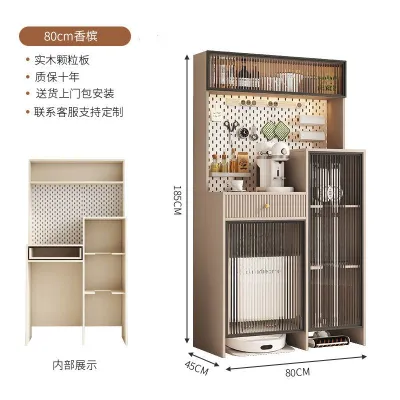
![[CozyNest ] Wood Sweeping Robot Storage Cabinet Companion Organizer Cabinet Housekeeping Cabinet Storage Organizer Bookshelf Cabinet Movable](https://img.lazcdn.com/g/p/3a9b4256cf4108d6718e7cf8ba79c697.jpg_400x400q80.jpg_.webp)
Prices are valid at publication and may change. Please refer to the product page for the latest price.
Determine the Required Cabinet Dimensions
To calculate the ideal internal dimensions of your cabinet, start by consulting the manufacturer’s specifications for your specific robot vacuum and docking station. Do not rely on generic measurements, as modern auto-empty and self-cleaning stations vary significantly in height and depth compared to basic charging docks. Measure the dock’s height with any top lids fully open, as you will need access to remove water tanks or dust bags.

Once you have the exact dimensions of the dock, add internal padding to prevent the robot from scraping against the cabinet walls during entry and exit. As a general rule, leave a buffer of space on all sides of the dock inside the cabinet. This internal clearance also accommodates cable management. Ensure there is enough depth behind or within the cabinet to house the power brick, excess cord length, and the plug itself without bending the cables at harsh angles. If your HDB flat has wall outlets positioned higher up, check if the cabinet design allows for clean cable routing through pre-drilled grommets or an open back.
Evaluate Clearance for Docking and Maintenance
A robot vacuum relies on infrared sensors, cameras, or laser navigation to find its way back to the charging station. If the cabinet opening is too narrow or lacks proper front clearance, the robot may struggle to dock, leading to dead batteries and incomplete cleaning cycles. Check your manufacturer’s manual for the recommended obstacle-free zone in front of the dock. This path must remain entirely clear of rugs, furniture legs, and decorative items so the robot has a straight line of sight to its home base.
Beyond navigation, you must evaluate the clearance required for routine maintenance. Many modern robot vacuums feature self-emptying bases that require you to lift out dirty water tanks or replace dust bags from the top of the station. If the cabinet’s internal height is too restrictive, you will be forced to slide the entire heavy docking station out every time you perform basic upkeep. To avoid this inconvenience, choose a cabinet with a hinged top lid, removable front panels, or generous vertical clearance that allows you to access the tanks comfortably from above. Additionally, because mopping robots return with damp pads, verify that the cabinet floor has a moisture-resistant finish or a protective tray to prevent water damage to the wood or laminate joints over time.
Integrate the Cabinet into Your Living Room Layout
Integrating a robot vacuum cabinet into a compact HDB living room is easiest when you choose multi-functional furniture. Instead of adding a single-purpose cabinet that consumes valuable floor space, look for side tables, shoe cabinets, or TV consoles that feature a dedicated bottom compartment for the vacuum. Freestanding cabinets offer the flexibility of easy relocation, while custom built-in carpentry can seamlessly blend the dock into your overall living room design.
When selecting the cabinet style, pay close attention to the door mechanisms. Standard swing doors require extra clearance to open, which can block narrow walkways in a small living room. Sliding doors, open-front designs, or cabinets with magnetic push-to-open bottom flaps are often more practical for tight spaces. Finally, match the cabinet’s finish, material, and hardware with your existing interior theme—whether it is Japandi, industrial, or modern minimalist—to ensure the appliance remains completely hidden while maintaining a cohesive aesthetic.
Common Sizing Mistakes to Avoid
One of the most common mistakes homeowners make is sizing the cabinet based solely on the robot vacuum’s circular body while ignoring the docking station’s footprint. Modern docks with auto-empty towers are substantially taller and deeper than the robot itself, requiring much larger cabinet cavities. Another frequent oversight is forgetting to measure the physical path leading from the cabinet opening to the main floor area. If the cabinet is tucked behind a dining chair or a heavy coffee table, the robot may get trapped before it even begins its run.
Lastly, do not overlook the depth of the power plug and the outlet placement. A standard wall plug can add several centimeters to the depth of the cabinet if the unit is pushed directly against the outlet. Always measure the total depth including the plugged-in cord, or opt for a cabinet with a recessed back panel to keep the furniture flush against the wall.
Frequently Asked Questions (FAQ)
Can I use a standard side table as a robot vacuum cabinet?
Yes, you can repurpose a standard side table, provided you verify its internal height, width, and structural stability. Ensure the table has an open front or a removable bottom shelf so the robot can enter and exit freely. Additionally, check the table’s load capacity and joint construction; the furniture must remain completely stable and wobble-free when the robot docks or undocks to prevent sensor misalignment.
How much front clearance does a robot vacuum need to dock properly?
The exact front clearance varies by model, so you should always consult your manufacturer’s guidelines. Generally, most robots require a clear, straight path directly in front of the dock to navigate successfully. This area must be free of obstacles, loose cables, and high-pile rugs to ensure the robot’s sensors can detect the docking signals without interference.

Community discussion
Share your experience or ask a question. Comments are reviewed before publication.