
Fitting a plastic storage drawer cabinet into a compact Singapore HDB bedroom requires balancing storage capacity with daily mobility. To keep walkways clear and ensure comfortable movement, the ideal cabinet footprint typically features a depth of 35 to 45 centimeters and a width of 40 to 50 centimeters. The critical factor is not just the static size of the cabinet, but the dynamic space it occupies when the drawers are fully extended. Maintaining a clear walkway of at least 60 centimeters when drawers are closed—and ensuring at least 30 to 40 centimeters of standing clearance when drawers are open—prevents the room from feeling cramped and allows for natural foot traffic.
Measure Your Bedroom Space and Walkway Clearance
Before browsing online marketplaces, map out the physical boundaries of your bedroom. Identify the exact zone where the plastic storage drawer cabinet will stand, such as the gap beside the bed, an unused corner, or opposite the door. Each location presents unique spatial constraints.
Using a metal measuring tape, record the precise width, depth, and height of the floor area. Do not rely on blueprint dimensions. When measuring depth, account for skirting boards, which typically protrude one to two centimeters and prevent the cabinet from sitting flush against the wall. Measure from the outer edge of the skirting board to avoid purchasing a unit that sticks out too far.
Products mentioned in this guide
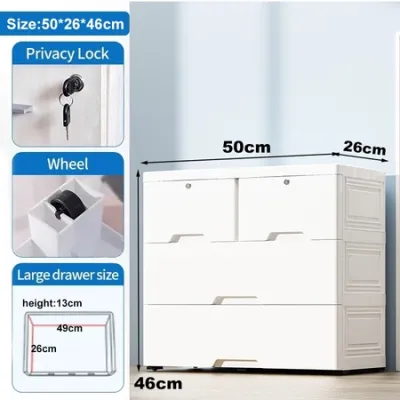
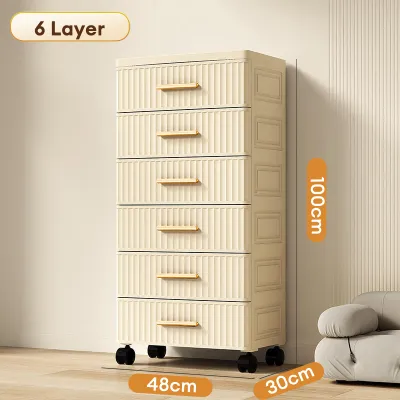
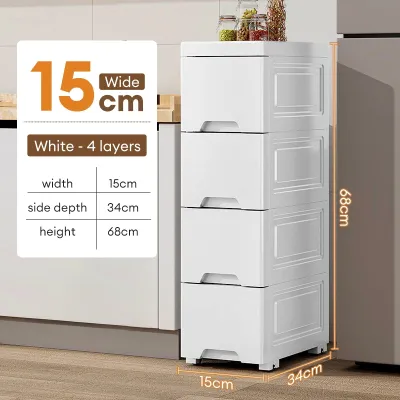
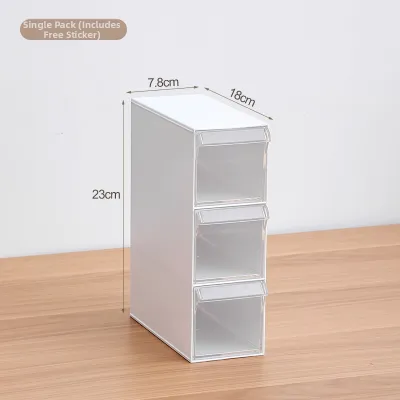
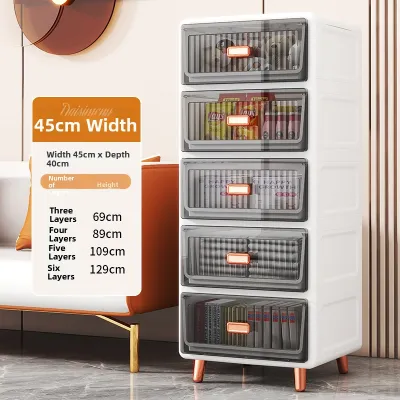
Prices are valid at publication and may change. Please refer to the product page for the latest price.
Additionally, locate all wall-mounted fixtures. Power outlets and light switches must remain accessible. If the cabinet blocks an outlet, you may have to pull it forward, consuming valuable walkway space. Also, account for the swing arcs of nearby doors, ensuring they can open fully without colliding with the cabinet.
Finally, apply standard clearance rules. A functional walkway requires a minimum width of 60 centimeters for a person to pass through sideways, though 70 to 75 centimeters is recommended for forward-facing movement. Ensure the remaining floor space meets these thresholds.
Evaluate External Footprint and Internal Drawer Capacity
When shopping, do not confuse the external dimensions of the frame with the actual storage space inside the drawers. Plastic cabinets often feature double-wall construction and integrated drawer tracks. These design elements are essential for structural integrity, but they can consume internal space, making the usable width and depth of an individual drawer three to five centimeters smaller than the external specifications.

To maximize efficiency, compare the manufacturer’s detailed specifications. If you plan to store bulky items like winter wear or extra bedsheets, you will need a deeper external footprint of 45 to 50 centimeters. However, if your primary goal is to organize smaller items like socks or t-shirts, a shallower cabinet with an external depth of 35 to 40 centimeters is far more appropriate, preserving precious floor space.
The height of the cabinet is another critical dimension. Plastic drawer towers are commonly available in configurations ranging from three to six tiers. While a taller unit provides more vertical storage without expanding the floor footprint, ensure the top surface remains at a usable height. A cabinet taller than 120 centimeters may block natural light from a window sill or make it difficult to reach items on the top shelf.
Furthermore, consider how the height interacts with wall-mounted air conditioning units or wall switches. In many HDB layouts, placing a tall cabinet directly beneath an air conditioner can restrict airflow or make filter maintenance difficult. Aim for a height that leaves at least 30 centimeters of clearance below any wall-mounted fixtures.
Space-Saving Placement Strategies for Compact Layouts
Integrating a new piece of furniture into a small bedroom often requires creative layout adjustments. One effective strategy is to prioritize vertical space over horizontal floor area. Instead of selecting a wide, low-profile three-drawer chest, opt for a tall, narrow five-drawer tower. This vertical approach allows you to store the same volume of items while reclaiming up to 50% of the floor space, leaving walkways unobstructed.
Another smart placement strategy involves identifying spatial dead zones. These are areas of the room that are typically left empty because they are too small for standard wooden furniture. For instance, the narrow gap between the side of your bed and the wall is an ideal spot for a slim plastic drawer cabinet. Placing a 30-centimeter-wide unit here can serve a dual purpose, acting as both storage and a compact bedside table.
You can also position the cabinet adjacent to your built-in wardrobe. Many HDB bedrooms feature wardrobes that do not extend fully to the adjacent wall, leaving a small alcove. Placing a matching plastic drawer unit in this alcove creates a cohesive look while utilizing space that would otherwise collect dust.
For maximum flexibility, consider modular or stackable plastic drawer systems. Unlike traditional solid-wood chests, modular plastic units allow you to purchase individual drawer compartments and stack them to your desired height. If you decide to rearrange your bedroom layout in the future, you can easily disassemble the stack and place individual drawers under the bed or inside the wardrobe.
Common Sizing and Clearance Mistakes to Avoid
The most frequent mistake homeowners make is failing to account for the drawer extension depth. A cabinet may seem like a perfect fit when its drawers are closed, but once you pull a drawer out, it projects significantly into the room. For example, a cabinet with a static depth of 40 centimeters will require an additional 30 to 35 centimeters of clearance when the drawer is fully extended. If your walkway is only 50 centimeters wide, opening the drawer completely will block the path entirely.
Another common oversight is ignoring the swing radius of nearby doors and drawers. If you place the plastic cabinet too close to your wardrobe, the wardrobe doors may strike the cabinet when opened. Similarly, if the cabinet is positioned behind the main bedroom door, it can prevent the door from opening fully, creating a frustrating bottleneck at the entrance of your room. Always map out the intersecting paths of all doors and drawers before finalizing your purchase.
Finally, avoid relying solely on visual estimates or product photos from online marketplaces. Photos can be highly deceptive, often using wide-angle lenses to make a cabinet appear larger or smaller than it actually is. Always locate the exact metric dimensions listed in the product description. Use masking tape to mock up the cabinet’s footprint on your bedroom floor to visualize how the unit will impact your movement.
Frequently Asked Questions (FAQ)
Can I place a plastic drawer cabinet behind the bedroom door?
Yes, you can place a plastic drawer cabinet behind the bedroom door, but only if you carefully calculate the door’s swing arc first. Measure the exact distance from the door hinge to the wall when the door is opened to its natural resting point. The depth of your plastic cabinet must be strictly less than this distance to prevent the door from slamming into the unit. Additionally, ensure that the cabinet does not block access to the room’s main light switch, which is typically located right next to the door frame, and verify that the placement does not restrict emergency exit paths.
Are slim plastic drawer cabinets stable enough for daily use?
Slim plastic drawer cabinets can be highly stable if you follow the manufacturer’s guidelines and load them correctly. Before purchasing, check the specified weight capacity per drawer and the overall structural limit of the unit. To prevent the cabinet from tipping forward when a drawer is fully extended, always place heavier items, such as jeans or books, in the bottom drawers, and reserve the top drawers for lightweight items like socks or underwear. For added safety, look for models that feature a wider base design, interlocking drawer mechanisms, or built-in wall-anchoring slots.

Community discussion
Share your experience or ask a question. Comments are reviewed before publication.