
Fitting a plastic drawers cabinet into a compact Singapore HDB bedroom requires balancing storage capacity with comfortable physical movement. To prevent the room from feeling cramped or blocking essential walkways, the ideal cabinet depth typically ranges between 35 to 45 centimeters, while the width must be carefully matched to your remaining wall space. The key is ensuring that you maintain a clear clearance zone so that drawers can open fully without colliding with your bed frame, wardrobe doors, or walking paths. By taking precise measurements of both the closed footprint and the fully extended drawer depth, you can select a highly functional storage unit that keeps your bedroom organized and easily navigable.
Measure Your Available Floor Space and Walkway Clearance
Before browsing online marketplaces or visiting local furniture shops, you must map out the physical boundaries of your bedroom. Start by identifying the primary walking paths that you use daily. In a typical HDB layout, these paths run from the bedroom entryway to the sides of the bed, the wardrobe, and the en-suite bathroom if your master bedroom has one. These high-traffic zones must remain completely unobstructed to ensure a smooth flow of movement throughout the day.
According to standard home design guidelines, a comfortable walkway for a single person requires a minimum width of 60 to 70 centimeters. Any furniture piece that encroaches on this space will force you to squeeze past sideways, creating an uncomfortable and frustrating daily routine. When planning where to place your plastic drawers cabinet, mark out this clearance zone on your floor using masking tape to visualize how much space remains for furniture.
Products mentioned in this guide
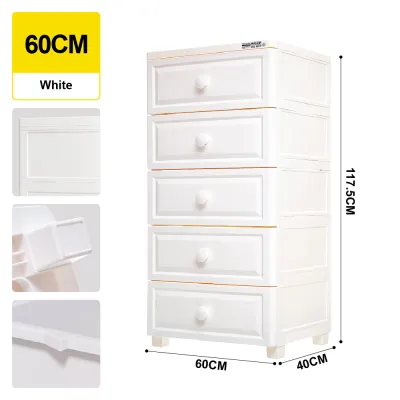
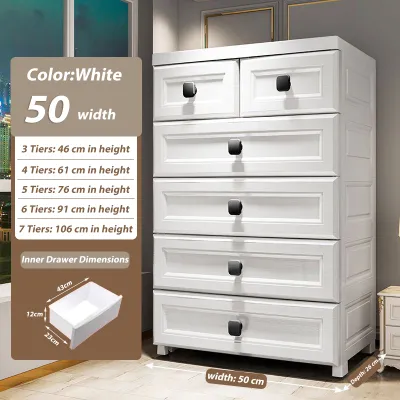
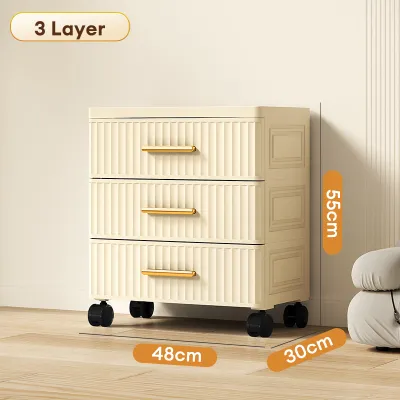
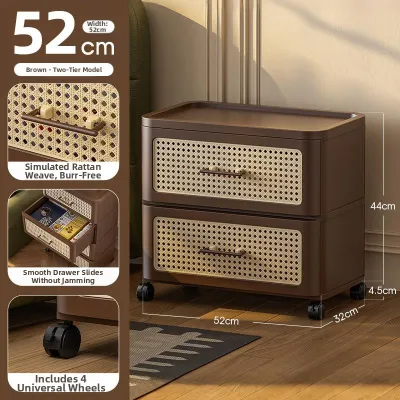
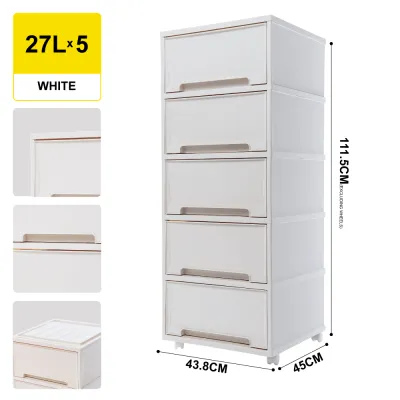
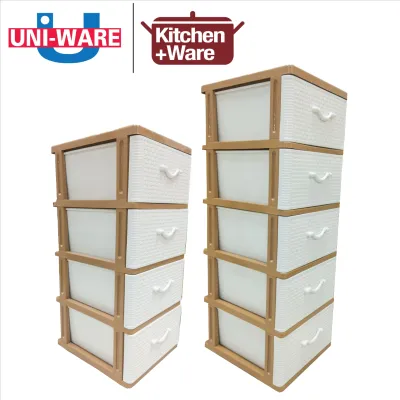
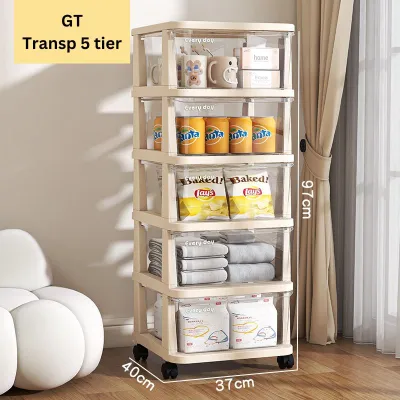
Prices are valid at publication and may change. Please refer to the product page for the latest price.
Crucially, you must account for the physical space required when the drawers are fully pulled out. A cabinet might seem to fit perfectly when closed, but opening a drawer can instantly block a walkway or strike the edge of your bed. Measure the depth of the cabinet frame and add the length of the drawer slide when fully extended. This combined measurement represents the true operational footprint of the cabinet, which must fit comfortably within your available floor space without crossing into your designated walking paths.
Calculate the Maximum Cabinet Footprint
Translating your room measurements into a maximum allowable footprint prevents costly purchasing mistakes. Begin by measuring the total length of the wall where you plan to position the cabinet. From this total length, subtract the required walkway clearance of 60 to 70 centimeters, as well as any clearance needed for adjacent furniture like bedside tables or wardrobe doors. The remaining dimension is the absolute maximum width your new cabinet can occupy.

Next, determine the maximum allowable depth for the cabinet. This is often the most critical dimension in a compact HDB bedroom, where the gap between the foot of the bed and the opposite wall is frequently narrow. Measure this distance carefully and subtract the space needed to stand comfortably while opening the drawers. If the remaining space is less than 40 centimeters, you will need to look specifically for ultra-slim cabinet models designed for tight spaces.
Use these calculated limits as strict filters when shopping. When browsing product listings, ignore generic marketing terms like “compact” or “mini” and look directly at the detailed specification diagrams. If a manufacturer does not provide exact depth, width, and drawer extension measurements, treat that product with caution. Having these precise limits on hand allows you to quickly eliminate units that are too deep or too wide, saving you the hassle of returning bulky items that do not fit.
Evaluate Plastic Drawer Configurations for Tight Spaces
Once you know your maximum footprint, you can evaluate different configurations to find the one that maximizes storage. Tall, narrow drawer towers are highly effective for small bedrooms because they utilize vertical space instead of consuming valuable floor area. A five-tier or six-tier narrow cabinet can hold a significant amount of clothing or accessories while occupying a minimal footprint. However, ensure the unit is stable and check if the manufacturer recommends anchoring it to the wall to prevent tipping when multiple drawers are open.
Conversely, wide, low-profile units offer a different set of advantages. While they take up more floor space, their lower height allows the top surface to double as a practical vanity, a bedside table, or a charging station for your devices. The trade-off here lies in the depth of the individual drawers. Deeper drawers are excellent for bulky items like winter wear or extra bed sheets, but they require a deeper cabinet frame and a wider clearance zone to open fully. Shallow drawers are often better suited for daily wear, undergarments, or accessories, and they keep the overall cabinet depth to a minimum.
Modular or stackable plastic units provide excellent flexibility for changing storage needs. These systems allow you to purchase individual drawer units and stack them to your desired height, adapting to the exact vertical space available under windows or next to wardrobes. If you move to a different room or decide to rearrange your layout, modular units can be separated and repurposed as under-bed storage or placed inside a built-in wardrobe, making them a highly versatile choice for HDB living.
Check Door Swings, Power Outlets, and Ventilation
A successful furniture layout must integrate seamlessly with the existing fixtures and architectural features of your bedroom. Start by checking the swing paths of all doors in the vicinity. This includes the main bedroom door, en-suite bathroom doors, and wardrobe doors. Even sliding wardrobe doors require a small amount of clearance to operate smoothly without scraping against adjacent furniture. Ensure your proposed cabinet location lies completely outside these operational arcs.
Power outlets and light switches are another critical consideration. Blocking a wall outlet with a plastic cabinet not only limits your access to electricity but can also create safety hazards if plugs and cables are bent tightly against the wall. If you must place the cabinet near an outlet, ensure there is sufficient clearance to plug in your chargers safely without pushing the cabinet forward. Keeping switches accessible prevents you from having to reach awkwardly behind furniture in the dark.
Finally, consider the airflow and ventilation patterns in your bedroom. Avoid placing tall plastic cabinets directly beneath air conditioning units where they might obstruct the downward flow of cool air, or too close to ceiling fan paths. If the cabinet is positioned near a window, ensure it does not block natural light or prevent you from opening the window fully for ventilation. Proper placement ensures your room remains bright, airy, and comfortable to inhabit.
Common Sizing Mistakes to Avoid
One of the most frequent errors when buying a plastic drawers cabinet is relying solely on the closed dimensions listed on the product page. Many buyers measure their floor space, find a cabinet that fits the static footprint, and only realize after assembly that they cannot open the drawers fully without hitting the bed frame. Always verify the fully extended depth of the drawers before making a purchase, and add a few centimeters of buffer space for your own body clearance while standing in front of the unit.
Another common oversight is failing to account for wall skirting boards or baseboards. These wooden or tiled borders run along the bottom of the walls and typically protrude by one to two centimeters. If your measurements are extremely tight, the skirting board will prevent the cabinet from sitting completely flush against the wall, pushing the entire unit forward into your walkway. Always measure from the edge of the skirting board rather than the bare wall to ensure your clearance calculations remain accurate.
Lastly, avoid the temptation to assume that all “slim” or “space-saving” cabinets share the same standard dimensions. There is no universal industry standard for these terms, and a cabinet labeled “slim” by one brand might be significantly wider or deeper than one from another manufacturer. Always rely on the exact millimeter or centimeter measurements provided in the product specifications. Taking the time to verify these details prevents the frustration of dealing with ill-fitting furniture that disrupts the flow of your bedroom.
Frequently Asked Questions (FAQ)
Can I place a plastic drawers cabinet in front of a window?
Placing a plastic cabinet directly in front of a window is generally not recommended unless the unit is low enough to sit entirely below the windowsill. A tall cabinet will block natural light from entering your bedroom, making the space feel smaller and darker, while also obstructing natural cross-ventilation. Additionally, prolonged exposure to direct sunlight and ultraviolet (UV) rays can degrade the plastic material over time, leading to unsightly discoloration, warping, and brittleness. It is also essential to maintain clear, unobstructed access to window latches for safety, emergency egress, and regular cleaning.
How much weight can a typical plastic drawer hold?
The weight capacity of a plastic drawer cabinet varies significantly depending on the quality of the plastic, the thickness of the frame, and the design of the drawer slides. To find the exact load limits for your specific model, always consult the manufacturer’s product manual, packaging labels, or official specifications. Overloading a plastic drawer can cause the bottom panel to bow downward, which prevents the drawer from sliding smoothly and can eventually crack the plastic frame. To maintain structural stability and prevent the cabinet from tipping forward, distribute your items carefully by placing heavier belongings in the bottom drawers to keep the center of gravity low.

Community discussion
Share your experience or ask a question. Comments are reviewed before publication.