
Sizing a fabric wardrobe cloth cabinet for a Housing & Development Board (HDB) bedroom requires balancing storage capacity with the physical limits of compact room layouts. The ideal size depends on measuring the exact floor footprint, subtracting necessary clearances for doors and walkways, and verifying the external frame dimensions of the unit rather than relying solely on internal storage capacity claims. Because HDB bedrooms often serve multiple functions, choosing a fabric wardrobe that fits comfortably ensures the room remains functional, accessible, and safe.
Measure Your HDB Bedroom Space Accurately
To find the maximum allowable footprint for a fabric wardrobe cloth cabinet, start by measuring the physical dimensions of the designated wall space. Use a reliable measuring tape to record the usable wall length from corner to corner, as well as the floor-to-ceiling height. HDB bedrooms, especially in newer Build-To-Order (BTO) flats, often feature specific structural columns, recessed areas, or pre-installed fixtures that can restrict where a freestanding wardrobe can stand.
Next, identify and map out any permanent obstacles along the wall. Take note of the location of electrical power sockets, light switches, skirting boards, and window sills. A fabric wardrobe must not block access to power outlets that you need for daily electronics, nor should it press tightly against light switches. Skirting boards at the base of the wall will also prevent the wardrobe frame from sitting completely flush, so measure the depth of these boards to calculate the true usable floor area.
Products mentioned in this guide
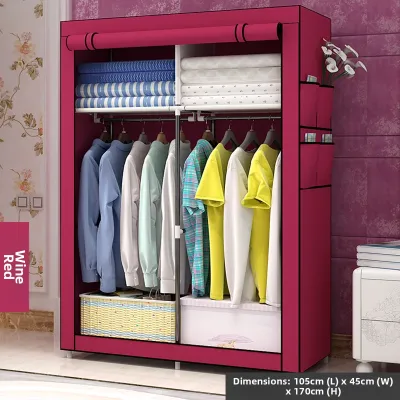
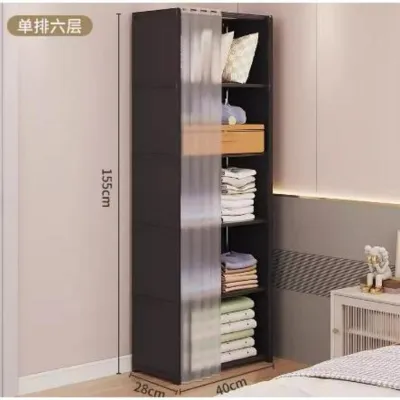
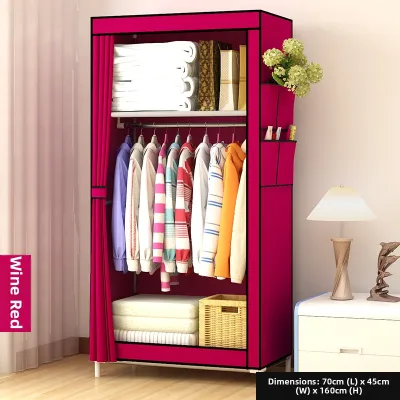
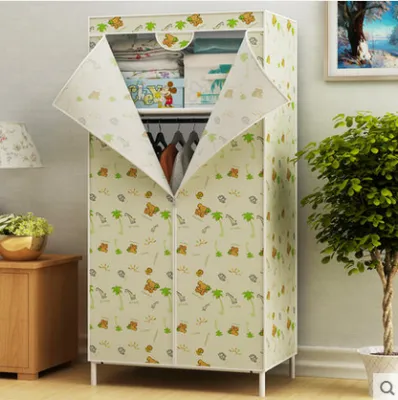

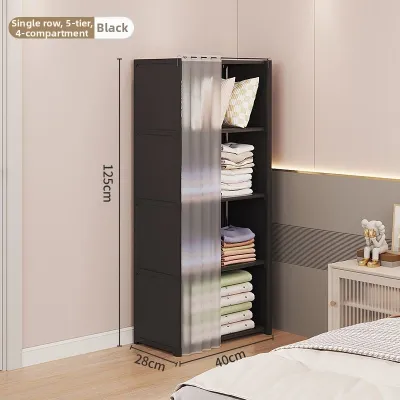
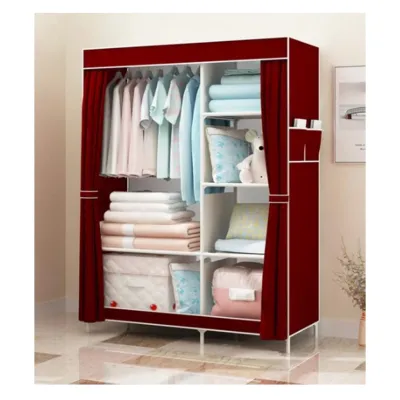

Prices are valid at publication and may change. Please refer to the product page for the latest price.
Finally, map out the positions of your existing furniture, such as the bed frame, bedside tables, and study desk. In a typical HDB layout, the bed occupies the central portion of the room, leaving limited pathways on either side. Mark the remaining open floor area to establish a clear boundary for the new wardrobe. This step ensures that the wardrobe does not overlap with other essential furniture pieces or restrict access to drawers and desk chairs.
Calculate Clearance for Doors and Walkways
A common oversight when placing a fabric wardrobe cloth cabinet is failing to account for the movement of doors and people within the room. Begin by calculating the swing radius of the main bedroom door and any adjacent en-suite bathroom doors. The wardrobe must be positioned far enough from these entryways to prevent collisions when doors are opened fully. If the door swings inward toward the wardrobe area, ensure there is a generous buffer zone to avoid damaging the fabric cover or the door itself.

In addition to door swings, you must maintain a comfortable walking clearance around the bed. For a standard HDB bedroom layout, a clear walkway between the edge of the bed and the front of the wardrobe is essential for daily movement. This pathway allows you to walk comfortably without having to squeeze sideways, which is particularly important when carrying laundry or moving around in low-light conditions.
You must also factor in the space required to operate the fabric wardrobe’s own opening mechanisms. Unlike wooden wardrobes with sliding or hinged doors, fabric models typically feature zippered doors, roll-up curtains, or Velcro flaps. To unzip, roll up, or secure these fabric panels, you need sufficient standing room directly in front of the unit. Ensure that your body and arms have enough space to operate these closures comfortably without bumping into the bed frame or other nearby furniture.
Match Fabric Wardrobe Dimensions to Your Layout
Once you have established your room’s physical limits and clearance zones, you can translate these measurements into target dimensions for your fabric wardrobe cloth cabinet. When selecting the width, choose a model that fits comfortably within your designated wall segment while leaving a small margin of space on both sides. This side clearance makes it much easier to slide the wardrobe into position during assembly and allows you to clean the surrounding floor area without moving the entire unit.
The depth of the wardrobe is a critical factor for narrow HDB bedrooms. Standard wardrobes designed for hanging adult clothes typically require a depth that accommodates standard clothes hangers without bending them. If your bedroom layout is exceptionally narrow, you might need to consider a shallower, folding-only fabric wardrobe. These shallower models are excellent for storing folded garments, bed linens, and storage boxes, and they preserve valuable floor space in tight walkways.
Height is another dimension that requires careful verification, especially in rooms with overhead fixtures. Measure the vertical clearance from the floor to the lowest point of any ceiling fans, air conditioning units, or overhead lighting fixtures. A tall fabric wardrobe must never interfere with the airflow of an air conditioner or get too close to the rotating blades of a ceiling fan. Ensuring a safe gap at the top also makes it easier to access any storage space on top of the wardrobe frame if the manufacturer’s instructions permit it.
Check Structural and Assembly Requirements
Before finalizing your purchase, it is essential to verify the manufacturer’s detailed product specifications rather than relying on general size categories. Always check the exact external frame dimensions provided in the product manual or specification sheet. The outer metal or wooden poles and plastic corner connectors often add a few centimeters to the overall width and depth of the unit, which can prevent a tight-fitting wardrobe from sliding into a precise alcove.
Examine the base structure and joint connections of the fabric wardrobe to ensure it will remain stable on your bedroom floor. Look for models with sturdy, reinforced joints and a balanced leg design that distributes weight evenly across flat flooring. Because fabric wardrobes are lightweight by nature, their stability depends heavily on the quality of their frame assembly and how securely the joints fit together during setup.
Additionally, determine if the unit requires wall anchoring to prevent tipping, which is a critical safety consideration for households with children or pets. Some manufacturers include anti-tip straps or wall-mounting hardware with their wardrobes. If you plan to store heavier items or if the wardrobe is particularly tall and narrow, check the assembly instructions to see if anchoring is recommended, and ensure your HDB walls are suitable for the required mounting hardware.
Common Sizing Mistakes to Avoid
One of the most frequent mistakes when buying a fabric wardrobe cloth cabinet is forgetting to account for the thickness of skirting boards. These wooden or tiled boards run along the base of HDB bedroom walls and can prevent the wardrobe’s frame from sitting completely flush against the wall. This creates an unexpected gap at the back, pushing the entire unit forward into your walking path and potentially blocking doors or drawers.
Another common error is relying solely on the manufacturer’s internal storage capacity claims or promotional photos instead of verifying the actual external footprint. A wardrobe might be advertised as holding a large number of garments, but the physical frame might still be too bulky or too wide for your specific room layout. Always prioritize the physical external dimensions over estimated storage volumes to ensure a proper fit.
Finally, avoid placing the fabric wardrobe too close to the bed or other large furniture pieces. If the clearance is too tight, you will find it difficult to fully unzip, roll up, or secure the fabric doors. This lack of space not only makes daily use frustrating but can also put unnecessary strain on the zippers and fabric seams, leading to premature wear and tear of the wardrobe cover.
Frequently Asked Questions (FAQ)
Can I place a fabric wardrobe in front of a window?
Placing a fabric wardrobe cloth cabinet directly in front of a window is generally not recommended due to several spatial and environmental trade-offs. Blocking a window restricts natural light and reduces fresh air ventilation, which can make a compact HDB bedroom feel dark and damp. Additionally, you must ensure that the wardrobe does not obstruct the window’s opening mechanism or block emergency access. Over time, direct exposure to sunlight through the window can also cause the fabric cover to fade, weaken, and degrade, while exposing your stored clothing to potential sun damage and moisture from condensation.
How do I prevent a tall fabric wardrobe from tipping over?
To keep a tall fabric wardrobe stable and prevent it from tipping over, always distribute the weight of your items evenly. Place heavier items, such as storage boxes, shoes, or folded winter wear, on the bottom shelves to lower the unit’s center of gravity, and reserve the upper hanging rods for lighter garments. Check the product manual to see if the manufacturer has provided anti-tip straps or wall anchors, and install them according to the instructions. If the wardrobe feels unstable on your bedroom flooring, consult the manufacturer’s guidelines for leveling the frame or securing it safely.

Community discussion
Share your experience or ask a question. Comments are reviewed before publication.