
Finding the perfect balance between keeping your shoes pristine and maintaining a clear, safe entryway is a common challenge in Singapore’s HDB flats. To select a dustproof shoe rack that fits your home without creating a physical bottleneck, you must align the cabinet’s external dimensions with the specific spatial limits of your foyer. A successful installation preserves a comfortable walking path, allows your main door to swing fully open, and complies with local safety standards, all while keeping your footwear collection shielded from dust and humidity.
Measuring Your HDB Entryway and Walkway Clearance
Before browsing online marketplaces, establish the maximum footprint your entryway can accommodate. Measure the total depth from the wall to the edge of your internal foyer or walkway boundary. In compact BTO flats, even a few centimeters of miscalculation can result in a cabinet that protrudes awkwardly into your daily path.
Next, analyze the swing radius of your main door. Open the door completely and measure the distance from the wall to the door’s edge at its widest point, accounting for handle protrusion and hinge placement. If your shoe rack is too deep, the door or its handle may repeatedly strike the cabinet, causing cosmetic damage.
Products mentioned in this guide
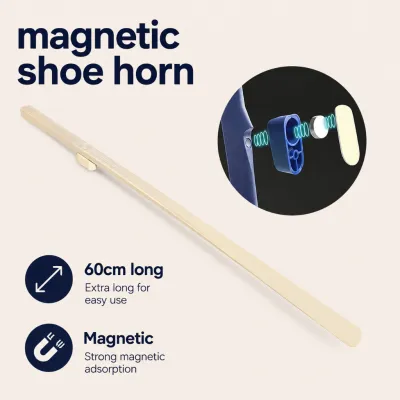
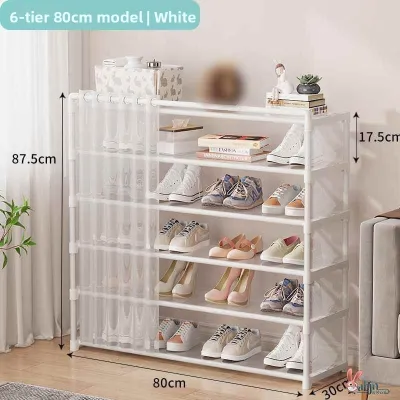
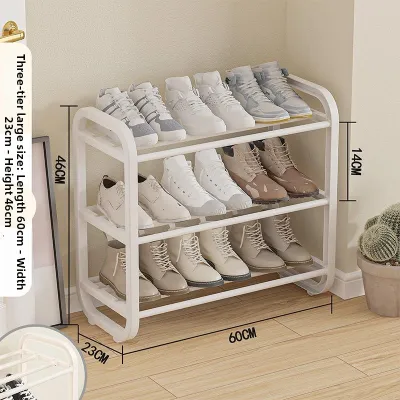
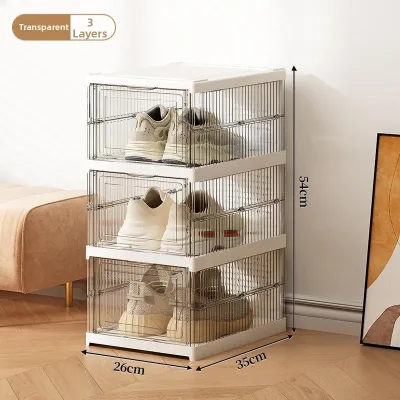
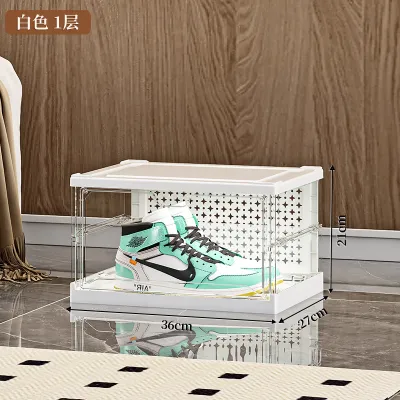
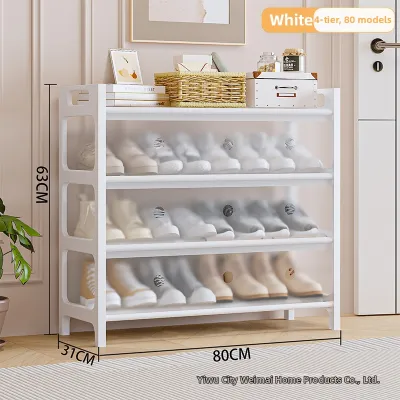
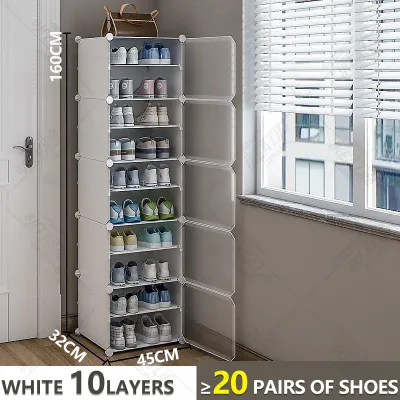
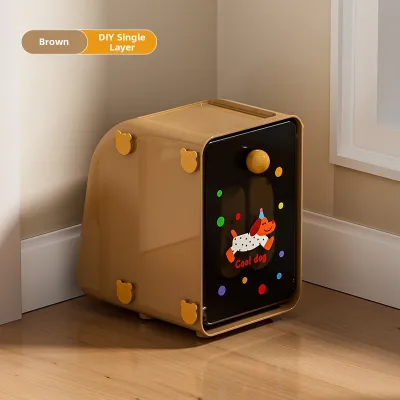
Prices are valid at publication and may change. Please refer to the product page for the latest price.
If considering placing a shoe rack in the external corridor, strictly adhere to Singapore’s fire safety regulations. The Singapore Civil Defence Force (SCDF) mandates a minimum clear escape passage of 1.2 meters along common corridors. Measure the distance from the outermost edge of your proposed cabinet to the opposite corridor wall or railing to ensure compliance.
Finally, inspect the wall and floor area for fixed obstructions like electrical DB boxes, water meters, gas pipes, light switches, and neighboring doors. A dustproof shoe rack must not block access to these utilities. Ensure the cabinet’s height and width allow for easy opening of utility doors during maintenance or emergencies.
Choosing the Right Depth, Width, and Height
Translating your physical measurements into the ideal cabinet dimensions requires analyzing how different styles store shoes. Standard pull-out shelves store shoes flat, requiring an internal depth of at least 30 to 35 centimeters. When you add the thickness of the back panel and front doors, the total external depth of a traditional dustproof cabinet often reaches 38 centimeters or more, which may be too deep for narrow HDB hallways.

For exceptionally tight spaces, slim tilt-out drawers offer a highly efficient alternative. These designs store shoes vertically or at an angle, reducing the external depth of the cabinet to between 15 and 24 centimeters. While tilt-out cabinets dramatically free up walkway space, they do limit the types of footwear you can store, as bulky sneakers, high heels, or work boots may not fit comfortably without bending.
To determine the appropriate width, calculate how many pairs of shoes you need to store per tier. On average, a pair of adult shoes requires about 20 to 25 centimeters of horizontal space. A cabinet with a width of 80 centimeters can comfortably hold three to four pairs per shelf. If you have a larger household, it is generally safer to increase the height of the unit rather than the width, as vertical expansion preserves precious floor space.
When maximizing vertical height, stability is a critical safety factor. Tall, narrow cabinets have a higher center of gravity and can easily tip over. Always check the manufacturer’s instructions regarding anchoring methods. Most tall dustproof cabinets must be secured directly to the wall using brackets and wall plugs suitable for your wall type, whether solid concrete or a lightweight partition wall.
Space-Saving Configurations for Compact Foyers
When a standard floor-standing cabinet is too bulky for your entrance, alternative configurations can help you maintain a clear walkway. Tall, narrow tower designs are excellent for utilizing vertical space. By occupying a minimal floor footprint of perhaps 40 by 40 centimeters, a vertical tower can still house a dozen pairs of shoes behind a single, sleek dustproof door.
Slim-profile tilt-down cabinets are another excellent choice for narrow corridors, but you must ensure there is adequate front clearance. Although the cabinet itself is thin, the drawers swing outward and downward when opened. Measure the clearance in front of the cabinet to ensure you can stand comfortably and retrieve your shoes without having to step backward into a wall or doorway.
Wall-mounted enclosed units offer a floating aesthetic that keeps the floor completely clear, making cleaning easier. Before installing, verify the structural limits of your wall. Heavy wooden cabinets filled with shoes require robust anchoring into concrete walls; avoid mounting heavy units onto hollow drywall partitions unless you can secure them directly to the internal wall studs.
If your HDB entryway features an irregular corner, a recessed niche, or an awkward pillar, look for modular or customizable enclosed systems. These systems allow you to mix and match smaller units to fit the exact contours of your space. Utilizing modular pieces ensures that no space is wasted, allowing you to build a dustproof storage solution that looks integrated and custom-built for your specific flat layout.
Common Sizing and Placement Mistakes
One of the most frequent errors is ignoring the extra depth added by baseboards, skirting boards, or protruding door frames. When you measure a wall-to-walkway distance, you might measure from the flat surface of the wall. However, the skirting board at the bottom will prevent the cabinet from sitting flush, pushing the entire unit forward by one to two centimeters. Always measure from the outermost point of the skirting board.
Another common mistake is overlooking ventilation requirements in Singapore’s hot and humid climate. While a fully sealed, dustproof shoe rack is excellent for keeping dust off your footwear, it can trap moisture and sweat from recently worn shoes. Without adequate airflow, this trapped moisture quickly leads to mold growth and unpleasant odors. Look for cabinets that feature ventilation cutouts, slatted doors, or breathable back panels that allow air to circulate while still blocking the majority of airborne dust.
Placing the cabinet too close to the main door frame can also create daily inconveniences. If the cabinet blocks the door from opening past a 90-degree angle, it will make moving large items, groceries, or furniture into your home incredibly difficult. Ensure there is a buffer zone between the edge of the cabinet and the door frame so that the door can swing open fully without obstruction.
Lastly, do not assume standard shoe sizes fit perfectly into fixed compartments. Many off-the-shelf cabinets come with non-adjustable horizontal dividers. If you own high-top sneakers, boots, or high heels, these shoes may not fit upright, forcing you to store them on their sides. Prioritize cabinets with adjustable or removable internal shelves so you can customize the compartment heights to match your actual footwear collection.
Frequently Asked Questions (FAQ)
Can I place a shoe cabinet outside my HDB main door?
Placing a shoe cabinet in the common corridor outside your HDB flat is subject to strict town council and fire safety regulations. Before purchasing any outdoor storage, you must verify the current guidelines set by the Singapore Civil Defence Force (SCDF) and your local town council. Generally, any furniture placed in the common corridor must maintain a minimum clear escape passage of 1.2 meters to ensure residents can evacuate safely during an emergency.
If your corridor is narrow, placing even a slim cabinet outside may violate these safety rules. Additionally, you must ensure that the cabinet does not block access to utility meters, dry risers, fire hose reels, or your neighbors’ entryways. If you do qualify for outdoor placement under local rules, opt for a highly compact, low-profile unit and ensure it is securely positioned so it cannot be easily knocked over or obstruct the walkway during heavy rain or wind.
How do I prevent odors in a fully enclosed dustproof shoe rack?
Preventing odors and mold in a fully enclosed shoe rack requires a combination of smart cabinet selection and proper shoe care. When shopping, look for enclosed designs that incorporate built-in ventilation features, such as slatted front doors, mesh panels, or pre-drilled ventilation grommets on the back panel. These features encourage passive airflow, which helps dissipate moisture without letting in significant amounts of dust.
To actively manage humidity inside the cabinet, place moisture absorbers, activated charcoal bags, or cedar blocks on the shelves. These products absorb excess moisture and neutralize odors naturally. Most importantly, establish a habit of airing out your shoes. Never place damp, sweaty, or rain-soaked shoes directly into a closed cabinet. Let them dry completely in a well-ventilated area for at least a few hours before storing them away to keep your cabinet fresh and mold-free.

Community discussion
Share your experience or ask a question. Comments are reviewed before publication.